
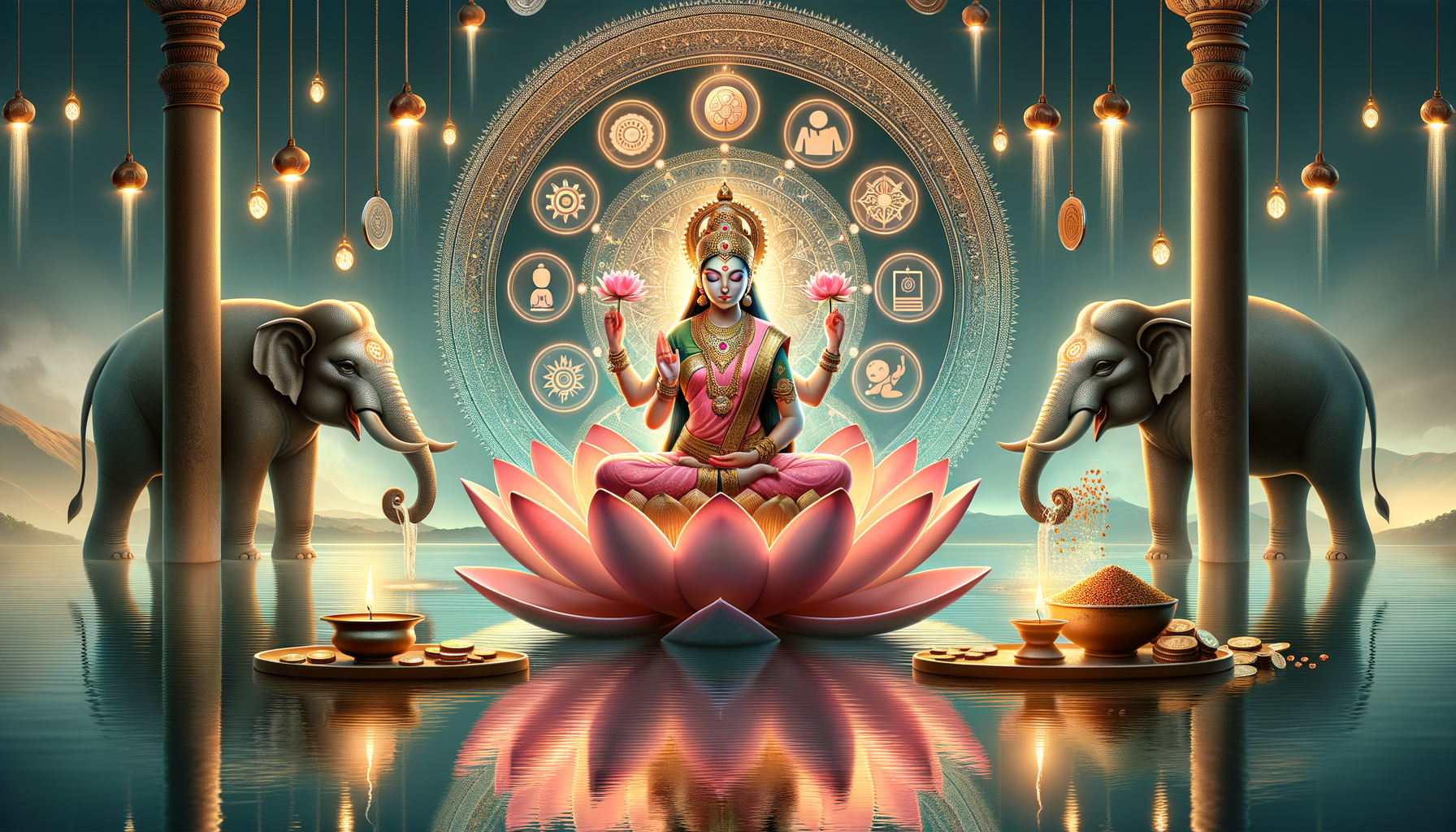
In contemporary discussions of Hinduism, Goddess Lakshmi is often equated narrowly with money and business success. A closer reading of the Hindu way of life shows that Lakshmi signifies a broader prosperity that includes both outer wealth (artha) and inner wealthqualities such as clarity, compassion, contentment, and wisdom. This integrated understanding, rooted in dharma, reframes prosperity as a balanced cultivation of material security and inner stability.
Hindu scriptures and traditions consistently align artha with dharma, emphasizing that wealth attains meaning when it supports ethical living, family well-being, and social harmony. The symbolism of Lakshmiseated on a lotus, accompanied by elephants in the Gaja Lakshmi motifconveys purity amidst the world and the steady effort required to sustain abundance. These images teach that prosperity is not merely an influx of resources but also the flowering of integrity, gratitude, and resilience.
Modern devotional practice frequently involves prayers for monetary gains, career advancement, or business growth. Such aspirations are legitimate in a householder’s life; however, the fuller Lakshmi tradition invites attention to inner wealth as well. The Ashta Lakshmi formsDhana, Dhanya, Dhairya, Vidya, Santana, Gaja, Vijaya, and Varamap prosperity across domains of livelihood, courage, knowledge, family, strength, victory, and grace. This spectrum affirms that enduring prosperity emerges when external success is anchored by inner virtues.
Seen through the lens of Hindu spirituality, inner wealth includes qualities like shraddha (trustful reverence), daya (compassion), and shanti (inner peace). These cultivate a settled mind capable of wise choices, responsible stewardship, and ethical generosity. The Bhagavad-Gita’s call to loka-sangraha highlights that one’s wealthmaterial or innerideally contributes to the cohesion and uplift of society. In this way, Lakshmi’s blessings support both individual flourishing and collective well-being.
This integrated vision resonates across dharmic traditions. In Buddhism, dana (generosity) and sila (ethical conduct) are foundational to a wholesome life. Jainism emphasizes aparigraha (non-possessiveness) and ahimsa (non-violence), guiding mindful acquisition and compassionate use of resources. Sikhism’s seva (selfless service) and the principle of sarbat da bhala (welfare of all) align wealth with responsibility and shared prosperity. Such convergences illustrate a common dharmic insight: true prosperity harmonizes outer security with inner wisdom and social responsibility.
Practical observances honoring Lakshmi naturally flow from this insight. Ethical earnings (aligned with dharma), transparent financial dealings, timely repayments, and gratitude for livelihood establish a clean foundation for artha. Household cleanliness (shaucham), mindful consumption, and small acts of dana nourish the conditions for inner calm. Regular remembrance, through simple puja or quiet contemplation, steadies attention and softens anxiety, allowing contentment to coexist with ambition.
Many householders report that anxiety about income, bills, or market shifts diminishes when daily routines pair effort with gratitude and giving. On festival evenings, lighting a lamp for Lakshmi while setting aside a portion for charity often brings a felt sense of balanceneither rejecting the material nor clinging to it. In time, this practice matures into inner steadiness, clearer priorities, and a gentler relationship with success and setbacks alike.
When approached in this way, Lakshmi becomes a guide to holistic prosperity: resources earned ethically, relationships tended with care, and an inner life enriched by wisdom, compassion, and peace. Such prosperity is durable because it is shared; it strengthens families, supports communities, and sustains cultural and spiritual continuity. In the Hindu way of life, this is the promise of Goddess Lakshmiouter abundance illumined by inner wealth.
Inspired by this post on Hindu Blog.
