
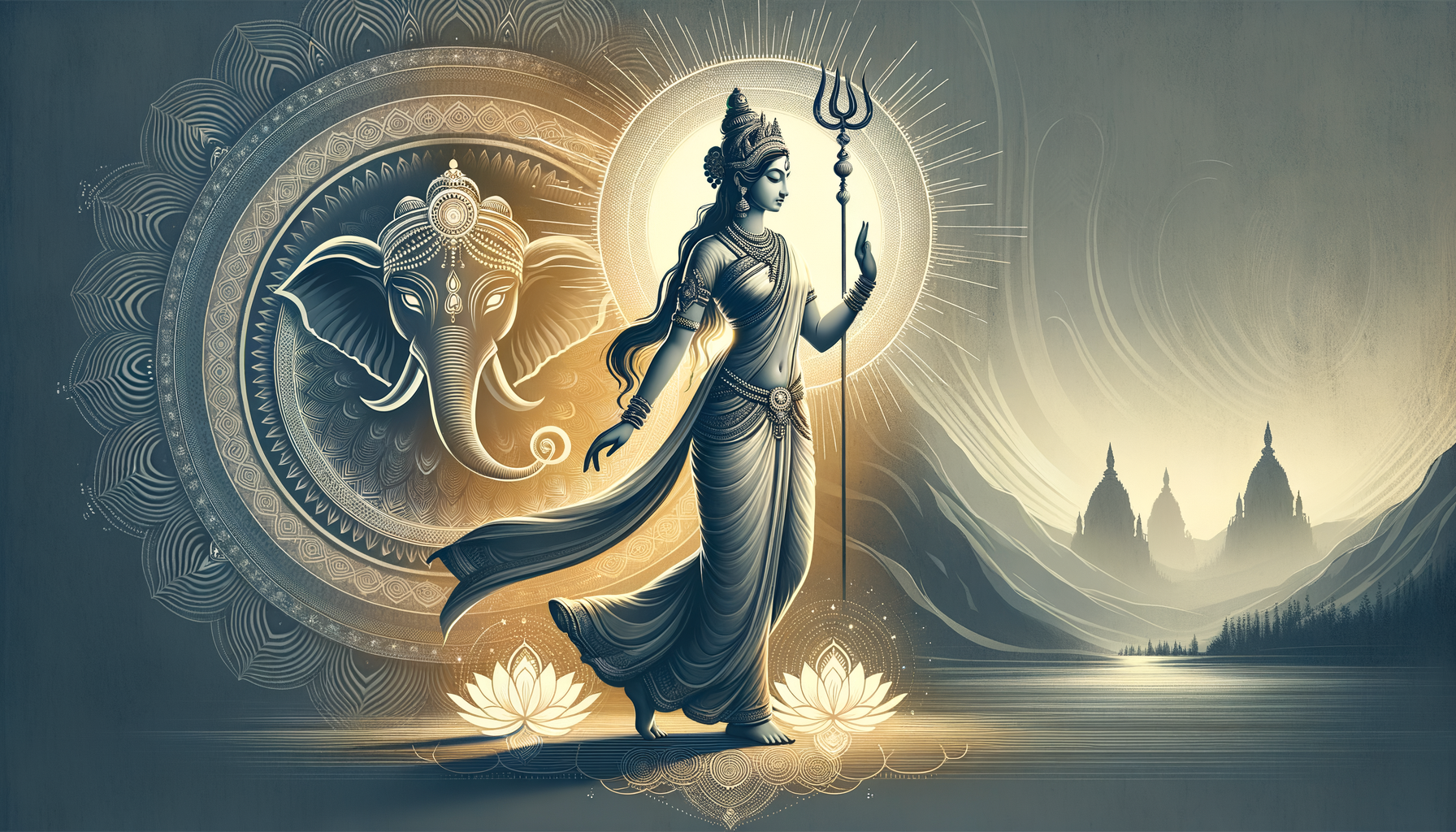
Goddess Chamunda is revered in Hinduism as a formidable embodiment of Shakti who protects seekers and removes obstacles to spiritual progress. Within Shakta iconography, an occasional motif of the elephantat times implied as a flayed hide or subdued presenceappears in select regional depictions and devotional interpretations. This image is often read symbolically as the subjugation of ahamkara (ego) and mada (pride), clearing a path toward inner freedom and unwavering dharma.
Across Indian aesthetic and philosophical traditions, the elephant carries multilayered meanings: immense strength, royal authority, and the heavy, untrained momentum of the mind. In the specific context of Chamunda’s fierce form, the elephant motif functions as a visual teaching, signaling a conversion of tamas (inertia) into purposeful energy. While the flayed elephant hide is more prominently associated in Hindu art with Shiva’s Gajasurasamhara, the thematic through-linemastery over destructive pride and ignorance (avidya)remains consistent. Chamunda’s terrifying compassion, skull-garland, and cremation-ground presence reinforce this transformative message in Shakta iconography.
Interpreted psychologically, the “flaying” signifies a stripping away of false identification, much like the neti neti method in Vedanta and the discipline of pratyahara in Yoga. The fierce Devi invites the practitioner to confront fear, grief, and attachment without compromise. In this reading, the elephant symbolizes the dense layers of self-importance and habitual conditioning; Chamunda’s victory represents a lucid, fearless state oriented toward moksha and the welfare of all beings.
For devotees and practitioners, this imagery resonates during periods of inner struggle. When meditative practice (dhyana) meets difficult emotions, Chamunda’s form becomes a mirror of courage and clarity. Many report that contemplating the symbolismwhether during Navaratri or personal sadhanahelps translate overwhelming heaviness into grounded resolve. The result is not suppression but transformation, a disciplined compassion aligned with dharma.
Unity across dharmic traditions strengthens this insight. In Buddhism, training the “elephant-mind” is a classic metaphor for taming restlessness and delusion; the White Elephant dream underscores purity and auspiciousness directed toward awakening. Jain traditions portray elephants as auspicious while emphasizing humility and non-violence (Ahimsa) that counteract pride. Sikh teachings on overcoming haumai (ego) likewise focus on remembrance of the Divine and ethical living. Despite distinct lineages, Hindu, Buddhist, Jain, and Sikh frameworks converge on a shared principle: subduing ego to awaken wisdom and compassion.
Historically, Chamunda’s emaciated, fear-dispelling form appears in diverse regions, sometimes alongside jackals and funerary motifs that symbolize impermanence and the end of delusion. A few sculptural programs and textual exegeses introduce the elephant as a complementary emblem, reinforcing the defeat of arrogance and heedlessness. Even when the elephant is absent, the thematic continuity of ego-transcendence, protection of the righteous, and restoration of cosmic order remains central to Devi’s worship.
In contemporary life, the elephant’s weight can be read as the collective burden of anxiety, status-preoccupation, and social rivalry. Chamunda’s symbolism offers a disciplined path to transmute this burden into vigilance, humility, and service. By recognizing and relinquishing egoic grasping, individuals cultivate inner strength that supports social harmony and interfaith respectvalues celebrated across dharmic traditions.
Thus, the motif of Chamunda and the elephantwhether explicit or inferredpowerfully communicates the annihilation of limiting pride. It affirms Shakti’s role as protector and guide, turning fear into insight and severity into compassion. In honoring this symbolism, practitioners not only deepen understanding of Hindu Symbols and Devi iconography, but also participate in a broader dharmic ethos that unites traditions in the shared work of overcoming ego and embodying wisdom.
Inspired by this post on Hindu Blog.
