
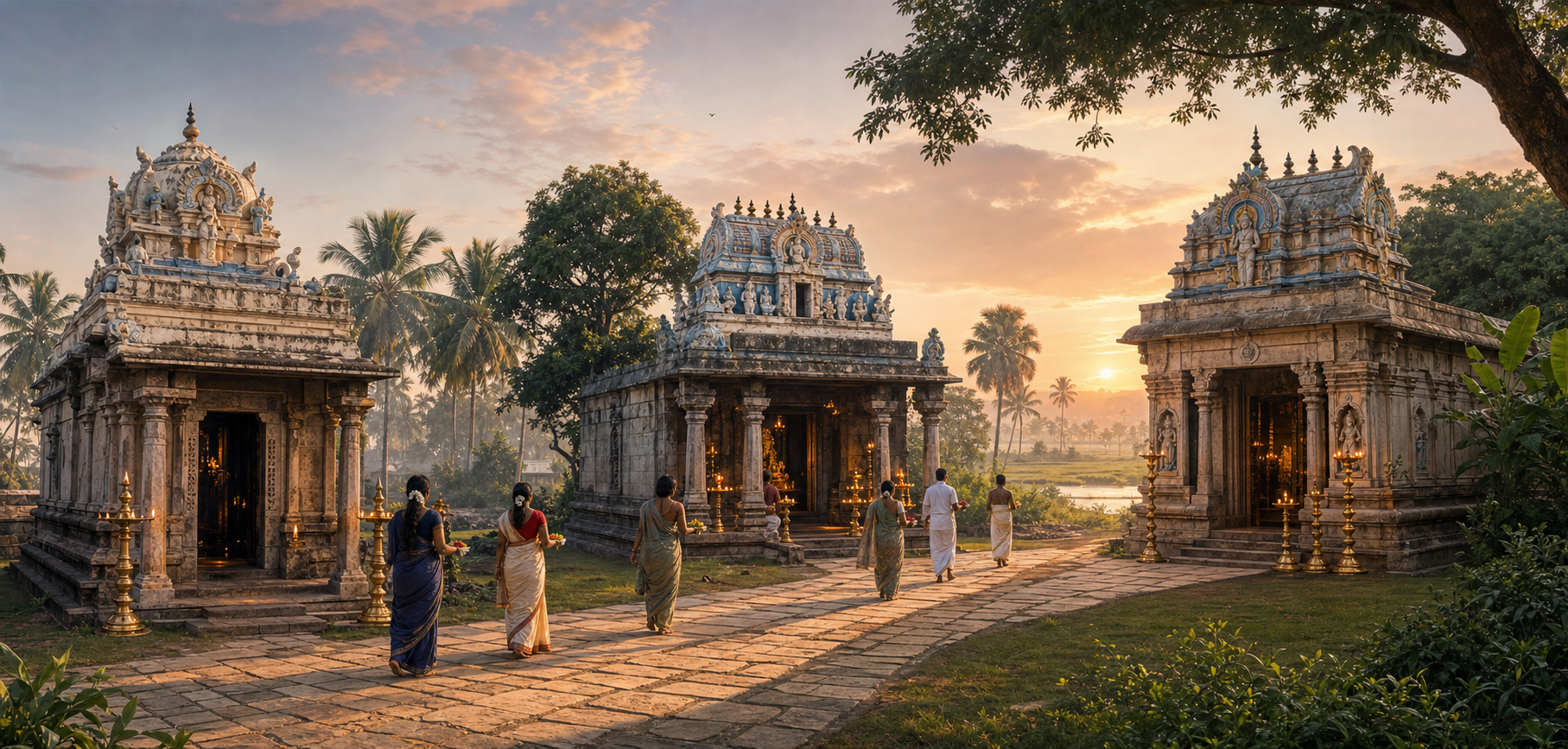
If you are planning a temple day in Thanjavur, the name Thanjai Mamani Koil can create an immediate practical confusion: are you looking for one temple or three? Treat it as one Divya Desam pilgrimage experienced through three distinct Vishnu sanctums. That distinction will change how you ask for directions, allocate your attention, and receive darshan.
The visit is most rewarding when you resist the urge to collect three quick sightings. Learn the names before you arrive, move through the sanctums deliberately, and let each form of Vishnu shape a different part of your prayer.
One Divya Desam, three sanctums: settle the name first
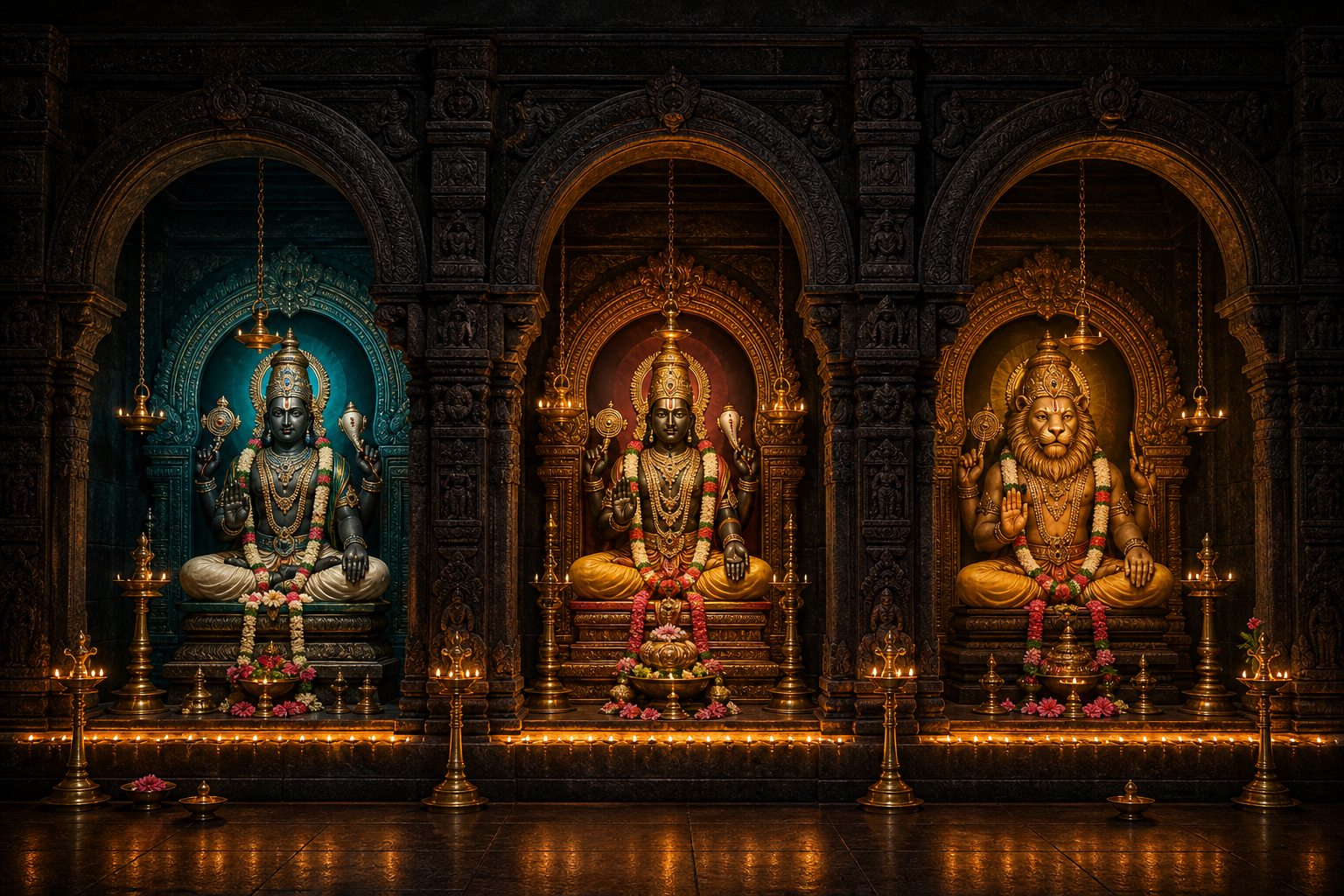
Thanjai Mamani Koil, also called Thirutanjai or Thanjavur Perumal Temple in regional usage, is a single sacred destination formed by three adjacent Vishnu shrines. The deities are commonly identified as Neelamegha Perumal, Manikundra Perumal, and Veera Narasimha Perumal. Each has a distinct murti and devotional emphasis, but the triad belongs to one pilgrimage experience.
This is also why the phrase triple Divya Desam needs care. It should not make you imagine three unrelated entries accidentally standing near one another. Thanjai Mamani Koil is counted within the 108 Divya Desams celebrated by the Alvars in the Naalayira Divya Prabandham, while its three sanctums disclose several complementary dimensions of Vishnu.
If a driver, local resident, or signboard uses only one of the individual deity names, clarify your intention with all three: Neelamegha Perumal, Manikundra Perumal, and Veera Narasimha Perumal of Thanjai Mamani Koil. That simple preparation reduces the chance of treating one sanctum as the whole visit.
Keep another distinction in mind. Divya Desam status comes from sacred remembrance and Alvar praise; it does not mean that every visible wall, pillar, or stucco figure belongs to one construction date. The holiness of the kshetra and the chronology of its built fabric answer different questions.
Let the darshan sequence become a three-part sadhana
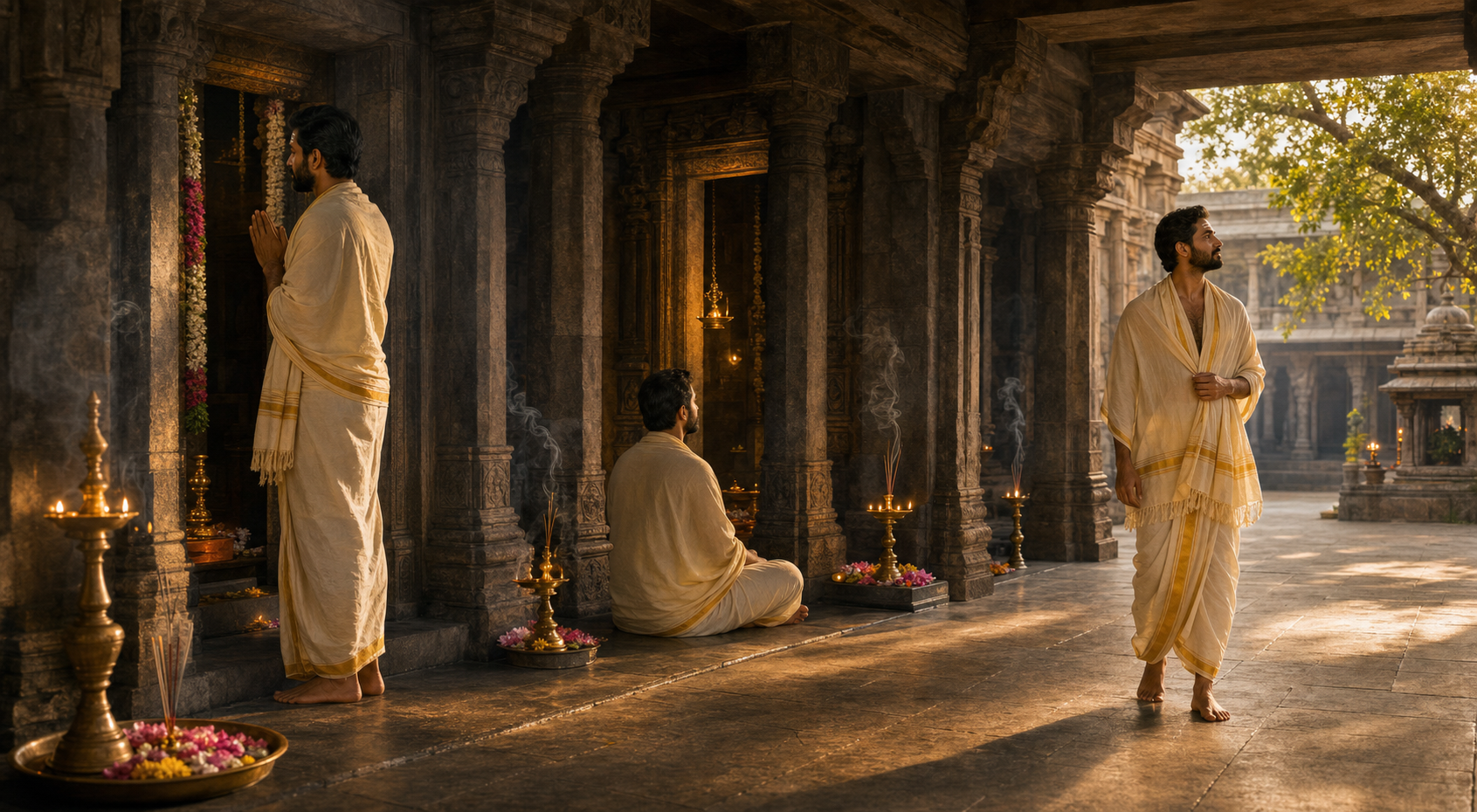
A commonly followed sequence begins with Neelamegha Perumal, continues to Manikundra Perumal, and concludes with Veera Narasimha Perumal. This is a devotional custom rather than permission to disregard current temple instructions. If an archaka or festival arrangement directs worshippers differently, follow the living practice of the temple.
One useful way to inhabit the sequence is through three Vaishnava themes: sustaining order, auspicious well-being, and protection from adharma. This is a contemplative framework, not the only doctrinal assignment possible. Interpretations can vary across sampradayas, and the three murtis should not be reduced to a rigid formula.
- At Neelamegha Perumal, become still. Name the agitation, duty, or uncertainty you have brought with you. Then ask what must be sustained rather than what must be escaped. This turns the first darshan toward sthiti: the preservation of rightful order.
- At Manikundra Perumal, examine your idea of the good. Move beyond a request for immediate advantage. Ask what would constitute shreyas, the more enduring and auspicious good, for everyone affected by your decision.
- At Veera Narasimha Perumal, make the prayer actionable. Protection is not merely relief from fear. Ask for the courage and discipline needed to resist adharma, correct your own conduct, or complete the duty that became clear in the earlier sanctums.
Keep each prayer short enough to remember. One sentence at each sanctum is often more useful than a long list of unrelated wishes. By the final darshan, you should be able to state one action you will take after leaving the temple.
During alankara, notice the classical Vaishnava identifiers when they are visible: the Sudarshana Chakra, Panchajanya Shankha, vanamala, and the jewel at the chest. Decorations, flowers, fragrances, and musical settings can change with the liturgical calendar. Do not treat these variations as cosmetic additions. They are part of how the deity is encountered through season, festival, and time of day.
The emotional movement of the triad is often described as cooling. That does not primarily refer to temperature. It is the shitala quality of grace: the calming of the inner heat created by anxiety, anger, rivalry, or helplessness. You can test whether you received that teaching very simply. Notice whether your prayer becomes less frantic and your next duty becomes more precise as you move from one sanctum to the next.
Read a living temple, not a frozen Chola monument
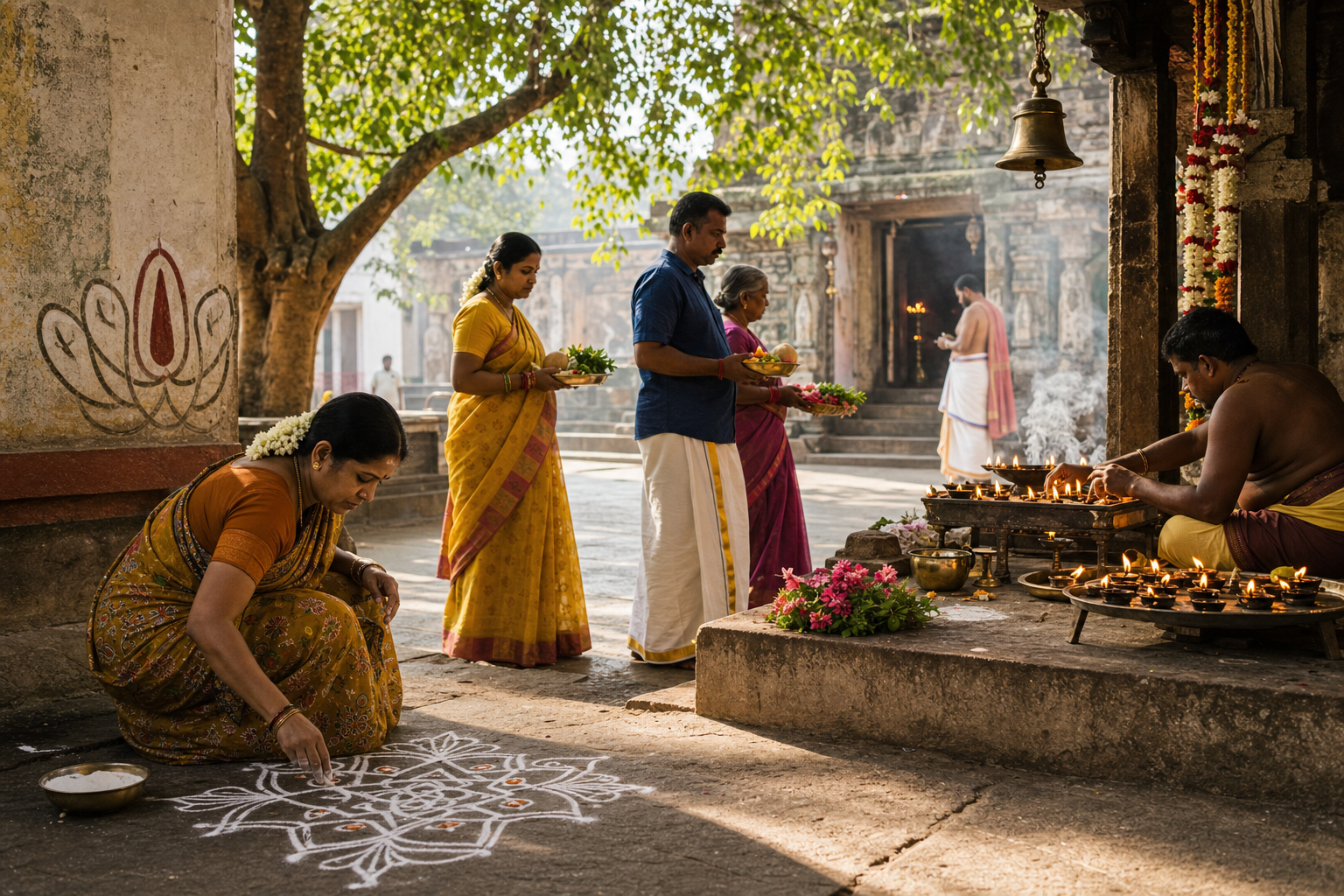
Thanjai Mamani Koil belongs to Thanjavur’s layered sacred landscape. Its architectural vocabulary includes features associated with late Chola and post-Chola building traditions, alongside later Nayak and Maratha interventions. The right question is therefore not which single dynasty owns the temple. Ask how successive communities kept a sacred place usable, beautiful, and ritually alive.
- Begin at the base. Look for the granite adhisthana that visually and structurally grounds the shrine. It establishes the ordered transition from ordinary terrain to sacred architecture.
- Then follow the wall upward. Proportioned pilasters, kumbha and kalasa motifs, the prastara above the wall, and the vimana over the sanctum reveal the disciplined grammar of Dravida temple design.
- Finally, look for evidence of continuation. Stucco work, enlarged mandapas, and yali-bearing columns can indicate later phases of patronage. Their presence reminds you that temple history did not stop after its earliest major construction.
- Notice how the plan teaches movement. The compact prakara and the relationship among the garbhagrihas guide worshippers from one encounter to the next. Architecture is doing theological work here: it turns a set of ideas into a path walked by the body.
These observations help you recognize layers; they do not date every stone or identify a donor. Regional patterns in the Kaveri delta point to royal, mercantile, and agrarian support continuing through later Chola, Nayak, and Maratha periods. A precise claim about a ruler, year, or endowment requires a corresponding inscription. Without that evidence in front of you, enjoy the architectural sequence without forcing an exact label onto every component.
Later additions are not automatically damage to an authentic original. In a functioning temple, mandapa enlargement, renewed stucco, ritual equipment, and practical utilities can record continued responsibility. The conservation challenge is to accommodate worship without allowing water ingress, biological growth, insensitive repairs, or poorly integrated services to erase older fabric.
Your conduct participates in that conservation. Do not touch carvings merely to inspect them, lean equipment against sculptural surfaces, obstruct a ritual route, or assume that photography is permitted. Follow the temple’s current rules, especially near the sanctums. Heritage protection here is not separate from seva; it is one way of serving the community that will inherit the shrine.
The wider Thanjavur setting also corrects a simplistic view of sectarian history. Vaishnava worship matured in a region where Shaiva and Shakta traditions were also deeply rooted. That proximity does not make their theologies identical. It shows how distinct traditions can sustain a shared civilizational landscape through patronage, craftsmanship, pilgrimage, and respect for sacred boundaries.
Choose the kind of visit you actually want
A quiet visit and a festival visit reveal different dimensions of Thanjai Mamani Koil. Decide which one you need before choosing your day. If your purpose is unhurried prayer or architectural observation, early morning or late evening offers a more contemplative atmosphere and softer light on the stone. If your purpose is to experience collective bhakti, choose a major utsavam and accept that congregation, sound, movement, and ritual will take priority over private stillness.
- For a contemplative visit: favour a non-festival morning or evening, keep the three deity names with you, and leave enough mental space to pause between sanctums.
- For Vaikuntha Ekadashi or Brahmotsavam: expect the communal dimension of worship to define the visit. Follow the processional flow and the instructions of temple personnel instead of trying to preserve a private itinerary.
- For Narasimha Jayanti: approach the concluding protective dimension of the triad with particular attention to Veera Narasimha Perumal.
- For Tiruvadippuram or Krishna-centred celebrations: attend to how Andal devotion, music, flowers, light, and congregational participation broaden the emotional range of Alvar bhakti.
Confirm the current opening periods, festival date, and access arrangements locally before travelling. The temple year follows lunar tithis and Vaishnava festival markers, so a fixed civil-calendar assumption can fail. No stable daily timetable should be inferred merely from the names of the nitya observances.
Daily worship follows an Agamic rhythm, with local practice understood through Pancharatra or Vaikhanasa tradition as applicable. Suprabhatam, alankaram, naivedyam, and deepa aradhana are not attractions scheduled around sightseeing; they structure the temple’s day. If you arrive during a ritual transition, wait without treating the pause as an inconvenience.
- Before arrival, write down the three deity names and one intention. This prevents the first few minutes from becoming a search exercise and keeps your prayer coherent.
- At the entrance, confirm the day’s sequence and rules. Ask about sanctum access, pradakshina, and photography rather than relying on habits learned at another temple.
- Dress modestly and lower your voice before approaching the garbhagrihas. Silence near a sanctum protects other devotees’ concentration as well as your own.
- Follow the permitted circumambulation route without rushing ahead of ritual movement. The compact plan is meant to connect the sanctums, not turn them into a checklist.
- After Veera Narasimha darshan, pause if the space and temple rules allow it. Decide on one concrete act of dharma, reconciliation, restraint, or service that follows from the visit.
This approach also prevents a common category mistake. Thanjai Mamani Koil is neither only a devotional destination nor only an architectural object. Its hymns, murtis, spatial sequence, offerings, processions, and community are parts of one living system. If you remove worship from the picture, you misunderstand the architecture; if you ignore the architecture, you miss how the theology is being taught.
Key takeaways for your visit
- Approach Thanjai Mamani Koil as one Divya Desam pilgrimage through three distinct Vishnu sanctums.
- Remember the names Neelamegha Perumal, Manikundra Perumal, and Veera Narasimha Perumal when asking for directions or confirming the darshan route.
- Use the common sequence as an arc from steadiness, through discernment of the good, to courageous protection against adharma.
- Treat that arc as a devotional aid, not as the only interpretation recognized by every Vaishnava sampradaya.
- Read Chola and post-Chola architectural forms together with Nayak and Maratha additions as evidence of continuing patronage.
- Choose a quiet morning or evening for contemplation, or a major utsavam for collective bhakti; do not expect both visits to feel the same.
- Verify current hours, festival dates, access arrangements, and photography rules locally before travelling.
Before you leave for Thanjavur, save the three deity names and write one question you genuinely need to resolve. At the temple, confirm the local sequence, put the phone away near the sanctums, and let the movement from grace to discernment to protection clarify your next act. The pilgrimage becomes complete when refuge changes how you live after darshan.