
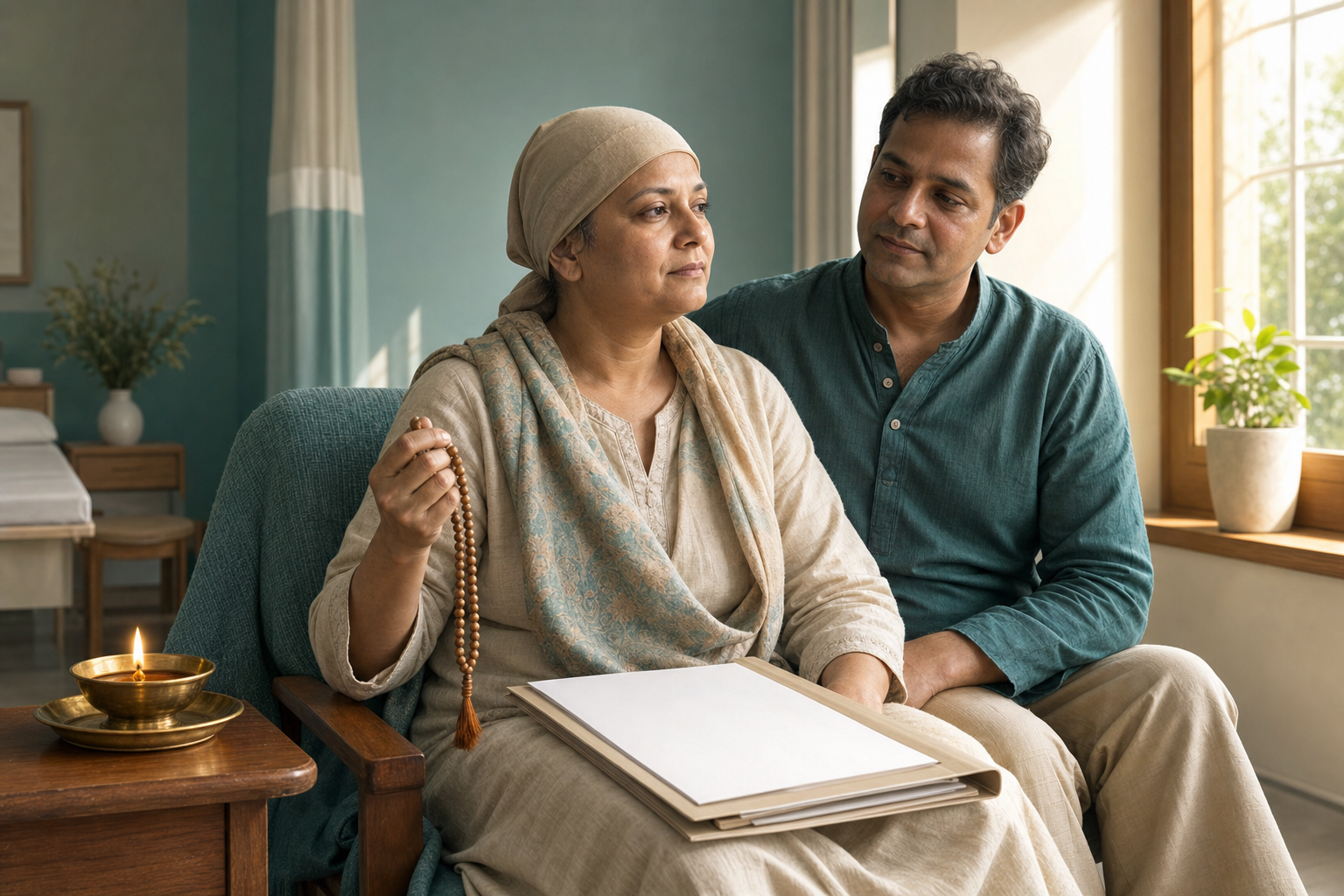
When a swollen node, scan, or biopsy puts cancer into your life, the mind can race from one finding to the worst possible ending. Your first task is smaller and more useful: establish what disease is present, where it began, how far it has spread, and which decision comes next. Cancer is serious, but a diagnosis is not a complete prognosis; outcomes vary with the cancer type, stage, and response to treatment.
Dharmic resilience begins with that distinction. It asks you neither to deny the biology nor to surrender your mind to it. You can pursue precise oncology while using Bhakti, meditation, Yoga, compassion, non-attachment, and Seva to remain steady enough to participate in your own care.
Key takeaways
- Do not make treatment decisions from a phrase such as “secondary cancer in a lymph node.” Ask for the exact histology, likely primary site, stage, relevant biomarkers, and any remaining diagnostic uncertainty.
- Ask whether your case will be reviewed by a multidisciplinary tumor board. Surgery, radiation, systemic treatment, rehabilitation, dental care, swallowing support, and nutrition need to form one plan.
- Use spiritual practice to improve steadiness, attention, and meaning. Do not use it to replace biopsy, imaging, oncology treatment, symptom care, or professional psychological support.
- Treat surrender as freedom from the illusion of controlling the outcome, not as permission to neglect the next responsible action.
- Give family and community members concrete Seva assignments. General concern becomes useful when it turns into transport, meals, notes, household help, or quiet companionship.
Turn a frightening finding into precise clinical questions

A malignant cervical lymph node is a finding, not yet the whole map. Cancer cells in a neck node may have travelled from a primary tumor elsewhere, while a lymphoid malignancy such as lymphoma follows a fundamentally different diagnostic and treatment path. Possible primary sites in metastatic neck disease include the oropharynx, nasopharynx, oral cavity, larynx, thyroid, and skin. The practical lesson is simple: the word “cancer” does not tell your clinicians which treatment you need.
Imaging and tissue answer different questions. Contrast-enhanced CT or MRI can map the involved nodes and nearby structures. PET-CT can help locate an otherwise hidden primary and identify other metabolically active areas, but it cannot by itself prove that every highlighted area is cancer. Inflammation and infection can produce false-positive PET findings, while very small lesions can escape detection. Suspicious findings still need clinical and pathological correlation.
When the upper aerodigestive tract is a possible source, clinicians may use endoscopic examination and directed biopsies. A core needle or excisional biopsy can establish histology and provide material for immunohistochemistry. Your oncology team must decide which procedure is appropriate in your case. Do not delay a recommended biopsy or staging test while trying diets, supplements, ritual remedies, or alternative treatments; the downside is losing time before the disease has been accurately classified.
Pathology can also identify biological features that materially change interpretation and treatment. In a suspected oropharyngeal cancer, p16 staining can indicate an HPV-associated subset with a more favorable biological profile. EBV-encoded RNA testing can inform the assessment of nasopharyngeal carcinoma. Thyroglobulin or PAX8 can support thyroid lineage. If lymphoma is suspected, flow cytometry, cytogenetics, and cell-of-origin classification help determine a specialized regimen. These are not decorative details on a report; they help turn a broad label into an individualized plan.
Take these questions to the appointment:
- What exact type of malignant cell did the biopsy identify?
- Is the tissue sample sufficient for immunohistochemistry and the relevant biomarker tests, or is more tissue needed?
- Are we dealing with metastatic carcinoma, lymphoma, or another malignancy?
- Which primary sites are being investigated, and what makes each one more or less likely?
- What question is each proposed CT, MRI, PET-CT, endoscopy, or biopsy meant to answer?
- Which findings are confirmed, which are suspected, and which remain unknown?
- Is staging complete? If not, what result must arrive before treatment can be chosen?
- Would a specialist pathology review or a second oncology opinion be useful before a consequential decision?
If the explanation becomes too technical, ask the clinician to translate it into a decision: “What will this result change?” That question distinguishes a test that guides treatment from one that merely adds information.
Build one plan for treatment, function, and daily life

Cancer care can become fragmented when each appointment addresses only one organ or treatment. A multidisciplinary tumor board helps connect the pieces. Depending on the diagnosis, the relevant team may include surgical, medical, and radiation oncologists, radiologists, pathologists, speech-language pathologists, nutrition professionals, dental professionals, and rehabilitation specialists.
The treatment menu can include surgery, intensity-modulated radiotherapy, chemotherapy, immunotherapy, or targeted therapy, but a menu is not a recommendation. Cisplatin-based treatment, PD-1 or PD-L1 inhibitors, and EGFR-directed agents belong in defined clinical settings; their names alone do not show that they are appropriate for you. Even neck-node disease with an unknown primary can require a carefully chosen combination of neck dissection, radiation to high-risk mucosal areas, and systemic treatment based on stage and physical fitness for therapy. Ask why the proposed combination fits your histology and staging rather than trying to select a modality from general descriptions.
Supportive care should begin while the treatment plan is being built, not only after function has deteriorated. In head-and-neck care, swallowing, oral health, nutrition, and neck mobility can directly affect whether you tolerate therapy and how well you recover. Dental care can reduce the risk of osteoradionecrosis, while swallowing therapy, lymphedema care, nutrition support, and rehabilitation help preserve function. If radiation is being considered, ask whether dental evaluation is needed before it starts. If swallowing is already difficult, say so before weight loss or dehydration makes treatment harder.
- Ask who owns each part of the plan and how the specialists communicate with one another.
- Ask what the proposed treatment is intended to accomplish in your specific situation and which result would cause the plan to change.
- Request an early swallowing, nutrition, dental, or rehabilitation assessment when the tumor location or treatment could threaten those functions.
- Ask which symptoms should trigger a call to the oncology team and where to call outside normal clinic hours.
- Seek a second opinion when the decision is consequential or the diagnosis remains uncertain. This is a way to clarify the plan, not a rejection of the current team.
- Ask whether an appropriate clinical trial exists, while also asking how its burdens, uncertainties, and alternatives compare with standard care.
- Use psycho-oncology or peer support when fear, low mood, or treatment stress is interfering with sleep, communication, or adherence. Spiritual discipline and professional psychological care can work together.
Evidence-based care does not require passivity. You are allowed to ask for plain language, copies of your reports, the reasoning behind the sequence, and time to understand a major decision. What it does require is intellectual honesty: neither a medical title nor a spiritual claim should be accepted without asking what it is meant to do, what supports it, and what risk follows if it fails.
Let Dharma steady treatment rather than compete with it
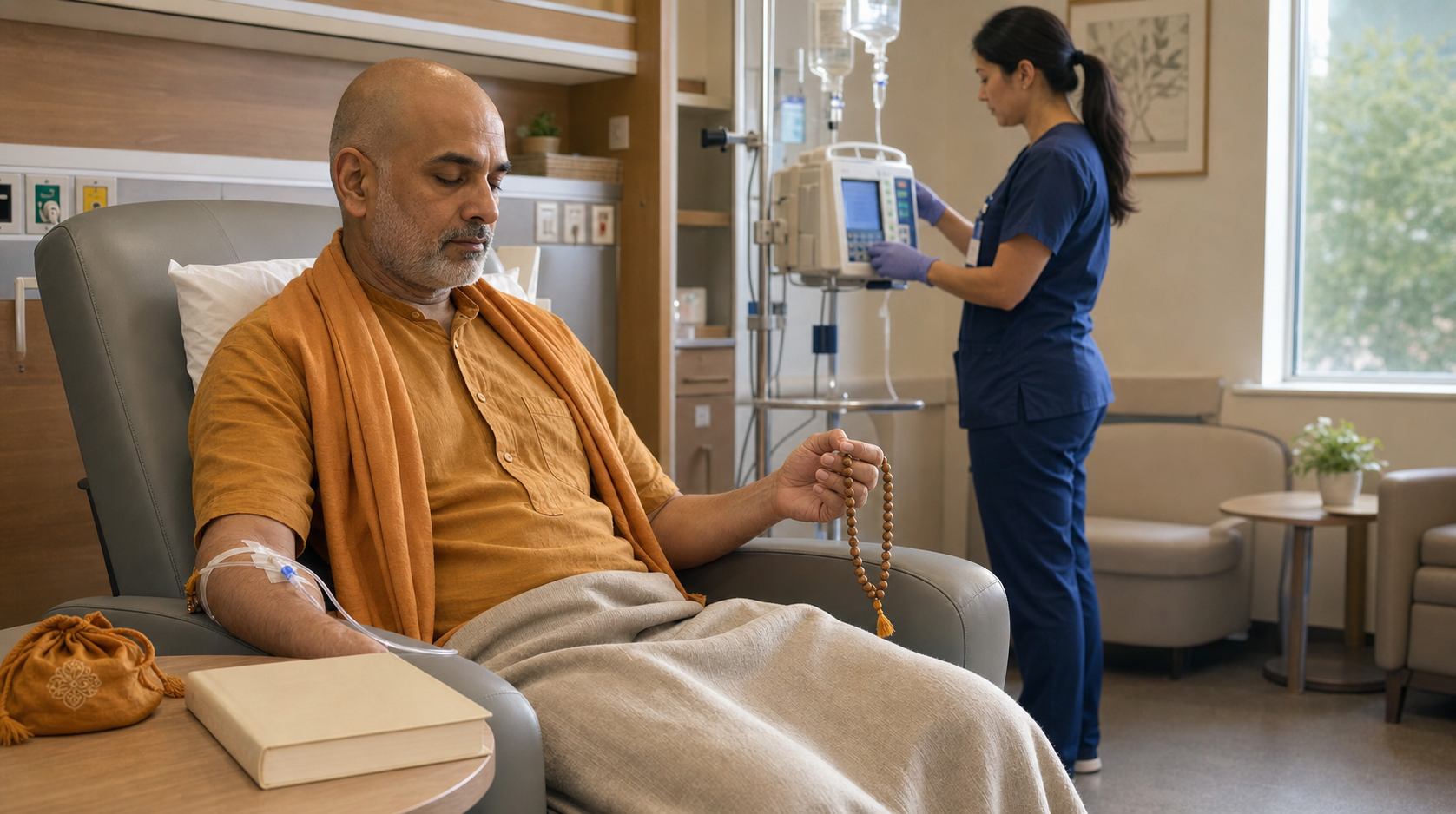
Acceptance is often mistaken for resignation. In a Dharmic frame, acceptance means seeing the situation without bargaining with reality, then carrying out the duty that the situation places before you. If the language of “Krishna’s embrace” is meaningful to you, let it describe the relationship in which you meet illness. Do not turn it into a biological explanation, a promise of cure, or a reason to abandon treatment.
The Bhagavad Gita’s discipline of steady action without possession of the result is especially practical in oncology. The result of a scan is not under your command. Attending the scan, asking the necessary questions, taking prescribed medicine correctly, reporting side effects, and accepting suitable help are actions within your field of duty. Śaraṇāgati gives the outcome to Krishna; it does not transfer your clinical responsibilities to someone else.
Bhakti can be woven into the places where uncertainty otherwise takes over. Japa or nāma-smaraṇa can accompany the waiting room. Prayer can precede a difficult conversation without becoming a demand that reality satisfy a preferred script. Sākṣī-bhāva, the stance of the witness, can help you notice pain, fear, or anger without reducing the whole self to the passing state of the body and mind.
Other Dharmic traditions offer equally concrete disciplines. Buddhist maraṇasati brings mortality into awareness so that fear can be met rather than endlessly avoided; it is not an exercise in predicting your death. Jain aparigraha loosens the demand to possess a guaranteed future while preserving careful regard for the body. Sikh alignment with Hukam joins acceptance of what cannot be controlled with chardi kala, Naam Simran, and active Seva. These paths do not erase their theological differences. They converge practically in clarity, disciplined conduct, compassion, and service.
Choose the practice native to your conviction rather than trying to collect every tradition at once. A sustainable practice may be as simple as remembrance before opening a test result, gentle breathing while waiting, or a prayer of offering after the appointment. Gentle Yoga, pranayama, meditation, mindfulness, and moderate activity may support anxiety, fatigue, sleep, mood, and deconditioning, but movement must be medically cleared and adapted to your condition. Stop treating any practice as “gentle” if your clinical team has warned that it is unsafe for your present state.
Food deserves the same discipline. A whole-food pattern tailored by an oncology nutrition professional can support body weight and treatment tolerance. A restrictive diet or treatment-like supplement program should not displace oncology care or undermine adequate nutrition. Before starting one, show the exact plan to your oncology team. “Natural” does not answer whether it is suitable during your treatment.
A useful boundary is to ask what category a practice belongs to. Meditation may support attention and emotional regulation; it cannot identify a primary tumor. Yoga may help maintain movement; it cannot stage cancer. Prayer may deepen courage and relationship with the Divine; it cannot tell you whether a PET finding is inflammation. Keeping those categories clear protects both medicine and Dharma from claims they were never meant to carry.
Make resilience visible in appointments, relationships, and hope
Create a simple decision record
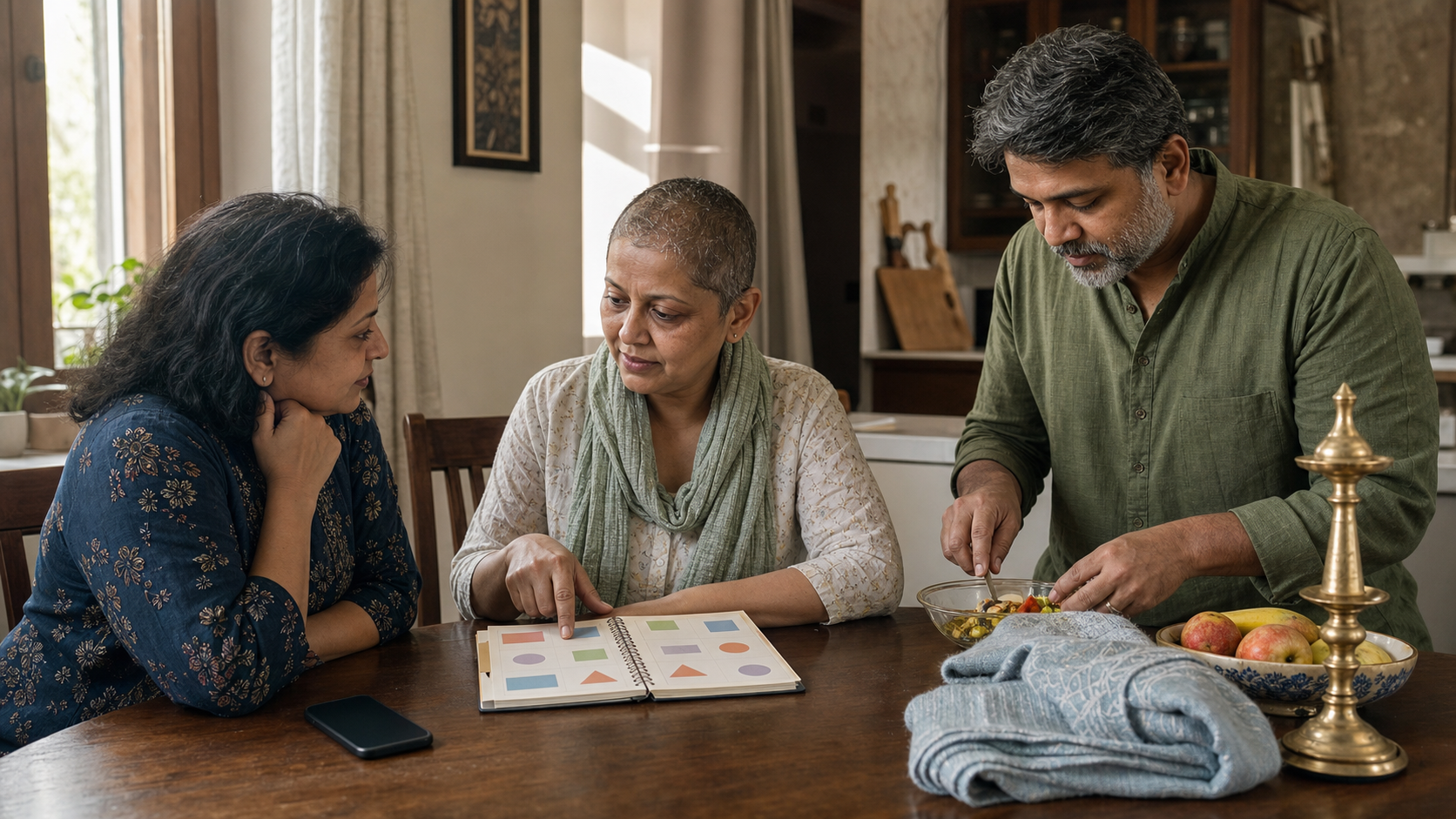
Fear makes memory unreliable, especially when new terminology arrives quickly. Keep one living record with the headings “confirmed,” “pending,” “next decision,” and “support needed.” Place the exact pathology wording under “confirmed.” Put uncompleted scans, biomarker results, or specialist reviews under “pending.” Record the decision that those results will unlock. Then name the practical obstacle: transport, meals, caregiving, communication, swallowing, finances, or emotional support.
Bring that record to each appointment. If possible, take a trusted listener who can write while you listen. Before leaving, repeat the next step in your own words and ask the clinician to correct you. Afterward, update the record before searching online. This sequence matters because information is easier to judge once you know your actual diagnosis and the question you are trying to answer.
Favor peer-reviewed guidance, professional consensus, and explanations tied to your pathology over testimonials that promise certainty. A compelling recovery story may offer companionship, but it cannot establish that the same remedy will work for a different cancer, stage, biomarker profile, or treatment history.
Turn concern into Seva
People often respond to cancer with shock, affection, advice, or repeated requests for updates. You do not owe everyone unrestricted access to your medical life. Decide who receives detailed information, who receives brief updates, and who coordinates communication. Candor can reduce uncertainty and mobilize support, but privacy can also protect the energy needed for treatment.
When someone says, “Tell me if you need anything,” give them an assignment that matches their capacity. One person can drive. Another can accompany you and take notes. Someone can prepare food that follows the nutrition plan. Another can handle community updates, household tasks, or quiet companionship. Seva becomes healing in the social sense when it reduces a real burden rather than adding another conversation you must manage.
Caregivers should resist spiritual pressure. Do not imply that fear reveals weak faith, that positive thinking controls tumor biology, or that progression means the patient failed a lesson. Do not turn every conversation into cancer either. Ask what would be useful now, and accept that the answer may be practical help, prayer, ordinary company, or silence.
Keep hope free of false promises
Hope does not have to mean certainty of cure. It can mean hope for an accurate diagnosis, a coherent treatment plan, preserved function, relief of suffering, a meaningful day, reconciliation, or the strength to serve while the outcome remains unknown. This form of hope can survive changing medical news because it is connected to action and value rather than prediction.
Contemplation of death can clarify life when it is used carefully. It may reveal which relationships need attention, which ambitions no longer deserve your limited energy, and which spiritual practices should move from intention into routine. If mortality contemplation instead produces overwhelming distress or makes ordinary functioning harder, bring that response to a psycho-oncology or mental-health professional. The practice is meant to deepen clarity and compassion, not trap you in terror.
Before your next oncology contact, prepare the decision record: confirmed diagnosis, pending information, next decision, and support needed. Take it to the clinician and then to the people serving beside you. That is Dharmic resilience made practical: truth without panic, surrender without neglect, and hope expressed through the next right action.