
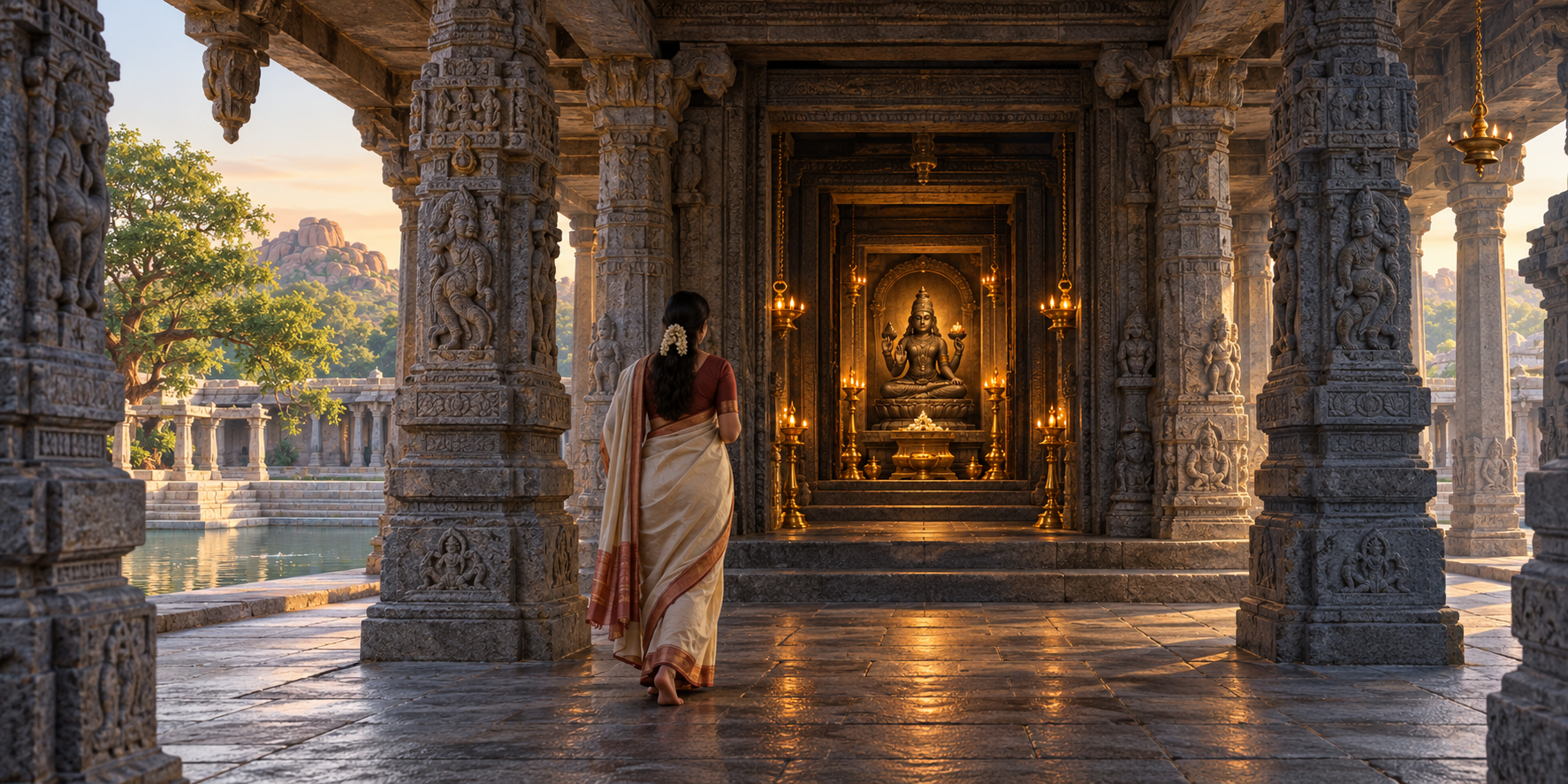
You enter a temple and encounter a form that does not resemble the familiar calendar image. The deity may be associated with an earthen manifestation, a particular hill or a seated posture whose meaning is not immediately obvious. If you treat these details as decoration, you miss much of what the shrine is communicating.
You need two complementary ways of seeing. The sthala puranam explains why the divine presence belongs to this place. Sacred iconography shows how that presence should be encountered. Reading both carefully lets you appreciate a shrine without turning local tradition into a universal doctrine or demanding that sacred memory behave like a modern historical report.
Start with the place: what the sthala puranam is doing

A sthala puranam is the sacred account of a particular place. It may identify how the deity became manifest, why a hill or other feature is holy, who first received the revelation and what devotees seek there. It is not merely a shortened biography of a widely worshipped deity. Its purpose is to join divine presence to a specific landscape and devotional community.
Komuravelli offers a clear example. Local tradition recounts that Lord Mallikarjuna appeared in a shepherd’s dream, identified the hill as Indrakeeladri and revealed his presence in putta matti, or soft earth. Devotees hold that worshipping the deity can bring the fulfilment of their desires.
Do not reduce that account to the single question, “Did this happen exactly as a modern report would record it?” Begin with what the tradition is asking you to notice. The recipient is a shepherd. The divine presence is attached to a named hill. The material is soft earth rather than an incidental detail to be replaced by the generic phrase “an idol.” The devotional promise concerns the desires carried by worshippers. Person, landscape, material and prayer belong to one sacred pattern.
When you hear shrine lore, ask three questions:
- Who receives the revelation? Record whether the figure is a shepherd, ruler, ascetic or another local person. Do not silently substitute a more prestigious character.
- Why is this exact place sacred? Look for the hill, grove, water, earth or other feature that makes the location more than a convenient building site.
- What relationship does the story establish? A shrine may be approached for grace, protection, fulfilment, discipline or another purpose. Phrase this as the community’s devotional understanding, not as a guaranteed transaction.
Preserve local vocabulary whenever you can. Translating putta matti as “soft earth” helps a new reader, but the translation should accompany the original term rather than erase it. The local word carries the shrine’s memory and prevents a distinctive manifestation from becoming a generic object.
Read the murti’s posture before assigning a meaning
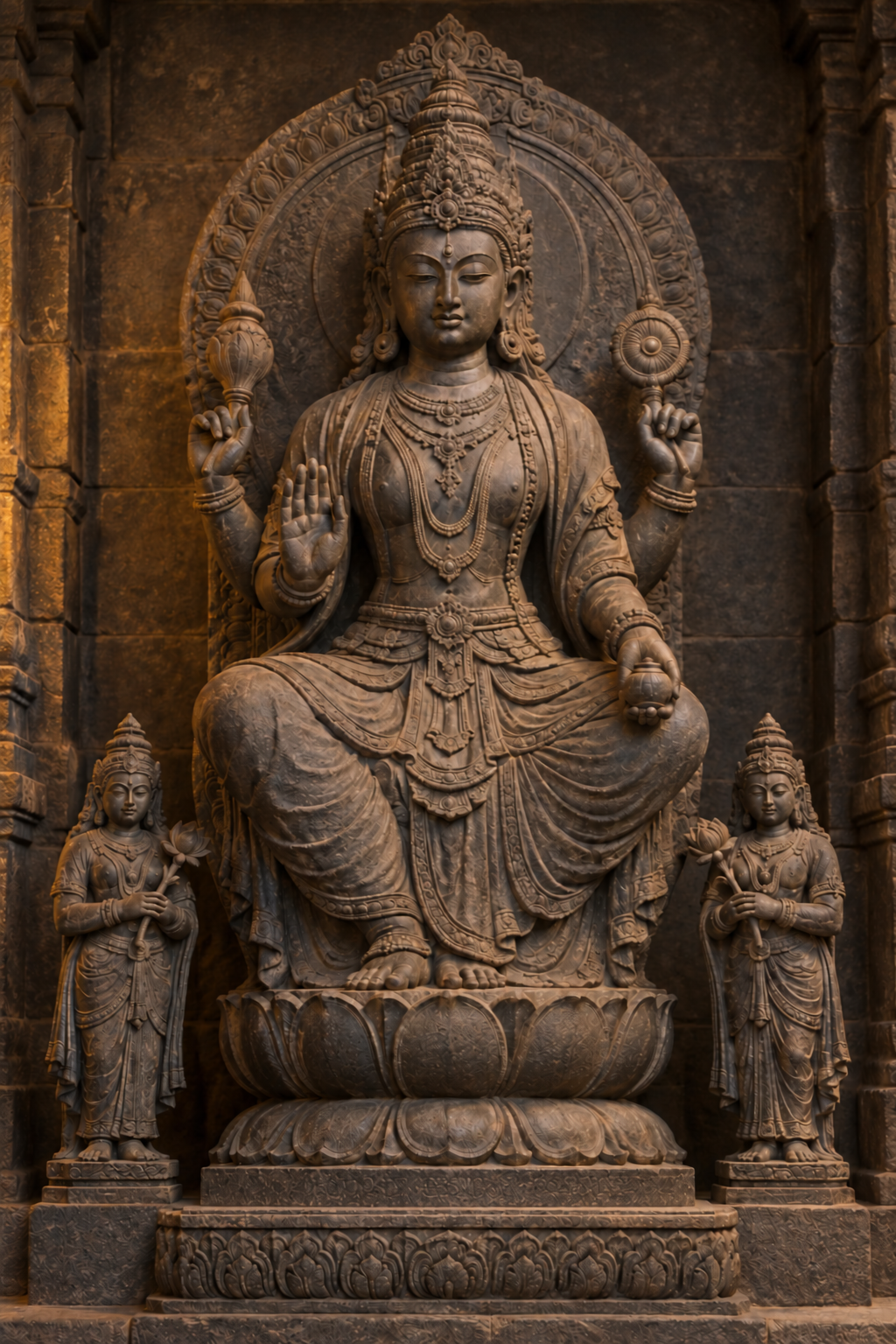
Sacred iconography begins with disciplined looking. Posture, gesture, material and attributes are not random artistic choices, but that does not mean every feature has one explanation that applies in every temple. A murti belongs to a living tradition of worship, not to a universal visual codebook detached from place.
Lord Ayyappa’s form is a useful test of this discipline. Visitors commonly notice a distinctive sitting posture that appears yogic. Calling it unusual may describe your first reaction, but it is not yet an interpretation. The unfamiliarity is a signal that you have encountered a visual grammar you do not fully know.
Start with the observable statement: the deity is seated in a posture perceived as yogasana. You may then notice that the form directs attention toward stillness, composure and disciplined presence. Keep that as a careful reading rather than presenting it as the shrine’s definitive doctrinal explanation. For that, you need the vocabulary and teaching of the relevant Ayyappa tradition.
Use four checks before explaining a sacred pose to someone else:
- Describe before interpreting. State what is visibly present before attaching ideas to it.
- Ask for the local name. A posture or form may have a traditional designation that is more precise than an outsider’s description.
- Look for ritual context. Ask whether the form is explained through worship, vrata, recitation, festival practice or temple teaching.
- Mark the reach of the explanation. Say whether it is associated with this shrine, one lineage or a more widely shared understanding. Do not turn one local answer into a claim about every Ayyappa temple.
This approach protects you from two opposite mistakes. One is to dismiss the posture as strange. The other is to assign a polished symbolic meaning without evidence and then repeat it as established tradition. Reverence requires more than admiration; it requires accuracy.
Keep sacred narrative, visual fact, belief and history distinct
Temple discussions often become confused because several kinds of statements are blended into one. You can respect a tradition more fully when you identify which kind of claim you are making and choose the right words for it.
| Register | Question it answers | Careful way to express it |
|---|---|---|
| Sacred narrative | Why is the deity present here? | “Local tradition recounts…” or “The sthala puranam relates…” |
| Visible feature | What can you actually observe? | “The deity is represented in a seated, yogic-looking posture.” |
| Devotional belief | What do worshippers trust or seek? | “Devotees believe…” or “Worshippers approach the shrine for…” |
| Historical claim | What can be dated or independently corroborated? | Name the inscription, record, material evidence or reliable documentation that supports the claim. |
These registers do not have to compete. A sacred account can orient worshippers to the meaning of a place even when it is not presented as a datable chronicle. Historical inquiry can investigate construction, patronage, inscriptions and changes in practice without deciding whether devotion is spiritually valid. Trouble begins when a person inflates local belief into demonstrated history or dismisses sacred narrative because it answers a different kind of question.
The verbs you use matter. “Recounts” identifies a sacred narrative. “Shows” identifies a visible feature. “Believe” identifies devotional confidence. “Documents” should be reserved for evidence you can actually name. This small verbal discipline allows you to speak sympathetically without claiming more than you know.
Use this five-step method inside a temple
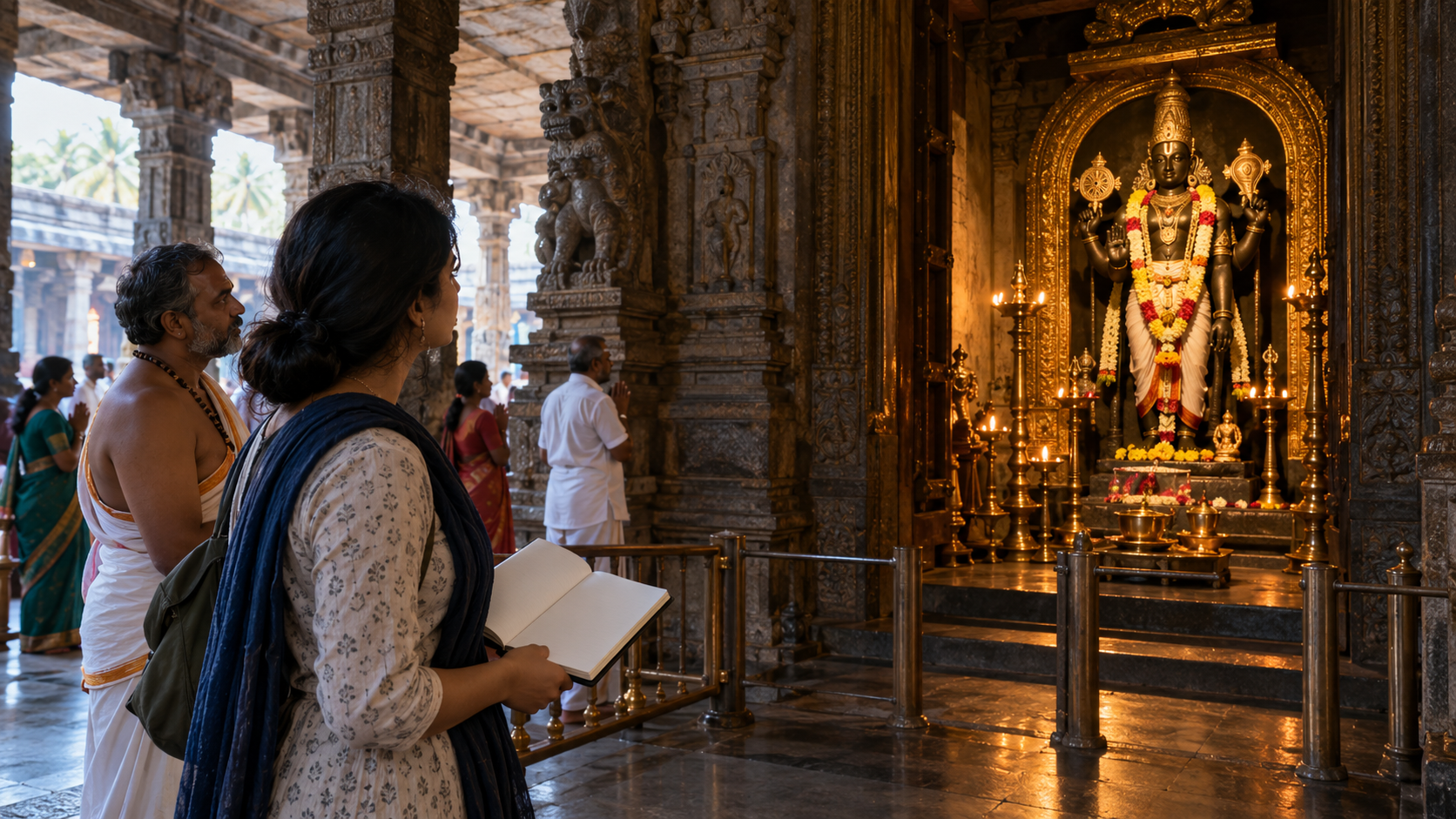
You do not need to become an art historian before your next visit. You need a repeatable way to notice what the temple places before you.
- Learn the exact form and place-name. Read the temple notice or ask respectfully how the deity and site are locally named. Similar divine names do not make two shrine traditions interchangeable.
- Record what you see without embellishment. Note the posture, material and setting that are actually visible or explicitly identified. Separate these observations from meanings you have heard elsewhere.
- Ask three neutral questions. How did the deity become present here? Why is the murti represented in this form? How do devotees traditionally approach the deity? Neutral questions invite instruction instead of forcing the answer you expected.
- Preserve the level of certainty. If one person gives an explanation, attribute it as that person’s or community’s understanding until you can confirm its wider standing. Do not convert a conversation, social-media caption or personal intuition into pan-Hindu doctrine.
- Let inquiry serve darshan. If you have come to worship, stop collecting information long enough to attend to the sacred presence. The purpose of learning the lore and iconography is deeper recognition, not the accumulation of temple trivia.
If you later write or speak about the visit, keep the same order. Introduce the place, state the local account, describe the form and only then discuss meaning. That sequence keeps the deity rooted in the shrine rather than turning the shrine into a backdrop for a generic explanation.
Key takeaways
- A sthala puranam explains why a divine presence belongs to a particular place; it is not merely a general story about the deity.
- Retain local terms such as putta matti alongside their translations because material and vocabulary can be part of the shrine’s identity.
- Describe a murti’s posture before interpreting it, and confirm the exact meaning within the relevant temple or lineage.
- Say that devotees believe their desires are fulfilled; do not turn devotional trust into a guaranteed outcome.
- Keep sacred narrative, visible fact, lived belief and historical evidence in distinct but mutually respectful registers.
At your next temple, choose one local term and one visual feature to understand properly. Record each exactly, ask how the tradition explains it and use language that preserves the difference between what is recounted, what is seen, what is believed and what is historically documented. That modest practice will make your encounter more attentive and your account of the shrine more trustworthy.
References
- Hindu Pad – Sthala Puranam of Komuravelli Mallikarjuna Swamy Temple
- Hindu Pad – Significance of Sitting Posture of Ayyappa

Leave a Reply
You must be logged in to post a comment.