
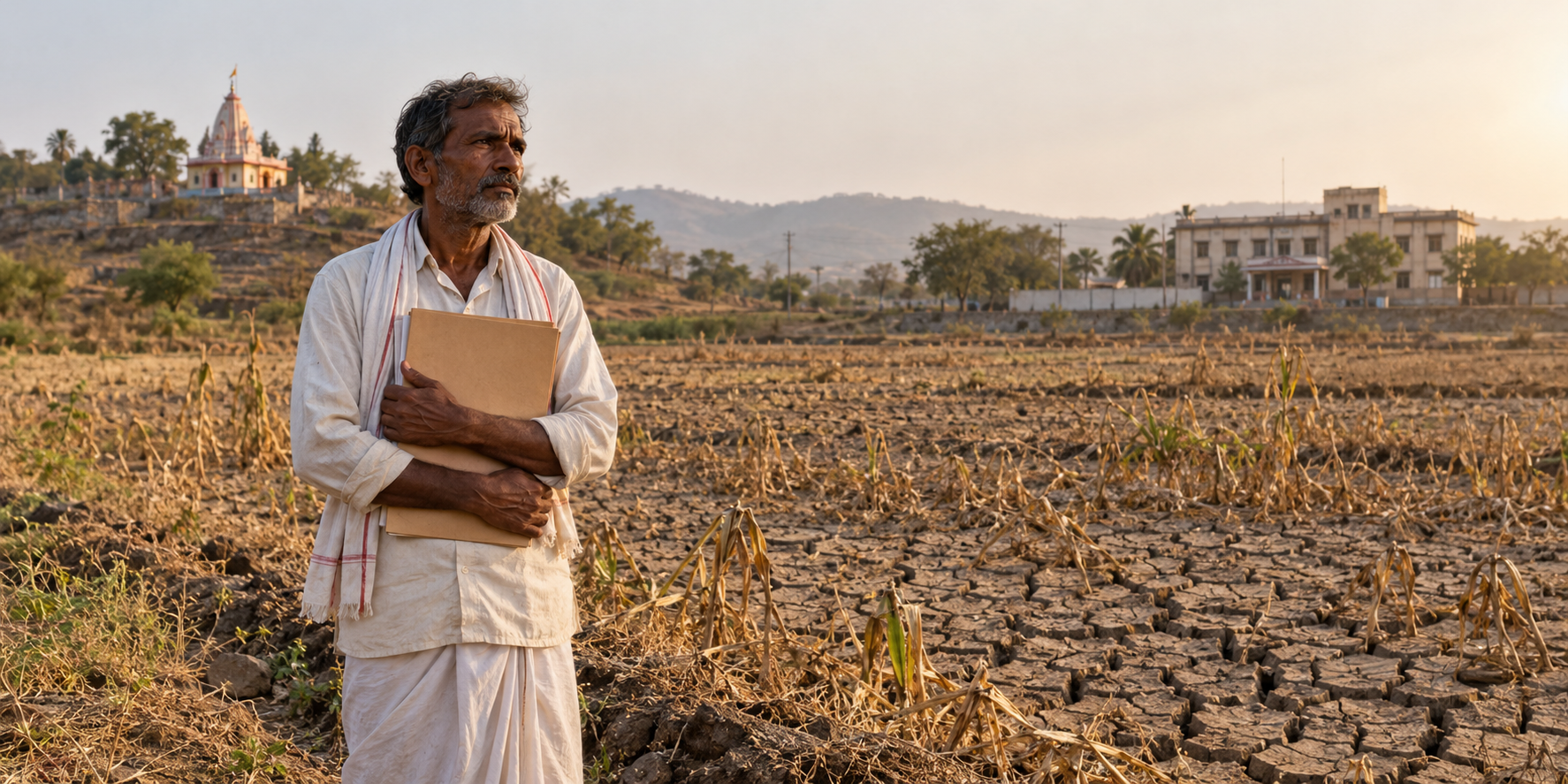
If you cultivate Devasthan inam land in Maharashtra, your drought-relief claim may be stalling before anyone assesses the loss itself. A Farmer ID cannot be issued, the land record identifies the Devasthan rather than the cultivator, or an official simply says that assistance is unavailable. Your first task is to turn that verbal obstruction into a documented case showing who cultivated the land, where the process stopped, and what decision you are requesting.
The Maharashtra Mandir Mahasangh has called for immediate compensation, removal of Farmer ID obstacles, and action where officials deny government assistance. The demands were raised in Palus and Miraj amid severe drought conditions. They establish that cultivators face a serious administrative grievance; they do not, by themselves, prove that compensation has been sanctioned or that every cultivator qualifies.
First separate the public demand from an approved entitlement
Do not begin with the assumption that a public demand for compensation is the same as a government order granting it. Before you spend time assembling forms, establish the current administrative position for your location and claim.
- Has drought assistance actually been announced for the affected area, crop, and relevant cultivation period?
- Do the applicable criteria recognize the actual cultivator of Devasthan inam land, and what evidence is accepted to establish that role?
- Is a Farmer ID mandatory for the claim, or is there an official correction, verification, or alternative submission route?
- Is your case being rejected on eligibility grounds, or is the application merely unable to move through the identification system?
- Which office can give you the applicable order, checklist, or written reason for refusal?
These questions prevent two different problems from being mixed together. If no relief has been formally approved for your circumstances, the immediate work is representation for inclusion and compensation. If assistance exists but you cannot apply because of the Farmer ID or land-record structure, the work is administrative correction and documented escalation.
An oral refusal is not enough to identify the obstacle. Note the date, office, official designation, application or reference number, and the exact reason communicated to you. Then submit a short written request asking the office to confirm the applicable criterion and the next permitted step. A stamped copy, inward number, or official digital acknowledgment is far more useful than a later disagreement about what someone said at a counter.
Treat the Farmer ID problem as its own bottleneck
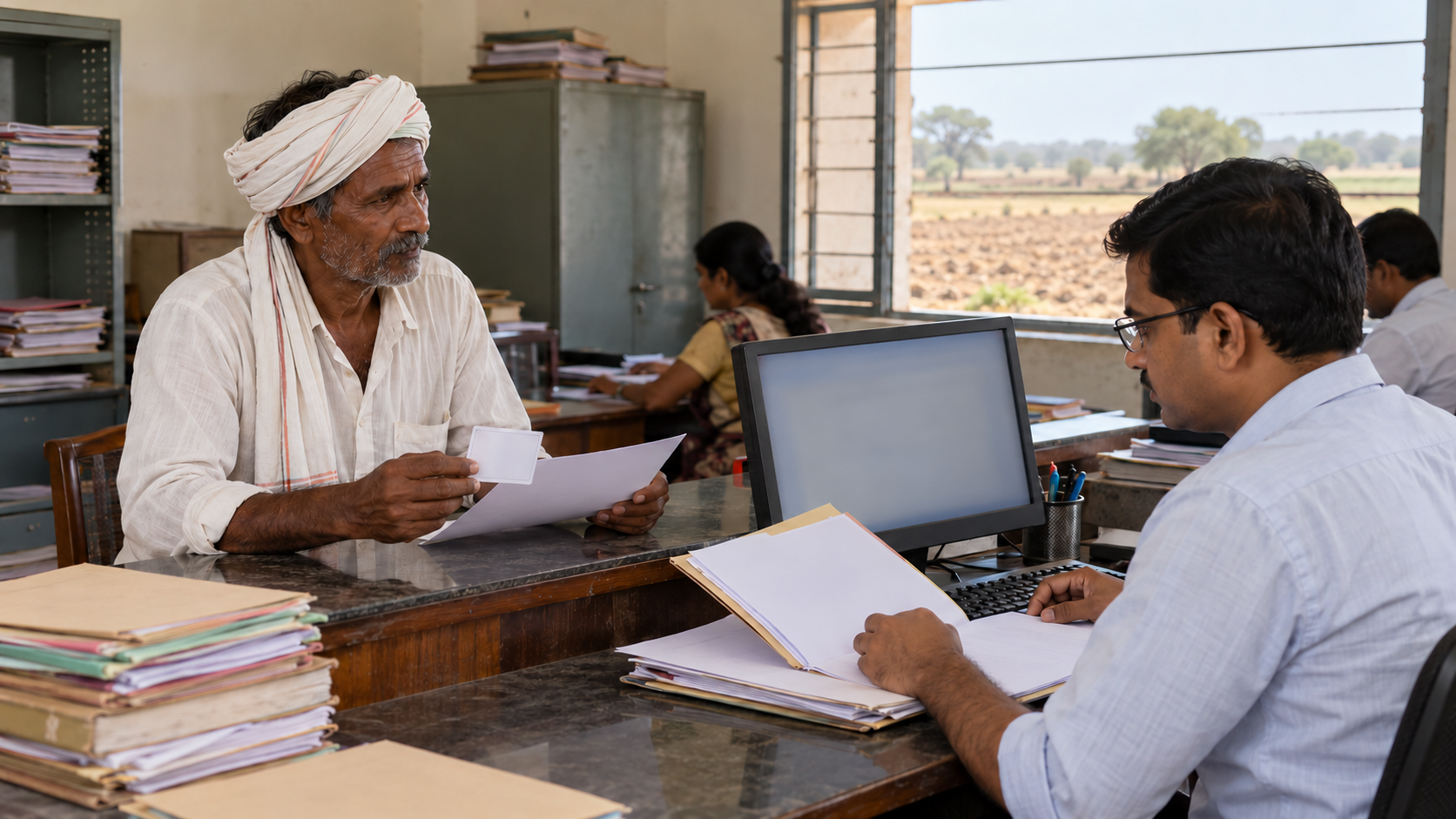
The reported dispute is not only about the severity of drought. It also concerns hurdles in issuing Farmer IDs to people cultivating Devasthan inam lands. That distinction matters. Evidence of cultivation or crop loss will not resolve an identification failure if the government system cannot connect the cultivator to the parcel.
Create a simple event log and follow the blockage from the first failed step:
- Write down exactly where the process stopped: registration, identity verification, land-record matching, Farmer ID generation, relief application, or payment processing.
- Preserve every available reference number, receipt, message, screenshot, rejection entry, and correction request. Record the date beside each item.
- Ask whether the failure requires a data correction, an official verification of cultivation, a mapping of the cultivator to the land, or a decision on eligibility. Do not accept a vague instruction to return later.
- Request a written reason if the office will not issue or process the Farmer ID. Ask which rule, order, or system requirement produces the refusal.
- If you escalate the case, carry forward the same facts and reference numbers. A consistent chronology is easier to examine than repeated applications containing different descriptions.
Do not declare yourself to be the owner merely to make a portal accept the application if ownership rests elsewhere. A technical obstacle does not justify a false declaration, and an inaccurate statement could create legal or financial exposure beyond the relief claim. Ask for the proper correction or verification route instead.
Build a file that proves cultivation without confusing ownership
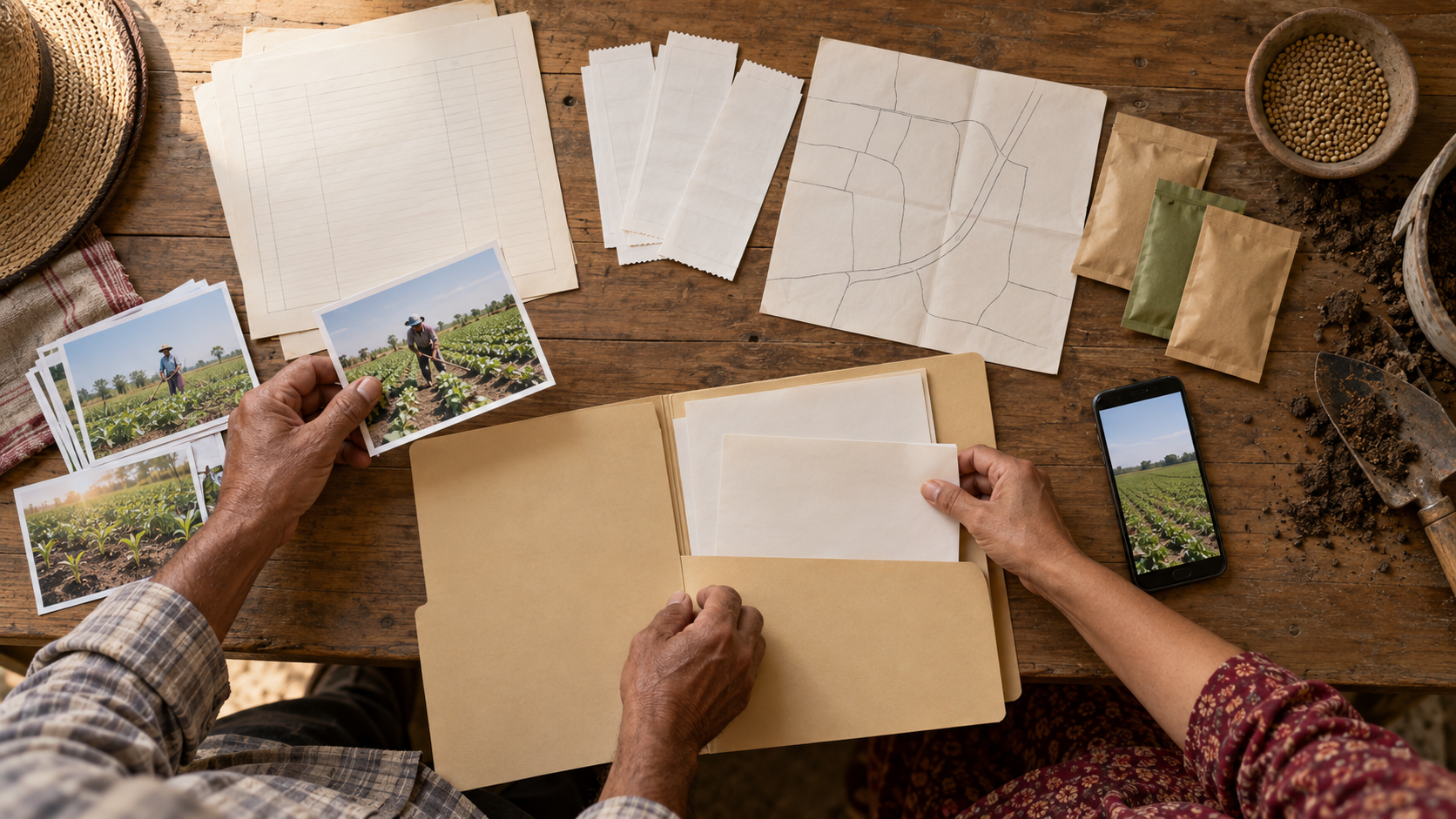
A useful claim file keeps three questions separate: which parcel is affected, who actually cultivated it, and what assistance is being requested. Devasthan ownership and cultivator eligibility are not automatically the same legal question. Protecting the temple endowment and recognizing the cultivator’s drought exposure need not be treated as opposing goals.
Exact document requirements may differ by scheme and office. Ask for the official checklist rather than assuming every item below is mandatory. Within that limit, gather the genuine records you already have:
- Your identity and current contact details.
- Available records identifying the land parcel and its recorded status.
- Any genuine document showing the basis on which you cultivate the land, including permission, an agreement, an entry in an official record, or another locally accepted record if one exists.
- Evidence of actual cultivation, such as dated crop photographs, input purchases, produce records, or other traceable material relevant to your case.
- Any official inspection, crop-loss assessment, or drought-related record already created for the parcel.
- The complete Farmer ID trail: attempts to register, correction requests, error messages, acknowledgment numbers, and written or recorded refusals.
- Copies of earlier relief applications, representations, and replies.
Put the documents in date order and add a one-page index. Mark clearly which records show ownership, which show cultivation, and which show the administrative blockage. This helps an official examine the real claim without treating every document as proof of the same thing.
Never alter a land description, backdate a document, sign a blank form, or conceal a dispute over cultivation. If your case depends on contested title, tenancy, possession, or authority from a temple body, obtain advice from a qualified local lawyer or the appropriate revenue authority before making a declaration. Drought relief should not be pursued by creating a second dispute that may be harder to resolve.
Turn a refusal into a decision that can be reviewed
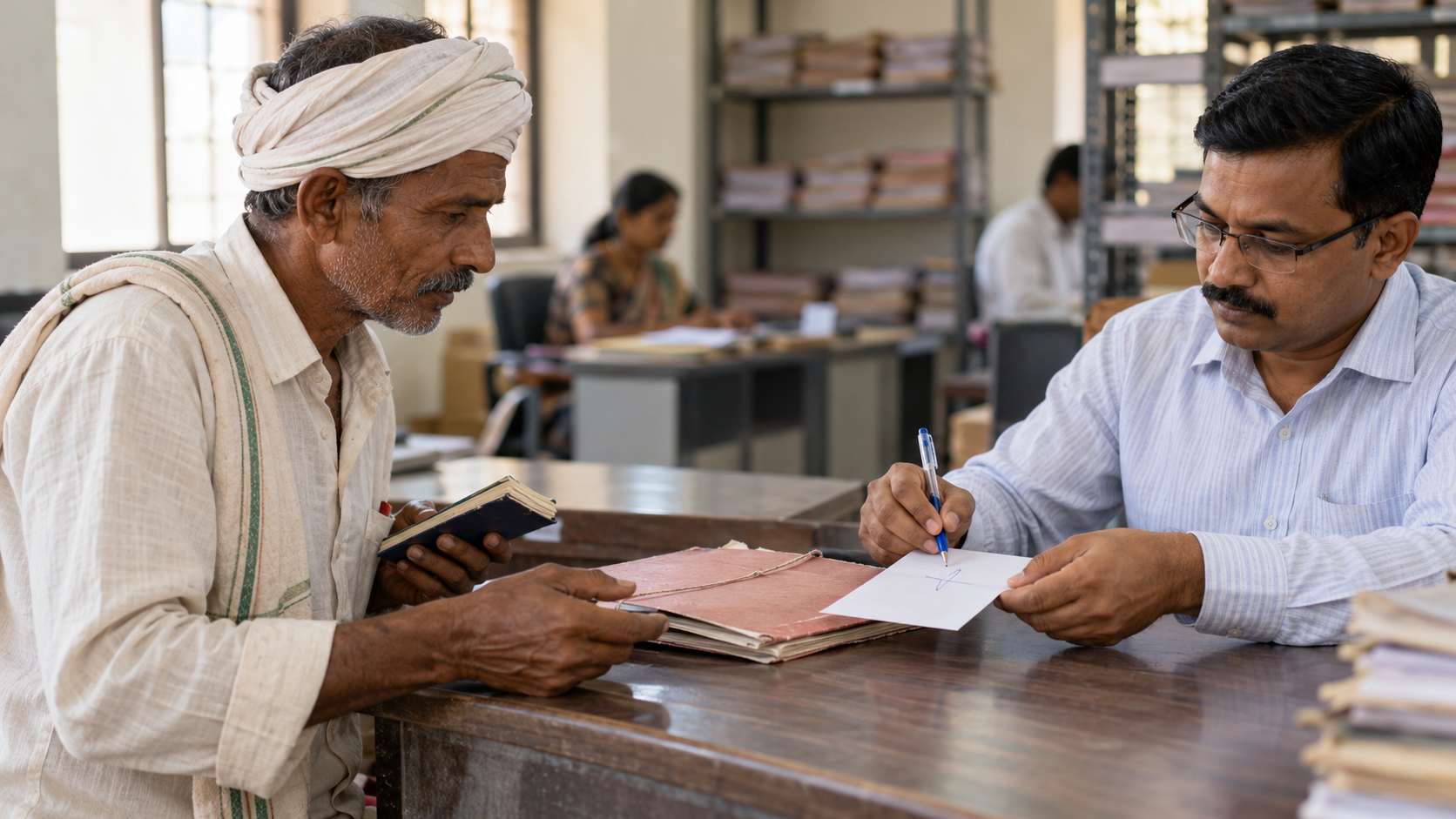
Your representation does not need elaborate language. It needs a precise request and a traceable record. A one-page submission can follow this sequence:
- Use a subject line that names the issue: Farmer ID or drought-relief access for a cultivator of Devasthan inam land.
- Identify yourself, the land parcel, and your claimed capacity as the actual cultivator. Do not describe yourself as the owner unless that is accurate.
- State when and where you attempted the Farmer ID or relief process, including every reference number available.
- State the precise objection or system failure. If the reason was given only orally, label it as an oral response and record the date and official designation.
- Request a defined outcome: completion or correction of the Farmer ID process; acceptance and verification of the relief claim; or a written rejection stating the applicable criterion and available grievance route.
- Attach an indexed set of copies and obtain a dated acknowledgment. Keep the originals unless an authorized process expressly requires otherwise.
If several cultivators face the same problem, use one collective cover letter but attach a separate fact sheet and document index for each person. Group the cases by failure type: Farmer ID cannot be created, land details cannot be matched, a relief claim is refused despite an ID, or no written reason is supplied. This turns a broad complaint into a pattern that administrators can examine.
Calls for strict action against officials accused of denying assistance should also be handled carefully. Accountability becomes credible when each allegation identifies the applicant, office, date, attempted process, exact response, and supporting record. Verify those facts before naming an individual or alleging misconduct. A mistaken personal accusation can distract from the underlying failure and expose the complainant to avoidable risk.
Key takeaways
- The current call for immediate compensation is a demand for government action, not proof that every claim has already been approved.
- Identify whether your obstacle is eligibility, a Farmer ID failure, a land-record mismatch, or a refusal to accept the application. Each requires a different response.
- Show actual cultivation without making an inaccurate claim of ownership over Devasthan land.
- Keep a dated chronology, copies of genuine supporting records, and proof that each representation was received.
- Ask for a written decision, the applicable criterion, and the permitted grievance route whenever an official refuses assistance.
- For a collective campaign, document individual cases in a consistent format so that the scale and pattern of the obstruction can be verified.
Your next move should be concrete: prepare the one-page chronology, arrange the supporting copies, and submit one clearly worded request for the blocked action or a written reason for refusal. If the answer turns on disputed land rights, seek qualified local legal or revenue advice before signing anything. If it turns on the Farmer ID system, insist on the official correction, verification, or rejection route. Knowing which barrier you face is what converts a general demand for justice into a case that can be acted upon.
References

Leave a Reply
You must be logged in to post a comment.