
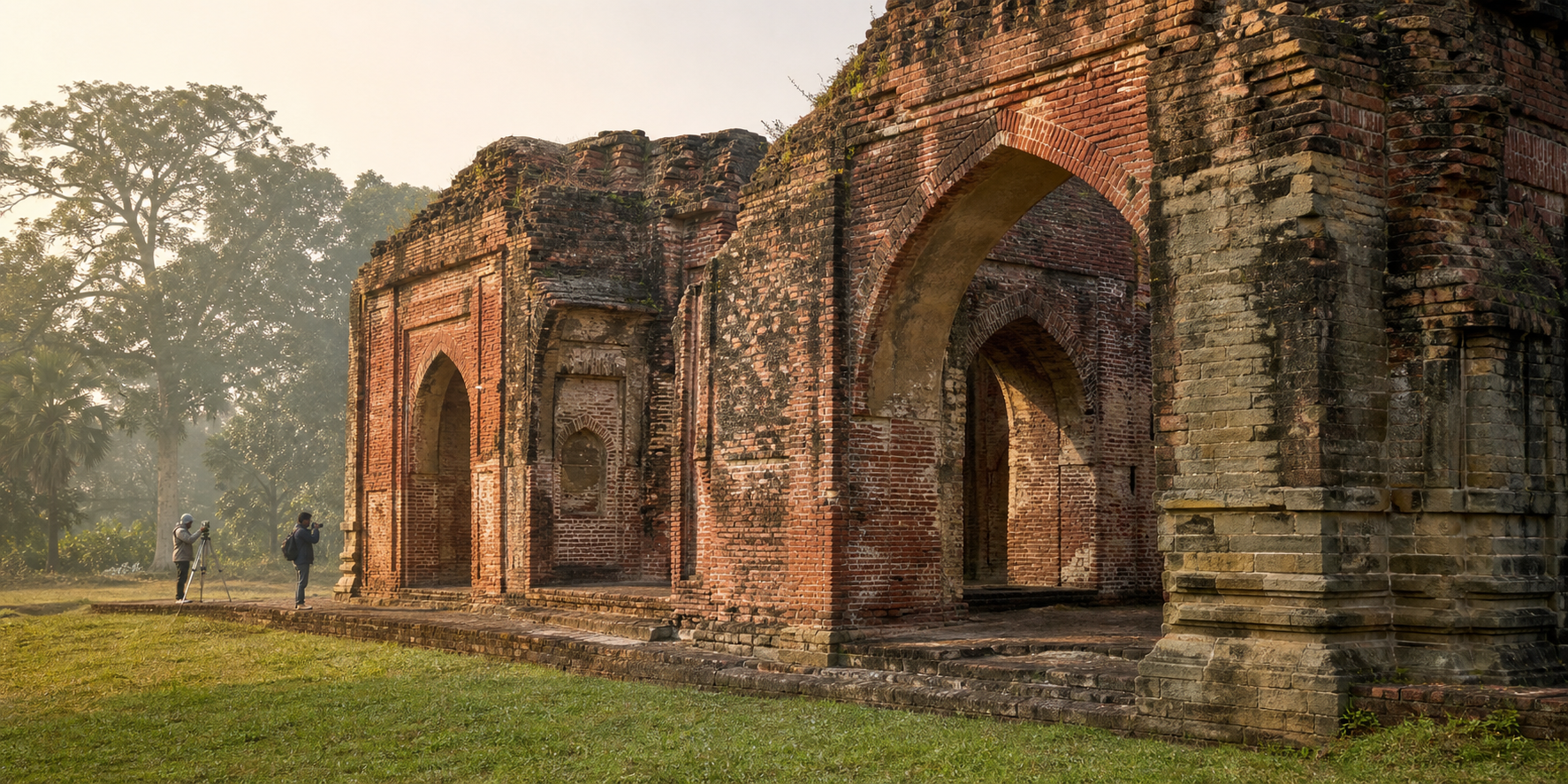
If you are trying to decide whether the Adina Mosque dispute is a documented case of temple recovery or an unproven demand, keep two truths together: the architectural claim is serious enough to investigate, but the facts currently asserted do not yet prove that an Adinath Temple stood at the site or establish a right to alter it.
That distinction protects both Dharma and history. A recovery claim gains credibility through a verifiable chain from object to context, date, identity and remedy. Repetition, political backing and the size of a gathering cannot replace that chain.
What Hindu organisations are claiming in Malda
At the roughly 650-year-old Adina Mosque in Malda, West Bengal, Hindu organisations supported by BJP leaders have begun public rituals outside the structure. They have also announced a plan to enshrine a 1.5-tonne Shivalinga.
The campaign rests on three separate propositions:
- A public action is under way: rituals have been held outside the mosque and a Shivalinga installation has been proposed.
- A historical interpretation has been advanced: the organisations cite Pala-Sena-era architectural relics embedded within the structure as evidence of an earlier Hindu sacred site.
- A remedy has been requested: central authorities are being urged to recognise and restore what the organisations describe as original worship rights.
You should not collapse those propositions into one another. Holding a ritual proves that a present-day campaign exists. An embedded architectural element may support an inquiry into an earlier structure. Neither fact, on its own, proves the identity of an Adinath Temple or decides present worship rights.
Why embedded sacred material matters but cannot settle the case
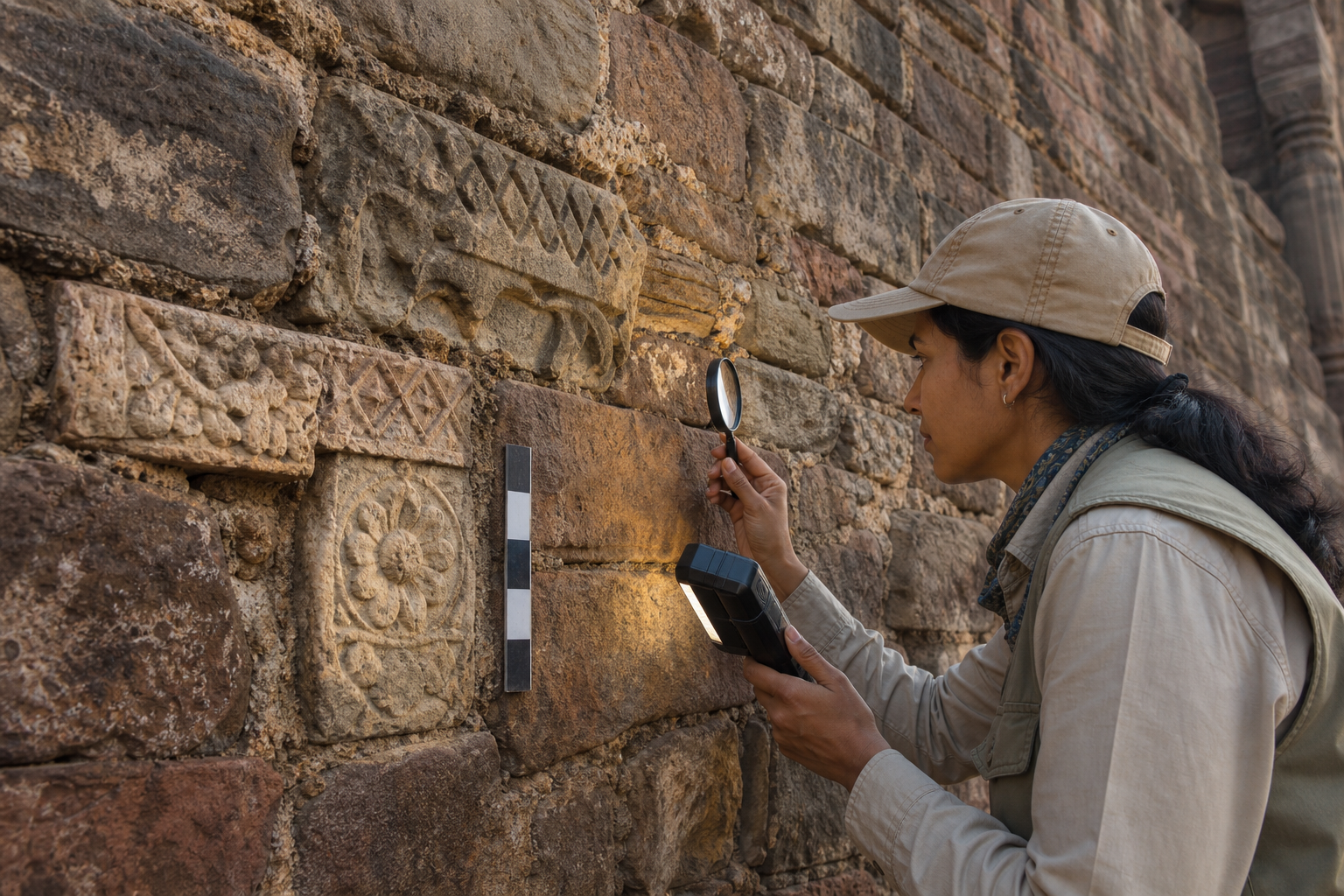
Carved elements from an earlier sacred structure inside a later building are historically relevant. They can preserve evidence that would otherwise have disappeared. Ignoring them because they complicate an accepted narrative would be poor historical practice.
But an embedded fragment cannot identify its original building by itself. Investigators must distinguish among material left in its original position, material reused from a structure at the same site, and material transported from somewhere else. Each possibility leads to a different conclusion.
Even if particular elements are eventually confirmed as Pala-Sena-era work, dating them would answer only one question. It would not automatically establish:
- that the elements belonged to a temple dedicated specifically to Adinath;
- that the original structure occupied the precise footprint of the present mosque;
- how, when or why the earlier material came to be incorporated;
- whether an intact sanctuary, a ruined structure or loose architectural material existed when the mosque was built; or
- what religious access or physical intervention should be permitted now.
This is not a reason to dismiss the claim. It is a reason to formulate it precisely. A strong Dharmic case does not ask you to leap from the presence of a carved stone to a complete historical narrative. It shows every link between the two.
The evidence needed to establish an Adinath Temple
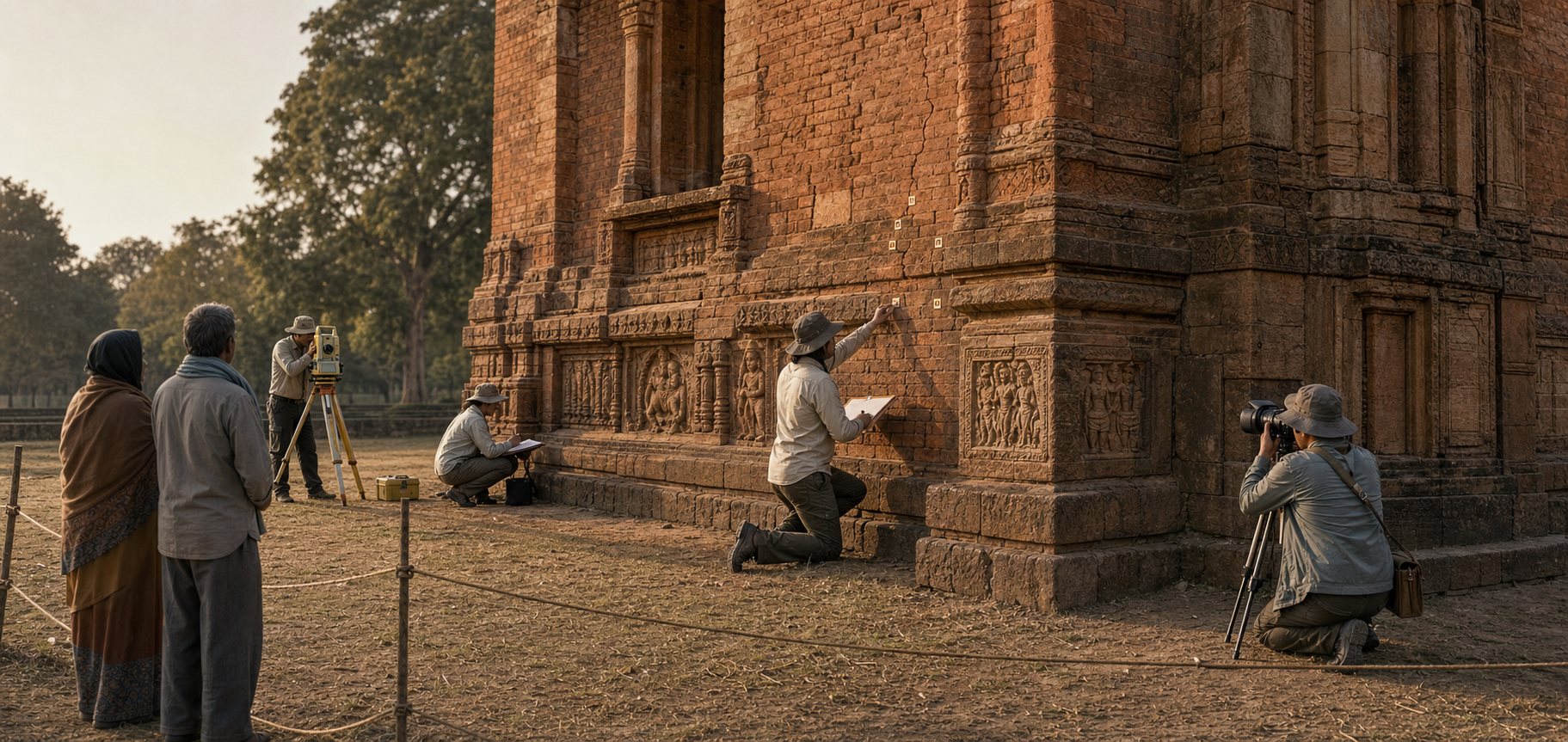
If the restoration demand is to survive scholarly, administrative and legal scrutiny, supporters should seek an object-by-object record rather than rely on a few visually striking features. A credible assessment would need to address six questions.
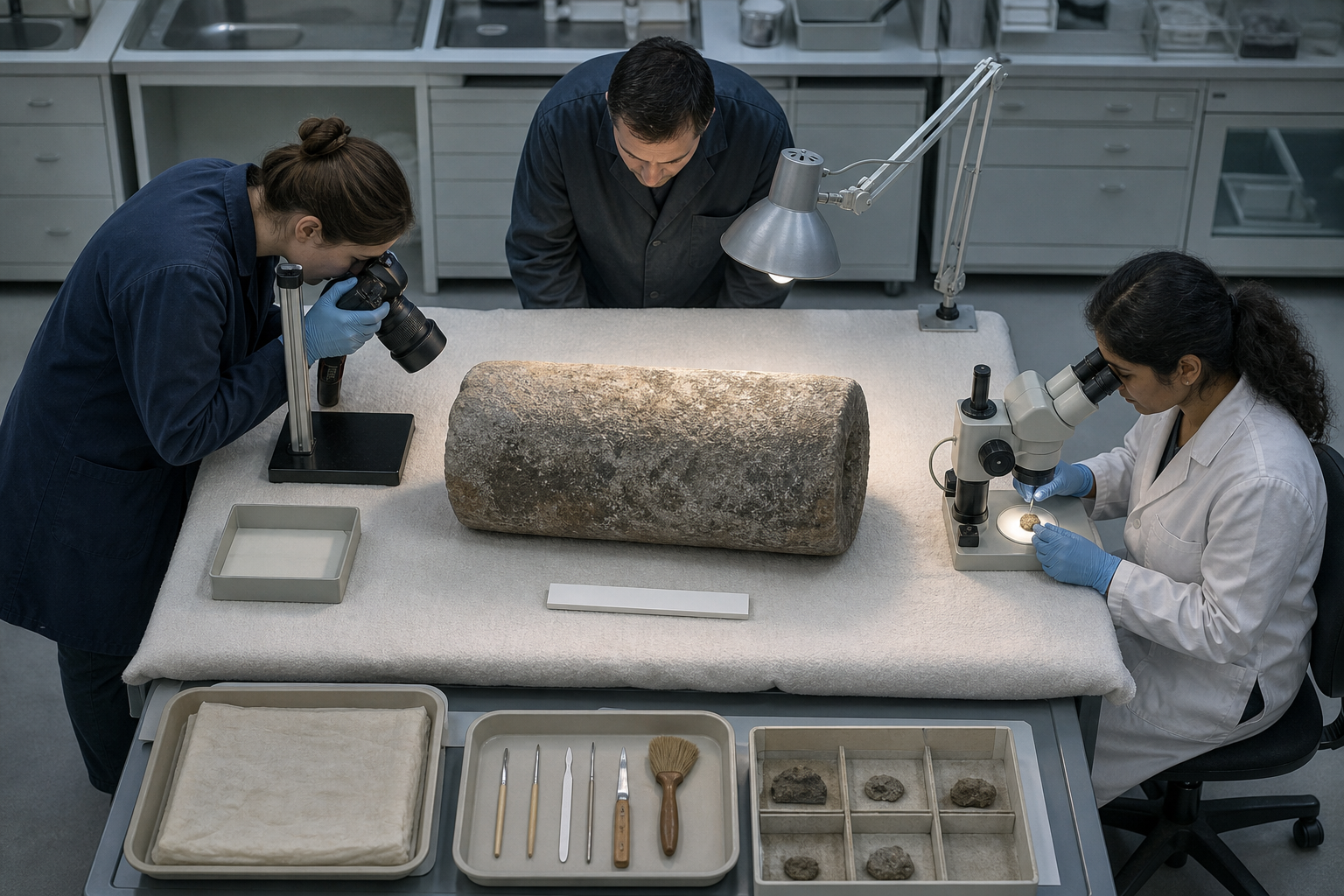
- What exactly survives? Each claimed pillar, carving, block or structural feature should be photographed, measured, described and assigned a fixed location.
- Is it in its original position? The relationship between the element, the surrounding masonry, the foundations and the broader building sequence matters as much as its appearance.
- How is it dated? A period label should rest on stated architectural, iconographic, epigraphic or archaeological reasoning, with comparable dated material identified.
- What establishes the religious identity? A general temple association is not the same as proof of an Adinath dedication. The argument must identify the inscriptions, icons, symbols, records or other evidence that make that attribution possible.
- What was the sequence of construction and reuse? Investigators must explain which fabric came first, which elements were added later and whether the physical relationships support that sequence.
- Can the findings be independently examined? Measurements, photographs, readings and reasoning should be available for qualified scrutiny. A conclusion that cannot be checked will remain vulnerable to both honest criticism and political dismissal.
Photographs can draw attention to a feature, but they are only a starting point. A tightly cropped image may reveal carving while concealing whether the stone is structural, decorative, displaced or recently altered. Context converts an interesting object into historical evidence.
The proposed 1.5-tonne Shivalinga should also be kept separate from the authentication question. Installing a sacred object can express devotion and a claim to worship, but it cannot date masonry or identify the earlier building. Moving and placing an object of that mass without authorisation, structural planning and conservation supervision could injure people or damage historic fabric. The safe sequence is documentation, determination, conservation planning and only then an authorised physical action.
Temple restoration and worship rights are different remedies
The word “restoration” can hide several distinct demands. It may mean documenting temple-origin material, conserving exposed remains, publicly recognising an earlier sacred layer, permitting limited worship, reconstructing a lost structure or installing a new object of worship. These outcomes are not interchangeable.
A finding that some stones came from a Hindu temple could justify preservation and historical acknowledgement without, by itself, proving the precise temple identity or deciding present access. Conversely, uncertainty about worship rights is not a sound reason to avoid examining the physical evidence. The historical question and the remedy question should proceed in sequence, even when they are emotionally connected.
If you support the campaign, ask its organisers to state the immediate request in exact terms. Is the first objective a documented assessment, recognition of a specific temple identity, permission for ritual access, or physical installation of the Shivalinga? Bundling all four together makes the evidentiary burden unclear and allows a refusal of one demand to be portrayed as a rejection of every claim.
How to advocate for investigation without weakening the cause
You do not have to choose between cultural memory and evidentiary discipline. In a contested heritage case, disciplined advocacy is what prevents cultural memory from being dismissed as rhetoric.
- Use accurate verbs. Say that organisations “claim,” “identify” or “cite” Pala-Sena-era temple material until a published assessment verifies its date, provenance and identity. Do not turn an attribution into an established finding.
- Ask for a documented dossier. Seek an inventory, measured locations, full-context photographs, proposed dates, iconographic readings and the reasoning connecting the material to Adinath.
- Protect the evidence. Do not scrape, clean, mark, climb on, remove or reposition disputed features. Such actions can destroy tool marks, surface deposits and construction relationships that might help establish the case. They can also create safety and legal exposure.
- Separate devotion from proof. Religious observance may sustain a community’s claim, but the historical case must stand on evidence that a sceptical examiner can inspect.
- Request a reasoned institutional response. A useful demand asks authorities to address specified features and questions, not merely to accept or reject a broad narrative.
- Keep the claim site-specific. Evidence concerning one structure should not become an accusation against an entire present-day community. Sweeping claims distract from the material record and make a lawful heritage inquiry harder.
This approach is not a retreat from the restoration claim. It is how supporters give the claim a form capable of being tested, defended and acted upon.
Key takeaways
- Hindu organisations have held rituals outside Adina Mosque, proposed a 1.5-tonne Shivalinga and requested restoration of claimed original worship rights.
- The cited Pala-Sena-era elements are a legitimate reason to seek careful investigation, but embedded material alone cannot prove an Adinath Temple.
- Date, original location, construction sequence, religious identity and provenance must be established separately.
- Historical recognition, conservation, worship access and physical reconstruction are different remedies with different evidentiary and administrative requirements.
- The most constructive immediate demand is a transparent, object-by-object assessment that protects the structure and permits independent scrutiny.
If you want to help move this cause forward, ask one concrete question: where is the context-by-context record connecting the surviving material to an Adinath sanctuary at this site? A credible answer can move the matter from assertion toward determination. Until that record exists, defend the right to investigate, protect every disputed feature and claim no more certainty than the evidence can carry.
References
