
-
Ishtasiddhi by Vimuktatman: A Timeless Advaita Masterwork Illuminating Non-Dual Wisdom

Ishtasiddhi by Vimuktatman (9th–10th century CE) is a landmark Sanskrit treatise in Advaita Vedanta that unites rigorous reasoning with Upanishadic insight. It clarifies core non-dual themesBrahman, Atman, māyā, and the role of knowledge in liberationthrough a fair-minded purvapaksha–siddhanta method. Readers gain a dependable map of Advaita epistemology while experiencing a gradual movement from conceptual complexity…
-
Beyond the Seeker’s Paradox: Unveiling “You Are That” and dissolving the illusion of separation

This essay explores the Advaita Vedānta insight expressed in “You cannot know That; You are That,” showing how objectifying the Absolute sustains the illusion of separation. It clarifies why tat tvam asi affirms identity rather than distance and how śravaṇa–manana–nididhyāsana stabilize non-dual understanding. Practical guidance highlights self-inquiry, meditation, and breath awareness as means to quiet…
-
You Are Already That: Effortless Realization of Infinite Pure ConsciousnessA Dharmic Perspective

This article clarifies a core Vedantic insight: infinite pure consciousness is not something to attain but to recognize. It explains how Hindu philosophy, especially Advaita Vedanta and the Upanishads, frames self-realization as effortless recognition rather than forced achievement. It highlights convergences with Buddhism, Jainism, and Sikhism, reinforcing unity in spiritual diversity. Practical guidance shows how…
-
Anatmabuddhi Explained: Unmasking the Not-Self Illusion and Awakening to Self-Realization

Anatmabuddhi names the intellect’s tendency to mistake the not-self for the Self, a root cause of anxiety, craving, and conflict. This article explains the concept in clear, accessible terms and connects it to allied insights in Buddhism’s anatta, Jainism’s anekantavada, and Sikh perspectives on ego. Readers gain practical toolsviveka, dhyana, ethical living, and a short…
-
Unveiling the Unmanifest (Avyakta): A Clear Guide to the Eternal Self in Hindu Thought
This article clarifies the Hindu concept of the unmanifest”avyakta”as reality beyond sensory perception and change. It explains how classical sources like the Upanishads and the Bhagavad Gita describe a timeless ground of being that illumines experience without becoming an object of experience. Readers learn how practices such as pratyahara and meditation reveal a lucid, steady…
-
Unveiling the True Source of Energy: Matter, Consciousness, and Dharmic Unity
Energy in daily life invites a deeper question: what truly animates matter? Dharmic traditions suggest that matter is latent potential, activated by living energy and ultimately grounded in consciousness. Hindu philosophy and Vedanta speak of Brahman and Shakti; Buddhism emphasizes dependent origination and clarity of awareness; Jainism distinguishes jiva’s inherent energy from material accretions; Sikh…
-
Katha Upanishad’s Naciketas and Yama: A Stirring Quest for Death’s Secret, Dharma, and Moksha

The Katha Upanishad frames Naciketas’s encounter with Yama as a disciplined quest for truth that unites ethics and insight. The three boons structure a complete path: reconciliation and dharma, Nachiketagni as ordered action, and the inquiry into death and the Self. Yama’s teaching clarifies śreya versus preya, the chariot allegory, Om as support, and the…
-
Enlightenment Demystified: Clear Signs, One Essence, and a Unified Dharmic Path to Peace

Across Hinduism, Buddhism, Jainism, and Sikhism, realization is singular while pedagogical stages vary. Signs of enlightenment commonly include steady equanimity, spontaneous compassion, ethical ease, and a quieting of egoic narratives. Emptiness (śūnyatā) is one essence taught for different purposes, dissolving clinging and opening fearless presence. Traditions use diverse skillful meansethics, meditation, devotion, and insightto mature…
-
Gitartha Sangraha: Yamunacharya’s 32-Verse Masterpiece for Gita Clarity and Self-Realization
Gitartha Sangraha distills the Bhagavad Gita into 32 precise Sanskrit verses, offering a clear, memorable pathway through karma-yoga, jñāna-yoga, and bhakti-yoga. Composed by Yamunacharya (Alavandar), it anticipates the Vishishtadvaita contours later systematized by Ramanujacharya. The text bridges rigorous study and practical sādhanā, aiding memorization, reflection, and ethical decision-making. Its succinct form supports learners, scholars, and…
-
Vishishtadvaita on Prakriti: A Clear Guide to Nature, Matter, and Spiritual Purpose

Vishishtadvaita Vedanta understands Prakriti as the real, insentient material world governed by Ishvara. It includes both gross (sthula) forms like the body and subtle (sukshma) instruments such as mind and intellect. As the dynamic field shaped by the three gunassattva, rajas, and tamasPrakriti supports the jiva’s actions across samsara. Ethical living, devotion (bhakti and prapatti),…
-
Para Prakriti in the Bhagavad Gita: Unveiling Higher Consciousness and Inner Freedom
This article clarifies the Bhagavad Gita’s teaching on para and apara prakriti, showing how the eightfold apara field relates to body, mind, and ego, while para prakriti points to the living awareness that enlivens experience. It references key verses (7.4–7.5, 15.7) and explains their practical relevance for yoga, meditation, and ethical life. Readers gain a…
-
Right Thinking, Real Change: Hindu Dharma’s Timeless Tools to Transform Self and Society

Ancient Hindu wisdom teaches that the quality of thoughts shapes realityan insight echoed across the Bhagavad Gita, the Upanishads, and yogic psychology. This post outlines practical tools such as mindfulness, breath awareness, and values-aligned intention to cultivate clarity and compassion. It highlights how right thinking extends beyond personal wellness to strengthen social trust and community…
-
Brahmavada in the Srimad Bhagavata Purana: Unveiling Non-Dual Wisdom that Unites Dharmic Paths
This essay explores Brahmavada in the Srimad Bhagavata Purana as a non-dual (Advaita) teaching that recognizes Brahman as the Absolute while seeing the world as Brahman’s expression. It clarifies how the Purana harmonizes devotion (bhakti) and knowledge (jnāna), showing them as complementary paths to the same Truth. Readers gain an accessible understanding of Advaita Vedanta…
-
Discover Bhartru Prapancha’s Essential Bhedabheda Vedanta: A Proven Breakthrough Beyond Advaita

Bhartru Prapancha emerges as an early Vedanta thinker linked to Bhedabheda-vada, the doctrine of identity-in-difference. Despite the loss of his original texts, preserved fragments reveal a balanced vision that honors both unity and real-world plurality. This outlook complements Advaita Vedanta while highlighting the wider diversity of Vedantic schools. It also offers a shared philosophical ground…
-
Essential Dharma Wisdom: Master Acceptance and Transform Resistance into Inner Freedom

A vivid parable of the food chain illustrates a central dharmic insight: acceptance is not fatalism, but alignment with reality. Drawing from Hinduism, Buddhism, Jainism, and Sikhism, the post explains how dharma-guided action and non-attachment can reduce anxiety, deepen clarity, and build resilience. It translates core ideas from Vedanta and the Bhagavad Gita into practical…
-
Baladeva Vidyabhushana: Essential Insights into a Gaudiya Vedanta Sage’s Legacy
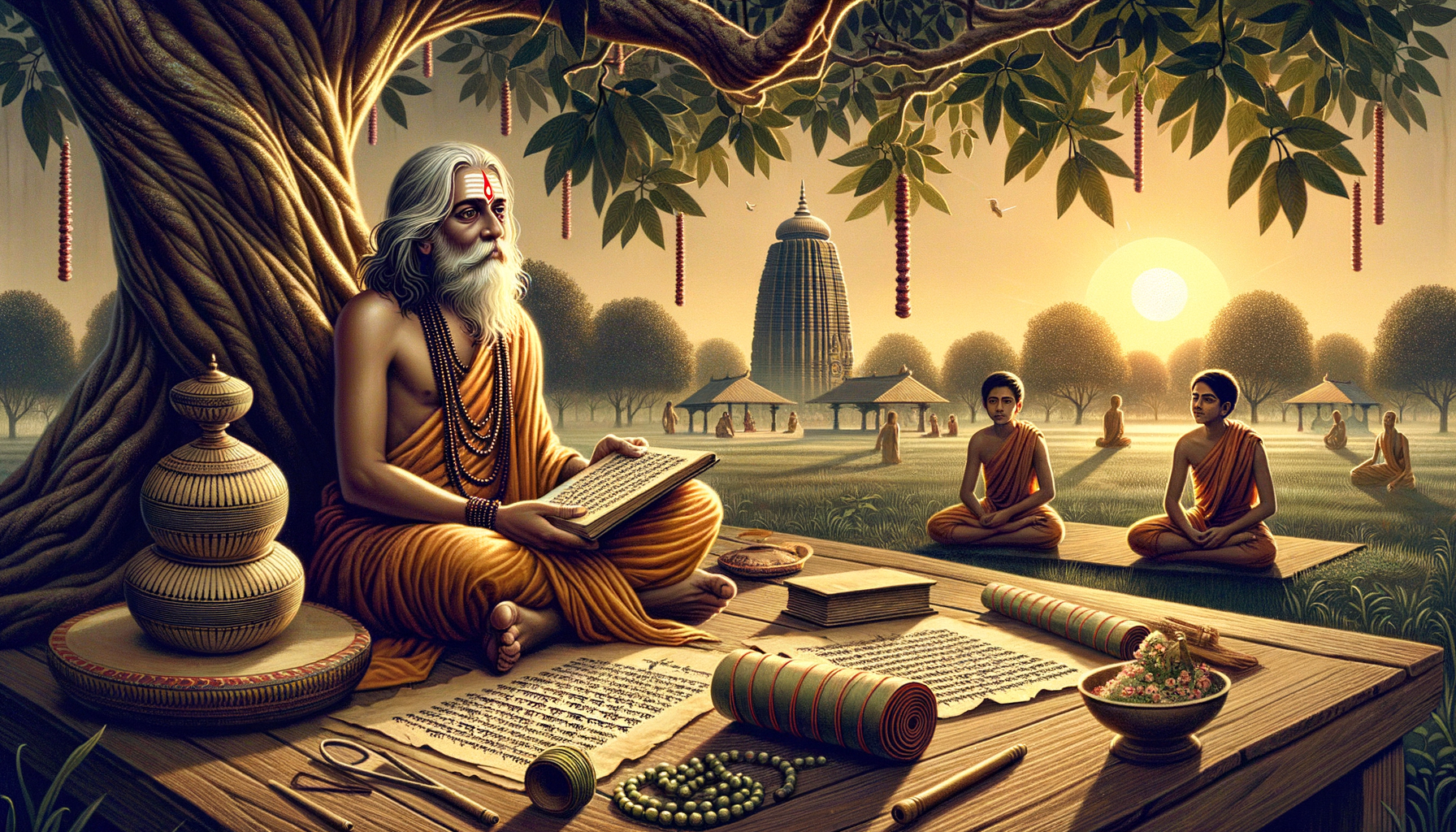
Baladeva Vidyabhushana emerges as a late eighteenth-century Gaudiya Vaishnava luminary whose life joins disciplined scholarship with living devotion. Trained under Vairagi Pitambara Dasa and Radhadamodara Dasa, author of Vedanta Syamantaka, he stands in a stream that unites Vedanta reasoning with Bhakti Tradition. His writing displays a measured Sanskrit clarity, demonstrating how scripture, ethics, and practice…
-
Discover the Ultimate Secret of the Gunas: How the Divine Transcends and Guides Them

This article explains the classic Hinduism teaching that the Divine pervades the three guṇassattva, rajas, tamasyet remains beyond them. Drawing on the Bhagavad Gita and Vedānta, it clarifies how Brahman is nirguṇa while Īśvara guides Prakṛti’s modes without being constrained. Readers gain a practical framework for recognizing and transcending the guṇas through bhakti, viveka, and…
-
Ekayana Unveiled: The Complete Path to Brahman and DharmaDiscover a Unifying Vision

Ekayana, a Sanskrit term meaning “the only path,” “one support,” or “the only refuge,” clarifies how Hindu philosophy unifies diverse practices around Brahman and Dharma. It integrates metaphysics and ethics, showing that jñana, bhakti, karma, and dhyana can form one coherent journey. Rooted in the Vedic and Upanishadic tradition and elaborated in Vedanta, Ekayana promotes…
-
Essential Vedantic Insight: Discover the Shift from ‘I am’ to ‘God is’ for Inner Freedom
This reflection explores a core dharmic insight: the practical and philosophical shift from ‘I am’ to ‘God is’or, more broadly, from ego-centered assertion to alignment with a higher truth. Drawing on Vedanta and SB 2.2.35, it highlights intelligence as a directing principle beyond ordinary control, sustained by a super self, a portion of God. The…
-
The Complete Vrātya-stōma Guide: How Schopenhauer, Emerson, Elst, Frawley Embraced Sanatana Dharma
Vrātya-stōma, a Vedic rite of reintegration, serves as a compelling symbol of Sanatana Dharma’s inclusive ethos. This article traces how Western thinkersSchopenhauer, Emerson, Elst, and Frawleyengaged the Upanishads, the Bhagavad Gita, and Vedanta to enrich global philosophical discourse. Readers will discover how dharmic principles such as ahimsa, yoga, and meditation support unity across Hinduism, Buddhism,…