
-
Dhanishta (Avittam) Nakshatra 2026–2027: Powerful, Actionable Insights on Career, Love, Wealth

Dhanishta (Avittam) Nakshatra 2026–2027 brings disciplined growth, strong partnerships, and measured risk for most natives, with distinct trajectories for Capricorn and Aquarius padas. Saturn in Pisces concludes Sade Sati for Makara padas and finalizes it for Kumbha padas, while Jupiter’s move to exalted Cancer mid-2026 reshapes alliances, career progress, and relationship outcomes. Early 2026 supports…
-
Parabhava Nama Samvatsara 2026–2027: Time-Tested Remedies, Ugadi Rituals, and Aaya‑Vyaya Insights

Ugadi on Thursday, 19 March 2026 ushers in Parabhava Nama Samvatsara, a year traditionally linked to humility, course-correction, and disciplined renewal. This comprehensive guide outlines time-tested remediesmantra, vrata, dāna, upāsana, and sevagrounded in Vedic and dharmic wisdom. It offers simple, safe Navagraha-aligned practices for each weekday, monthly cadences like Amavasya and Purnima observances, and culturally…
-
Pallava Mantras in Tantra: Power of Naming, Will, and Karma (Pallav Prayogas Explained)

This in-depth exploration clarifies what a Pallava Mantra is and how Pallav Prayogas personalize a mūla-mantra by ethically inserting a name or intention. It explains the linguistic and phonetic rules that guide such insertions, along with the ritual frameśuddhi, nyāsa, dhyāna, protective sealing, and universal dedication. The discussion foregrounds dharma, ahimsa, and consent, showing why…
-
Beyond 24×7 Devotion: A Dharmic Guide to Spiritualizing Every Daily Action

Many assume spirituality requires unbroken prayer or constant meditation. Dharmic traditions, led by the Hindu way of life, offer a more practical path: spiritualize each action through intention, ethics, and mindful presence. Grounded in the Bhagavad Gita’s teachings on Karma Yoga, īśvara-arpana-buddhi, and prasāda-buddhi, this approach consecrates work without withdrawing from responsibility. The Pañca-Mahā-Yajña translates…
-
Siddhidata Ganesha’s Right‑Coiled Trunk: Sacred Discipline, Temple Protocols, and Home Guidance
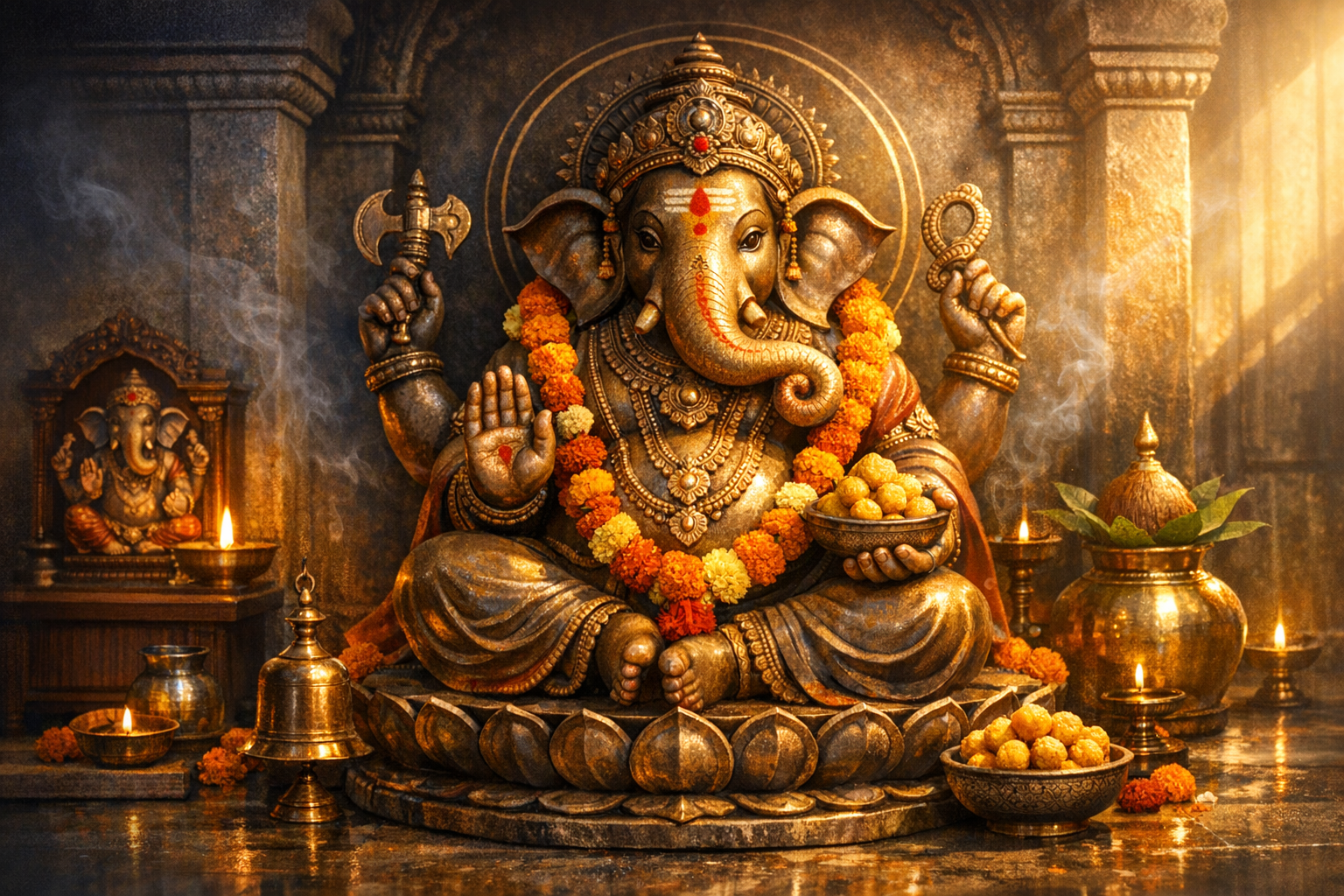
Siddhidata Ganesha’s right‑coiled trunk (dakshinavarti) carries a potent, solar symbolism that calls for strict, temple‑grade discipline. This long‑form guide explains why many traditions advise keeping such forms in temples or in homes only where steady nitya‑puja and satvika living are realistically sustained. It clarifies the pranic rationale (Ida–Pingala–Sushumna), summarizes Shilpa Shastra and Agama perspectives, and…
-
Krishna’s Transformative Grace: From Nigranta to Devotional Service (SB 1.7.10)

This article explores how attraction to Krishna, as discussed in commentarial treatments of SB 1.7.10, draws any soulregardless of birth, wealth, or educationinto devotional service. It clarifies the analytical use of the term nigranta and reframes it inclusively, showing that spiritual eligibility in bhakti depends on sincerity rather than status. The transformation of Mṛgāri the…
-
The Silent Power of Association: Satsanga, Desire-Transfer, and Protecting the Bhakti-Latā

Association transfers desires, shapes attention, and quietly sets the course of spiritual life. Drawing on Bhagavad Gita psychology, cross-dharmic teachings on satsanga, kalyāṇa-mitra, sādhu-saṅga, and sangat, and contemporary findings on social contagion and habit science, this essay explains why company is causal, not incidental. It defines practical signatures of uplifting association and clarifies how to…
-
Vishnupathi Punyakalam 2026–2027: Sacred Dates, Auspicious Timings, and Complete Puja Guide

Vishnupathi Punyakalam occurs four times a year when the Sun enters the fixed signs of the sidereal zodiac, creating an especially auspicious window for worship of Lord Vishnu. The 2026 cycle begins on 13 February 2026 with Kumbha Sankranti, followed by observances in May, August, and November; the pattern repeats in 2027 with similar mid-month…
-
Mahashivaratri Night Vigil Explained: Scriptural Roots, Profound Benefits, Practical Guide

Why remain awake on Mahashivaratri? The night-long jagaran is a carefully structured sadhanarooted in Purana and Agamacombining four prahar abhishekas, mantra japa, meditation, and upavasa to cultivate clarity and devotion. Scriptural narratives, including the Lubdhaka episode, affirm that vigilant remembrance invites Shiva’s anugraha. Practically, aligning with nishita kala and prahar timings preserves continuity with temple…
-
In Memoriam: Ekanatha Das’s Profound Humility and the Timeless Guru–Shishya Ethos

This in memoriam reflection on Ekanatha Das examines a formative devotional episode in Bombay to unpack the difference between authentic humility and performative self-negation. Drawing on the Bhagavad-gita’s “amanitvam adambhitvam” and the Gaudiya Vaishnava instruction “trinad api sunicena…,” it clarifies how humility matures as steady presence, gratitude, and service. The analysis situates the episode within…
-
Knowing Truth, Living Dharma: Why Insight Fails Without Practice in Hindu Philosophy

Hindu philosophy names a timeless challenge: many recognize truth yet struggle to live it. Drawing on the Bhagavad Gita and Yoga philosophy, this piece explains how abhyāsa and vairāgya bridge the gap between knowledge and action. It highlights practical stepsdaily routine, Karma Yoga, svādhyāya, and ethical commitments (yama–niyama)that turn insight into steady conduct. Parallels from…
-
‘Dugga Dugga’ Explained: The Heartfelt Bengali Blessing for Protection and Safe Journeys

“Dugga Dugga” is a cherished Bengali Hindu blessing spoken at moments of departure, invoking Goddess Durga’s protection for safe journeys. This concise invocation blends family care, Shakta devotion, and cultural continuity into an accessible daily practice. Readers will learn its spiritual meaning, historical roots, and role at liminal moments such as travel, exams, and new…
-
Manasa Snana and Mantra Snana: Compassionate Vedic Paths to Purity, Presence, and Peace

Manasa Snana and Mantra Snana are compassionate, dharmashastra-sanctioned practices that preserve purity through focused awareness and Vedic chanting when physical bathing is not feasible. Manasa Snana employs visualization of sacred waters and ethical intention to cultivate inner clarity. Mantra Snana invokes Rig Vedic hymnssuch as water hymnsto consecrate consciousness with sacred sound. Together, they uphold…
-
Sambrani Dhoop: Ancient Origins, Sacred Uses, and Benefits Across Dharmic Traditions

Sambrani dhooptraditionally associated with aromatic resins like benzoin and, in some regions, the Sal Treehas enriched Indian life from antiquity to the present. Its fragrance purifies spaces, anchors daily rituals, and invites calm focus for meditation and prayer. Families use it during griha-pravesh and seasonal observances, preserving cultural memory and spiritual poise. Gentle, well-ventilated use…
-
Practical Lal Kitab Remedies for Shukra in 1st House to Restore Harmony, Confidence, and Love

Lalkitab associates Venus (Shukra) in the 1st house with allure, aesthetics, and relational ease, while noting that stress can ariseespecially with a Saturn conjunction sometimes described as a Crow Line. This guide reframes such patterns as invitations to practice ethical remedies rooted in shared dharmic values. Friday-oriented charity of white items and simple silver offerings,…
-
Tulasi Mala: Sacred Significance, Ayyappa Pilgrimage Observance, and Holistic Health Benefits

Tulasi Mala is a revered devotional garland, central to many Hindu households and especially visible among Ayyappa devotees undertaking the Sabarimala pilgrimage. It signifies vows of simplicity, service, and daily prayer, linking private worship to community observance. In practice, Tulasi Mala functions as a japa aid, helping cultivate focus, emotional steadiness, and mindful breathing. Ayurveda…
-
Shani Sade Sati for Karka Rashi: Navigate Viraya Shani’s First 2.5 Years and Protect Finances

Shani’s transit through the 12th house from Karka Rashi initiates Sade Sati’s first 2.5-year phase, called Viraya Shani (Expenses). This period often heightens outlays and responsibilities but also cultivates discipline, clarity, and minimalism. Saturn’s aspects to the 2nd, 6th, and 9th houses encourage careful budgeting, healthy routines, and ethical guidance. Practical steps such as mindful…
-
Unlock Ishtadevta through Lagna: पंचमेश सूत्र, सरल उपासना, आंतरिक शांति और धर्मिक एकता

A concise, Lagna-based guideline from Jyotisha offers a practical way to contemplate one’s Ishtadevta by focusing on the fifth-house lord (Panchamesh). The maxim“आपकी लग्न कुंडली मैं पंचम भाव का स्वामी गृह (पंचमेश ) आपके इष्ट देव है !”frames a simple, accessible starting point that aligns devotion with the chart’s bhakti-oriented house. Even when doshas create…
-
Seven Daily Practices to Cultivate Wismad for Calm, Clarity, and Dharmic Unity

This guide presents seven daily practices to cultivate Wismadan awe-filled awareness recognized across Hinduism, Buddhism, Jainism, and Sikhism. It begins with simple breathwork to calm the nervous system and prepare the mind for ethical action. Short, contemplative study fosters humility and integrative understanding through Anekantavada. Compassion-in-action turns mindfulness into service, while mindful speech and listening…
-
Beyond VIP Lines: Restoring True Bhakti and Sacred Calm in Popular Hindu Temples

Many popular Hindu temples now resemble busy theaters, with VIP lines and special passes risking a shift from devotion to display. This analysis explores how to restore simplicity and sacred calm without compromising safety or heritage conservation. It presents equity-centered steps for devotees and administratorssingle-queue time slots, transparent policies, and priority access only for vulnerable…