
-
Sri Hanuman Das: Enigmatic Early Bhakti Poet of Uttar Pradesh and Rama-Hanuman Devotion

Sri Hanuman Das is remembered as a Hindu saint and Sanskrit poet from Uttar Pradesh, celebrated for ardent devotion to Lord Rama and Lord Hanuman. While a 1st-century CE date appears in some traditions, available evidence suggests this chronology is hagiographic, not epigraphically confirmed. Placed within the broader Bhakti Tradition and the ritual geography of…
-
Jayadeva of Vidarbha: Discover the Timeless Brilliance of Candraloka in Sanskrit Poetics
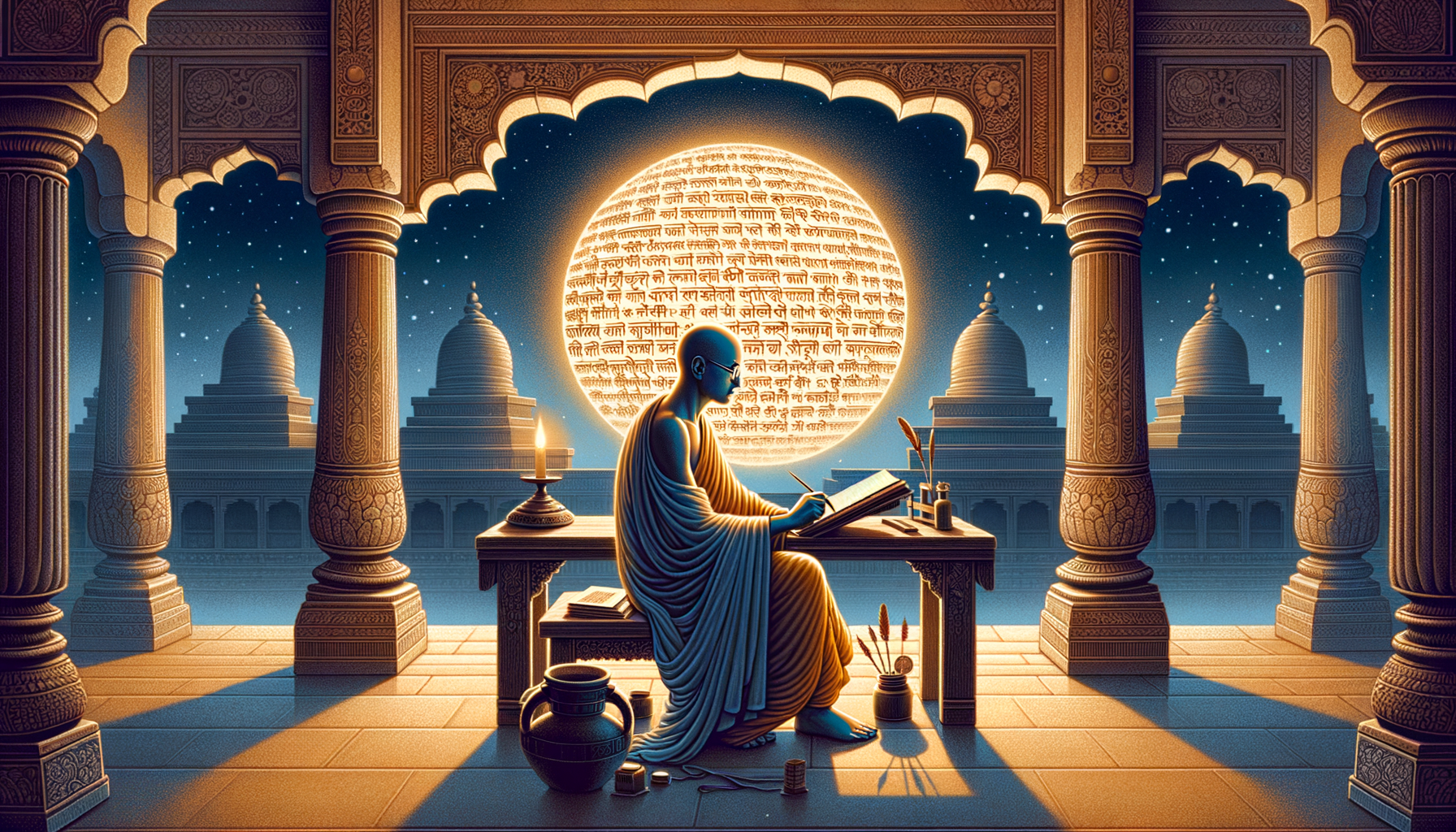
Jayadeva, the renowned 12th-century Sanskrit scholar from Vidarbha, is celebrated for the Candraloka, a foundational text in Sanskrit poetics. Situated in an age of artistic and intellectual efflorescence, his work unites theory and practice with exceptional clarity. The Candraloka’s accessible structure and illustrative verses made it a mainstay of traditional pedagogy across India. In a…
-
Kshemaraja of Kashmir Shaivism: Timeless Nondual Wisdom, Practice, and Dharmic Harmony

Kshemaraja, the eminent disciple of Abhinavagupta, distilled Kashmir Shaivism’s non-dual insights into lucid, practice-ready guidance. Core textsPratyabhijñāhṛdayam, Spandanirṇaya, Spandasandoha, and Śiva Sūtra Vimarśinībridge rigorous Indian philosophy and accessible methods. Readers gain a clear map of upāyas to steady attention, reduce stress, and cultivate compassion. Everyday beauty and stillness become gateways to recognition (pratyabhijñā) through the…
-
Sringara Rasa Unveiled: The Heartbeat of Love in Hindu PoeticsUnion and Separation

Sringara Rasa, one of the nine rasas, expresses the refined essence of love grounded in the sthayi bhava called rati. It unfolds through two modesSambhoga (union) and Vipralambha (separation)which together illuminate the fullness of human affection. Classical vibhavas such as seasons, garlands, and garden visits prepare the mind for aesthetic experience. In dance traditions like…
-
Annambhatta’s Brilliant Legacy: A Clear Guide to Hindu Logic in the Tarkasamgraha
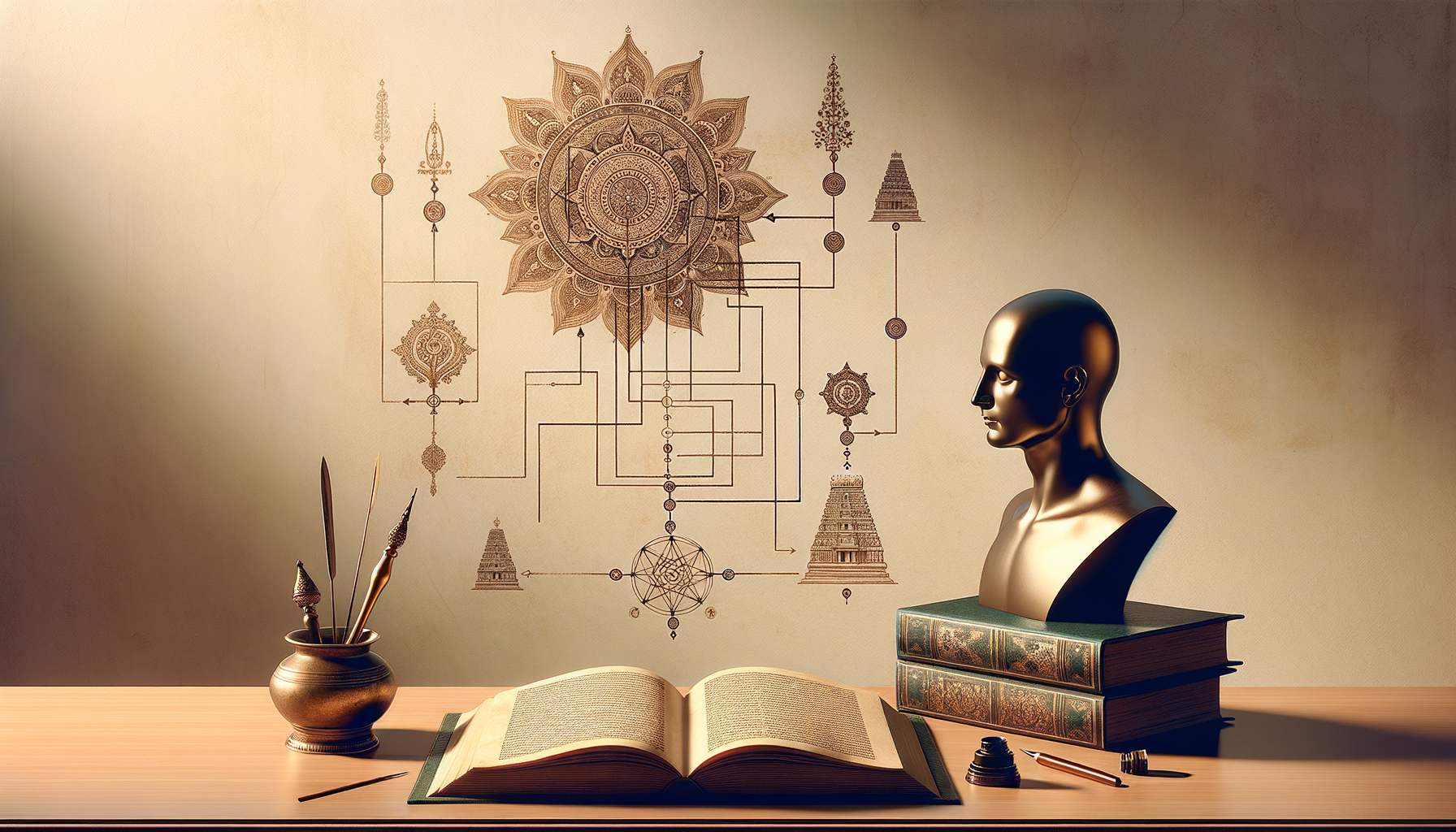
Annambhatta, a 17th century CE philosopher and logician from Andhra Pradesh, authored the widely respected primer Tarkasamgraha. Recognized for clarity and simplicity in Sanskrit, his work offers an accessible introduction to Hindu logic (tarka). Students consistently turn to Tarkasamgraha to build foundational skills in structured reasoning and inference. The text’s lucidity transforms initial apprehension into…
-
Mahakavi Kalidas Din 2026: Date, Significance, Rituals, and Timeless Cultural Legacy

Mahakavi Kalidas Din (Kalidas Divas) in 2026 falls on July 15, coinciding with Shukla Paksha Pratipada of Ashada Month in the Hindu calendar. Regionally, it aligns with Aani Masam (Tamil), Midhunam (Malayalam), and Aashar (Bengali Panjika), reflecting its pan-Indian significance. The day honors Kalidasa’s enduring contributions through works like Raghuvamsa, Kumarasambhava, Meghaduta, and Abhijnanasakuntalam. Common…
-
Halayudha’s Genius: The 10th-century Sanskrit lexicographer who shaped Indian letters

Halayudha, the 10th-century Sanskrit scholar and lexicographer, is best known for the Abhidhanaratnamala (Halayudhakosha), a metrical dictionary that shaped classical Indian literature. Composed for memorization and precision, it preserves semantic fields vital to poets, teachers, and students. The work’s linguistic and historical value helps modern readers interpret layered meanings across texts central to Hinduism, Buddhism,…
-
Unraveling Jayadeva Goswami: A Shaka-Era Luminary, Birthplace Debates, and Devotional Legacy
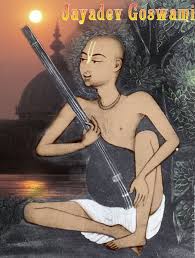
Sri Jayadeva Goswami, a luminary of the Bhakti tradition, is situated by scholars in the 11th–12th centuries of the Shaka era, a transformative period for Indian devotional culture. His birthplace remains debatedKendubilva in Birbhum (Bengal) holds the majority view, while Odisha and South India preserve alternative traditions. Rather than a contradiction, these claims reveal the…
-
Kulluka Bhatta’s Manvarthamuktavali: A Brilliant Beacon in India’s Dharmashastra Heritage

Kulluka Bhatta’s Manvarthamuktavali shaped how generations interpret the Manusmriti, blending Mimamsa hermeneutics and Nyaya reasoning to clarify a foundational Dharmasastra text. Situated in Varendra Bengal and remembered as the son of Bhatt-ivakara, Kulluka’s biography points to vibrant medieval Sanskrit networks. His commentary stabilized a widely read recension, influenced later editions and translations, and refined debates…
-
How Tagore Illuminates Kalidasa: Forest Hermitages and the Soul of Sanatana Dharma
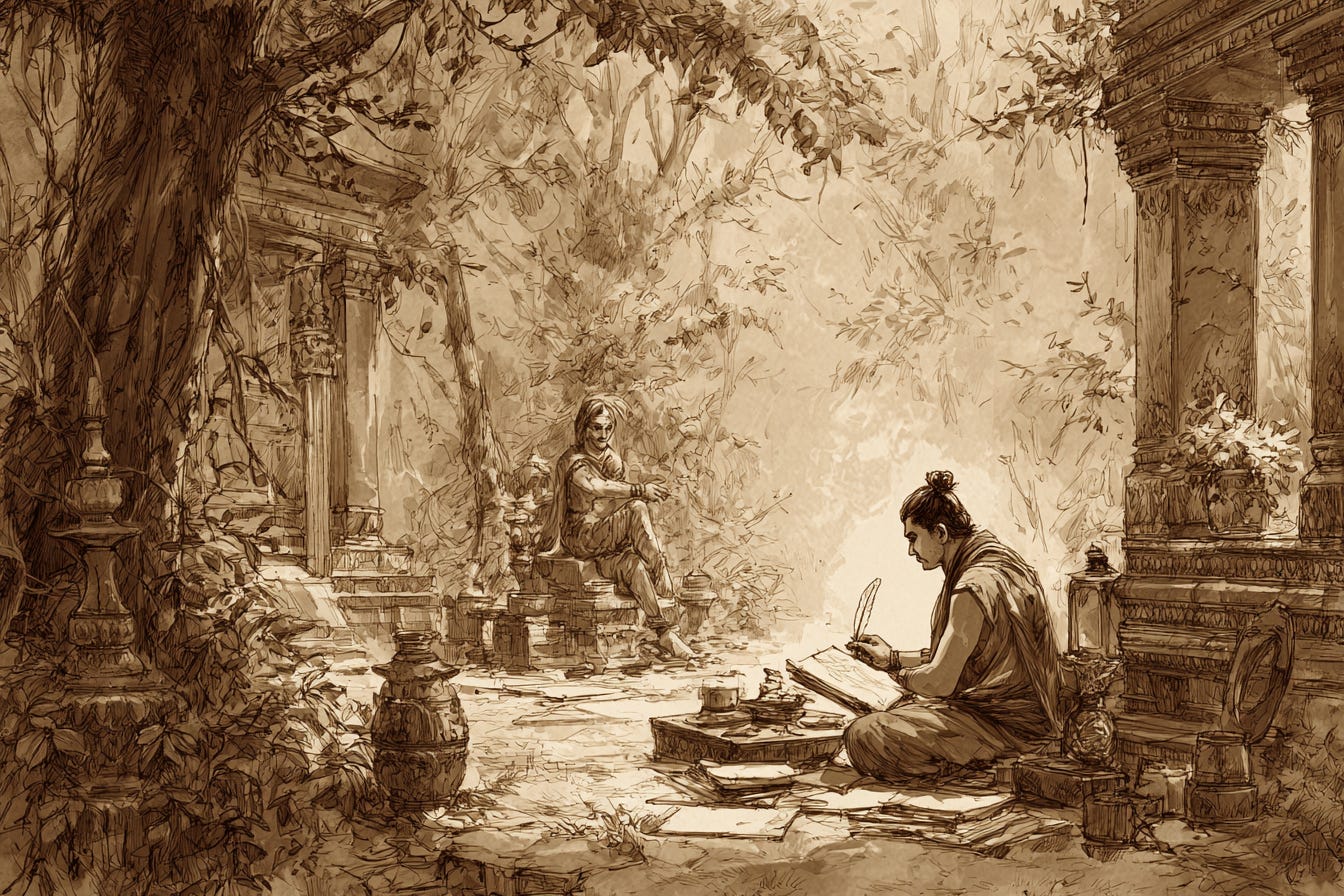
This essay distills Rabindranath Tagore’s reading of Kalidasa to show how forest hermitages embody the ethical and aesthetic heart of Sanatana Dharma. Drawing on The Springhead of Indian Civilisation (translated by Acharya Jadunath Sarkar), it traces how the forest nurtured both Vedic and Buddhist ages and continues to inform a broader dharmic ethos. Kalidasa’s Raghuvamsa…
-
First English Release of Kavya-kaustubha: Unlocking Sri Baladeva Vidyabhusana’s Poetics

Kavya-kaustubha, composed by Sri Baladeva Vidyabhusana, is now available in English for the first time, opening a precise gateway to Sanskrit poetics. The work’s rigorously defined concepts, each paired with clear examples, make complex ideas accessible for students, educators, and researchers. This edition enhances classroom teaching and self-study while supporting comparative literary analysis. It also…
-
Jimutavahana and Dayabhaga: The Bengal Luminary Who Transformed Hindu Inheritance Law
Jimutavahana stands as a seminal figure in Bengal’s Dharmashastra tradition, renowned for the Dayabhaga and its enduring influence on Hindu inheritance law. His careful synthesis of scriptural sources with legal reasoning shaped practice in Bengal and informed judicial thinking during the early modern and colonial periods. The Dayabhaga’s spiritual rationale for inheritance and its social…
-
Ramabhadra, Not King of Ayodhya: Sri Rama’s Humility in Bhavabhuti’s Uttara Rāma

This article explores why classical sources such as Bhavabhuti’s Uttara Rāma emphasize the intimate name “Ramabhadra” for Sri Rama over the formal title “King of Ayodhya.” It shows how the choice reflects a deliberate centering of dharma, humility, and ethical proximity rather than hierarchical distance. Readers gain insight into Rama’s model of kingship, where restraint,…
-
Bhasa’s Bold Reimagining of Sita’s Abduction in Pratima Natakam: Ethics, Dharma, Drama

Bhasa’s Pratima Natakam (Pratimanatakam) presents Sita’s abduction not as onstage spectacle but as a reflective, ethically charged episode grounded in classical Sanskrit dramaturgy. By channeling the event through memory, messenger-reports, and the symbolic power of the pratima (statue), the play emphasizes dharma, agency, and the psychology of crisis over physical action. This approach foregrounds rasaespecially…
-
Utsav and Mricchakatika: A Scholarly, Heartfelt Reappraisal of Girish Karnad’s Adaptation

This scholarly reappraisal situates Utsav (1984) within the long legacy of Sudraka’s Mricchakatika, establishing a careful baseline before assessing Girish Karnad’s adaptation. It outlines the play’s complex plot, deftly interwoven subplots, and richly drawn charactersespecially Cārudatta and Vasantasena. It highlights the social and political motifs of Ujjaini under Palaka and Shakara, and the moral transformations…
-
Gitartha Sangraha: Yamunacharya’s 32-Verse Masterpiece for Gita Clarity and Self-Realization
Gitartha Sangraha distills the Bhagavad Gita into 32 precise Sanskrit verses, offering a clear, memorable pathway through karma-yoga, jñāna-yoga, and bhakti-yoga. Composed by Yamunacharya (Alavandar), it anticipates the Vishishtadvaita contours later systematized by Ramanujacharya. The text bridges rigorous study and practical sādhanā, aiding memorization, reflection, and ethical decision-making. Its succinct form supports learners, scholars, and…
-
Complete Mudrarakshasa Analysis: Discover Chanakya–Rakshasa Statecraft and Essential Dharma
Mudrarakshasa is a Sanskrit political thriller that showcases Chanakya’s and Rakshasa’s mastery of statecraft, espionage, and ethical reasoning in the formative years of the Maurya Empire. The drama’s alternating scenes read like shatranj with human stakes, revealing how forged letters, disciplined intelligence work, and psychological insight can alter the balance of power. Far from caricaturing…
-
Discover Chaturvedasvami: The Complete Guide to a Forgotten Rig Veda Commentator

Chaturvedasvami, a late 15th-century commentator on the Rig Veda, offers a valuable but underrecognized perspective within Vedic literature. Situating his work alongside the dominant tradition of Sayana reveals how multiple commentaries enrich Sanskrit scholarship and deepen understanding of Hindu scriptures. This exploration highlights the benefits of interpretive plurality, including sharper textual analysis and nuanced appreciation…
-
Unveiling the Ancient Ayurvedic Treasure: The Navanītakaṁ Manuscript
Step into the world of ancient Ayurvedic wisdom with ‘Unveiling the Ancient Ayurvedic Treasure: The Navanītakaṁ Manuscript.’ This fascinating journey takes us back in time to explore the rich heritage of Ayurveda, one of the world’s oldest systems of natural healing. The spotlight shines on the remarkable Navanītakaṁ manuscript, a hidden gem that remained obscured…
-
A 19th Century Murder that Excavated a Second-Century Sanskrit Manuscript: Episode One
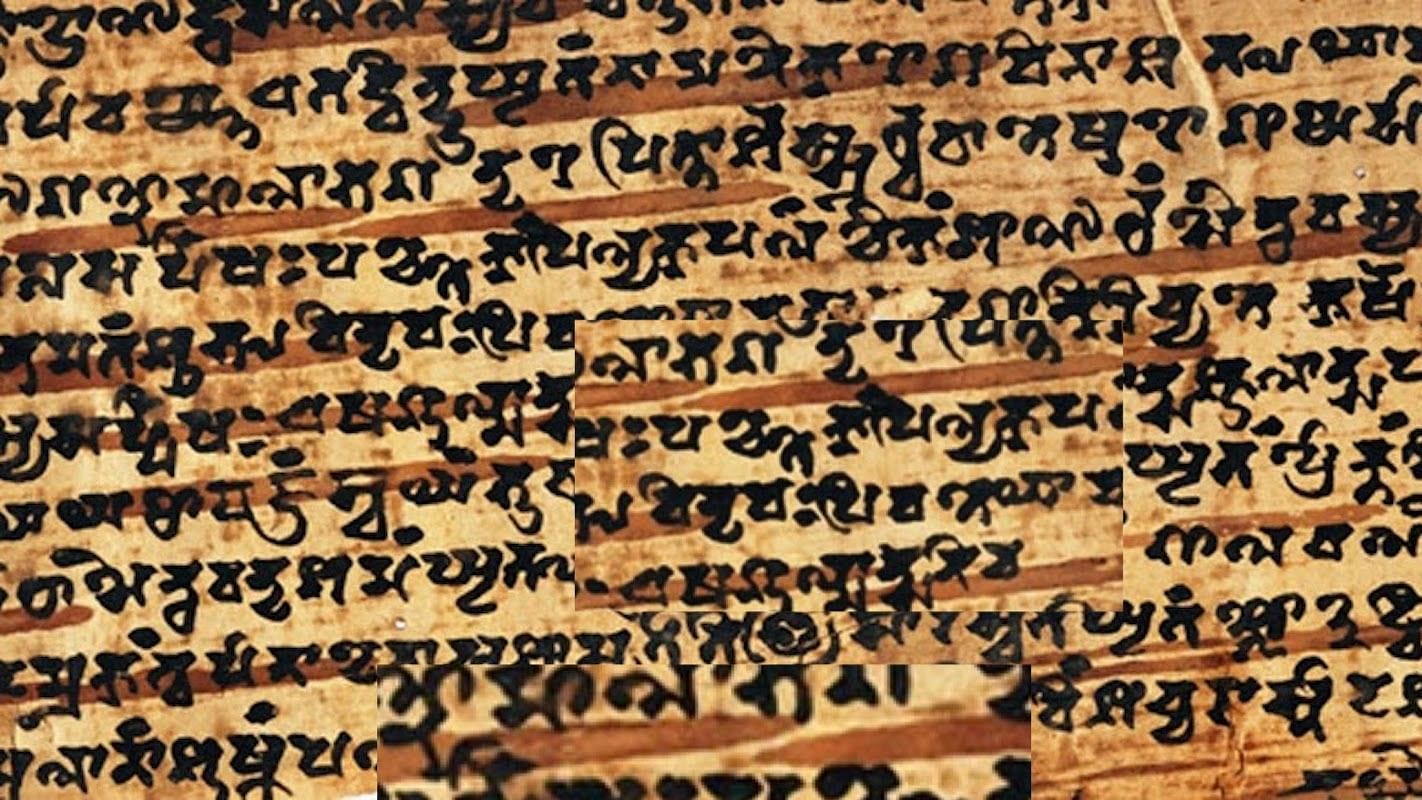
How the brutal murder of a 19th century British trader led to the unlikely discovery of a valuable 2nd century Sanskrit Manuscript. The story begins with the British explorer, tea-planter and diplomat Robert Barkley Shaw who established the Central Asian Trading Company in 1873 to trade primarily in Indian tea.