
-
Is Life Easy or Difficult? An Evidence-Backed Dharmic Guide to Joy, Suffering, and Mastery
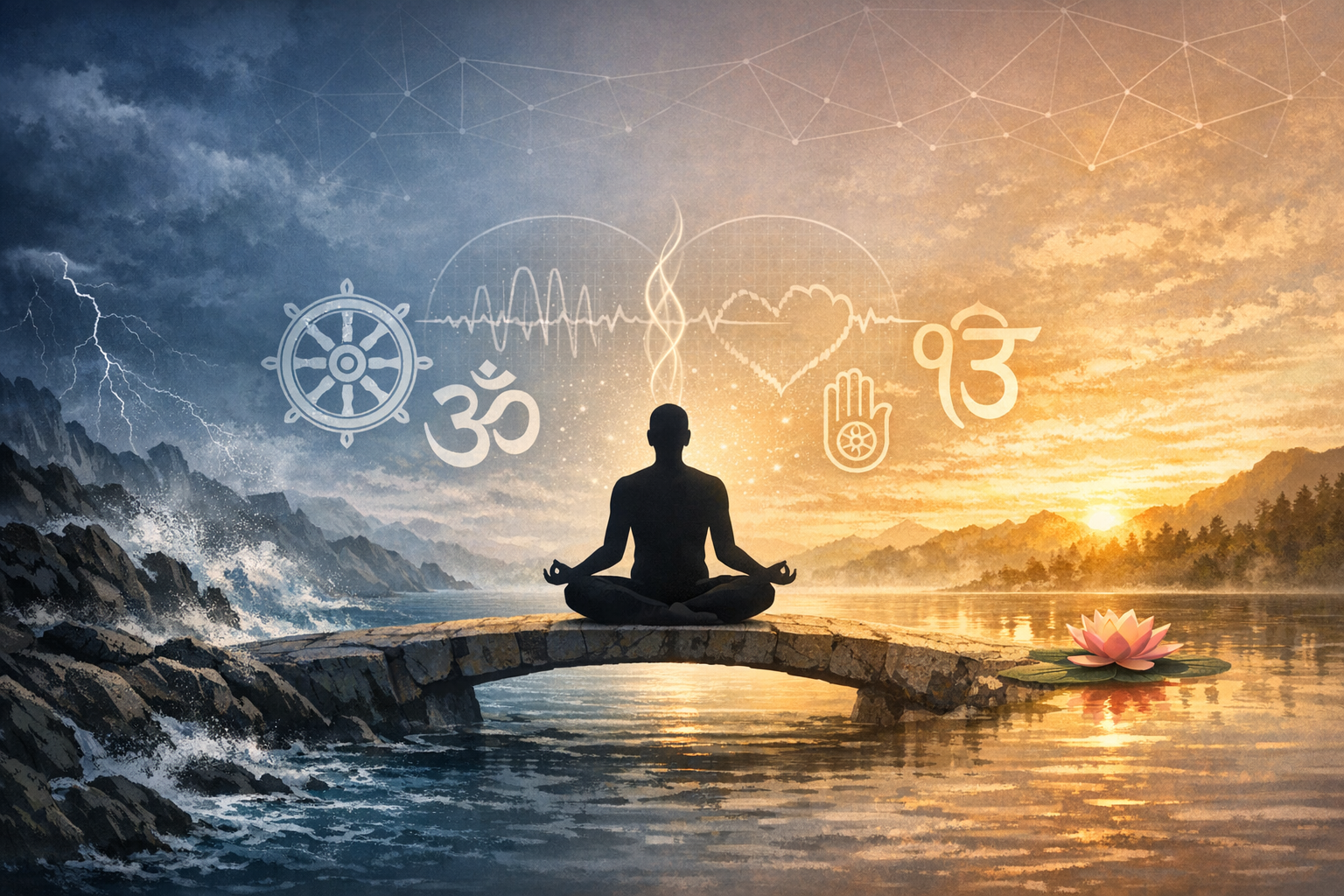
Is life easy or difficult? A dharmic analysis shows the question spans two complementary levels: the conventional reality of dukkha (unsatisfactoriness) and the ultimate discovery of ananda (joy). Buddhism’s Four Noble Truths, the Yoga Sutra, Vedanta’s ananda doctrine, Jain anekantavada, and Sikh Chardi Kala together form a unified method for transforming difficulty into resilience while…
-
Reclaiming Voice from Shame: Trauma‑Informed Assertiveness Guided by Dharmic Principles

Many adults taught that their feelings did not matter struggle to speak up, not because they lack maturity, but because their nervous systems learned that silence equals safety. This article reframes learned silence as an adaptive response and outlines a trauma-informed path to assertiveness grounded in nervous system regulation, emotional literacy, and boundary setting. It…
-
As You Believe, So You Live: Hindu Dharma’s Science of Mindset, Health, and Longevity

This long-form analysis explores how dharmic wisdomHinduism, Buddhism, Jainism, and Sikhismanticipated modern findings on the mind-body connection by showing that belief (śraddhā, bhāva) measurably shapes healthspan and longevity. It integrates Bhagavad Gita and Yoga Sūtra insights with Ayurveda’s sattvavajaya and rasāyana, and aligns them with contemporary stress biology, autonomic regulation, and immune resilience. Practical guidance…
-
Conquer Fear of Failure: Evidence-Backed Dharmic Practices to Unlock Peak Efficiency

Fear of failure often hijacks attention and slows execution just when performance matters most. This article integrates dharmic wisdom and behavioral science to convert that fear into steady, reliable efficiency. It explains how breath-first resets like Bhramari pranayama and Nadi Shodhana regulate arousal and restore cognitive control. It shows how Nishkama Karma reframes success around…
-
Introspection to Self-Realization: A Rigorous Dharmic Blueprint for Knowing the Divine

This long-form analysis explains why disciplined self-analysis is a direct, repeatable path to self-realization and knowing the Divine across Hinduism, Buddhism, Jainism, and Sikhism. It integrates the Upanishads, the Bhagavad Gita, Patanjali’s Yoga Sutra, the Satipaṭṭhāna Sutta, Jain Anekāntavāda with Samayik and Pratikraman, and Sikh Naam-centered living under hukam. A rigorous seven-phase practice cycleintention, observation,…
-
Tapasya in Kali Yuga: Powerful, Scripture-Sourced and Science-Backed Austerities for Modern Life

Tapasya in Kali Yuga is not self-mortification but an intelligent discipline that purifies body, speech, and mind for clarity and resilient living. Drawing on the Bhagavad Gita, Yoga Sutras, the Bhagavatam, and the Kali-Santarana Upanishad, it reframes penance as preparatory purification rather than an attempt to please the divine or force realization. Practical śarīra-, vāk-,…
-
Tapasya in Hinduism: Transformative Austerity for Self-Realization, Clarity, and Inner Power

Tapasya in Hinduism is a disciplined, life-affirming austerity that refines body, speech, and mind to foster Self-Realization and ethical clarity. Drawing on the Upanishads, Bhagavad Gita, and Yoga philosophy, it is defined as a transformative heat that burns impurities and ripens insight. The Gita’s typology (sāttvika, rājasika, tāmasika) and Patañjali’s Kriyā Yoga supply practical guardrails…
-
From Burnout to Balance: A London Surgeon’s Evidence-Based Blueprint for Energy, Sleep, and Calm

A London-trained surgeon transitioned from heroic overwork to evidence-based self-care by treating fatigue as physiological data, not a moral failing. The narrative explains how subtle autonomic imbalance, circadian disruption, and mitochondrial stress can produce “tired but wired” states even with normal lab results. Practical changessleep regularity, morning light, 30 minutes of daily walking, Mediterranean-style nutrition,…
-
Master One-Pointed Attention: Dharmic Science to Transform Every Action into Sacred Power

Modern life fractures attention, but Dharmic traditions teach a precise science of wholeness through one-pointed engagement. Drawing on the Bhagavad Gita, Yoga Sutra, Buddhist Satipatthana, Jain Samayik, and Sikh simran, this article explains how complete presence elevates everyday action. It integrates cognitive science on task switching, attentional residue, and flow with practices like pratyahara, dharana,…
-
Stop Buying What the Mind Sells: A Dharmic Art of Witnessing for Lasting Inner Freedom

A tireless inner salesmanfear, regret, desire, anxietyconstantly pitches stories and urges. This long-form analysis presents the dharmic antidote: the art of witnessing across Hinduism, Buddhism, Jainism, and Sikhism. Drawing on Patanjali’s Yoga Sutra, Sankhya, the Bhagavad Gita, Vedantic discernment, Buddhist mindfulness, Jain samayik, and Sikh simran, it explains why the mind’s pitch works and how…
-
Unlock the Paths of Yoga: A Comprehensive Guide to Hatha, Kundalini, Ashtanga, Kriya, Jivamukti
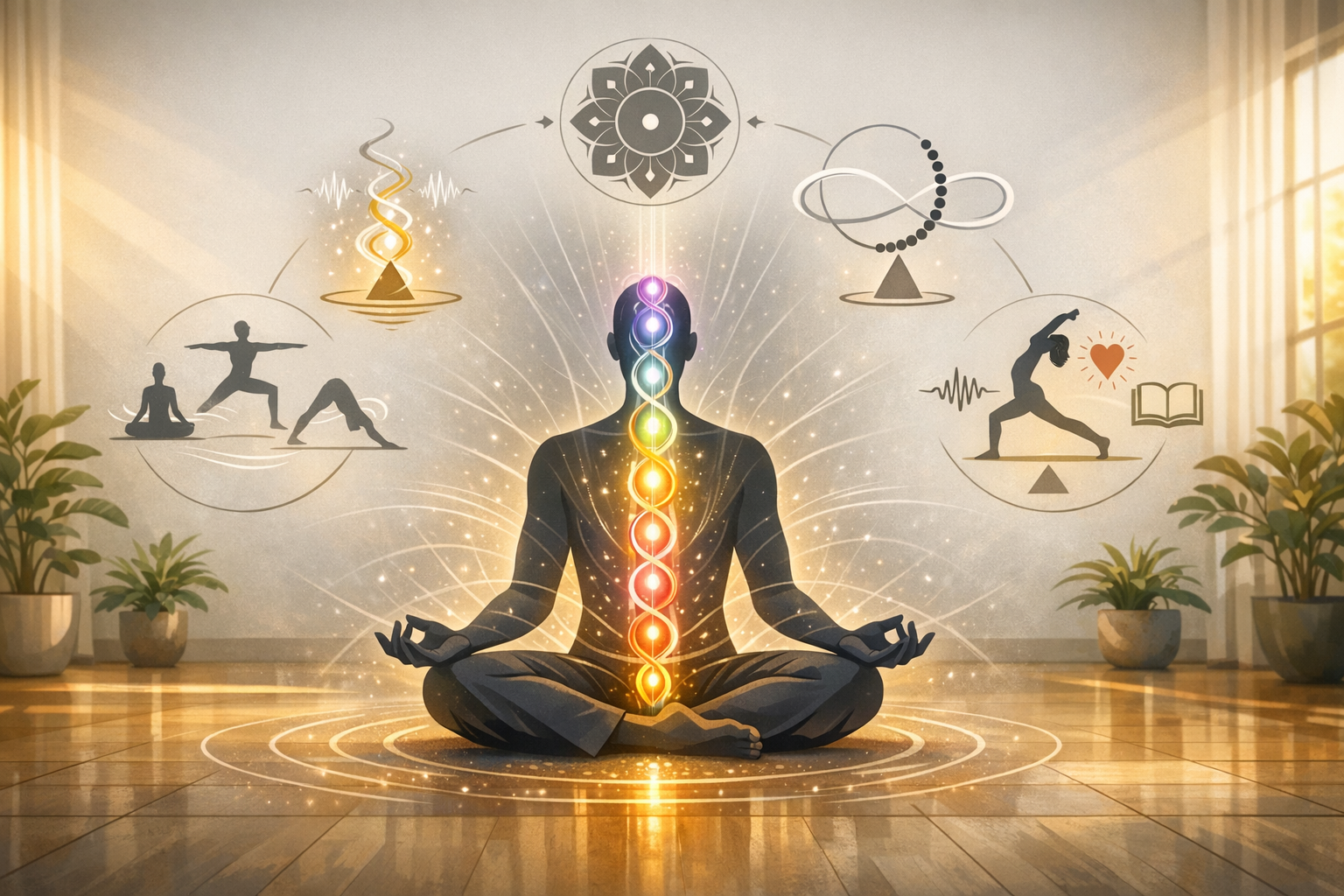
This comprehensive guide clarifies five major pathsHatha, Kundalini, Ashtanga, Kriya, and Jivamuktishowing how each unites body, breath, and mind while honoring shared dharmic ethics across Hinduism, Buddhism, Jainism, and Sikhism. Readers discover the philosophical foundations, core methods (asana, pranayama, bandhas, mudras, meditation), and practical safety cues that make practice sustainable. The article demystifies yogic anatomy…
-
Unlock the Power of Yoga: Hatha, Kundalini, Ashtanga, Kriya, JivamuktiComprehensive Guide

This comprehensive guide clarifies the major types of YogaHatha, Kundalini, Ashtanga, Kriya, and Jivamuktithrough the classical eight-limbed framework. Readers learn how each style emphasizes distinct methods while sharing the same goal: a steady, compassionate, and lucid mind. Practical guidance covers pranayama, dhyana, sequencing, and the role of yama and niyama in everyday life. Evidence-informed notes…
-
From Numb to Whole: How Emotional Suppression Derails Hormones, Gut Health, and the Nervous System

This case study traces how lifelong emotional suppression created nervous system dysregulation, hormonal imbalance (notably PMS), and gut-brain axis disturbancesand how listening to the body reversed these trends. It explains mechanisms (polyvagal theory, HPA/HPO axes, vagus nerve, microbiome) alongside Ayurvedic concepts (vata, pitta, kapha, agni) to show why symptoms escalated with “push through” strategies. Evidence-aligned…
-
Master the Mind in a Distracted World: Bhakti-Yoga, Mindfulness, and Digital Discipline

The digital age fragments attention, yet the classical aim of yogasteadying the mindremains essential. This analysis explains how bhakti-yoga (Krishna consciousness), mindfulness, and pranayama collectively counter distraction by building one-pointed concentration. It connects pratyahara, dharana, and dhyana to practical digital hygiene, offering a modern, research-aware framework for focus. Parallels from Buddhism (sati, samatha), Jainism (samayik,…
-
At the Guru’s Last Breath: A Mango, Mindfulness, and the Taste of Immortality

A classical Hindu teaching story recounts a Guru who, at the threshold of death, uses a simple mango to demonstrate how breath awareness, mindful attention, and remembrance reveal the peace of the Atman. The narrative is analyzed through the Bhagavad Gita and the Upanishads, showing how last-thought psychology aligns with daily practice in dhyana, japa,…
-
From Turmoil to Tranquility: SB 3.28.10 on Yogic Breathing and the Power of Chanting
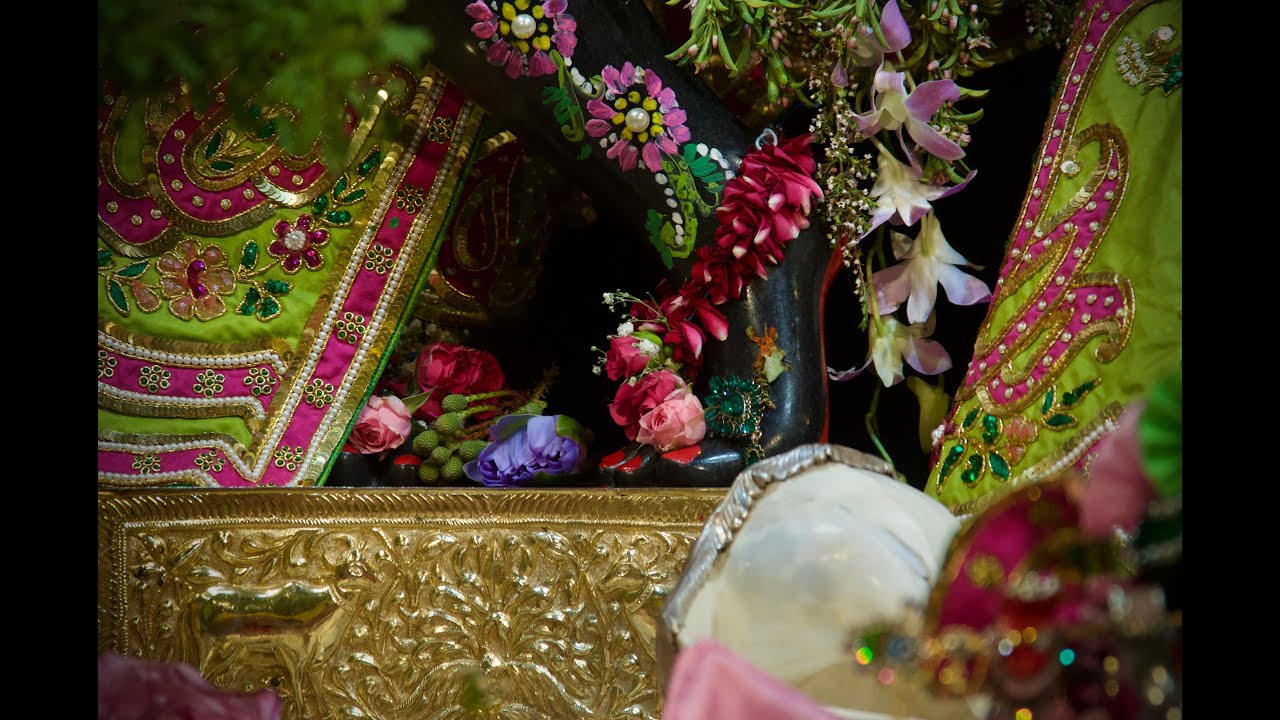
Srimad-Bhagavatam 3.28.10 presents a precise blueprint for mental purification: disciplined attention (the fire) and regulated breath (the air) refine the mind as heat and fanning purify gold. Framed by HH Ramai Swami’s exposition, the verse aligns with modern findings on vagal tone, heart-rate variability, and the calming effects of slow, coherent breathing. Lord Caitanya’s recommendation…
-
Pure Mind Beyond Desire: A Rigorous Path to Moksha in the Gita, Upanishads, and Yoga

This article offers a rigorous, text-anchored exploration of the Hindu ideal of a pure mind free from desire, linking it to moksha in the Bhagavad Gita, the Upanishads, and Patanjali’s Yogasutra. It clarifies the difference between eliminating compulsive craving and nurturing dharma-aligned intention, avoiding the common pitfall of suppression or nihilism. Readers gain a practical…
-
Master Your Breath, Still Your Mind: Kapila’s Precise Yogic Protocol in SB 3.28.8

SB 3.28.8 presents Kapila’s concise blueprint for meditation: a sanctified, secluded space; an easy, erect posture (svasti samāsīnaḥ); and regulated breath control. The verse aligns environment, asana, and pranayama to quiet the senses and stabilize attention for dhyana. Practical guidance includes seat preparation, spinal alignment, and gentle ratios such as 4–4 progressing to 4–6 exhalations.…
-
Prayer Is the Voice of the Soul: Timeless Dharmic Science for Healing, Clarity, and Grace

This article unpacks the Hindu teaching “Prayer is the voice of the soul” as a precise, reproducible inner science shared across Hinduism, Buddhism, Jainism, and Sikhism. It explains technical frameworks such as vāk (levels of speech), Pancha-kosha viveka (five sheaths), and the discipline of japa, dhyana, and pranayama. Readers gain a clear practice framework that…
-
From Restless Mind to Inner Clarity: How Yoga Rewires the Brain, Body, and Behavior

Yoga reframes a “restless” mind as a dynamic wave and offers precise methods to organize that energy into clarity, steadiness, and purpose. Patanjali’s ashtanga integrates ethics, postures, breath, and meditation, while parallel practices in Buddhism, Jainism, and Sikhism affirm unity in spiritual diversity. Evidence links yoga to better autonomic balance, reduced stress reactivity, improved mood,…