
-
Why Hindu Gods Ride Animals: The Profound Symbolism Behind Ganesha’s Mouse and Skanda’s Peacock

Why do Hindu gods ride animals such as Ganesha’s mouse and Skanda’s peacock? In Hindu iconography, vāhanas are a precise symbolic language codified in Purāṇas, Āgamas, and śilpa-śāstra that maps each deity’s ethical and cosmological function. Animals personify instincts and forces that the deity harmonizes, teaching that spiritual mastery begins with taming subtle habits. Case…
-
Beyond Abundance: Why Modest Expectations Foster Lasting Happiness in Dharmic Wisdom

Modern abundance has not eliminated dissatisfaction because expectations often outrun reality. Dharmic wisdomHindu, Buddhist, Jain, and Sikhoffers a unifying solution: cultivate santosha (contentment) and aparigraha (non-hoarding) while acting with clarity and purpose. The Bhagavad Gita’s karma-yoga and the Yoga Sutra’s abhyāsa–vairāgya framework train steadiness without suppressing healthy ambition. Contemporary psychology aligns with these teachings: lower,…
-
12th State Gatka Championship for Girls: Precision, Courage, and Dharmic Unity on Display

The 12th State Gatka Championship for Girls showcased a disciplined, safety-first competition rooted in the Sikh martial tradition, highlighting precision, timing, and ethical strength. Organized with standardized rules and protective equipment, it balanced point-sparring duels with judged demonstrations that rewarded control, coordination, and cultural literacy. Athletes benefited from periodized training, sports medicine awareness, and psychology-informed…
-
Indian Railways and Religious Dietary Choice: Halal vs JhatkaA Practical, Respectful Fix

A passenger’s request for a jhatka meat option on Indian Railways spotlighted a narrow but important gap in IRCTC’s otherwise safety-first catering policy: the absence of transparent, method-of-slaughter choice. This analysis explains why food safety compliance, while essential, does not resolve concerns rooted in conscience and religious practice. It defines halal and jhatka in neutral,…
-
Cradled by Prakriti: A Dharmic and Science-Backed Guide to Caring for Mother Nature

This article reframes the classic insightGod as supreme source and nature as nurturing motherthrough a unified dharmic and scientific lens. Drawing on Hindu concepts of Prakriti, the pañca-mahābhūta, and guṇa theory, it aligns Vedic philosophy with modern ecology’s ecosystem services. It integrates Ayurveda’s seasonal and daily regimens to translate ecological literacy into embodied health. Ethical…
-
Kabir’s Weekly Discipline Planner: A Dharmic, Science-Backed Path to Focus, Calm, and Service

This weekly discipline planner draws from Kabir’s ethic of simplicity and sincerity to create a dharmic, science-backed structure for daily life. It integrates niyama, mindfulness, japa, pranayama, svadhyaya, and seva into a humane seven-day arc adaptable to Hindu, Buddhist, Jain, and Sikh traditions. The design aligns with circadian and ultradian rhythms, protecting attention for deep…
-
Kerala Vishu Poster Furor: Chicken Mandi Before Shri Krishna Spurs Arrest, Harmony Lessons
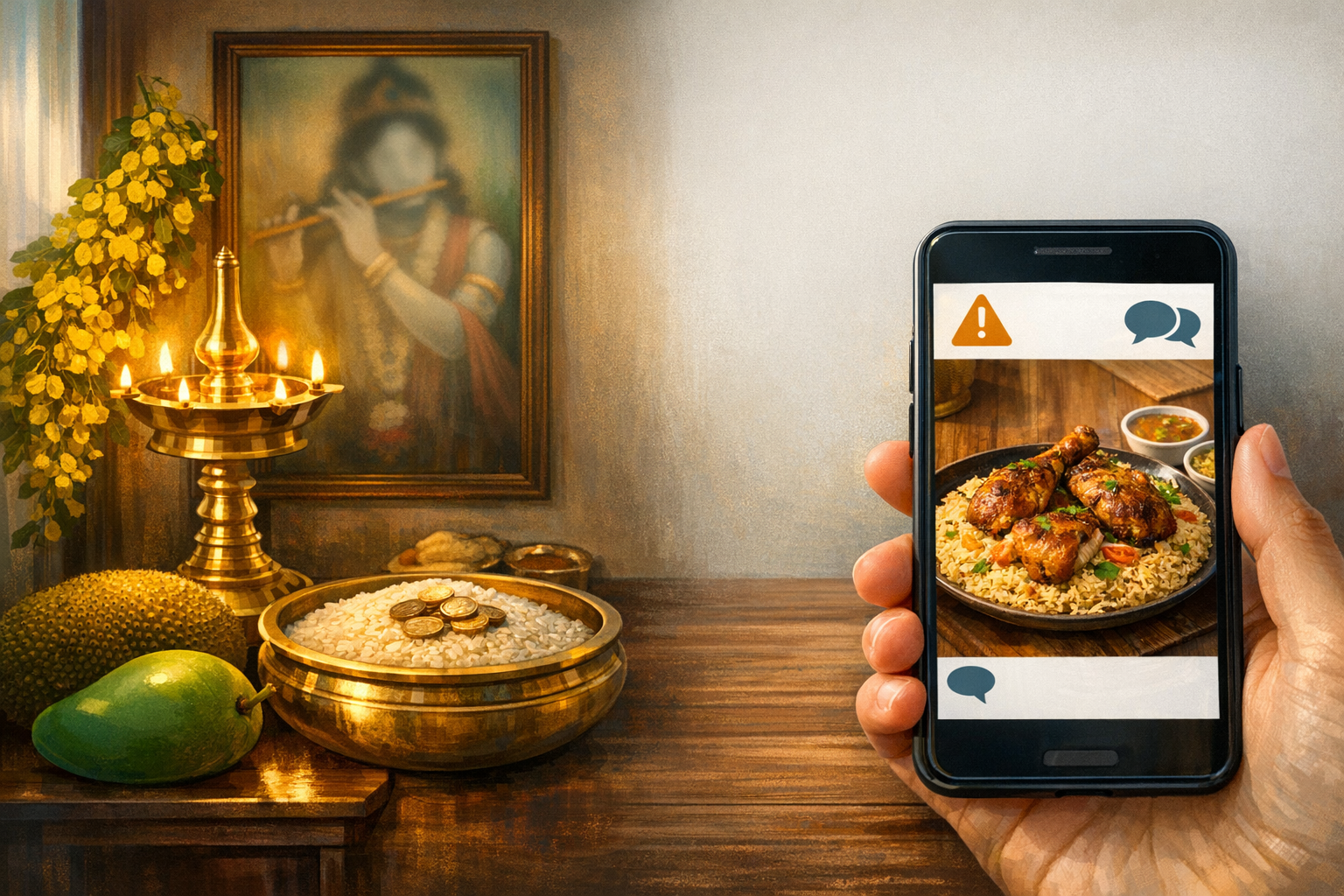
A Vishu greeting poster from a Kerala restaurant that placed chicken mandi before an image of Shri Krishna triggered public outcry and a police arrest, spotlighting the high sensitivity of sacred symbols in India. The analysis explains why Vishukkani Darshan, vegetarian naivedya, and South Asian visual grammar made the imagery read as an offering, not…
-
Lenskart revises style guide: Bindi, Sindoor, Tilak, Kalwa affirmed for inclusive workplaces

Lenskart has reportedly revised its style guide to explicitly permit Bindi, Sindoor, Tilak, and Kalwa, offering a practical blueprint for how consumer brands in India can respect religious expression without compromising safety or professionalism. The episode highlights the importance of clarity in corporate dress code and grooming policies to avoid discretionary enforcement at store level.…
-
Viral Kerala Video Ignites Outrage: Why Consent and Dietary Respect Must Rule Film Sets

A viral Kerala video allegedly showing Shiyas Kareem urging a Hindu co-actor to eat beef has sparked a larger discussion on consent, cultural sensitivity, and interfaith respect on Indian film sets. This analysis separates allegation from verification while mapping the issue to India’s constitutional protections and relevant IPC provisions. It outlines practical, production-ready safeguardsno food…
-
Lenskart Dress Code Controversy: Evidence-Based Roadmap for Inclusive, Rights-Aligned Workplaces

Allegations in April 2026 that Lenskart circulated an “anti-Hindu” dress code underscore a broader national need for inclusive, rights-aligned uniform policies in retail. This analysis avoids polarisation and instead offers an evidence-based roadmap grounded in India’s constitutional guarantees, ILO Convention 111, and the UN Guiding Principles on Business and Human Rights. It synthesizes court signals…
-
Why Nothing Is Ever Lost: Dharmic Wisdom to Transform Grief into Clarity and Peace

This long-form exploration explains why, across Hinduism, Buddhism, Jainism, and Sikhism, nothing is ever truly lostforms change while meaning, memory, and value continue. It clarifies Vedanta’s two levels of truth, showing how the atman remains untouched even as prakriti transforms. It integrates Buddhist dependent origination, Jain Anekantavada, and Sikh Hukam to present a unified dharmic…
-
Who Is the Real Father? ISKCON and Gita on the Soul, Death, and the Supreme Source

This essay explores the Hare Krishna (ISKCON) understanding of who the “real father” is by distinguishing bodily from spiritual parenthood through the lens of the Bhagavad Gita. It explains why everyday bereavement language“he has gone”implicitly recognizes the self (ātmā) as distinct from the body. Drawing on key verses (Gita 14.4, 2.13, 2.20, 15.7), it shows…
-
Decoding Sacred Mudras in Hindu Puja: A Deep, Practical Guide to Gesture, Mantra, and Mind

Mudras in Hindu puja are not mere motions but a precise language that unites gesture, mantra, and focused intention. This comprehensive guide explains how mudras function within the classical triad of kayika, vacika, and manasika acts to stabilize attention and deepen devotion. Drawing on Agamic, Tantric, and Smarta sourcesalongside insights from the Natya Shastra traditionit…
-
SAB KE APNE RAM (SKAR) 4K: ISKCON Chowpatty’s Soul-Stirring Ramayana of Bhakti and Dharma
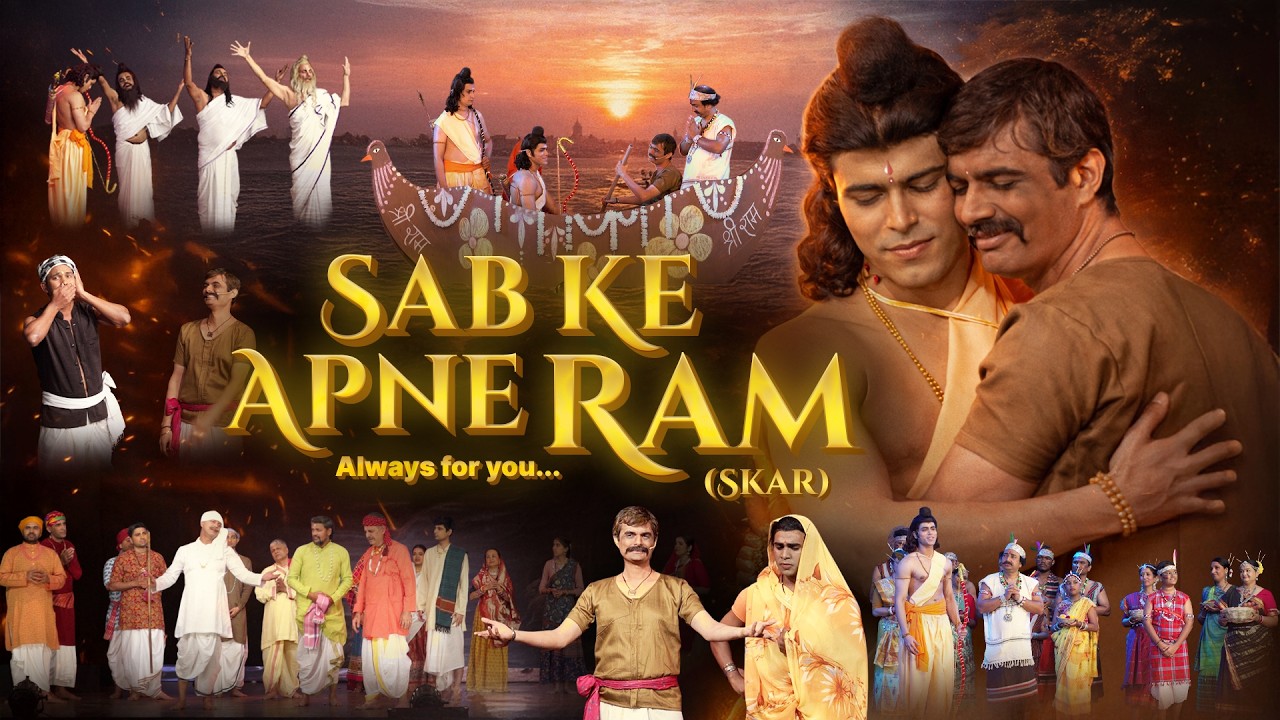
SAB KE APNE RAM (SKAR) at ISKCON Chowpatty delivers a 4K Ramayana drama that unifies devotion, ethics, and scholarship into an accessible cultural experience. The production frames Ram as Ideal King, Loving Friend, Goal of Sages, and Beloved of Devotees, translating Sanatana Dharma into relatable stagecraft. The Kevat episode becomes a living lesson in humility,…
-
Sri Rama’s Virtue and Valor: A Timeless Dharma Blueprint for Courageous, Just Leadership
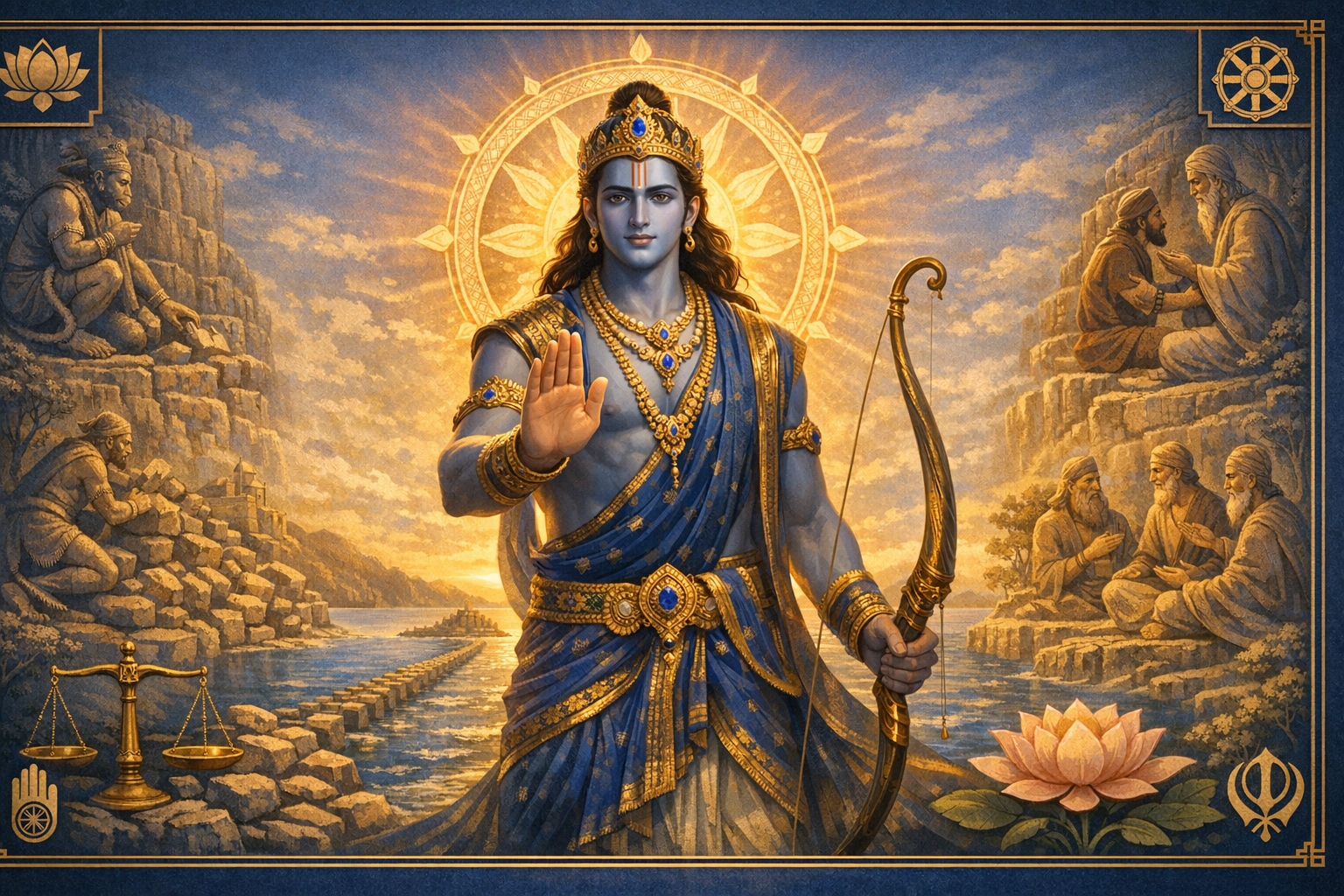
Sri Rama’s portrayal in the Ramayana unites virtue (dharma) with valor (kshatra), forming the ideal of Maryada Purushottama. This synthesis grounds strength in compassion and binds power to law, offering a reliable template for just leadership and community protection. The epic narratively encodes principles akin to just war ethics: just cause, right intention, last resort,…
-
Timeless Life Lessons from the Ramayana: Integrity in Action and Devotion with Patience
The Ramayana offers enduring guidance on ethics and spiritual discipline through two luminous episodes: Jatayu’s defense of Sita and Shabari’s patient, joyful preparation for Sri Rama. Read as a practical framework, Jatayu models courage that privileges dharma over short-term gain, while Shabari models disciplined readiness that turns daily tasks into sacred practice. Together, they show…
-
Desire Beyond Need: Dharmic Strategies to Transform Craving into Clarity and Freedom

This article clarifies why, in Hindu thought, desire is not a need but a demand that reaches beyond needand how that demand can be guided rather than suppressed. It maps desire across the puruṣārthas and pañca-kośa models, showing when desire serves dharma and when it becomes compulsion. It integrates insights from the Bhagavad Gita, Yoga…
-
Ram Navami Resolve: A Timeless Blueprint to Live Shri Ram’s Ideals and Realize Ram Rajya

Ram Navami offers more than celebration; it provides a rigorous, actionable framework to live Shri Ram’s values daily. This long-form reflection defines Ram Rajya as a just social order rooted in dharma, satya, compassion, and competent statecraft. Drawing on the Ramayana alongside Arthasastra and the Buddhist dasa raja dhamma, it maps how Maryada Purushottama’s ethic…
-
From Ego to Empathy: A Dharmic, Science-Backed Path to a Cleaner Mind and Heart

Reducing self-absorption is a practical way to keep the mind clear and the heart clean. Dharmic traditionsHinduism, buddhism, jainism, and sikhismconverge on this insight through ahimsa, aparigraha, seva, metta, simran, and Yoga, offering unity in spiritual diversity. Psychological research on mindfulness, compassion training, and breath regulation supports these practices by reducing rumination, stabilizing attention, and…
-
Unraveling Karma’s ‘Complicated Play’: Dharmic frameworks of action, causality, and grace

This long-form guide unpacks why “Gurudev says that it is a complicated play,” showing how Karma operates across intention, action, impressions, and outcomes. It compares Hindu, Buddhist, Jain, and Sikh frameworks, clarifying doership, responsibility, and grace without collapsing their differences. Readers gain a precise map of sañcita–prārabdha–kriyamāṇa, Buddhist intentionality (cetanā) and dependent origination, Jain karmic…