
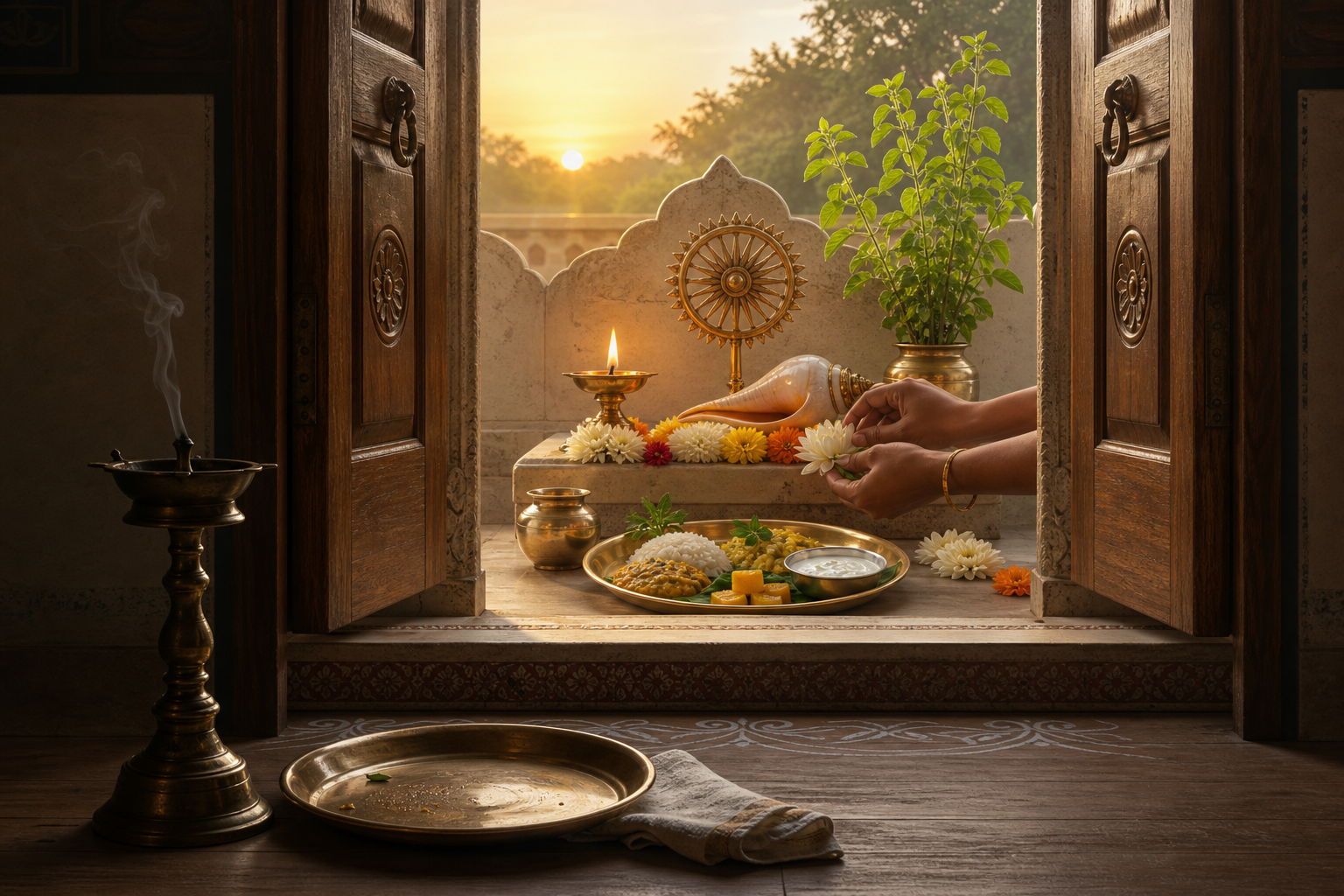
Dwadashi can look like the date after an Ekadashi fast, but the observances dedicated to Damodara and Vamana give the twelfth lunar day a more active role. It becomes a threshold: restraint is completed carefully, worship is renewed, and a theological lesson is carried back into household life.
Read together, the two source articles show a shared framework of Vishnu devotion while preserving distinct emphases. Damodara Dwadashi turns toward loving relationship and family welfare; Vamana Dwadashi examines humility, possession, and the moral limits of power.
A shared rhythm: Dwadashi as a sacred threshold
Dwadashi is the twelfth tithi of a lunar fortnight. In the observances described by both articles, it is inseparable from the Ekadashi that precedes it. The Damodara Dwadashi report places the day after Shravana Putrada Ekadashi and emphasizes parana, the formal and properly timed conclusion of the fast. The Vamana Dwadashi report places its observance after Devsayani Ekadashi, presenting it as a transition into the disciplined atmosphere of Chaturmas.
The articles report different dates and seasonal settings for 2026. Vamana Dwadashi, associated with Ashada Shukla Dwadashi, is reported for July 26. Damodara Dwadashi, observed on Shravana Shukla Dwadashi, is reported for August 24. These dates should not be treated as universal ritual timetables: both sources caution that tithi, sunrise, location, regional calculations, and community practice can affect the appropriate worship or parana period. A trusted local panchang or temple authority therefore remains essential.
This relationship between Ekadashi and Dwadashi changes the meaning of fasting. Abstinence is only one movement of the vrata. Completion is another. The return to food and ordinary activity is meant to retain the attentiveness cultivated during restraint rather than abruptly ending it.
Two Vishnu forms, two disciplines of devotion
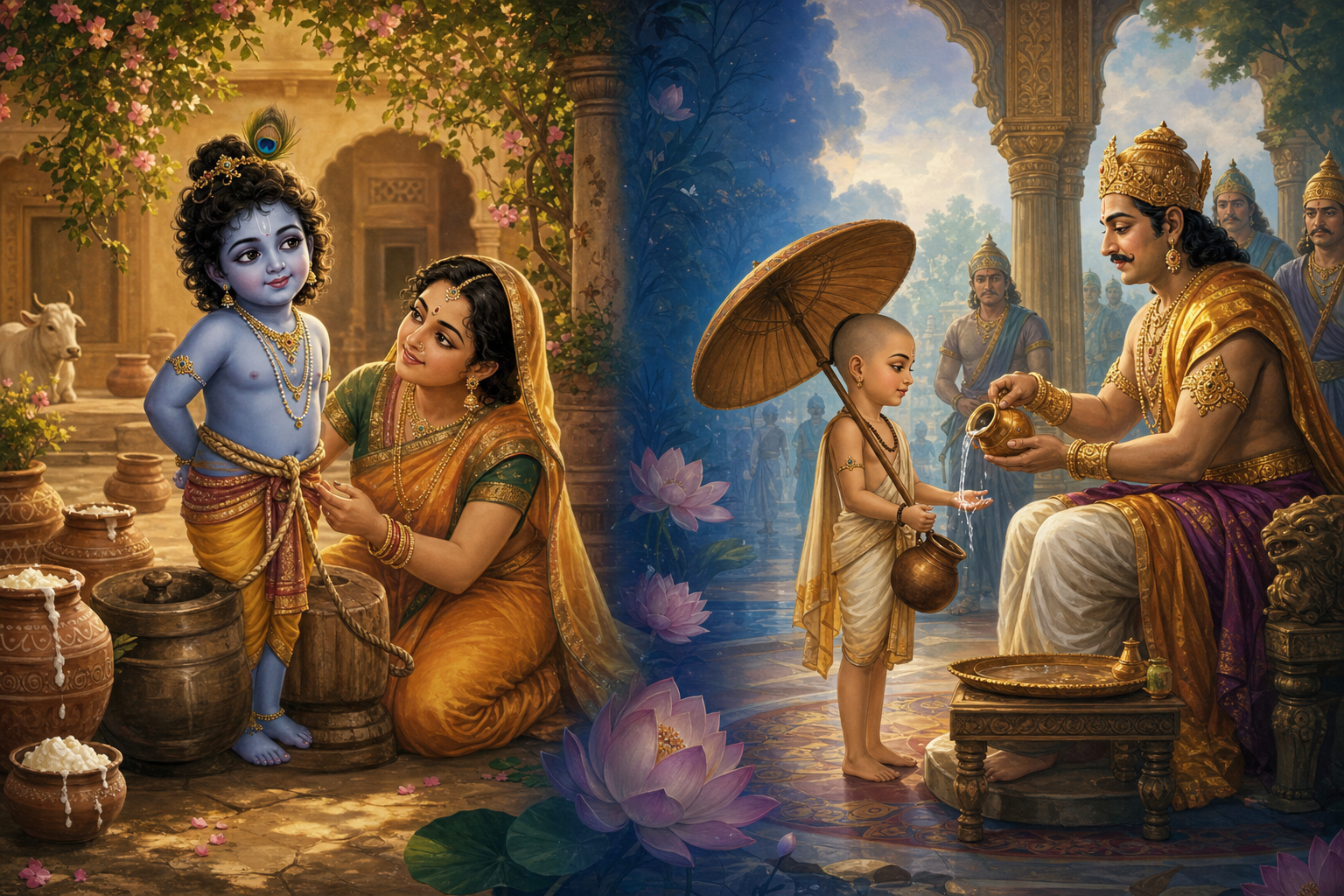
Damodara and Vamana disclose contrasting but complementary dimensions of Vishnu devotion. Damodara is a name associated with Krishna’s childhood form, lovingly bound by Mother Yashoda. As interpreted in the Damodara article, the image holds divine majesty and domestic tenderness together: the Divine accepts the bond of love, and the household itself becomes a setting for sacred relationship.
That emphasis accords with the observance’s connection to Putrada Ekadashi. The source explains that the term Putrada historically referred to the blessing of sons within social settings concerned with lineage and ancestral duties. It also offers a broader contemporary interpretation centered on children’s well-being, responsible parenthood, family harmony, and the transmission of dharma across generations. The article presents this as an ethical reading rather than a replacement for every inherited interpretation.
Vamana Dwadashi looks outward toward sovereignty and inward toward ego. Its source recalls Vishnu’s fifth avatar appearing before King Mahabali as a young Brahmachari and requesting three steps of land. Vamana then reveals a cosmic scale, while Mahabali ultimately offers his own head when no territory remains for the third step. The article treats Mahabali as morally complex rather than simply wicked: his generosity and fidelity to his word are honored even as the expansion of his power is corrected.
The comparison yields a distinctive insight. In the Damodara image, the Divine permits love to place a bond around him. In the Vamana narrative, the Divine places a boundary around worldly expansion. One observance asks how devotion can make intimacy sacred; the other asks whether wealth, influence, and ambition remain accountable to dharma. Both relocate spiritual strength away from display and toward relationship, restraint, and surrender.
From Ekadashi restraint to Dwadashi participation
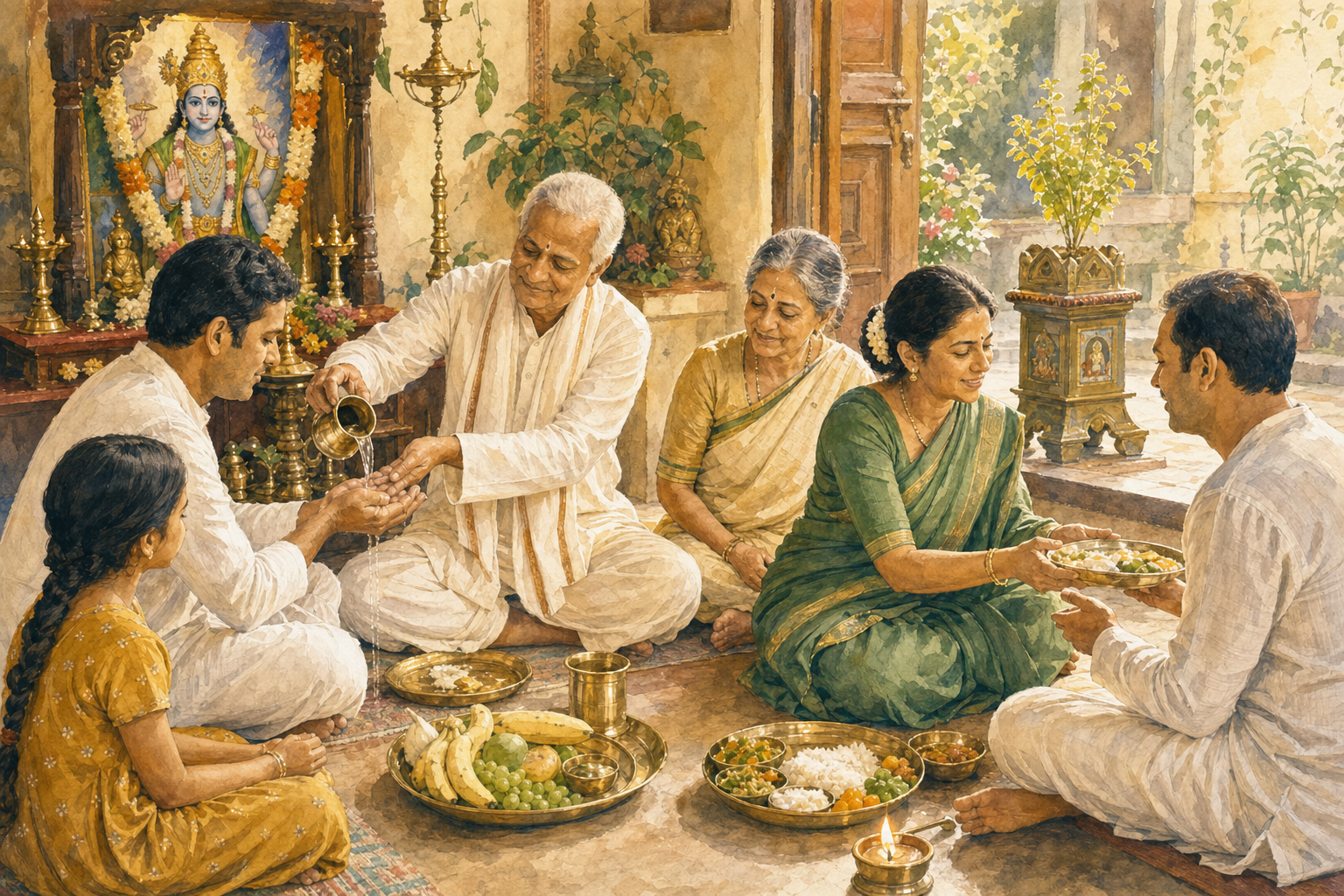
The household practices described in the sources overlap substantially. Devotees may rise early, bathe, clean the worship space, light a lamp, and offer flowers, water, fruit, naivedya, and tulasi leaves where appropriate to their tradition. Worship may be directed to Vishnu, Krishna as Damodara, or the Vamana form. Recitation can include Vishnu’s names, Vishnu Sahasranama, Bhagavad Gita or Bhagavata readings, and remembrance of the relevant divine narrative. The sources consistently place sincerity and attentiveness above ceremonial scale.
Damodara Dwadashi gives special importance to completing the preceding fast through parana at the locally determined time. Its article also reports a stricter traditional discipline that praises abstention from rice and food salt across two days, while acknowledging that practices vary. Vamana Dwadashi likewise permits different levels of fasting according to household custom, physical capacity, and local guidance. Neither report makes bodily severity the measure of devotion.
A practical observance can therefore preserve both precision and proportion. The family first confirms the applicable local calendar. It then maintains the devotional mood established on Ekadashi, performs worship suited to its sampradaya, and concludes the fast without turning the first meal into excess. The Damodara article recommends simple sattvic food after parana, presenting the meal as an occasion for gratitude rather than compensation for deprivation.
Health, age, pregnancy, medical requirements, and physical capacity are explicitly recognized in the Damodara account, while the Vamana account similarly connects fasting choices to health and family tradition. The shared principle is disciplined adaptation: prayer, reading, japa, temple worship, or a simple lamp offering can carry the observance when a demanding fast is unsuitable.
Key takeaways
- Dwadashi is presented as the completion or continuation of Ekadashi discipline, not merely the following calendar date.
- The sources report Vamana Dwadashi on July 26, 2026, and Damodara Dwadashi on August 24, 2026, while directing devotees to local panchang calculations for exact timing.
- Damodara Dwadashi connects Vishnu devotion with loving relationship, family welfare, and the continuity of dharma.
- Vamana Dwadashi connects devotion with humility, truthful surrender, rightful limits, and accountability in the use of prosperity or power.
- The two observances share accessible forms of worship, but fasting and parana should reflect sampradaya, household tradition, health, and physical capacity.
Keeping precision and plurality together
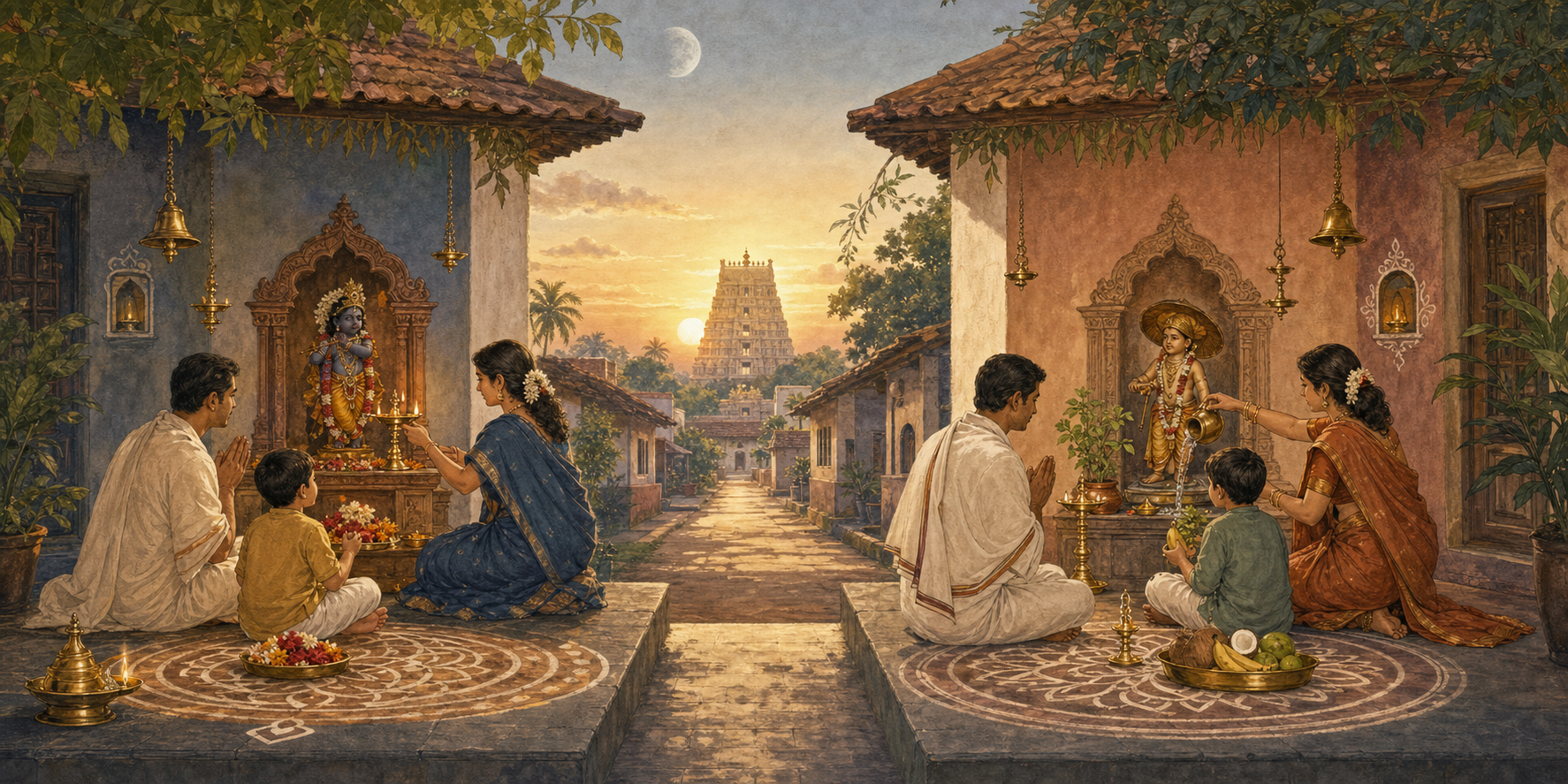
The sources also show that Vishnu observance is not culturally uniform. The Vamana article points to traditions associated with Thrikakkara near Kochi, Kanchipuram, and Khajuraho, and notes that Kerala’s sacred memory can honor Vishnu while retaining affection for Mahabali. The Damodara article places its Vaishnava vrata within the wider devotional diversity of Shravana, when different communities may emphasize Shiva, Vishnu, Krishna, Devi, or regional temple traditions.
Such plurality does not erase the need for calendrical care. It clarifies why one universal checklist cannot govern every home. Tithi calculation belongs with local authority; mantras and offerings belong with sampradaya and family inheritance; fasting belongs with honest assessment of capacity. What joins these variations is an effort to let sacred time reshape conduct.
As future Dwadashi observances approach, their most durable contribution may lie in this combination of exactness and inward change. A carefully completed fast can renew gratitude, while the forms of Damodara and Vamana can keep affection, ambition, family duty, and prosperity answerable to dharma.
References
- DharmaRenaissance Blog — Damodara Dwadashi 2026: Sacred Shravana Vrat for Vishnu Devotion
- DharmaRenaissance Blog — Vamana Dwadashi 2026: Powerful Meaning, Puja Wisdom, and Vishnu’s Humble Avatar