
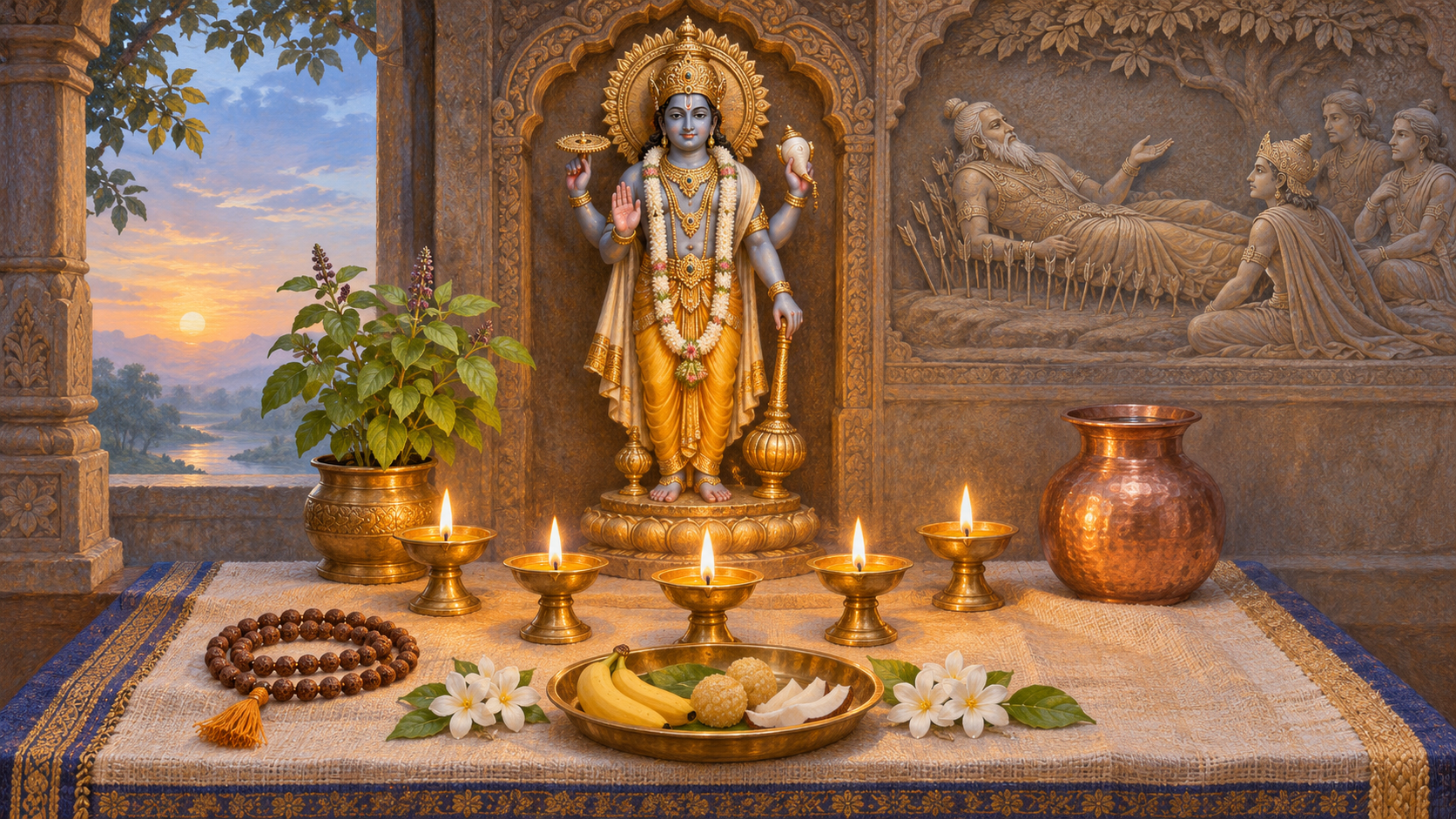
If you want to observe Bhishma Panchaka but don’t know which rules are essential, begin with the distinction that prevents most confusion. It is a five-day sacred period dedicated to Bhishmadeva; the exact calendar, food discipline, mantras, offerings and concluding rite should come from the sampradaya you follow.
Your task is not to collect the largest possible number of restrictions. It is to make one coherent sankalpa and keep it attentively. Before the observance begins, you should know when it starts and ends where you live, what you are promising, how each day will be structured, and whom you will consult if a ritual or fasting question arises.
Fix the dates and your governing tradition first
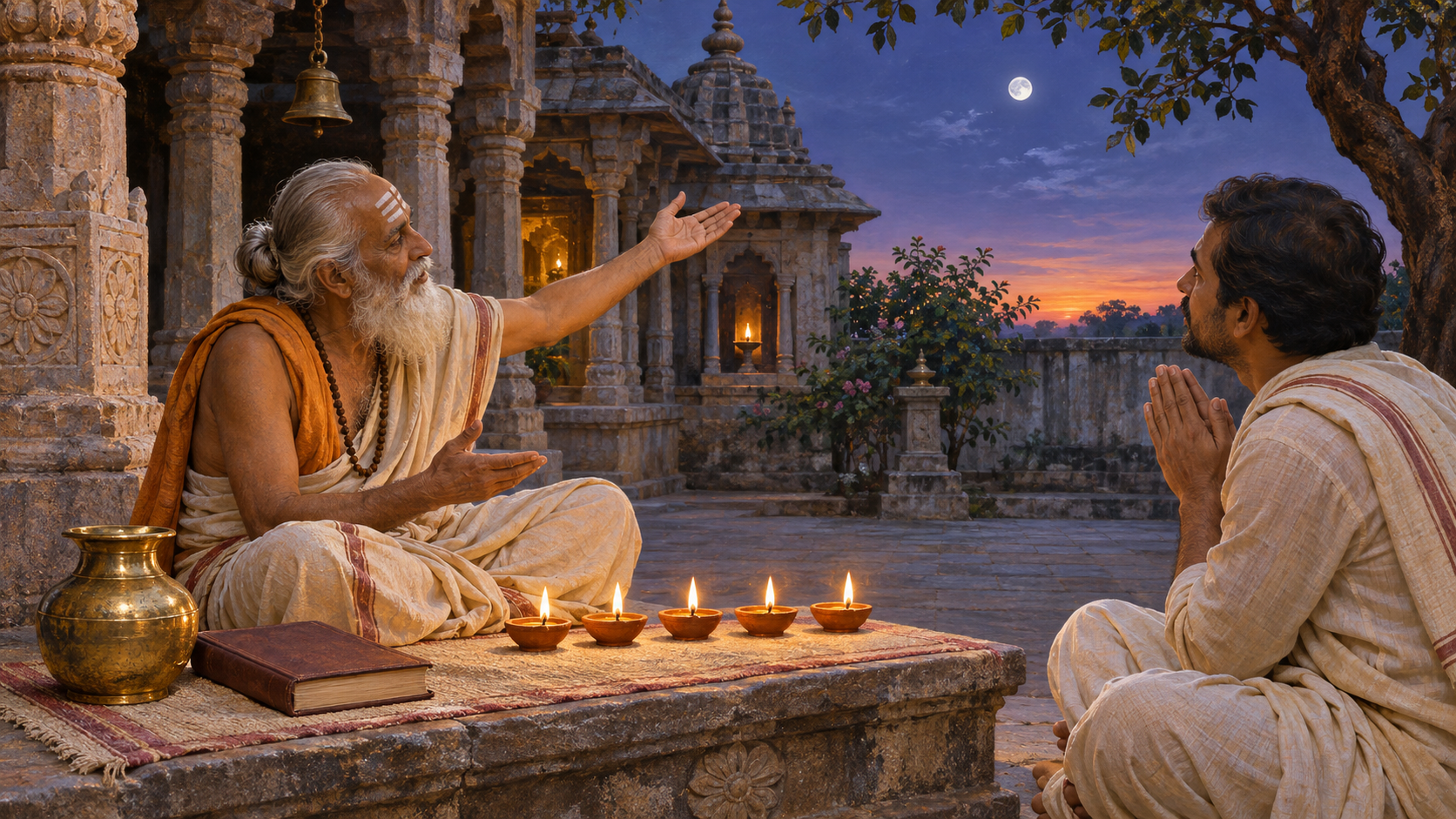
Do not plan Bhishma Panchaka from a generic Gregorian date alone. Hindu observances are determined through the relevant tithi, and a tithi does not necessarily begin or end at civil midnight. Location and calendrical convention can therefore affect how the observance appears on a calendar.
Choose one reliable authority for the full observance: your family tradition, acharya, temple or the panchanga normally used by your community. If two calendars differ, ask why before combining them. Following one established convention consistently is more defensible than creating a hybrid from unrelated instructions.
Get clear answers to these questions before you begin:
- Which local tithi marks the beginning of the vrata?
- When and how is the observance formally completed?
- Which food restrictions does this tradition prescribe, permit or treat as optional?
- Which daily worship, recitation or offering belongs to the practice?
- What adaptation is appropriate if health, medication, age or work makes the customary fast unsafe?
This short consultation prevents a common practical failure: beginning with enthusiasm, discovering conflicting rules midway, and then spending the remaining days wondering whether the vrata still counts. Resolve the structure first so that your attention can remain on worship.
Write a five-day sankalpa you can actually keep
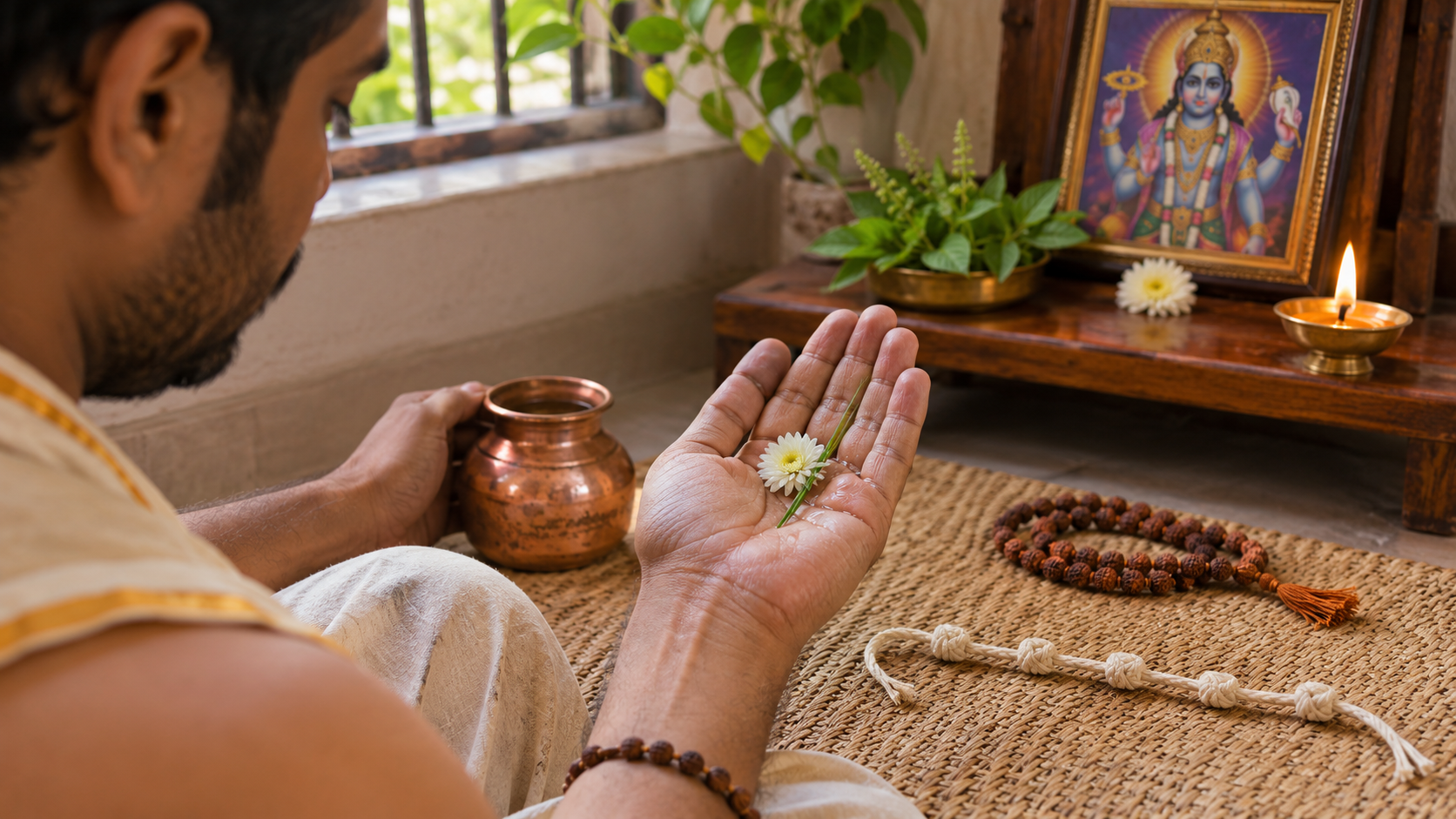
A vrata needs clear edges. A private intention such as “I will be more spiritual this week” is too vague to guide you when your routine becomes inconvenient. Write a short sankalpa in plain language before adopting any formal wording taught by your tradition.
- Daily anchor: Name the worship, japa, prayer or reading you will complete every day.
- Discipline: State the food rule or other restraint you have received and are able to follow safely.
- Bhishma-centred study: Select the Mahabharata passages you will read, rather than searching for something suitable each day.
- Conduct: Choose one habit to restrain, such as needless argument, careless speech or compulsive entertainment.
- Safety boundary: Record any medical requirement that must not be overridden by the fast.
A workable planning sentence is: “During these five days, I will follow the dates and ritual guidance of my tradition, complete my chosen daily practice, study Bhishma with attention, keep the discipline I have accepted, and conclude the vrata in the prescribed way.” This is not a ritual mantra. It is a practical check against making promises you have not defined.
Build the sankalpa around the week you really have. Mark work shifts, travel, caregiving and family obligations before fixing your routine. Prepare any permitted meals in advance, place the text and worship materials together, and protect a repeatable period for practice. A demanding vow that depends on every day going perfectly is fragile; a clearly bounded vow can survive an ordinary disruption.
Let Bhishma shape what you examine
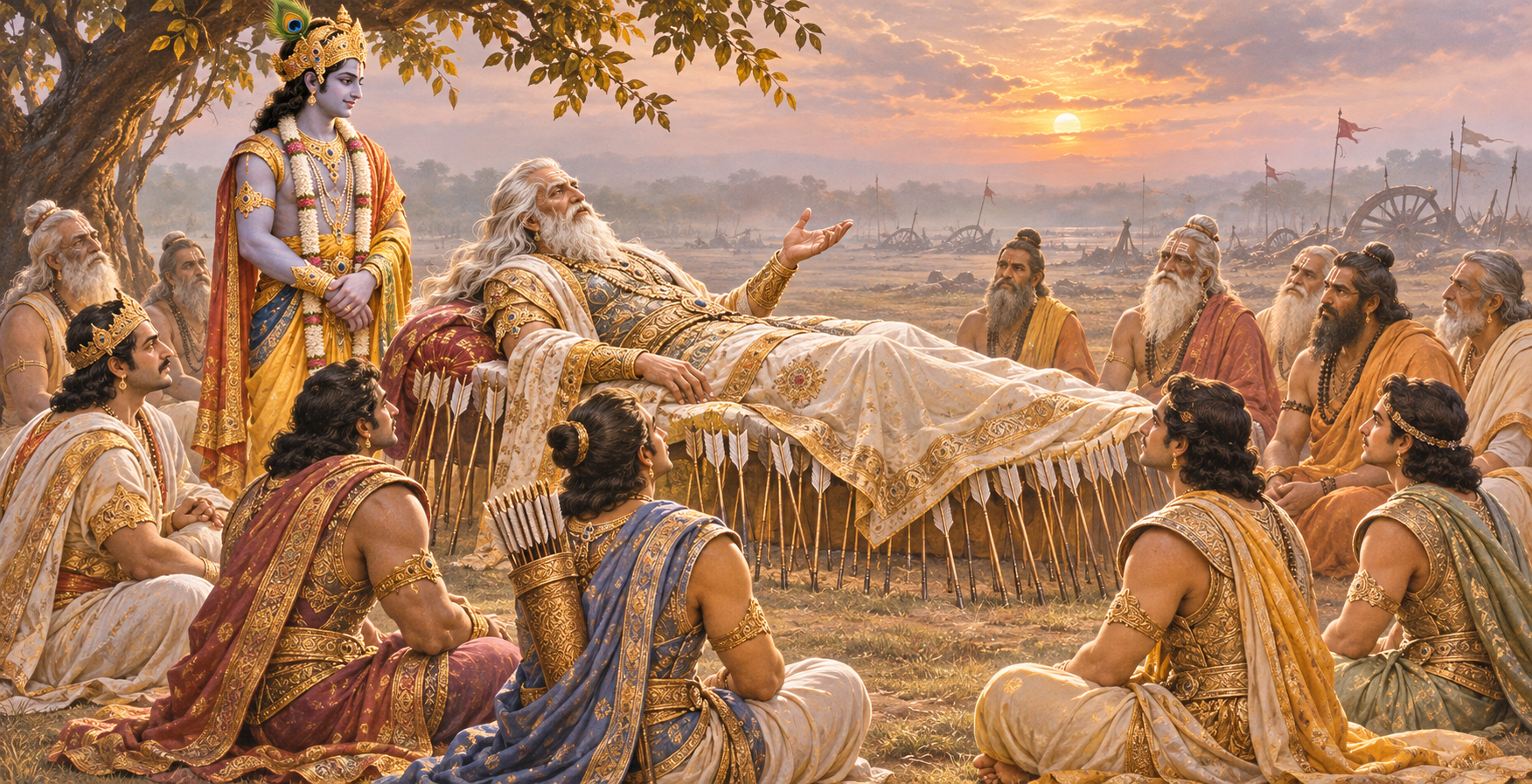
Bhishma should not become a decorative name attached to a food regimen. His life in the Mahabharata makes you confront the power of a vow, the discipline required to carry responsibility, and the moral difficulty that arises when loyalty, authority and dharma pull in different directions. Remembering him seriously means examining both steadfastness and its consequences.
The following five-day sequence is a reflection framework, not a claim that every lineage prescribes these themes:
- Day one — Sankalpa: Which promise in your life genuinely protects dharma, and which commitment survives only because you have never re-examined it?
- Day two — Self-command: Which appetite, irritation or distraction most easily governs your conduct?
- Day three — Dharma under pressure: When your roles conflict, which principle must not be traded merely for convenience or approval?
- Day four — Counsel: Do you offer necessary truth early enough, and can you receive correction without defending your pride?
- Day five — Completion: What did the discipline reveal, and which one practice should continue after the vrata closes?
Pair each question with a passage centred on Bhishma. Chapter and section numbering can differ among Mahabharata editions, so use the contents, index or guidance supplied with the edition trusted by your household or temple. Read a manageable passage slowly. Note the decision being made, the dharmic value at stake, the people affected and the cost of the decision. That method keeps the reading from collapsing into uncomplicated hero worship or equally shallow condemnation.
Fast without making food the whole observance
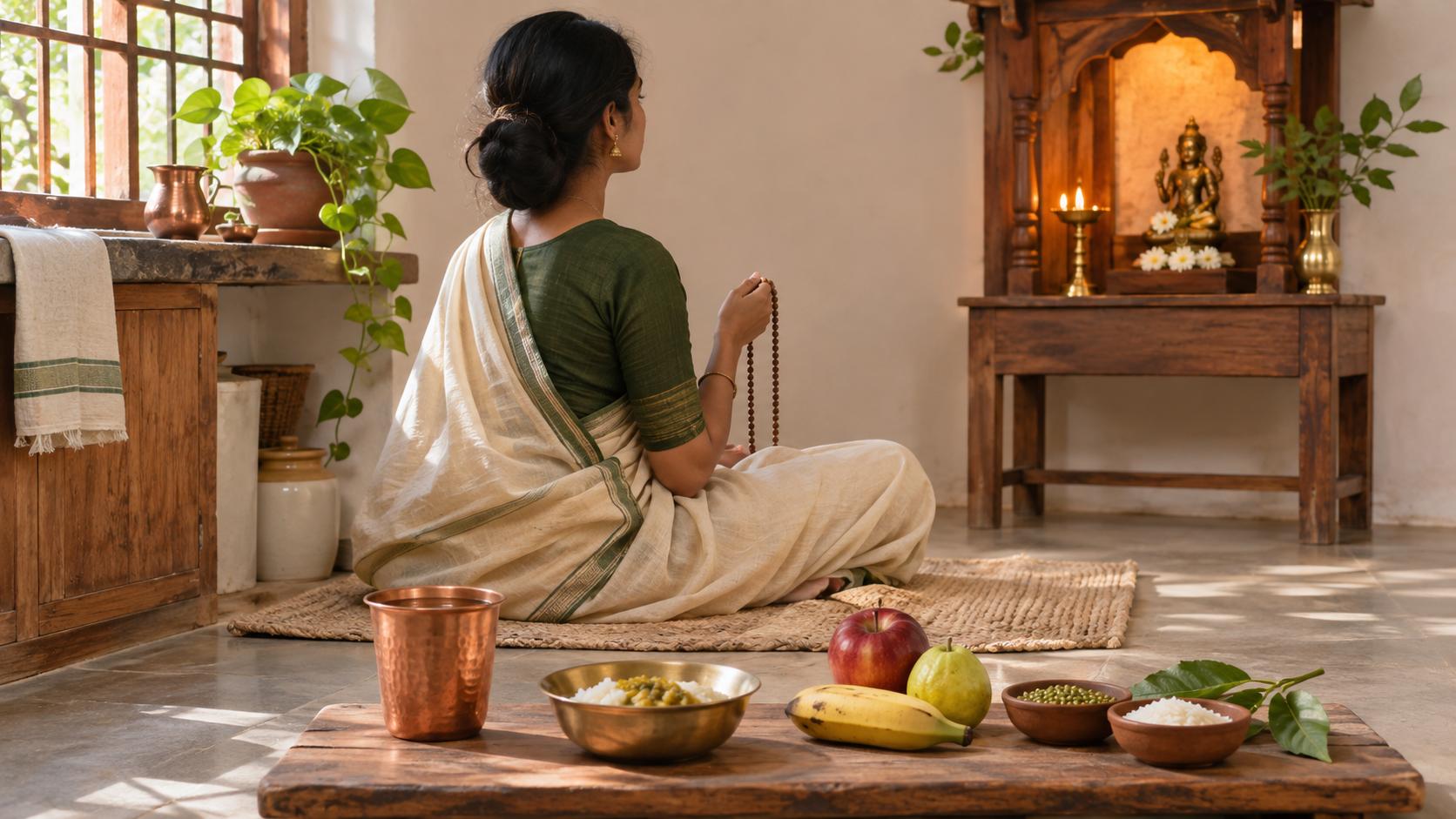
Food discipline can sharpen attention, but severity is not a reliable measure of devotion. Do not assume that a menu circulated by one community is a universal Bhishma Panchaka rule. Ask whether your tradition distinguishes the opening day from the remaining days, whether it specifies permitted foods or meal frequency, and how the fast is broken. Then follow that answer instead of switching systems midway.
A restrictive fast can be unsafe for some people. If you have diabetes, take medicine that requires food, are pregnant or breastfeeding, have a history of disordered eating, are frail, or are responsible for a child or older adult who wants to participate, obtain qualified medical guidance before changing food or fluid intake. A religious observance is not a substitute for medical care, and dizziness, confusion, fainting or other concerning symptoms are not spiritual accomplishments.
If strict fasting is not safe, do not invent a ritual equivalence and declare it traditional. Ask your priest, teacher or family elder how the vrata may be adapted. You can still protect the scheduled worship, Bhishma-centred reading, disciplined speech and appropriate seva while following a safe eating plan. The point is to adapt honestly, not to conceal a health need or claim a rule your tradition has not given.
Use the same simple rhythm every day
Consistency reduces decision-making and leaves more attention for remembrance. A home routine can remain simple without pretending to replace lineage-specific worship.
- Prepare before the vrata: Confirm the local dates, obtain any required materials, select your readings and settle the food plan.
- Open deliberately: Begin the first day with your household’s normal worship and state the sankalpa you have accepted.
- Repeat a fixed daily sequence: Perform the worship you already know, complete the selected reading, keep the chosen restraint and record a brief response to that day’s reflection.
- Handle disruption without improvising punishment: If you miss part of the routine, resume it and seek guidance where necessary. Do not add an extreme fast or unfamiliar penance on your own authority.
- Complete rather than drift out: Observe the concluding time and rite supplied by your tradition. Mark the vrata as finished, offer gratitude, and decide which discipline will remain part of ordinary life.
If you are observing with family, agree on the shared portion and the personal portion. The household might meet for worship and reading while each person keeps a health-appropriate discipline. This prevents comparison from becoming the centre of the observance and lets children or first-time participants take part without being pushed into an adult austerity.
Key takeaways for a first-time observer
- Confirm the beginning and conclusion through the panchanga and tradition used in your location.
- Choose one governing authority instead of combining unrelated ritual instructions.
- Write a specific, sustainable sankalpa before the first day.
- Make Bhishma-centred reading and reflection part of every day, not an afterthought to fasting.
- Treat food restrictions as tradition-specific and adapt them only with appropriate religious and medical guidance.
- Plan the concluding rite in advance so the observance ends deliberately.
Start tonight with two concrete actions: check which calendar your temple or family follows, and write the one sentence that will define your five-day sankalpa. Once the dates and promise are clear, you can prepare the worship, reading and meals around them without confusion. That gives Bhishma Panchaka a firm beginning—and gives you a vow you can carry to its proper completion.
References

Leave a Reply
You must be logged in to post a comment.