
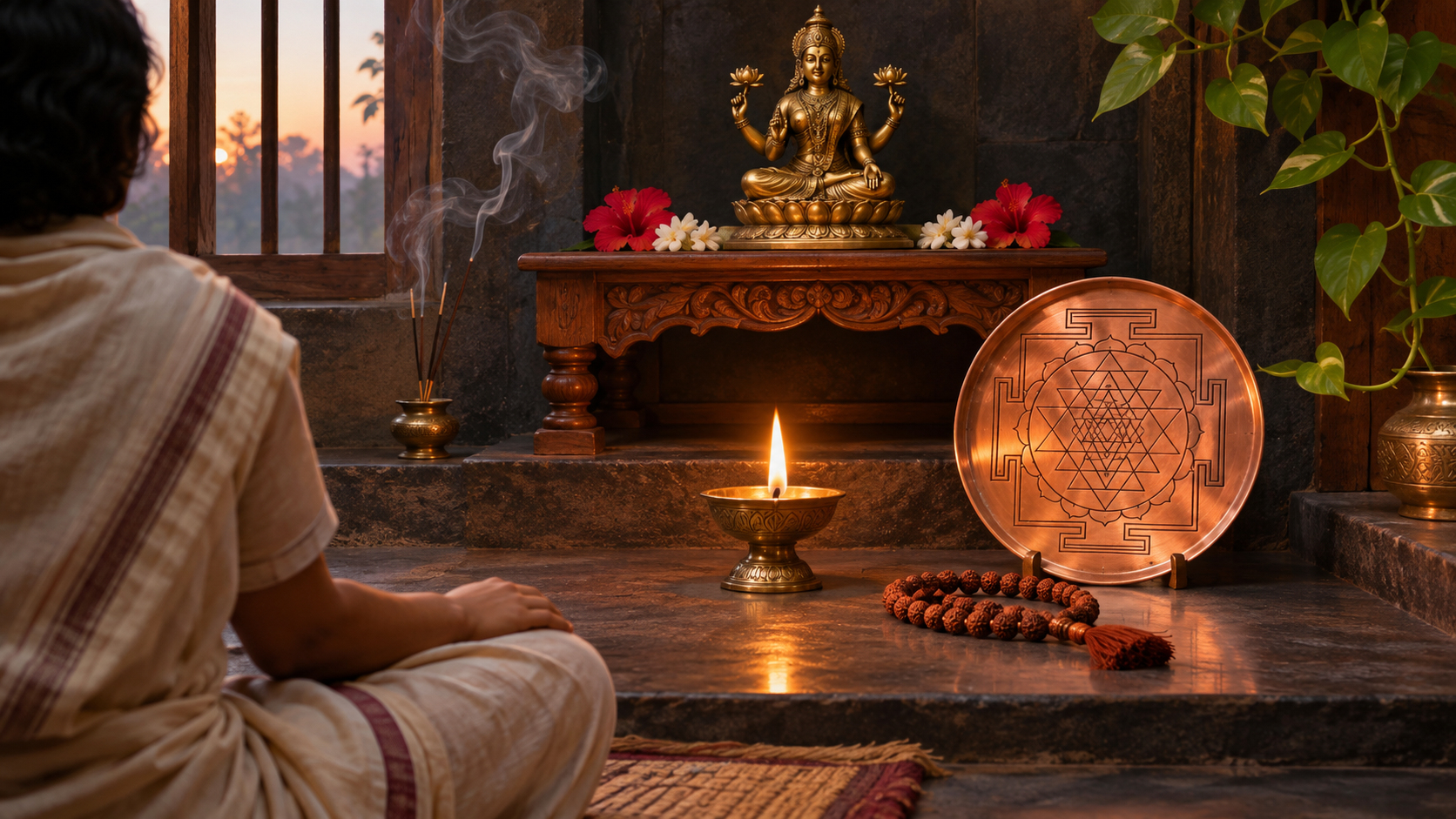
You may feel genuine devotion before a murti, mantra, or yantra and still wonder whether spiritual maturity requires leaving such forms behind. If the highest reality is beyond name and shape, does attention to a sacred image deepen your practice or keep you at the surface?
The apparent contradiction disappears when you treat form as a method of attention rather than a final boundary. A sacred form gives the wandering mind somewhere worthy to gather. As attention becomes steadier, the form can disclose the unity it expresses rather than compete with that unity.
Form is a method, not a spiritual mistake
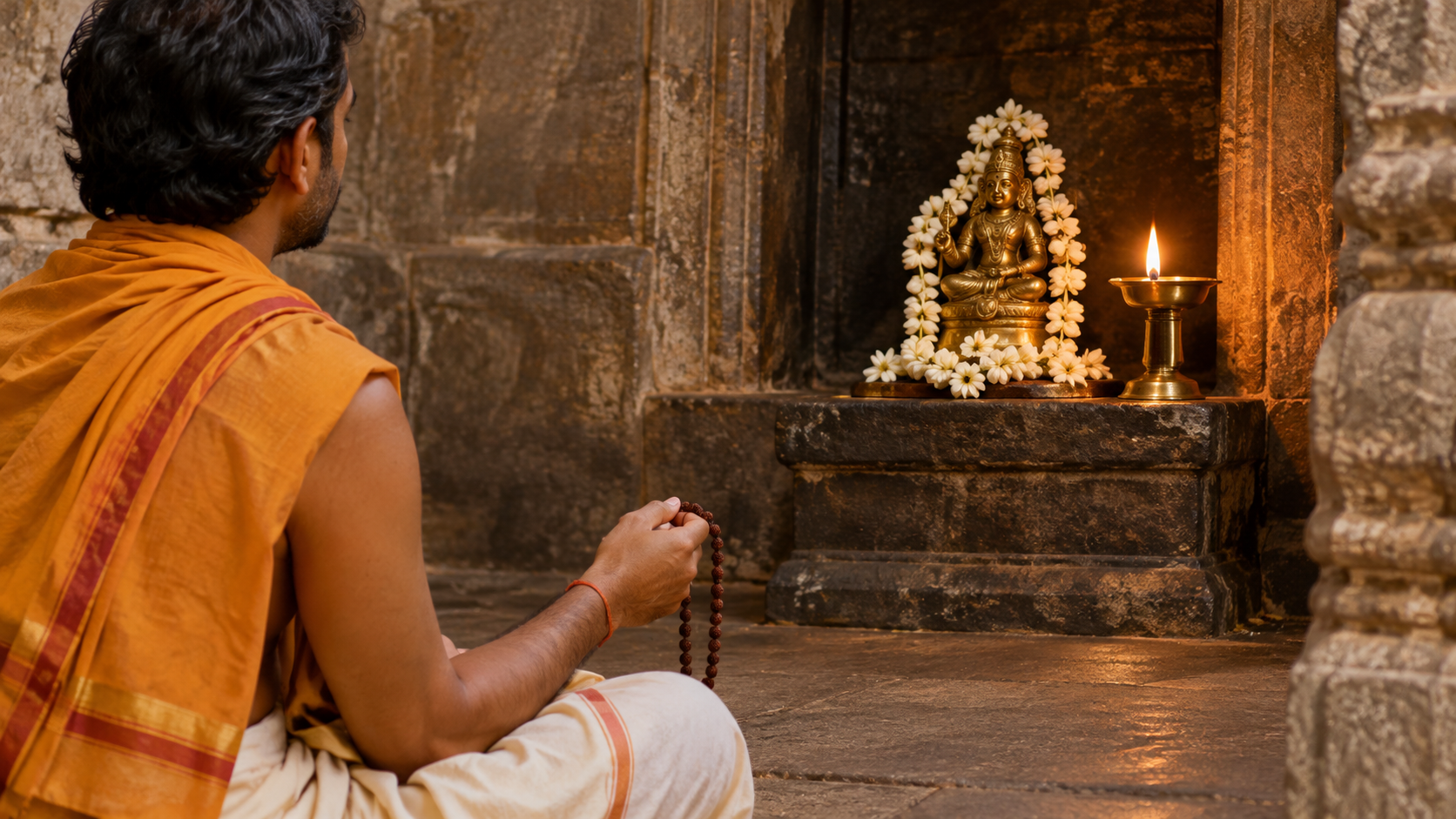
The ordinary mind moves toward whatever can be seen, heard, remembered, desired, or feared. It repeatedly reaches outward toward names, forms, and sensations. Condemning that movement rarely makes it disappear. Hindu practice often works with it deliberately.
A murti offers a visible presence. A mantra gives attention a sound and rhythm. A yantra gives it an ordered visual field. Puja engages gesture, offering, memory, and feeling. These are not merely decorations placed around an otherwise abstract philosophy. They organize faculties that are already active and direct them toward a sacred center.
The important question is therefore not, “Am I using a form?” Ask instead, “What is this form doing to my attention and conduct?” A useful support should gradually reduce distraction, possessiveness, and spiritual vanity. It should make reverence more stable and action more responsible. If it becomes an object of mechanical repetition, sectarian pride, or anxious dependence, the correction is deeper engagement, not automatic rejection.
This also prevents a common mistake: treating form-based worship as a beginner’s stage that knowledgeable people must outgrow. A person can perform an elaborate ritual absent-mindedly, just as another person can repeat lofty language about formless reality while remaining governed by anger and appetite. The maturity of a practice is shown by the quality of awareness it produces, not by how abstract its vocabulary sounds.
How Sri Chakra turns multiplicity toward a center
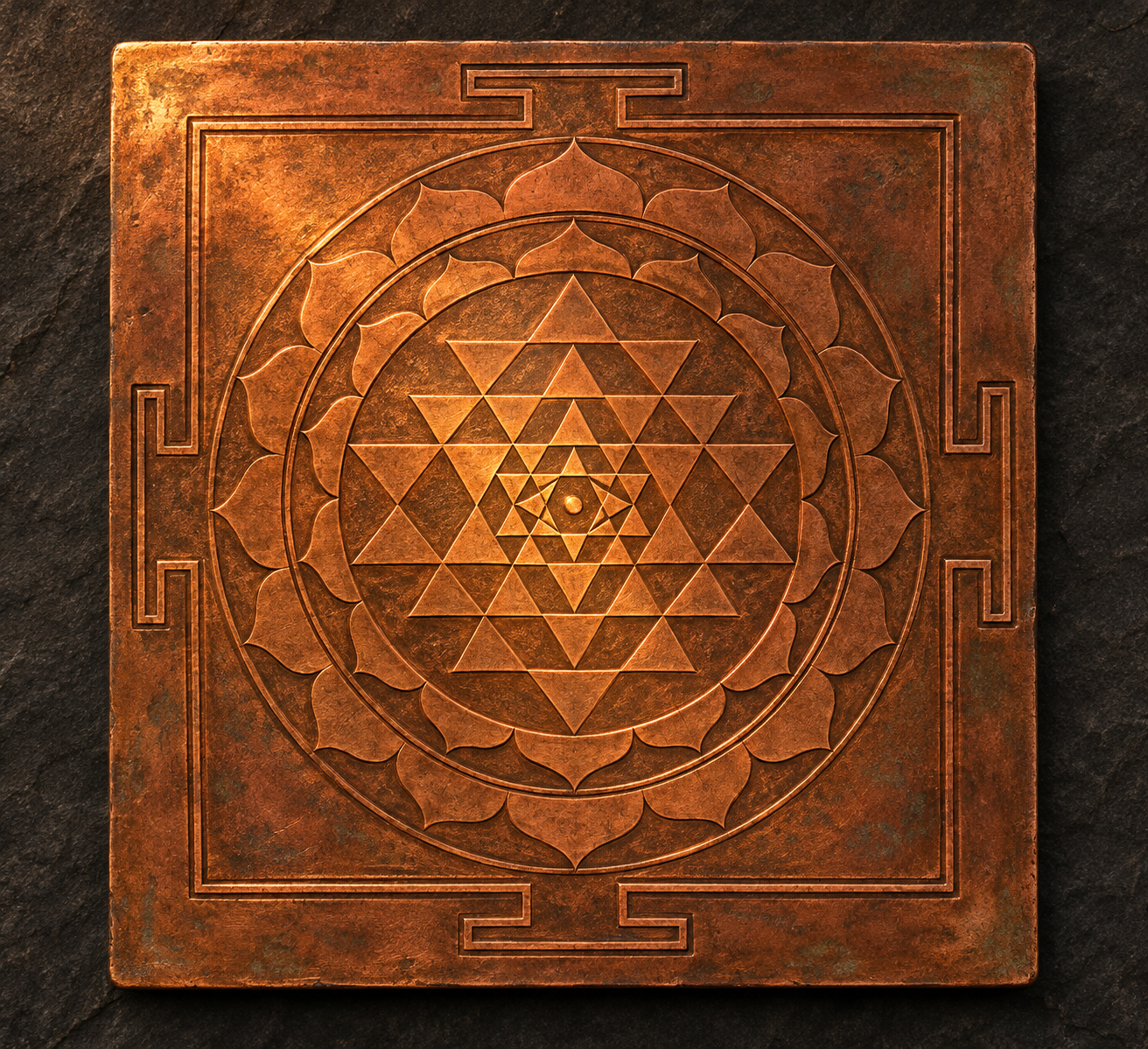
Sri Chakra makes the movement from form toward formlessness especially clear. Its geometry presents complexity without chaos. Boundaries, intersecting forms, and an ordered center give the eyes something precise to encounter while training attention to move from dispersion toward integration.
Its value does not lie in forcing the mind to become blank. The mind first meets an articulated whole. It notices distinction, relation, enclosure, direction, and center. As attention becomes less scattered, the geometry functions as a map from outward movement toward stillness. The visible pattern remains present, but its work is to lead awareness beyond restless consumption of visible things.
You can notice this principle without pretending to perform a complete Sri Vidya ritual. Sit before a clear representation of Sri Chakra. Let your gaze receive the whole design before concentrating on any one feature. Notice where the eyes hurry, where they become confused, and where they seek relief. Then allow attention to move gradually toward the center. When it settles, stop mentally explaining the image. Remain attentive without demanding a special experience.
If you have received a particular ritual, mantra, or meditation method from a qualified teacher, follow that instruction instead of inventing additions. The simple exercise above is a way to observe how sacred geometry affects attention; it is not a substitute for a lineage-specific discipline.
The same principle applies beyond Sri Chakra. When you offer a flower, repeat a divine name, light a lamp, or contemplate a murti, let the outward act perform an inward task. Move from many impressions to one orientation, from one orientation to sustained attention, and from sustained attention to quiet presence. Form has fulfilled its purpose when it becomes transparent to what it signifies.
Spiritual unity does not make every path interchangeable
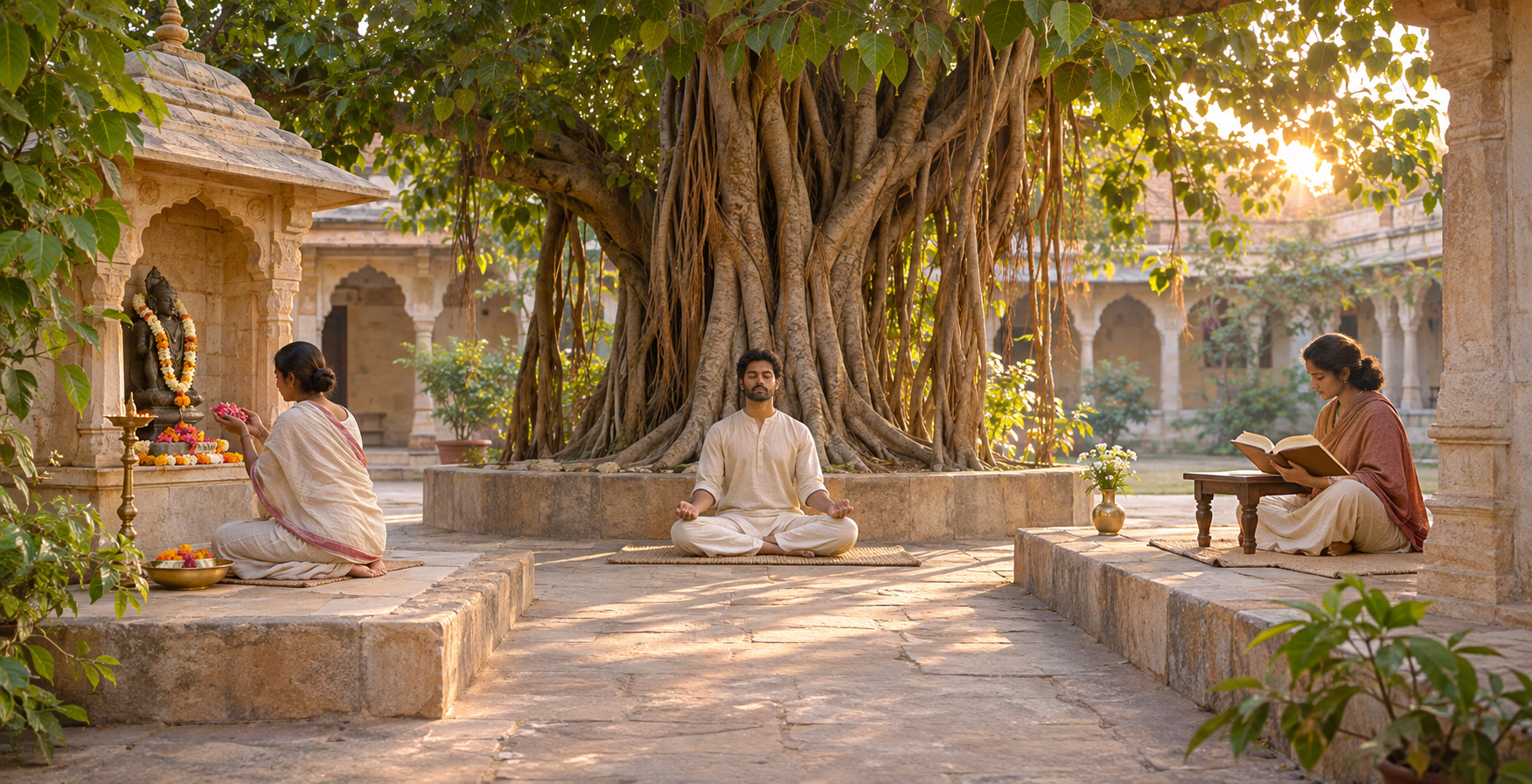
A unifying Hindu vision holds that different spiritual approaches can culminate in the same ultimate reality. This is not a claim that every method, doctrine, or devotional relationship is identical. It is a distinction between the route and what the route finally discloses.
Bhakti works through love, surrender, remembrance, and relationship. Jnana investigates the assumptions behind the separate self and asks what is ultimately real. Karma yoga addresses attachment within action, especially the demand to possess results. Meditative disciplines collect attention and expose the mind’s habitual movements. A practitioner may draw from more than one of these, but each has its own immediate work.
Unity should not be used to erase those differences. Saying that paths share an ultimate orientation does not mean you can exchange their instructions carelessly or reduce every deity, practice, and school to a slogan. Nor does respect require pretending that Hindu traditions formulate every metaphysical question in exactly the same way. Their distinct languages and disciplines deserve to be understood on their own terms.
At the same time, difference need not become hostility. The devotee absorbed in a divine form and the contemplative examining the nature of awareness may be loosening different knots. One should not ridicule the other’s instrument merely because the work begins at another point. A path can be definite without becoming defensive.
This gives you a practical test for sectarian claims. When someone insists that another sincere Hindu path must be spiritually worthless simply because its symbols or language differ, ask whether the disagreement concerns method, doctrine, or the possibility of realization itself. Keeping those levels separate allows serious disagreement without turning diversity into contempt.
Choose the path that addresses your present obstacle
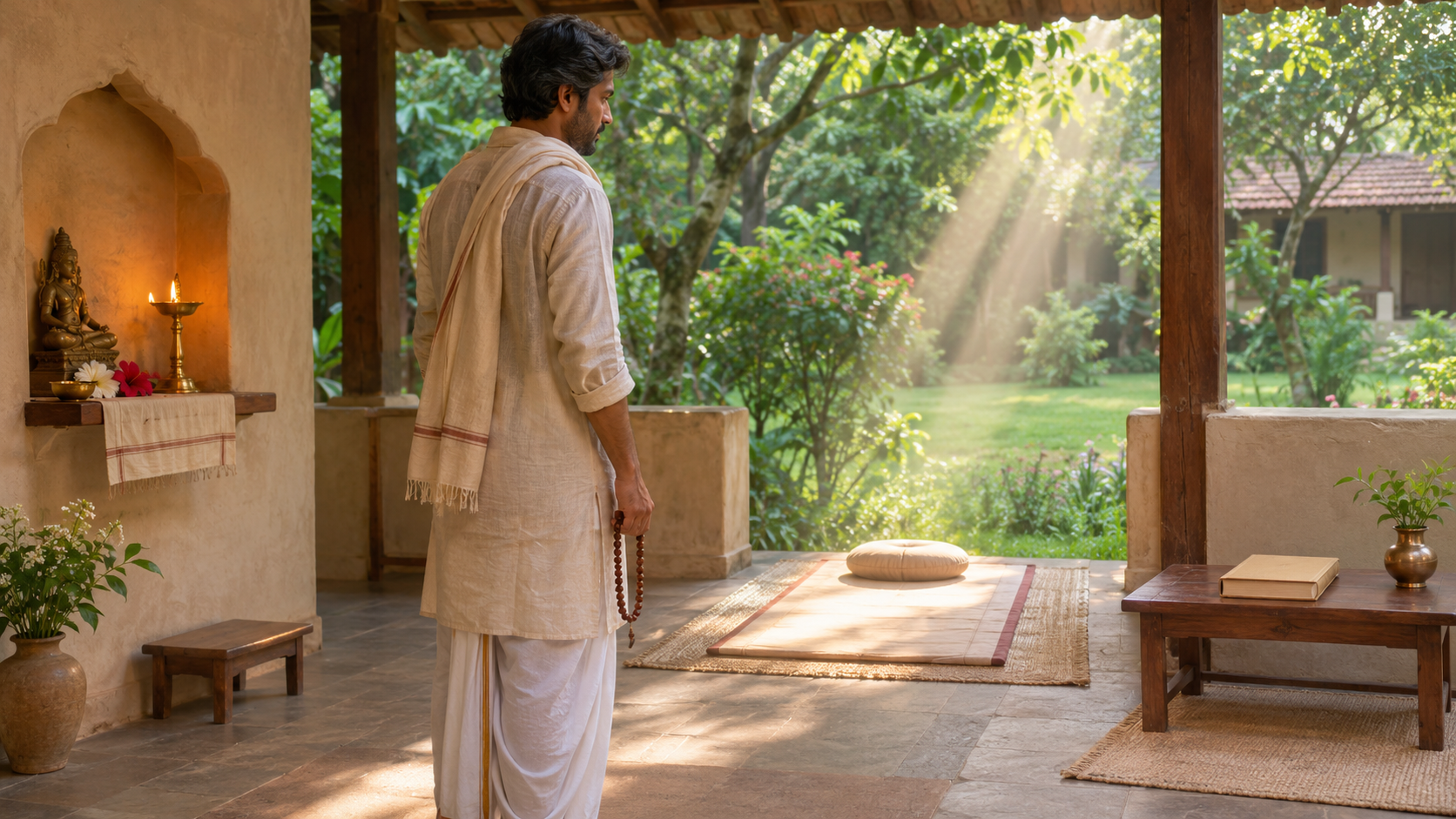
You do not need to settle every philosophical question before beginning a disciplined practice. Start by identifying what repeatedly breaks your attention or distorts your conduct. Choose one primary discipline that works directly on that tendency, then judge it by observable changes rather than by novelty.
| What repeatedly pulls you off course | A fitting primary emphasis | What progress may look like |
|---|---|---|
| Scattered attention and constant sensory seeking | Contemplation with a murti, yantra, mantra, or another stable sacred support | You return to the chosen support more readily and remain present through the practice |
| Emotional isolation, self-protection, or difficulty surrendering | Bhakti expressed through remembrance, worship, and offering | Devotion begins to appear as patience, gratitude, and care beyond the ritual setting |
| Persistent questions about self and reality | Jnana-oriented reflection and disciplined inquiry | Your questions become more precise, and borrowed conclusions lose their appeal |
| Attachment to praise, control, and the outcome of work | Karma yoga within duties you already carry | You act carefully without allowing success or disappointment to determine your integrity |
This table is a starting point, not a ranking. Several tendencies may be present at once. Choose one anchor rather than changing methods whenever the mind becomes uncomfortable. Abhyasa, sustained practice, matters because the mind’s preference for novelty can disguise avoidance as spiritual exploration.
Consistency does not require rigidity. A devotional practice can include reflection; inquiry can be supported by worship; action can become contemplative. The anchor simply tells you where to return when your practice becomes scattered. It gives the different elements an organizing center.
A six-part movement from form toward stillness
- Name the immediate purpose. Before beginning, identify the faculty you are training: attention, devotion, inquiry, or non-attachment in action. Avoid asking one short session to solve every spiritual problem.
- Choose one primary support. Use the divine form, mantra, yantra, prayer, or contemplative question appropriate to your path. Keeping the support stable makes distraction easier to recognize.
- Meet the form fully. Look, listen, recite, offer, or reflect without rushing toward an imagined higher stage. Details are not distractions when they are the chosen field of attention.
- Gather the many into one. Let separate impressions become a unified orientation. With sacred geometry, this may mean moving attention toward the center. With mantra, it may mean allowing sound and listening to become one continuous act.
- Permit a quiet interval. After the active portion, pause without adding another image or explanation. Do not fight thoughts. If attention fragments completely, return to the support and begin gathering it again.
- Carry one result into conduct. Select a concrete expression before you leave: complete a duty without seeking praise, speak without unnecessary harshness, or give full attention to the next person before you. This prevents stillness from becoming a private spiritual mood.
Do not manufacture a dramatic experience to prove that the method works. A more reliable question is whether your relationship to distraction is changing. You may still notice many thoughts, but notice whether you recognize them sooner, follow fewer of them automatically, and return with less irritation. The return itself is part of the discipline.
Key takeaways
- Sacred form gathers faculties that would otherwise move in competing directions.
- Sri Chakra makes an inward movement visible: complexity is ordered around a center and attention is guided toward stillness.
- Formlessness is not reached by despising form; it is approached by seeing through form without becoming careless about it.
- The unity of the ultimate goal does not erase differences among devotional, contemplative, philosophical, and action-centered disciplines.
- Choose a primary practice according to the tendency that most often disturbs your attention or conduct.
- Measure practice by steadier awareness and better action, not by abstract language or extraordinary sensations.
At your next practice, choose one sacred support and one tendency you want to observe. Give the form your full attention, allow a short interval of silence, and carry one deliberate action into the rest of your day. You do not have to leap from symbol to infinity. Let the symbol teach the mind how to become quiet enough to recognize the unity toward which it points.
References
- Hindu Blog — Sri Chakra: The Geometry That Leads the Mind Home
- Hindu Blog — The Ultimate Goal Is The Same And The Experience Is Also The Same – Hinduism

Leave a Reply
You must be logged in to post a comment.