

You may enter a Devi temple expecting a single central form, only to encounter three sacred presences, seven or eight Mothers, nine forms of Durga, or a much larger assembly. The obvious question follows: if Shakti is one, why is she worshipped in groups?
The short answer is that unity and multiplicity are not rivals in Shakti worship. A singular form lets you approach the Divine Mother as complete presence. A collective form lets you see how that same sacred power can be differentiated without being divided. Once you understand that distinction, the Three Pindis, Saptamatrikas, Ashta Matrikas, Nava Durga, 51 Shakti Peethas and 64 Yoginis stop looking like unrelated lists.
Multiplicity is a sacred grammar, not a head count
The question “How many goddesses are there?” can be useful for identifying a particular group, but it cannot explain what collective worship is doing. It treats divine forms as items in an inventory. Shakti traditions often ask a more fruitful question: what becomes visible when divine power is encountered through several related forms?
Consider the difference between a lamp and the light falling from it in several directions. The directions can be distinguished without requiring several independent sources of light. In a similar way, a collective manifestation can disclose differentiated powers, relationships or modes of approach while retaining an underlying unity. This is an analogy, not a universal doctrinal formula; Hindu traditions do not all explain Shakti in identical philosophical language.
This changes how you should look at a group of Devi forms. Do not begin by asking which member is the “real” Goddess and which are merely secondary. First ask what the arrangement communicates as a whole. Notice the number, the names, the order, the location and whether one form occupies a central place. The relationships are part of the meaning.
Read the kind of group before interpreting its members
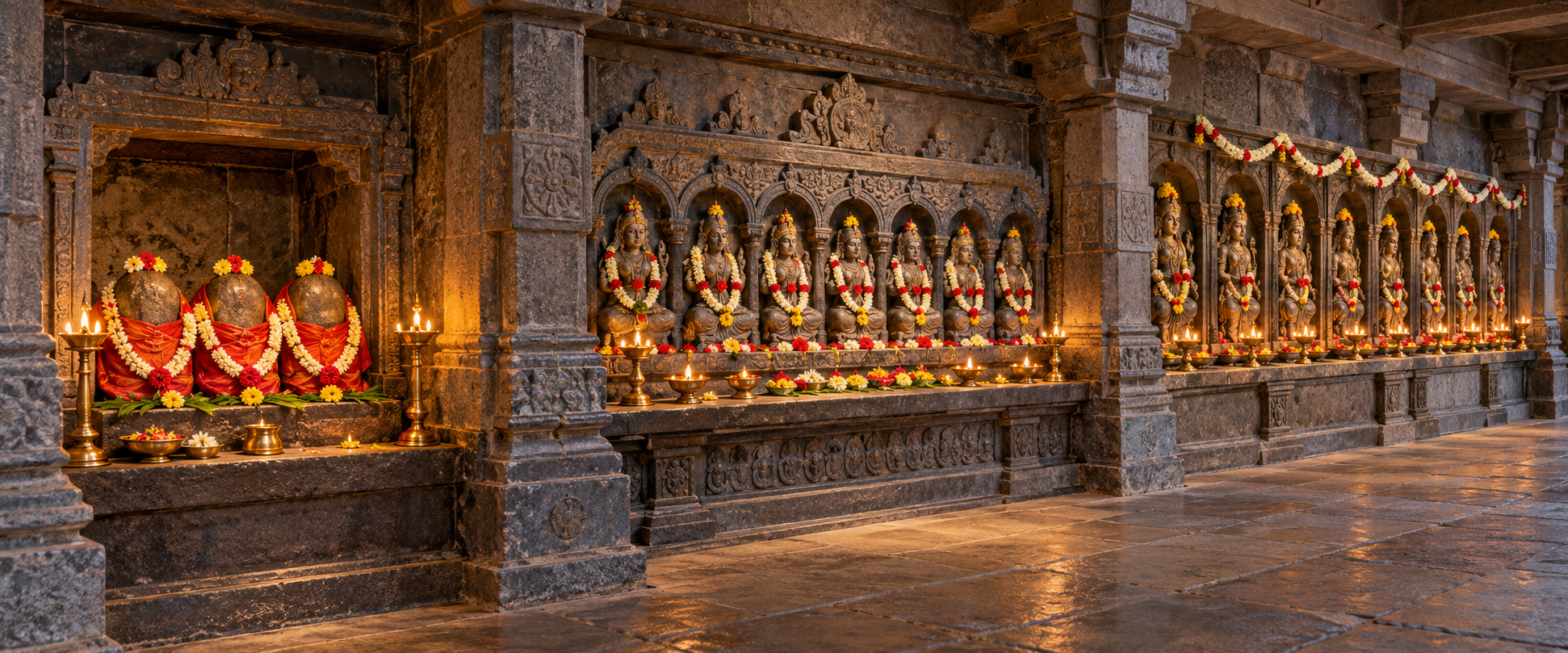
Not every collective represents multiplicity in the same way. Some present a small set of sacred presences. Some gather named forms under one divine identity. Some establish a company of Mothers. Others extend Shakti through sacred geography. Keeping these structures distinct prevents an attractive but misleading idea from becoming your explanation for every tradition.
| Collective form | What its structure immediately tells you | A useful first question |
|---|---|---|
| Three Pindis | You are encountering a threefold sacred presence rather than being asked to look only for one isolated figure. | How does this particular tradition identify and relate the three presences? |
| Saptamatrikas and Ashta Matrikas | The Mothers appear as a defined company of seven or eight. | Which membership, order and count does the local tradition preserve? |
| Nava Durga | Nine distinguishable forms remain forms of Durga. | Are the nine approached in sequence, together, or in another locally established manner? |
| 51 Shakti Peethas | Collective identity is expressed through a network of sacred places. | Is the immediate focus one Peetha, the larger sacred geography, or both? |
| 64 Yoginis | A large assembly must be understood collectively as well as form by form. | How does this tradition present the relationship between each Yogini and the complete group? |
Three Pindis: begin with the triad
When you encounter the Three Pindis, resist the assumption that a sacred presence must resemble a human figure before it can be intelligible. Start with what the arrangement gives you: three presences held together in one field of worship. Ask how the temple or lineage names them and whether their identities are explained as aspects, powers or a relationship particular to that tradition. Do not supply a triad borrowed from somewhere else merely because the number matches.
The Matrikas: understand the company of Mothers
Sapta and ashta indicate seven and eight, while Matrikas identifies the forms as Mothers. The collective character therefore matters from the beginning. If you study only one Matrika at a time, you may learn individual names or attributes while missing what their presence as a company communicates.
The existence of both Saptamatrika and Ashta Matrika groupings should also make you careful. A difference in count is not automatically a mistake waiting to be corrected. Establish which tradition, temple or presentation you are examining before you compare memberships. The proper unit of study is the particular group in its own setting.
Nava Durga: plurality held within one identity
Nava Durga offers the clearest verbal clue to the underlying logic: nine forms, yet Durga remains the unifying name. You do not have to choose between saying “Durga is one” and acknowledging nine forms. The collective is precisely what allows distinction to be contemplated without surrendering unity.
For practical study, keep two columns in your notes. In one, record what differentiates each form. In the other, record what the full sequence or assembly teaches you about Durga. If the second column remains empty, you have collected names but have not yet understood the collective.
Shakti Peethas and Yoginis: geography and assembly
The Shakti Peethas and Yoginis should not be collapsed into the same type of grouping. The Peethas express collective sacredness through places: one may visit or contemplate an individual seat while recognizing its place within a wider Shakta geography. The Yoginis present a body of divine forms whose collective presence is itself essential to what you are encountering.
This distinction gives you a simple test. When the grouping is geographic, ask how each place participates in the larger whole. When it is an assembly of forms, ask how the members relate within that assembly. The same language of “many forms” applies to both, but your way of reading them should not be identical.
The number is a boundary, not a free-floating code
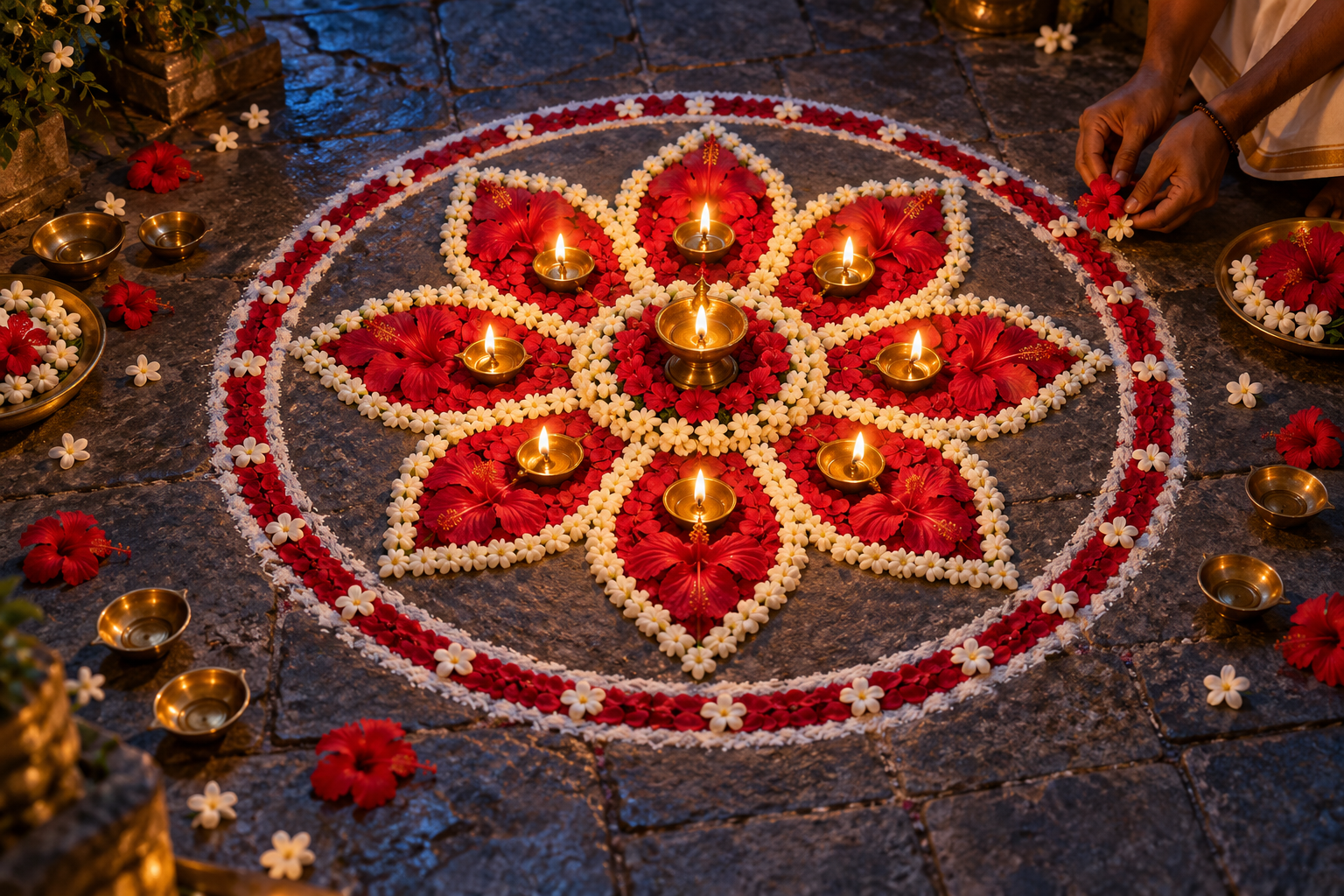
Seven, eight, nine, 51 and 64 are not decorative labels. A count gives a collective its boundary. It tells you whether you have encountered the complete set recognized in that context or only part of it. Preserve the stated count when taking notes, viewing an arrangement or learning the names.
At the same time, a number does not explain itself. A common error is to see a familiar number and immediately map it onto another numbered scheme. That may produce an elegant chart, but elegance is not evidence. A numerical correspondence becomes meaningful only when the relevant tradition actually makes that connection.
Use three checks before accepting an interpretation:
- Membership: Does the explanation account for the forms that actually belong to this group?
- Arrangement: Does it respect the order or spatial relationship in which the forms are presented?
- Context: Does it come from the temple, lineage, text or customary practice being discussed, rather than from an unrelated system with the same number?
If an interpretation fails these checks, treat it as speculation. You do not need to reject symbolic meanings; you need to distinguish inherited meaning from a modern association imposed after the fact.
How to approach a collective form without flattening it
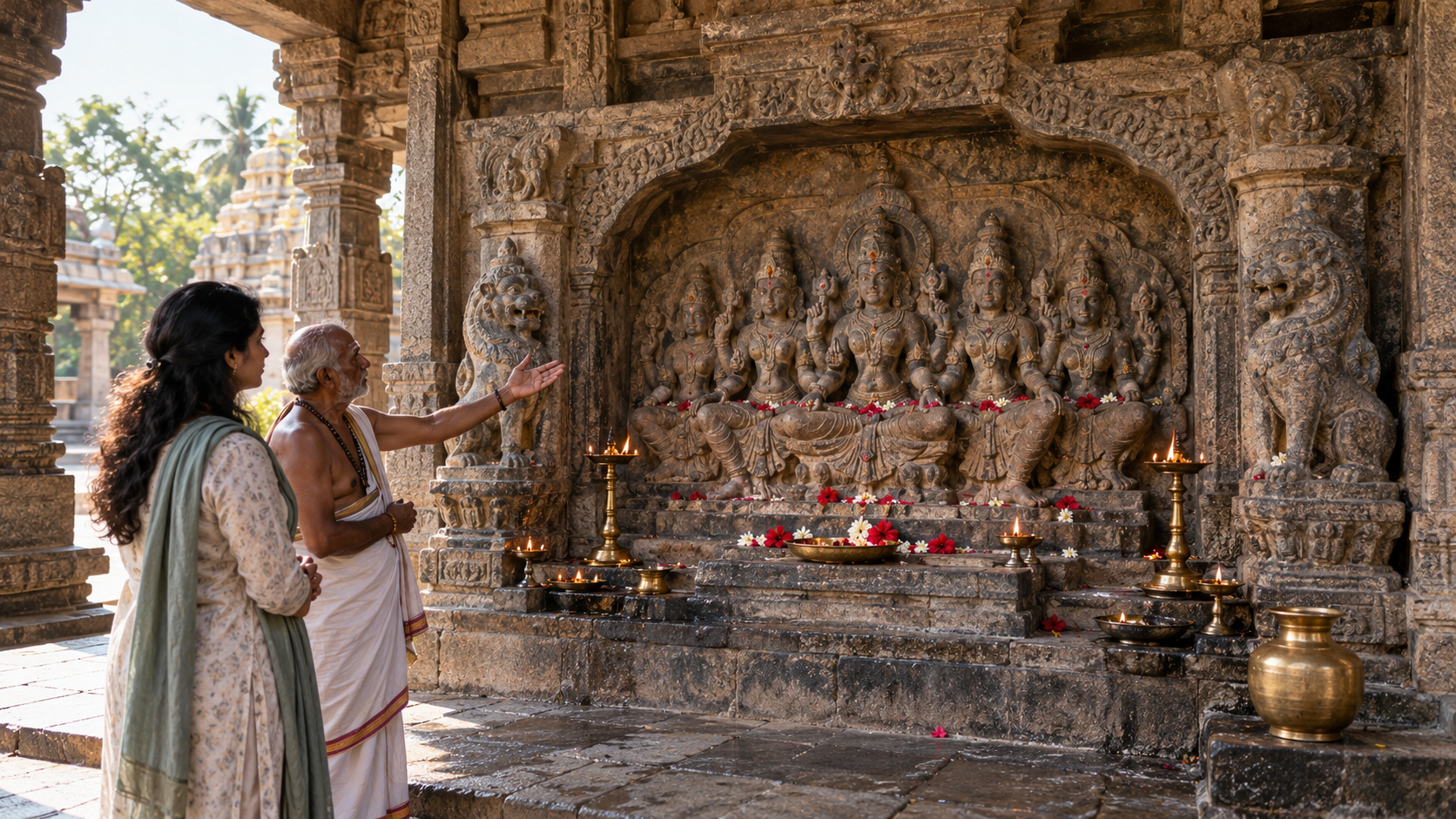
You do not need to master every Shakta grouping before beginning. You do need a disciplined way to learn. The following sequence works whether you are visiting a temple, reading about a tradition or deciding what belongs in a home practice.
- Name the exact collective. Write “Nava Durga” or “Saptamatrikas,” not simply “forms of Devi.” The precise name prevents several traditions from blurring together.
- Preserve its stated count. Do not add a familiar deity to complete your preferred pattern or omit an unfamiliar member for convenience.
- Learn the local membership and order. Use information supplied by the temple or lineage, or ask a knowledgeable practitioner. A generic chart should not overrule the tradition in front of you.
- Identify the type of unity. Ask whether the group is organized as a triad, a company of Mothers, forms under one name, a sacred geography or a larger assembly.
- Separate observation from interpretation. Record what is visibly or explicitly present before deciding what it symbolizes. This small habit prevents assumptions from becoming facts.
- Respect ritual boundaries. Public darshan or general study does not automatically authorize you to improvise every associated mantra or specialized practice. If a community treats a practice as requiring instruction or initiation, seek that guidance.
- Return from the members to the whole. After studying individual forms, state in one sentence what their relationship reveals about Shakti. If you cannot, continue with the collective before moving to another list.
A compact field note can keep your learning honest. Record the collective’s name, count, setting, members, order, local explanation and the person or institution from whom you received that explanation. Add two final prompts: “What remains one here?” and “What becomes many?” Those questions keep both sides of Shakti’s sacred multiplicity in view.
Key takeaways
- Collective Shakti worship does not require you to choose between one Goddess and many forms; the grouping explores their relationship.
- The Three Pindis, Matrikas, Nava Durga, Shakti Peethas and Yoginis are different structures, not interchangeable lists.
- A group’s number identifies its boundary, but the number’s meaning must be learned from its own tradition and context.
- Membership, order, setting and local practice are more reliable than a symbolic correspondence based only on matching numbers.
- Study each form, then return to the whole. The relationships among the forms are part of the teaching.
The next time you meet Shakti in a group, pause before translating the arrangement into a scheme you already know. Name the collective, preserve its count, learn its local order and ask what becomes visible only because the forms stand together. That is the point at which a list becomes darshan.
References

Leave a Reply
You must be logged in to post a comment.