
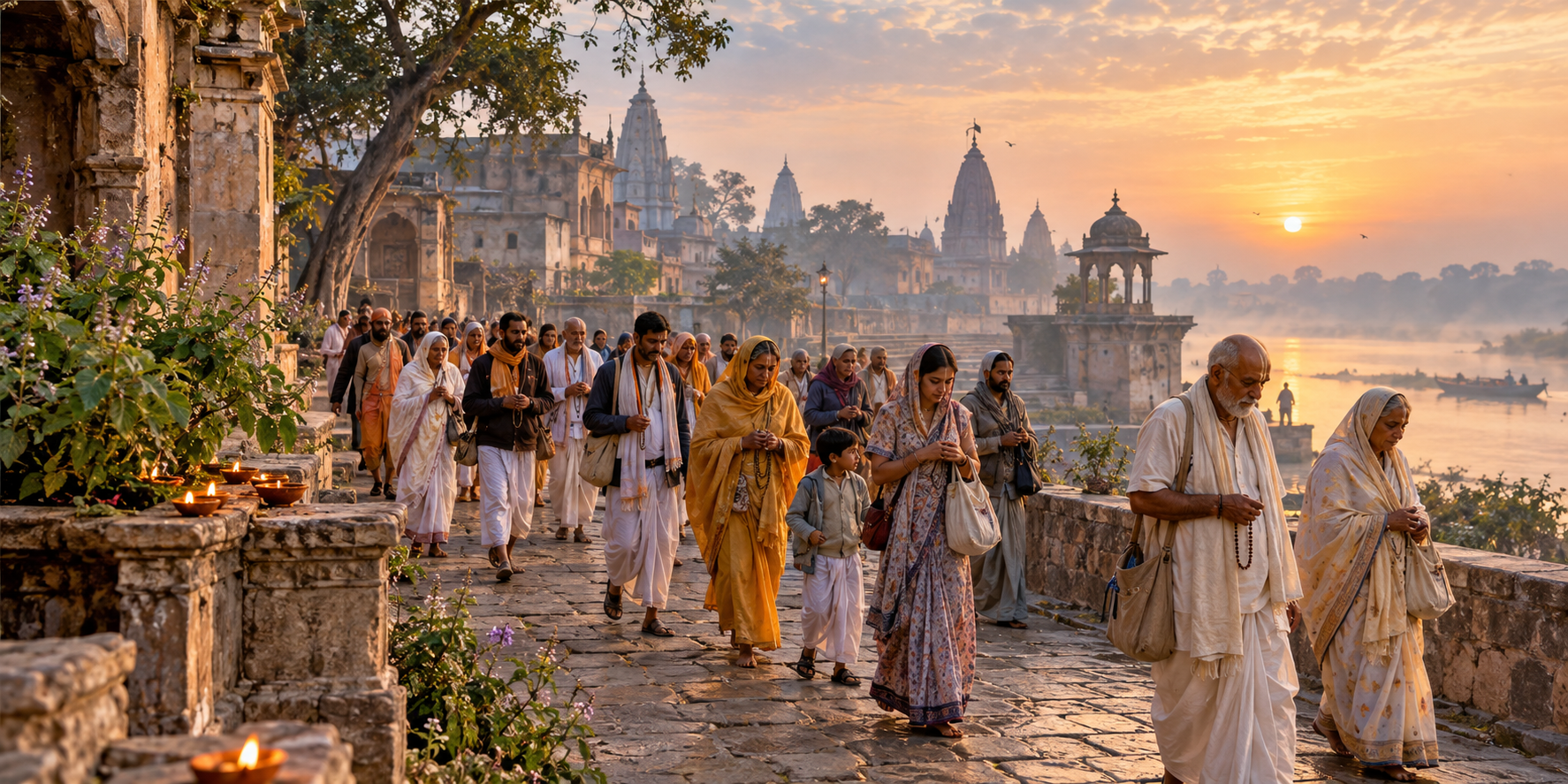
If the thought of entering Sacred Vrindavan for Kartik Parikrama in 2026 has moved you, do not book on emotion alone. A sacred journey deserves the same seriousness before departure that you hope to bring to it on the path.
You need two plans. The outer plan covers confirmed dates, registration, route, lodging, physical demands, money and emergency contacts. The inner plan names why you are going, which devotional discipline you will keep and how you intend to behave when inconvenience strips away the romance. Set both before you travel, and parikrama is less likely to become hurried religious sightseeing.
Key takeaways
- Do not infer an itinerary from the words “Kartik Parikrama 2026.” Obtain the exact calendar dates, meeting point, route, costs and accommodation terms directly from the organiser.
- Prepare for the walking conditions in the footwear and clothing the organiser permits. Do not assume that everyone must walk barefoot or that footwear will be accepted everywhere.
- Choose one modest sankalpa before departure, such as daily japa, restrained phone use or a regular act of seva. A clear commitment is more useful than a dramatic vow you cannot sustain.
- Treat Vrindavan as a living sacred place, not a devotional backdrop. Follow local rules, ask before photographing worship and carry your own refuse until it can be disposed of properly.
- Plan the practice you will continue at home before the yatra ends. The measure of parikrama is not how many images you collected but what changed in your attention and conduct.
Verify the 2026 yatra before you commit money

Kartik identifies a sacred period, but it is not enough information for a booking. You still need exact civil-calendar dates and times. Never buy non-refundable travel merely by matching an online calendar to the word “Kartik.” Use the dates supplied by the temple, ashram or pilgrimage organiser responsible for your particular group.
Ask for the practical terms in writing. If the organiser cannot yet answer an item, mark it as unresolved rather than filling the gap with an assumption.
- What are the arrival, reporting, walking and departure dates, including local times?
- Where is the assembly point, and who will meet pilgrims there?
- Is advance registration required, and who is eligible to join?
- What does the payment cover: lodging, meals, local transport, luggage movement, temple contributions or none of these?
- What type of accommodation is provided, and what bedding, bathroom access and room sharing should you expect?
- Which parts of the route are walked, and what support exists for a pilgrim who cannot complete a stage?
- Are footwear, dress, photography or luggage subject to group or temple rules?
- Who is the emergency contact during the yatra, and what is the procedure if you become separated from the group?
- What are the cancellation and refund terms?
Do not treat social-media forwarding as confirmation. Identify the person or institution accepting registrations, then verify payment instructions through a second official contact channel before sending money. If a payment name, telephone number or account changes unexpectedly, pause and re-confirm it.
Know whose discipline you are joining
Vrindavan is shared by multiple Vaishnava lineages and communities, each with its own daily rhythm and devotional emphasis. Ask whether your group follows a particular temple or sampradaya, what the daily programme includes, which dietary rules apply and whether participation in scheduled kirtan, katha or seva is expected. You do not need to imitate customs you have not been taught, but you do need to enter as a respectful guest.
If you are travelling independently, write down your lodging address, host’s contact details and return plan. Share them with someone at home. A sacred destination does not remove the ordinary need for identification, reliable transport arrangements and a way to seek help.
Prepare the body and establish your sankalpa
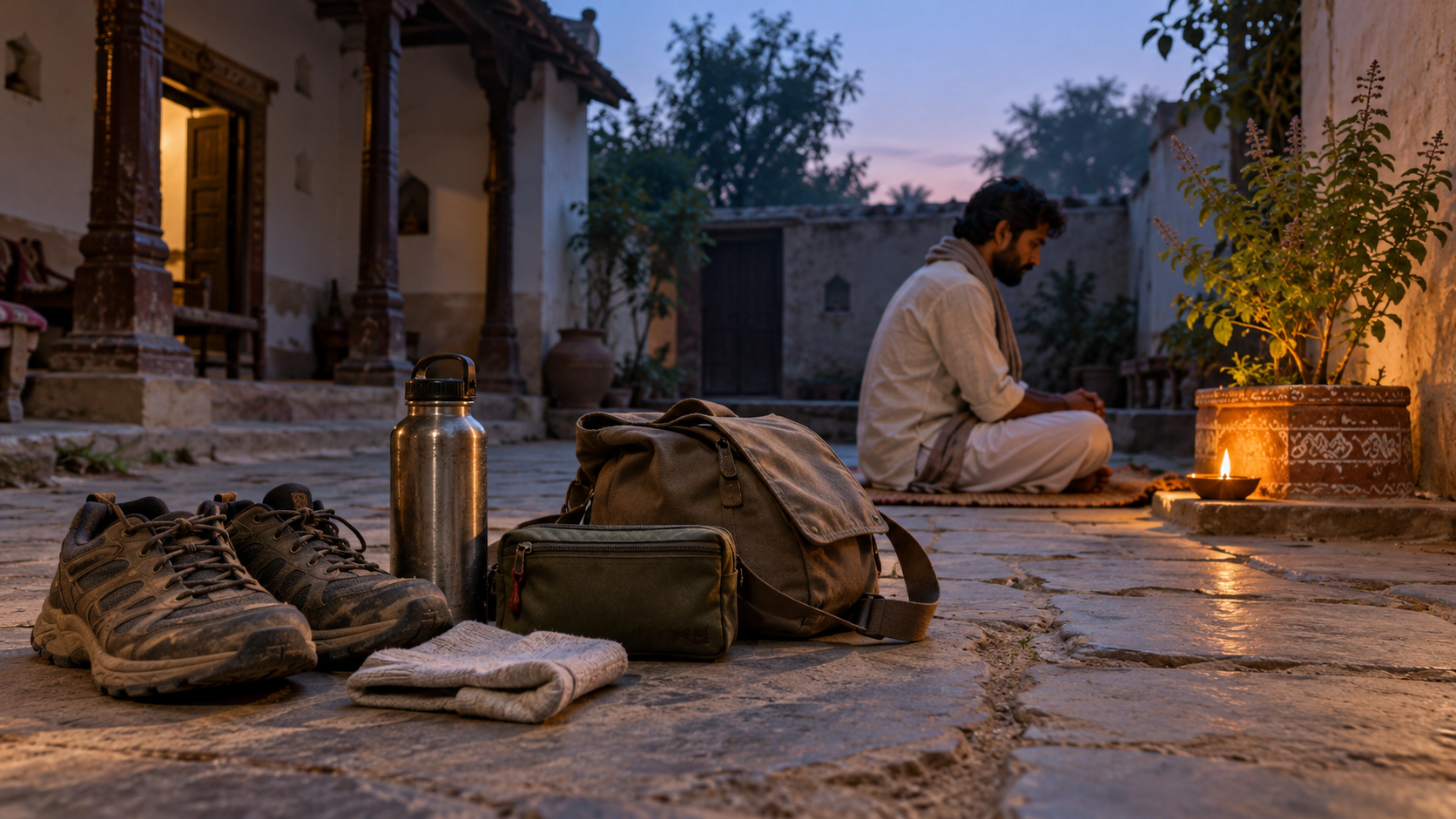
Parikrama is devotional movement, but the body still carries you. For many Vaishnavas, Kartik is a period of intensified remembrance and offering; physical preparation protects that intention by reducing the amount of attention consumed by preventable discomfort.
Test your walking setup before departure
Begin regular walks well before the journey and increase them gradually. Use the same footwear, socks and day bag you expect to carry. A shoe that feels comfortable indoors can rub during sustained walking, while an overloaded shoulder bag can become the loudest fact in your mind. Test the whole setup rather than packing each item on reputation.
- Confirm the organiser’s footwear expectations before deciding whether to bring walking shoes, sandals or both. Do not attempt unaccustomed barefoot walking merely to copy another pilgrim.
- Carry a refillable water container and ask where safe refills will be available. Do not depend on finding a vendor precisely when you need one.
- Check the local forecast close to departure, then pack light protection appropriate to the expected sun, rain and temperature. Seasonal assumptions are not a forecast.
- Bring prescribed medicines in sufficient quantity and keep essential doses with you rather than in transported luggage.
- Carry identification, your lodging address, the group leader’s number and an emergency contact on paper as well as on your phone.
- Keep the day bag small. Every optional item has to be carried when your energy and attention are already under demand.
If you have a condition affected by prolonged walking, fasting, heat, dehydration or crowded travel, discuss the plan with an appropriate clinician before departure. Tell the organiser what assistance you may need. Concealing a limitation does not make the pilgrimage more devotional; it can put you and the people helping you at risk.
Choose a commitment small enough to keep
Your sankalpa should answer a plain question: what will you do differently, every day, because you are in Vrindavan? Keep the answer observable. “Be more spiritual” cannot guide you when you are tired. “Complete my daily japa before casual phone use” can.
- Choose one principal practice: japa, kirtan, scriptural listening, silence during a set part of the walk or a defined act of seva.
- Name one restraint: gossip, unnecessary photography, habitual scrolling, complaints about arrangements or criticism of another tradition.
- Decide what you will do when the commitment is broken. Resume it at the next opportunity instead of turning one lapse into abandonment.
- If you are considering a formal vrata involving fasting or other demanding observance, seek guidance from your guru, acharya or a trusted senior who understands both the tradition and your circumstances.
Write the commitment down before you leave. That prevents the mood of each day from rewriting the purpose of the journey.
Walk as a devotee and a guest of the dham
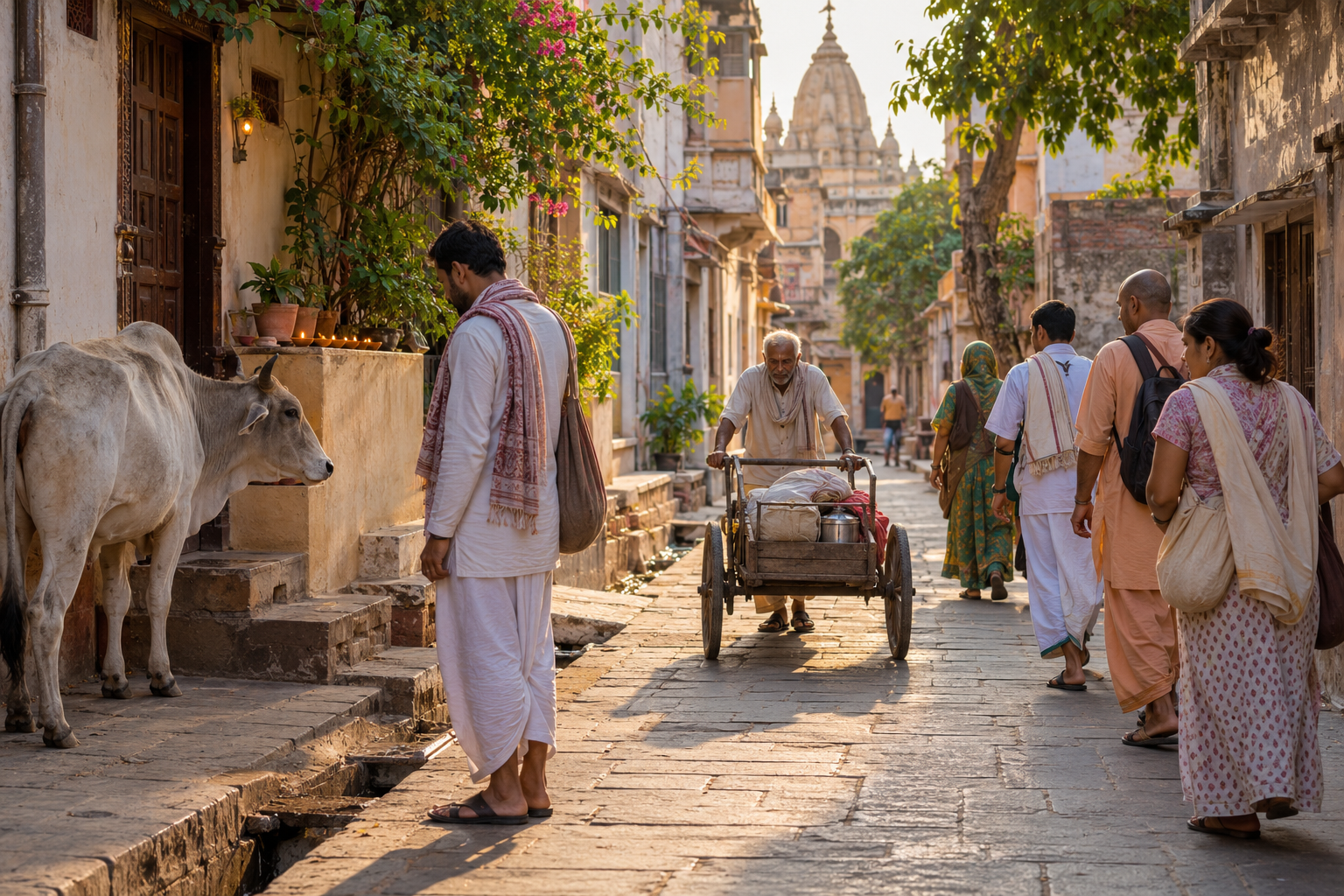
Parikrama is not simply exercise arranged around a sacred centre. Its devotional logic is to place the sacred centre before the wandering ego and to move in remembrance. That changes how you judge a successful day. Speed, distance and photographs are secondary to attention, humility and conduct.
- Follow the group leader’s route and timing. If you want to leave the route, tell the responsible person rather than disappearing into a crowd.
- Keep enough quiet to hear kirtan, instruction and the needs of people around you. Loud private conversation can turn a shared devotional practice into background noise.
- Ask before photographing people, worship, sadhus or temple interiors. Put the phone away when taking an image would interrupt darshan or obstruct another pilgrim.
- Wear clothing suited to the devotional setting and follow the rules of each temple you enter. A practice permitted outdoors may not be appropriate inside a shrine.
- Carry wrappers and other refuse until you find a proper receptacle. Reverence for the dham is incomplete if your visit leaves waste behind.
- Do not use differences in tilak, mantra, ritual or lineage as material for argument. Listen first, and direct sincere doctrinal questions to someone qualified to answer them.
- Respect queues, residents, workers and other pilgrims. Spiritual urgency does not justify pushing, blocking an entrance or demanding special access.
Respond early when fatigue changes your judgement
Fatigue first appears in conduct as often as it appears in the feet. Irritation, careless road crossing, refusal to drink, separation from the group and impatience at a temple can all signal that you need to slow down. Tell your companion or group leader early. Resting or using authorised transport for part of a stage is safer than hiding distress until other people must manage an emergency.
Use a buddy system in crowded areas and agree on a meeting point in case phones fail. Keep money and identification secure, but do not carry more cash or valuables than the day requires. If a stranger offers an unexpected service, donation request or change of plan in the organiser’s name, verify it with your group leader before agreeing.
Let the return journey complete the parikrama
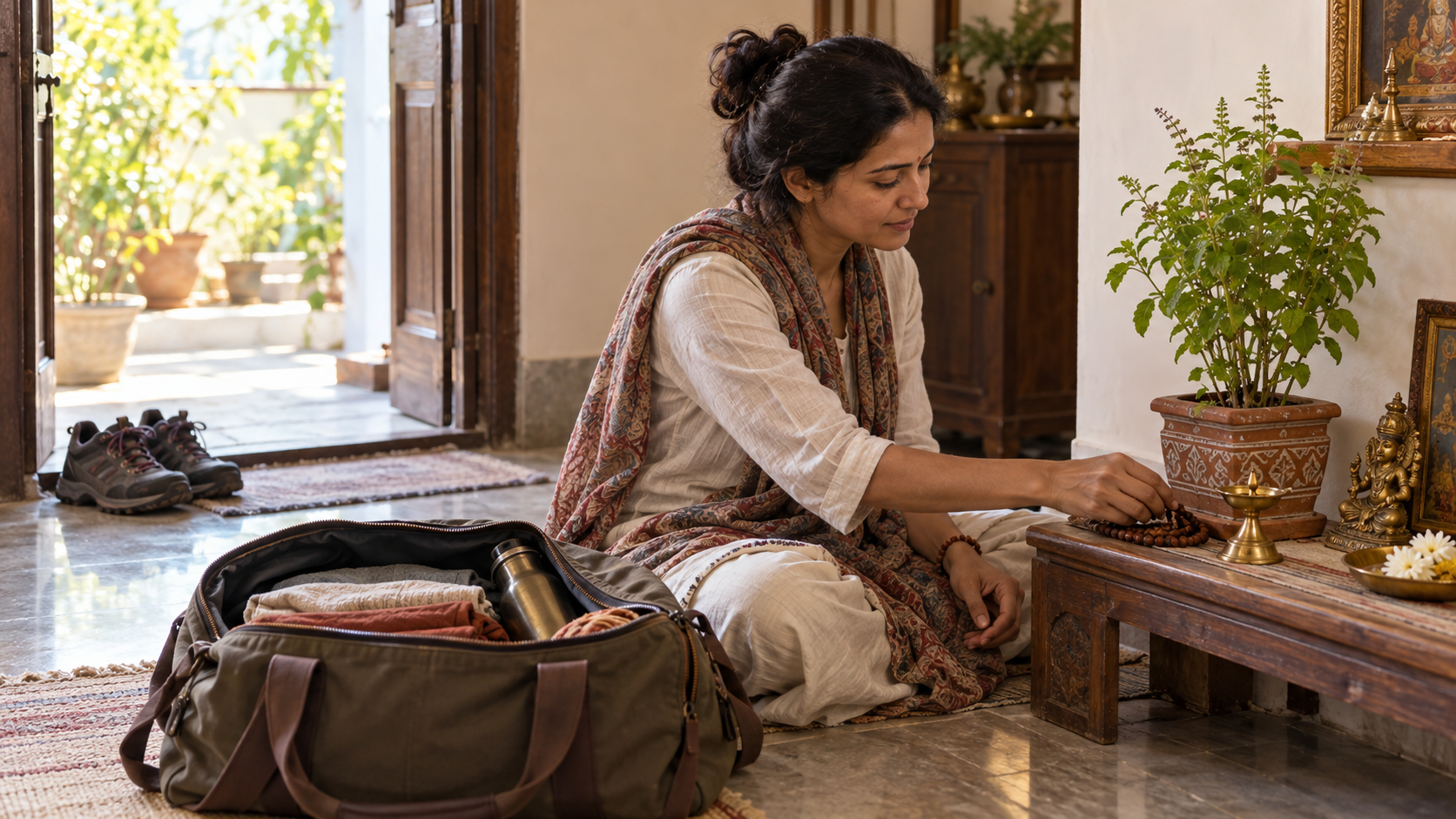
The easiest part of pilgrimage to neglect is the return. Vrindavan can sharpen your attention for a time, but ordinary routines quickly reclaim it unless you decide what will continue at home.
Before the yatra ends, record brief answers to three questions:
- Which practice became more natural when the day was organised around devotion?
- Which habit became louder when you were tired, delayed or uncomfortable?
- What did respect for a sacred place require from you that your daily environment also deserves?
Then choose one continuation that fits your real life: a stable daily japa period, regular kirtan, study with a qualified teacher, service through your local mandir or more disciplined care for a nearby sacred and natural place. Keep it modest enough to survive work, family duties and an uninspiring day.
Do not make the yatra a status claim. Share photographs and reflections with restraint, protect the privacy of people who did not consent to publicity and avoid presenting brief contact with a tradition as mastery of it. Gratitude is a more truthful fruit of pilgrimage than self-importance.
Your next step is concrete: identify the responsible 2026 organiser, request the full practical terms, test your walking setup and write one sentence naming your sankalpa. When those four things are clear, you will be preparing not merely to reach Vrindavan, but to enter it with attention.
References

Leave a Reply
You must be logged in to post a comment.