
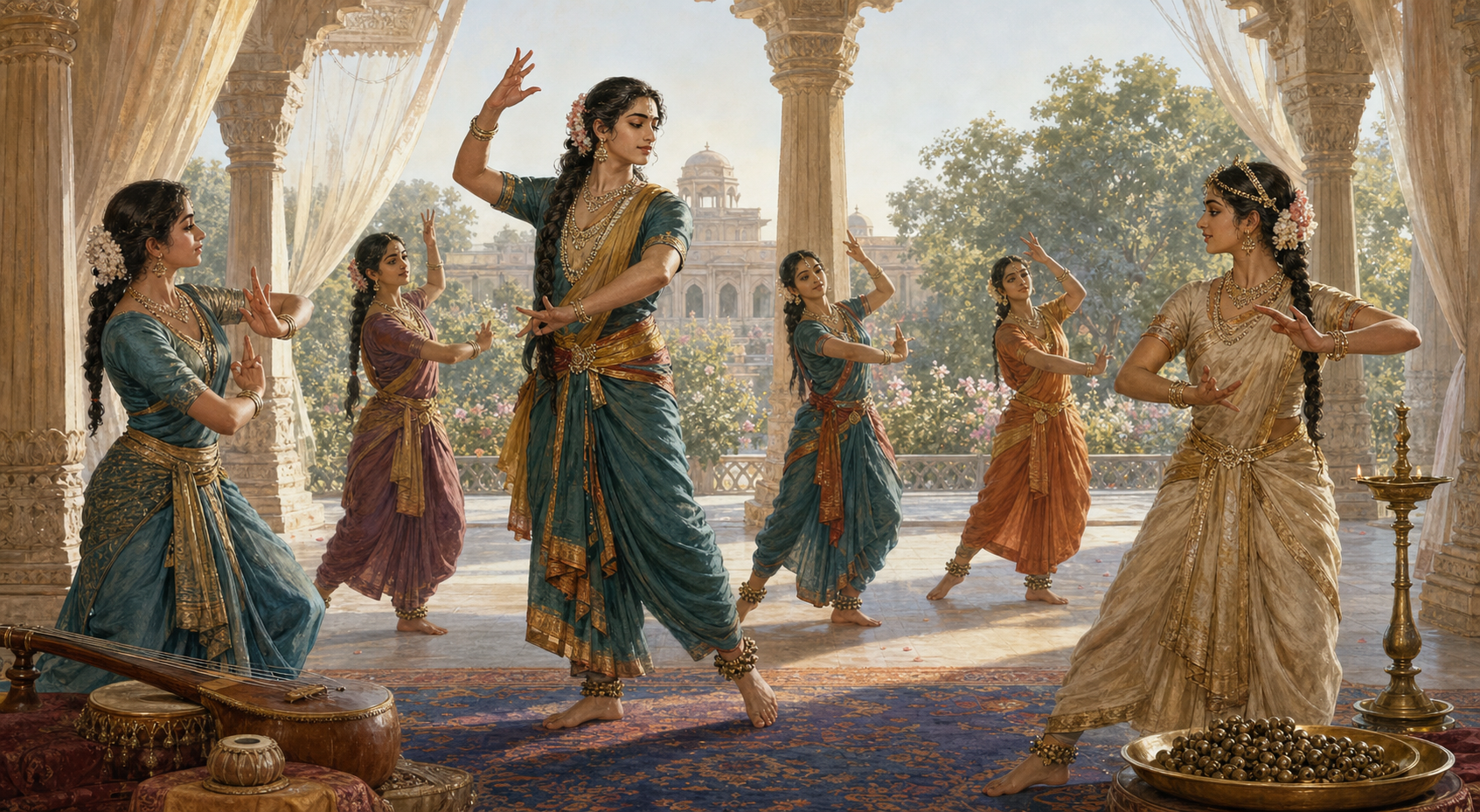
If you have wondered why Arjuna, the Mahabharata’s celebrated warrior, would spend the Pandavas’ incognito exile as Brihannala, a dance teacher living outside the masculine role for which he was famous, the answer is not that he abandoned his identity. He protected it.
Brihannala was an unusually effective disguise because it did more than change Arjuna’s appearance. It gave him a credible occupation, a different social identity and a disciplined way to remain useful while concealing the qualities by which others would recognize him.
The short answer: Brihannala made Arjuna difficult to recognize

The Pandavas’ exile had two distinct phases: twelve years of Vanvas followed by one year of Agyatvas, or residence without being identified. A disguise suitable for the forest would not necessarily work during that final year. The brothers needed sustainable public lives, not temporary costumes.
That distinction matters. Clothing can hide a person for a meeting; it cannot carry someone through an entire year of ordinary scrutiny. Arjuna needed a name, a place in society and work he could perform convincingly. As Brihannala, described as a eunuch and employed as a dance teacher, he acquired all three.
- The name separated him from the identity under which his martial achievements were known.
- The gendered presentation placed distance between Brihannala and Arjuna’s conspicuous warrior persona.
- Teaching dance supplied a useful daily occupation rather than leaving him to behave like a warrior pretending to be idle.
- The role required restraint, consistency and control over habitual conduct, making the disguise an extended discipline rather than a theatrical trick.
Traditional narration also connects Brihannala with Urvashi’s curse. An apparent misfortune could be confined to a limited period, and Arjuna used that condition during the period when it could protect the Pandavas. The curse explains why this particular transformation was available to him. Agyatvas explains why he accepted it at that moment.
This is the cleanest way to understand the decision: an earlier burden became a strategic resource. Brihannala was neither a random comic invention nor evidence that Arjuna had lost his strength. The role solved the concrete problem placed before him.
The disguise demonstrates mastery rather than diminishing it
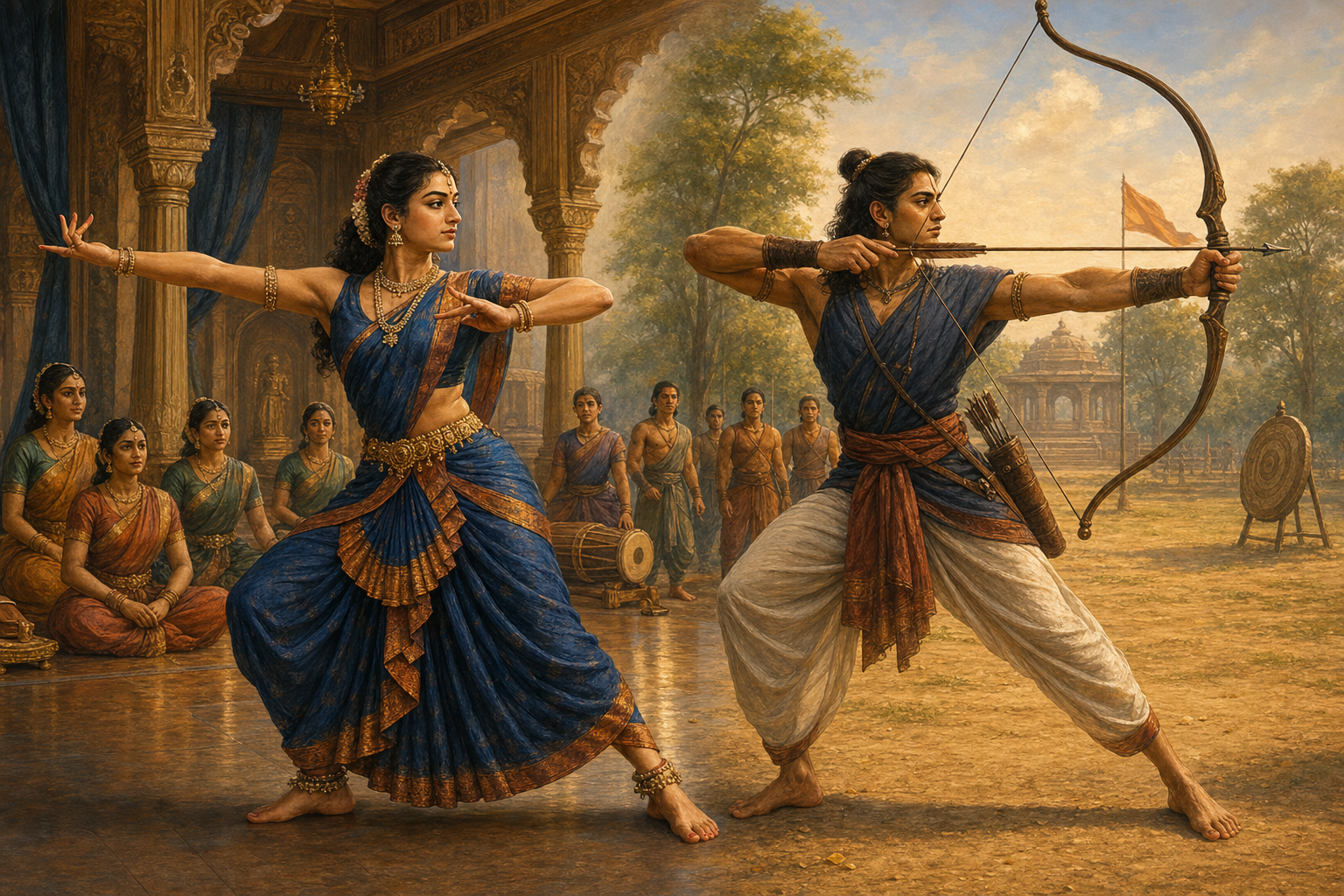
Arjuna’s public image made concealment difficult. A man renowned as a supreme archer and an embodiment of masculine valour could not safely continue advertising the same bearing, occupation and social expectations. The more distinctive the reputation, the more radical the cover had to be.
The contrast is therefore functional. Arjuna moves from conspicuous martial display to the quieter discipline of teaching an art. He exchanges the identity that attracts recognition for one that allows continued service. His capacity has not disappeared; he has stopped displaying the part of it that would endanger the shared mission.
This corrects a common misreading of strength. If strength exists only while other people applaud its familiar form, it is dependence on reputation. Arjuna’s self-command is visible precisely because he can set aside the honours attached to his warrior identity. He does not need constant public confirmation that he remains Arjuna.
Dance should not be treated as the opposite of discipline either. A teaching role demands technical knowledge, attention, patience and control of presentation. The narrative’s contrast lies between public identities, not between a serious warrior’s work and a supposedly worthless art. Turning Brihannala into nothing more than a joke weakens the episode because it removes the competence that makes the disguise believable.
When you encounter this scene in a retelling or performance, notice where its humour is directed. Amusement at the extraordinary reversal of Arjuna’s public role can coexist with respect. Contempt for dance, femininity or gender variance cannot explain his achievement; it merely imports a prejudice that prevents the reader from seeing his adaptability.
Read the gendered disguise carefully
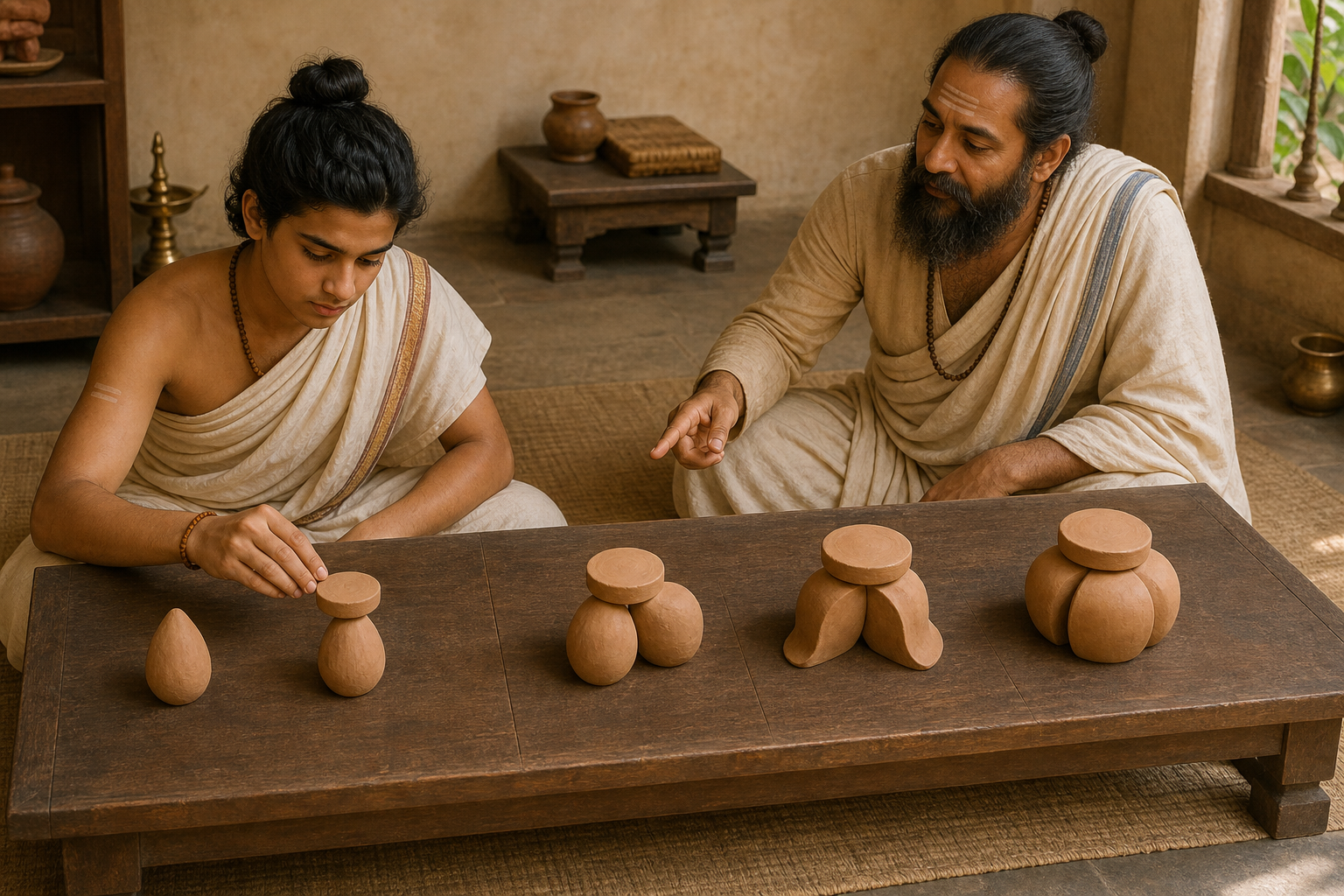
The word “eunuch” can tempt a modern reader into one of two hasty conclusions. One reading assumes that adopting a non-masculine role must be humiliating. The other assigns Brihannala a complete modern identity category and treats the episode as if it directly answered questions framed in contemporary terminology. Neither approach begins with what the story is actually doing.
The safer method is to separate three claims. First, Arjuna assumes a deliberately gendered social presentation. Second, that presentation is part of a disguise required by Agyatvas. Third, he performs the role competently enough for it to function as a public identity. Those claims belong to the narrative. Broader arguments about what the episode proves should be identified as interpretation rather than silently inserted into the plot.
The humiliating reading is especially weak because it makes Arjuna’s worth depend on visibly conforming to one social expression at every moment. The episode points in the other direction. His identity is stable enough to withstand a profound outward change. Masculine valour is not mocked out of existence; it is placed under voluntary restraint.
You can keep a discussion grounded by using a simple rule: describe the action before declaring its symbolism. Say that Arjuna adopts Brihannala’s identity to remain unrecognized, works as a dance teacher and converts an adverse condition into useful concealment. Only then ask what the change means for gender, heroism or social identity. This order prevents either ridicule or present-day projection from replacing the episode itself.
Brihannala reveals a practical dimension of dharma
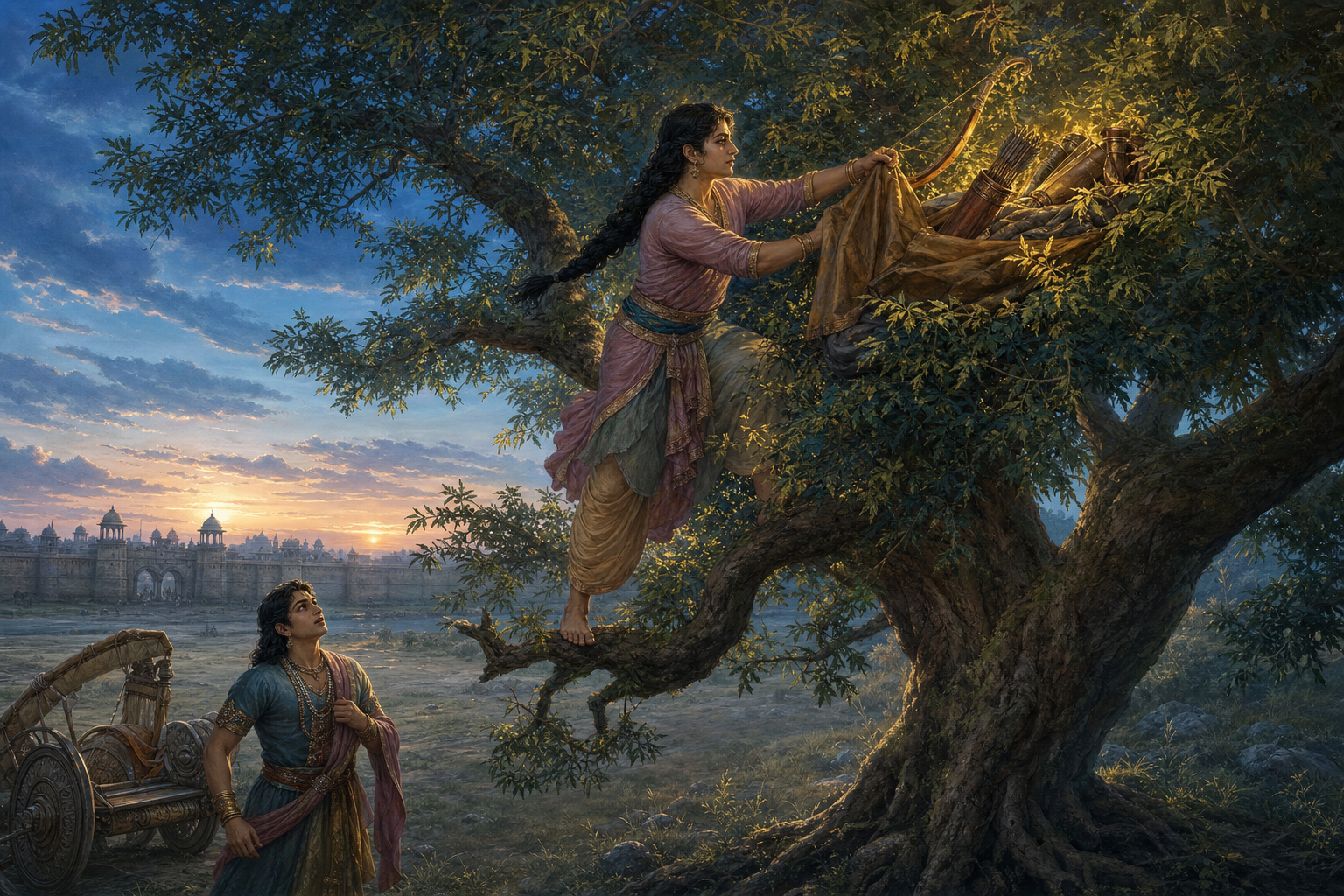
Agyatvas imposed a duty different from the duties displayed on a battlefield. Success required the Pandavas to remain unknown. For Arjuna, openly performing the identity of a famous warrior would have contradicted the immediate obligation, however natural that conduct might otherwise have seemed.
Dharma in this episode is therefore not a demand to repeat the same outward behaviour under every condition. It requires fidelity to the relevant obligation. Arjuna changes his name, occupation and presentation while preserving his commitment to the Pandavas and the terms governing their exile.
Three useful distinctions follow:
- Role is not essence. Brihannala is the role required by the moment; Arjuna’s deeper commitments are not erased by performing it.
- Restraint is not incapacity. The decision not to display power can be an exercise of power when display would jeopardize a legitimate purpose.
- Adaptation is not surrender. Arjuna changes the means by which he serves without abandoning the people or duty he serves.
This does not turn the episode into a general license for deception. The concealment belongs to the specific obligation of incognito exile. Its transferable lesson is narrower and more useful: do not confuse a familiar expression of your responsibility with the responsibility itself. When circumstances change, preserve the commitment first and reconsider its outward form.
You can apply that distinction without imitating the disguise. When a trusted role, title or established method becomes unusable, ask four questions: What duty remains? Which visible habits belong only to the old role? What real abilities remain available? What new form would let those abilities serve the same legitimate commitment? Brihannala matters because Arjuna answers all four without clinging to prestige.
Key takeaways
- Arjuna became Brihannala during the one-year Agyatvas that followed the Pandavas’ twelve-year Vanvas.
- The disguise worked because it was a complete social identity with useful work, not merely a change of clothing.
- Urvashi’s curse supplies the narrative background for the transformation; the need for incognito exile supplies its strategic timing.
- Teaching dance concealed the public traits associated with Arjuna while still requiring knowledge, discipline and sustained competence.
- The episode should not be reduced either to mockery of a non-masculine role or to a definitive statement in modern identity terminology.
- Brihannala shows that self-command includes the ability to restrain the public display of strength when duty requires another form of service.
The next time Brihannala appears in a recital, adaptation or conversation, look past the surface reversal. Ask what Arjuna must conceal, what he refuses to abandon and how he turns a constraint into service. That is where the episode’s practical intelligence becomes visible.
References
