
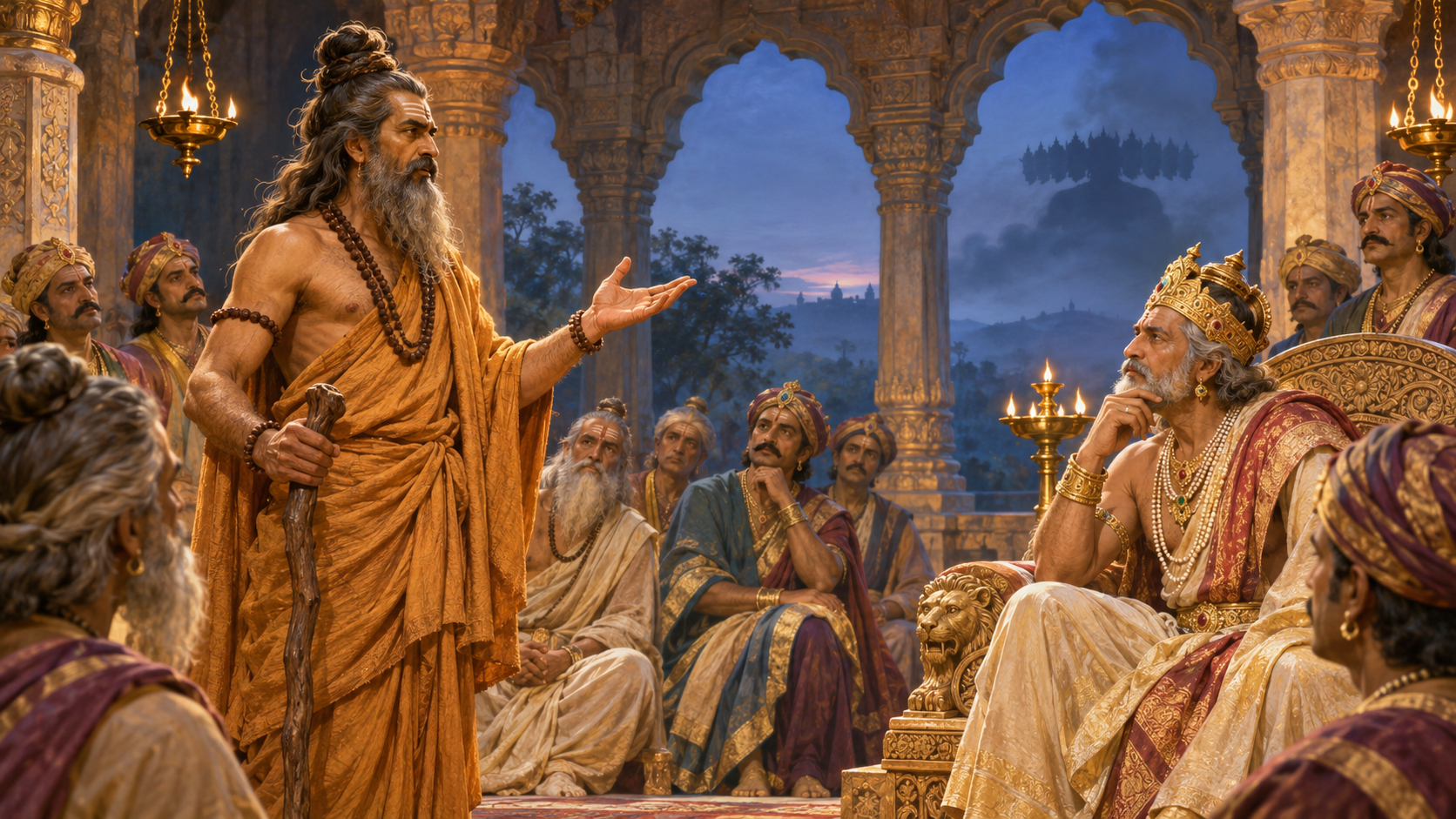
You may remember Ravana through Lanka and the abduction of Sita, so it is natural to look for his introduction in those later parts of the narrative. If your question is where Valmiki first names him, however, you need to turn much further back.
The answer is precise: Ravana’s name first occurs in Bala Kanda, Chapter 19. Yet calling this his first “appearance” can create the wrong picture. Ravana does not enter the scene as an acting character. Vishwamitra speaks his name.
The exact location of Ravana’s first mention

Ravana is first mentioned in Chapter 19 of the Bala Kanda of the Valmiki Ramayana. At this point, the narrative has not reached the forest episodes or Lanka. The first person to name Ravana is Vishwamitra.
If you need a short answer for a discussion, note, or citation, use this wording: “Ravana is first named by Vishwamitra in Bala Kanda, Chapter 19.” It identifies the book, the chapter, the speaker, and the kind of appearance involved without importing anything from later episodes.
A first mention is not a dramatic entrance
The word “appearance” can hide several different questions. Before answering, decide which one you actually mean:
- First mention: the earliest point at which Ravana’s name occurs in the narrative.
- First direct entrance: the first scene in which Ravana acts, speaks, or is present as a participant.
- First developed portrayal: the point at which the reader receives a fuller picture of his character, position, or intentions.
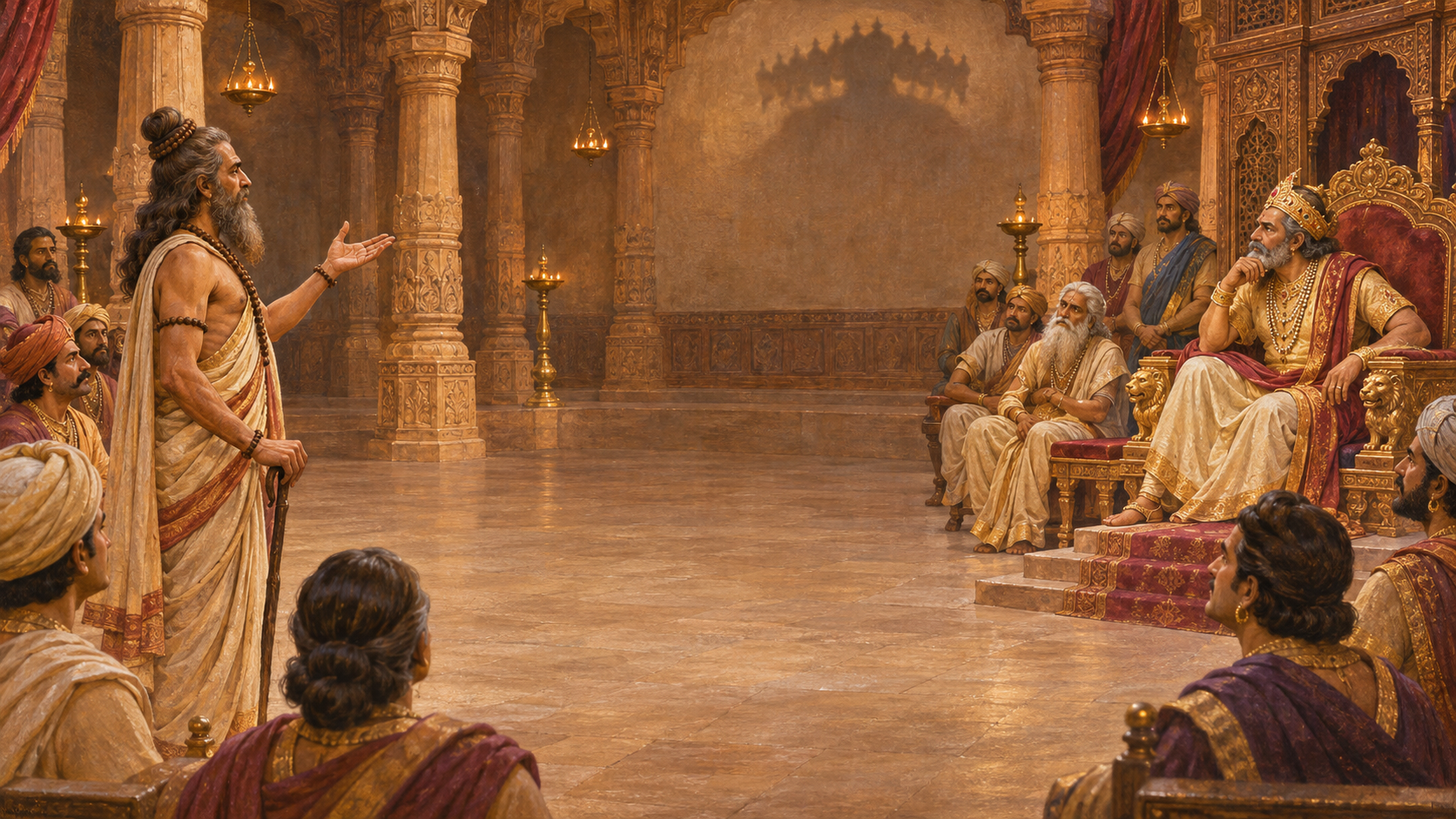
Bala Kanda, Chapter 19 answers the first question. It should not automatically be presented as the answer to the other two. Vishwamitra’s speech brings Ravana into the reader’s awareness, but that is different from Ravana personally stepping into the action.
This distinction matters whenever you discuss an ancient narrative. A famous character can be established indirectly before receiving a scene of his own. If you collapse mention, entrance, and characterization into one event, you lose the sequence through which the text prepares you to encounter that character.
Why Vishwamitra naming Ravana matters
Valmiki first gives you Ravana as a name spoken by someone else. You hear of him through Vishwamitra before you see Ravana participate directly in the story. The narrative therefore establishes awareness before encounter.
That placement is worth noticing because Ravana’s later fame can distort how we remember the Ramayana’s order. Knowing the whole story, we may mentally place his beginning near Sita’s abduction or the movement toward Lanka. Chapter 19 corrects that retrospective impression: his name has already entered the narrative during Bala Kanda.
When you read the passage, resist filling the moment with everything you know about Ravana from later events. Ask a narrower question: what has the text actually placed before you at this stage? Here, the essential facts are the name, the early location, and the speaker. Later knowledge should not be allowed to rewrite the first mention.
How to verify the passage in your own copy
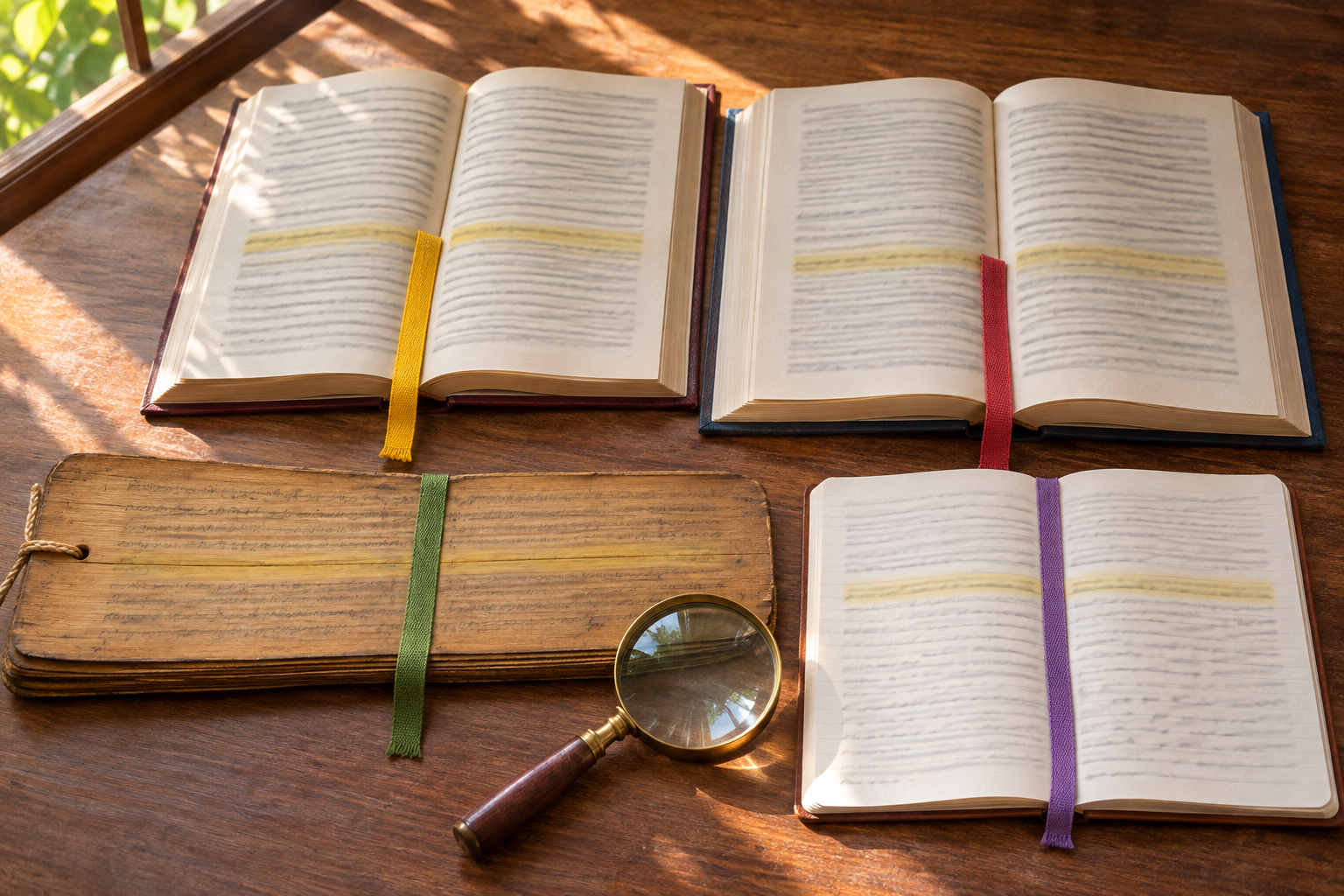
You can check the claim without searching through every later Ravana episode. Use three textual coordinates: Bala Kanda, Chapter 19, and Vishwamitra’s speech.
- Open the Bala Kanda rather than beginning with the forest or Lanka portions.
- Go to Chapter 19. If your edition calls its chapters sargas, look for the nineteenth unit of Bala Kanda.
- Identify Vishwamitra as the speaker when Ravana’s name occurs.
- Read only the immediate passage once before bringing in details from later episodes. This helps you distinguish what is introduced here from what the complete narrative eventually reveals.
- In your notes, label the passage “first mention of Ravana,” not “Ravana’s first direct scene.” That wording preserves the evidence accurately.
This method is also useful for other character-origin questions. Record where the name first occurs, who speaks it, whether the person is physically present, and what the passage itself discloses. Those four checks prevent a remembered storyline from replacing the text’s actual order.
Key takeaways
- Ravana’s name first appears in Bala Kanda, Chapter 19 of the Valmiki Ramayana.
- Vishwamitra is the person who first speaks his name.
- The first mention occurs before the narrative reaches the forest or Lanka.
- Ravana is mentioned rather than presented in a direct dramatic entrance.
- The most accurate formulation is: “Ravana is first named by Vishwamitra in Bala Kanda, Chapter 19.”
On your next reading, pause at Chapter 19 and mark the moment for what it is: Ravana entering the narrative through another person’s words. That small act of textual precision will help you see how the Ramayana establishes a major presence before bringing that presence fully into view.
References

Leave a Reply
You must be logged in to post a comment.