
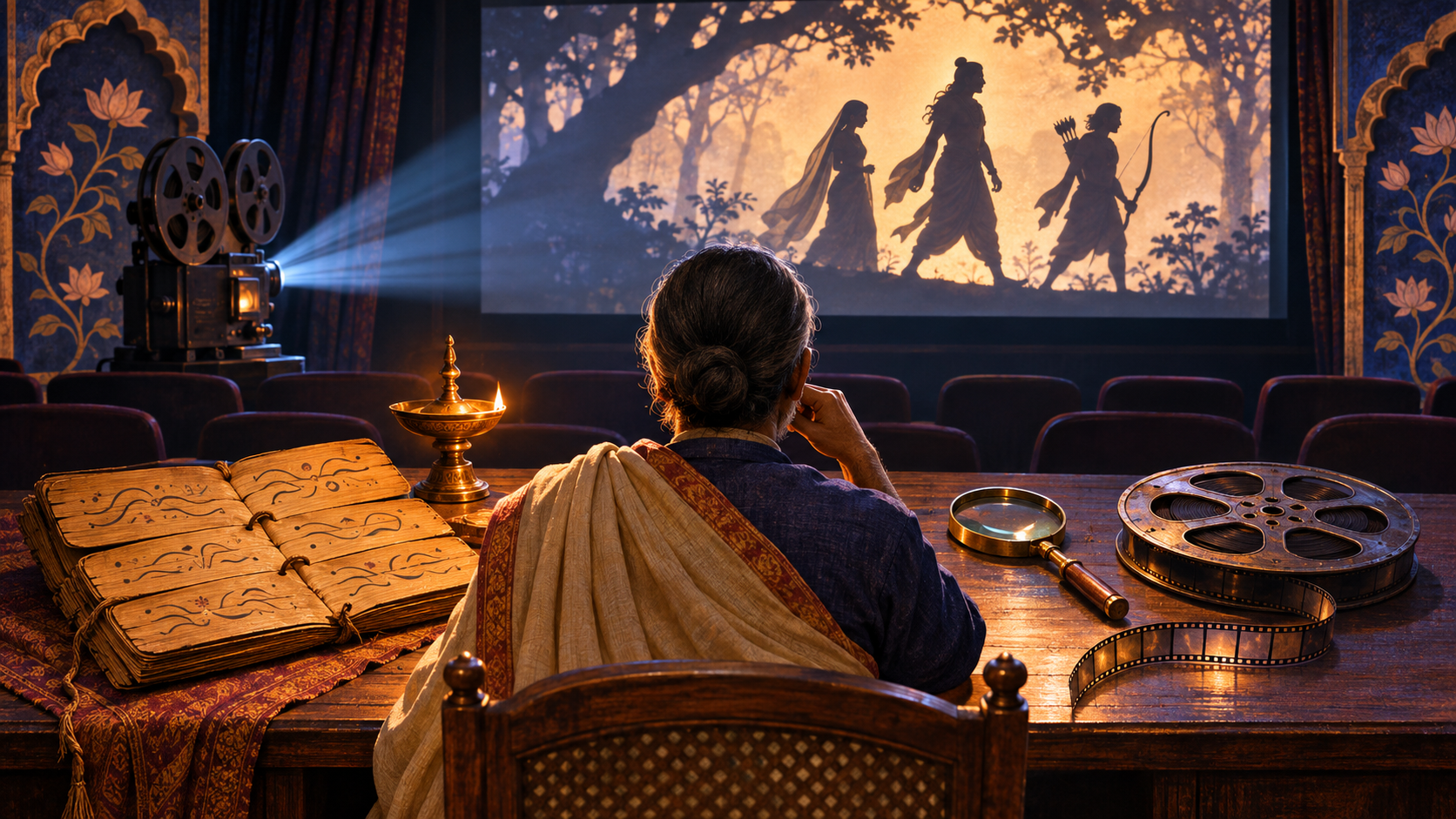
If a Ramayana film leaves you wondering whether you watched a legitimate adaptation or a rewriting of the epic, do not let either outrage or spectacle answer the question for you. The useful test is not whether the film changed anything. It is whether the changes misrepresent characters, events, or the moral relationship between action and consequence.
You can make that judgment without demanding a word-for-word transfer to the screen. Start by identifying the disputed scene, the textual baseline against which it is being judged, and the meaning created by the film’s choices. That turns a broad accusation into something you can verify and explain.
Start with the claim that is actually being made
Hindu Janajagruti Samiti has raised three objections to the film: the glorification of Ravana, the denigration of Lakshman, and the alteration of events from the Ramayana. It has also warned of nationwide protests if it finds similar distortions in the second part.
That establishes the nature of the controversy, but it does not settle the interpretation. Each objection still needs a scene-by-scene demonstration. Which action, line, reaction, omission, or visual choice creates the alleged distortion? Which passage or established narrative element does it contradict? How does the change affect the audience’s understanding?
This distinction matters because three different questions are often collapsed into one. A film may depart from a particular textual version, depart from a familiar popular telling, or reverse a central ethical relationship. Those are not equivalent. The first may be a choice between traditions, the second may simply surprise the audience, and the third may amount to a substantive distortion.
So if someone tells you that the Ramayana has been distorted, ask for one complete comparison: the scene as shown, the relevant textual basis, and the precise difference between them. A claim that cannot yet supply those three elements should be treated as an allegation to investigate, not a verdict to repeat.
Adaptation changes form; distortion changes meaning
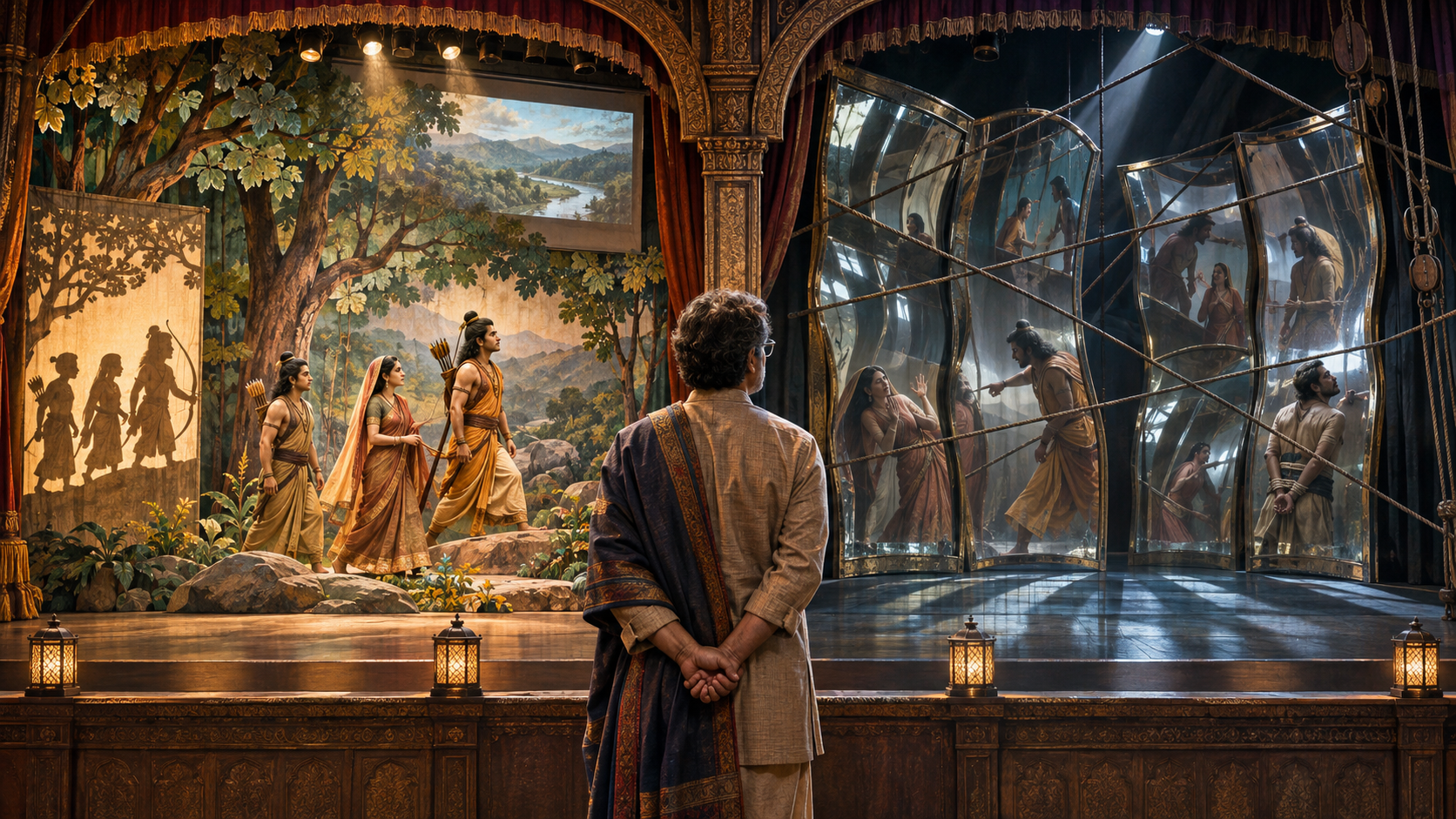
A film cannot reproduce an epic in the same way that a text, recitation, or dramatic performance unfolds it. Screen time requires selection. Characters may be introduced earlier, separate incidents may be combined, and dialogue may be invented to convey motives that another medium can explain differently. None of this proves distortion by itself.
The stronger question is whether the alteration preserves or reverses the meaning of what it adapts. You can test that through five points:
- Textual baseline: Does the film identify the telling, edition, translation, or tradition it follows? If it does not, claims of faithfulness become harder to assess.
- Event integrity: Has an event merely been shortened or reordered, or have its cause, participants, and outcome been changed?
- Character integrity: Does the character retain the motives, duties, loyalties, and moral agency that make the role recognisable?
- Ethical consequence: Does the film still show how dharmic and adharmic choices produce consequences, or does its framing invite the audience to reverse that judgment?
- Disclosure: Are major inventions presented honestly as dramatic interpretation, or promoted as though they were direct scriptural narration?
The difference can be stated plainly. Compression removes material while trying to preserve the narrative’s function. Distortion changes the function itself. Combining two conversations may be economical storytelling. Reassigning a decisive deed, motive, or moral responsibility can alter what the audience believes the Ramayana teaches.
This also prevents a common mistake: treating personal unfamiliarity as proof of fabrication. The Ramayana has lived through textual, regional, devotional, and performance traditions. A version different from the one you grew up with is not automatically hostile to the epic. The filmmaker should still name the chosen basis, however, because a vague appeal to multiple tellings cannot justify every invention.
Test the complaints about Ravana, Lakshman, and events separately
Ravana: complexity is not the same as glorification
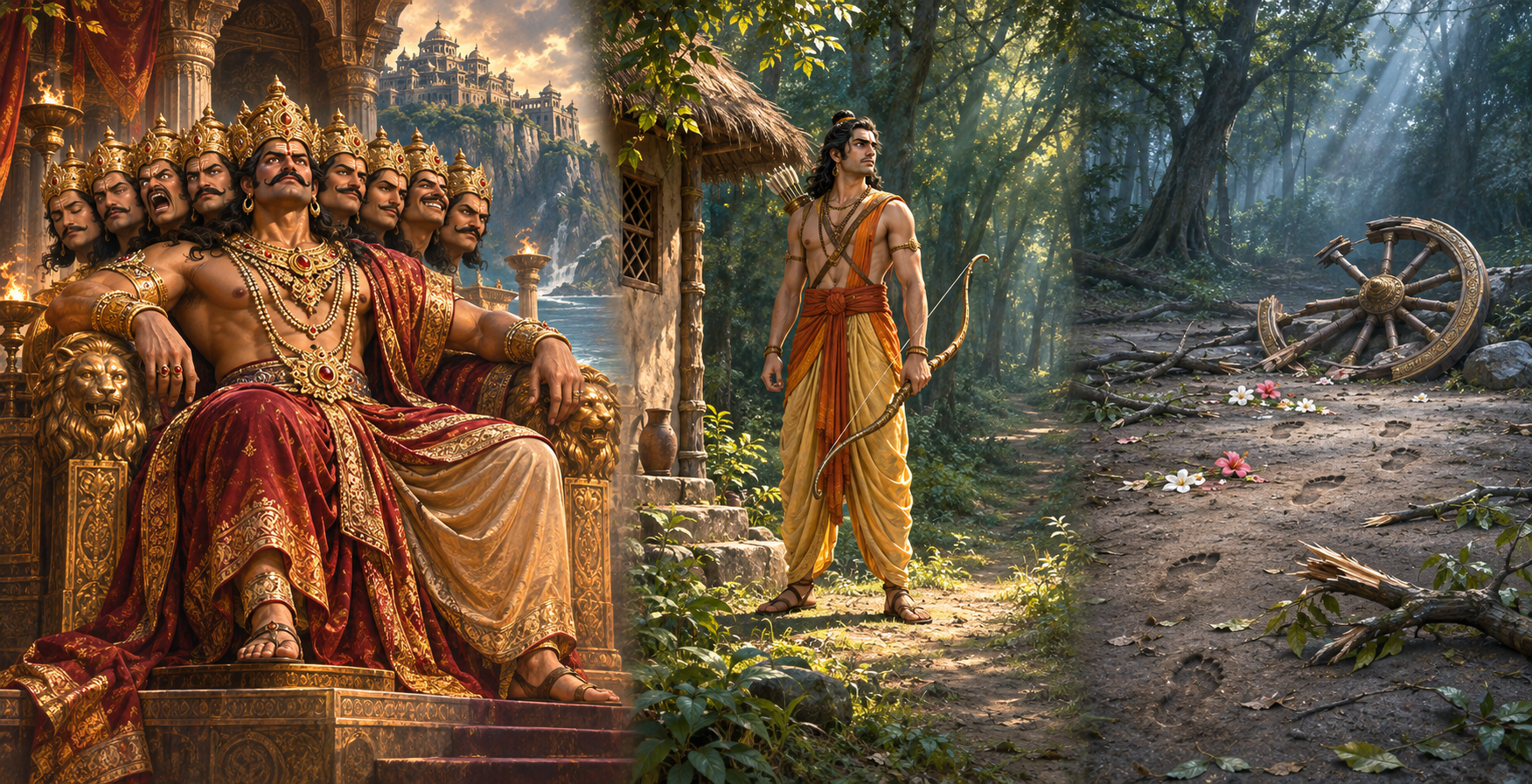
A powerful antagonist can be intelligent, commanding, learned, or visually impressive without being morally vindicated. Drama often needs an antagonist whose power makes the conflict consequential. The presence of grandeur therefore does not, on its own, prove glorification.
Look instead at the film’s moral framing. Does it preserve the agency and suffering of those harmed by Ravana’s conduct? Does it show consequences, or make wrongdoing seem admirable by muting what it costs others? Does it invent excuses that displace responsibility? Does the camera repeatedly grant him heroic cues while denying moral weight to those who resist him?
The decisive issue is not whether viewers find Ravana compelling. It is whether the film uses that appeal to obscure or reverse the ethical significance of his choices. Do not confuse charisma with exoneration, but do not ignore exoneration when the screenplay, imagery, and consequences work together to produce it.
Lakshman: human vulnerability is not automatically denigration
A screen portrayal can give Lakshman anger, uncertainty, pain, or disagreement without necessarily diminishing him. A character does not need to be emotionally flat to retain dignity. Denigration is a stronger charge and requires a stronger pattern.
Ask whether the film preserves his loyalty, courage, discernment, and relationship to dharma, or whether it repeatedly converts him into an object of ridicule, cowardice, incompetence, or moral inferiority. Pay attention to reassigned actions as well. A film can diminish a character without insulting him directly if it transfers his meaningful decisions to someone else and leaves him present only to react.
Judge the whole arc rather than isolating one unflattering expression. A difficult moment may prepare a character’s recovery or illuminate a conflict. Repeated humiliation with no narrative correction is different. The relevant unit is the pattern of portrayal.
Events: distinguish compression, invention, and reversal
When an event differs from your recollection, classify the change before condemning it. Compression shortens an episode. Reordering changes when the audience encounters it. Synthesis combines material. Invention adds something not found in the chosen baseline. Reversal changes who acted, why the action occurred, or what it meant.
Invention deserves scrutiny, but it is not always distortion. An invented private conversation might dramatise a motive already present in the narrative. The problem becomes more serious when invention supplies a contrary motive, absolves conduct the narrative holds responsible, or attributes a central act to the wrong character. Reversal is therefore the category that should receive the closest attention.
Omission can matter as much as addition. If a film keeps a dramatic action but removes the context that makes its ethical meaning intelligible, viewers may leave with a false impression even though the visible event appears familiar. Compare causes and consequences, not merely costumes, names, and plot landmarks.
Build a scene-by-scene case before joining a campaign

If you intend to criticise the adaptation publicly, make the criticism precise enough for another person to check. This six-step method keeps cultural advocacy grounded in evidence:
- Record the complete scene. Note what happens before and after the disputed moment. A clipped line can conceal irony, correction, or consequence.
- Describe before interpreting. Write down the action, dialogue, music, reaction shots, and outcome. Then state the meaning you think those choices create.
- Identify the claimed baseline. Use the version declared by the filmmakers when available. If none is declared, say so rather than assuming one.
- Compare the actual passage. Check the relevant episode in a named edition or translation. Do not rely solely on memory, a circulating clip, or another person’s summary.
- Classify the difference. Mark it as compression, reordering, synthesis, invention, omission, or reversal. Explain why that category affects the meaning.
- Choose a proportionate response. Ask for clarification, publish the comparison, contact the producers, use audience feedback channels, or support lawful cultural advocacy. Evidence will persuade more people than abuse directed at performers or viewers.
A strong criticism might say that a particular scene assigns a motive to Ravana that the chosen textual baseline does not support, removes the consequence that originally answers that motive, and thereby invites moral approval. A weak criticism says only that the scene felt wrong. The first can be examined and answered; the second spreads heat without establishing the case.
Filmmakers can reduce this conflict before release. They should identify their narrative basis, label major departures as interpretation, and have readers grounded in that tradition review the screenplay for character and ethical continuity. A disclaimer will not repair a reversal of meaning, but clear disclosure helps the audience distinguish creative invention from a claim about scripture.
Key takeaways for a fair verdict
- A distortion claim needs a disputed scene, a named textual baseline, and an explained difference.
- Changing the form for cinema is not the same as changing the narrative’s moral meaning.
- Ravana’s dramatic power does not prove glorification; the test is whether the film obscures responsibility, victims, or consequences.
- Lakshman’s difficult emotions do not prove denigration; look for a sustained loss of dignity, agency, loyalty, or moral weight.
- Event changes become most serious when they reverse motive, responsibility, causation, or ethical consequence.
- Cultural advocacy is strongest when viewers can inspect the evidence instead of being asked to inherit someone else’s anger.
Before you repeat a sweeping verdict about the film, complete one careful scene-to-text comparison. If the evidence supports only a narrower criticism, state it narrowly. If it reveals a genuine reversal, document the reversal clearly. That discipline protects both the Ramayana and the credibility of those who speak in its defence.
References

Leave a Reply
You must be logged in to post a comment.