
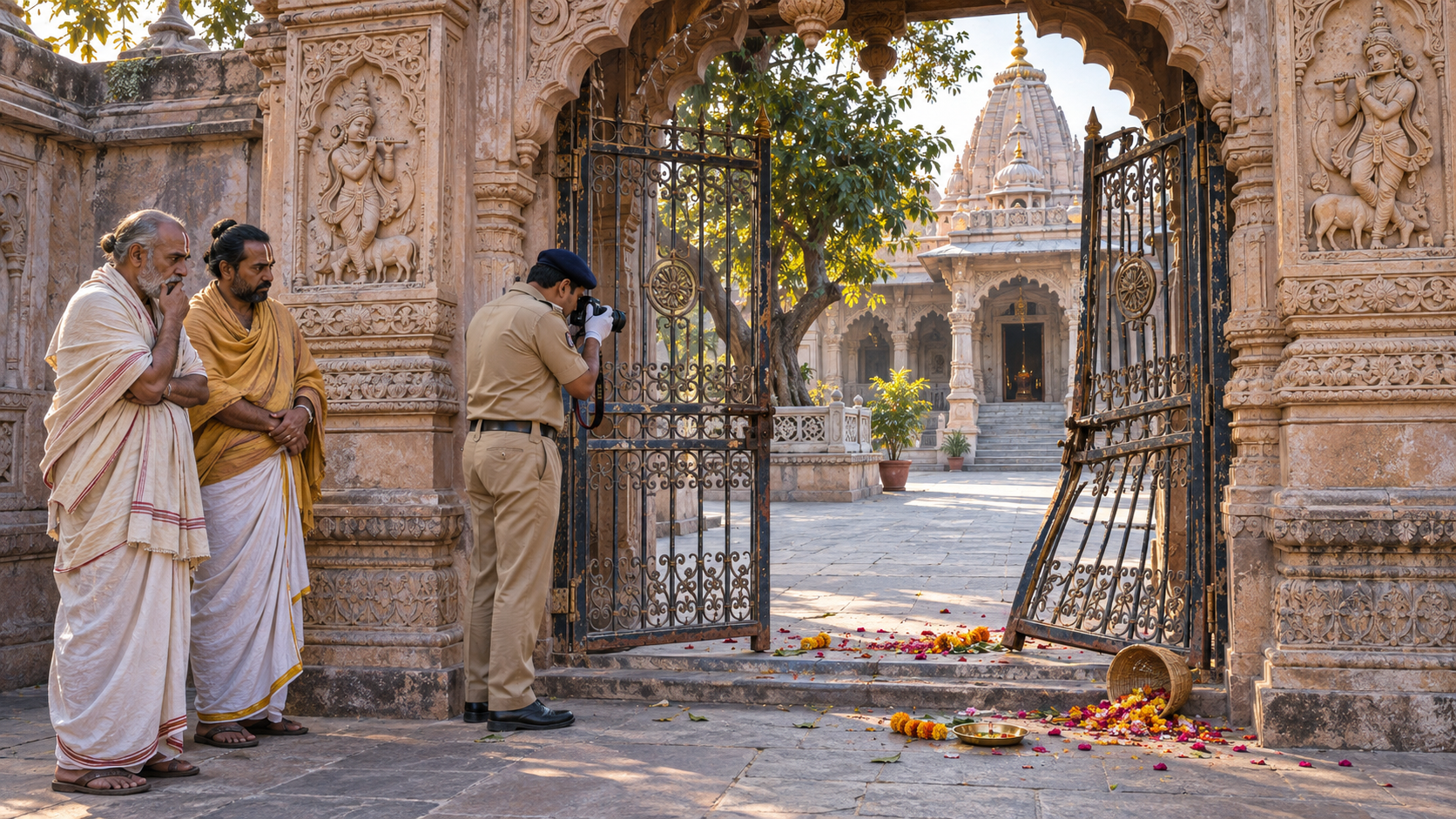
If the circulating CCTV footage left you asking how pujaris could be attacked inside a Vrindavan mandir, focus on two outcomes: evidence-led accountability for the alleged attackers and practical protection for the people who perform daily seva.
At Shri Radha Sneh Bihari Mandir, an argument over a restricted exit allegedly escalated into abuse, threats, physical violence and damage to the entrance. The incident is more than a disturbing confrontation. It is also a warning for temple committees that depend on pujaris and other staff to enforce rules without always giving them a clear safety system.
What is established, and what remains unproved
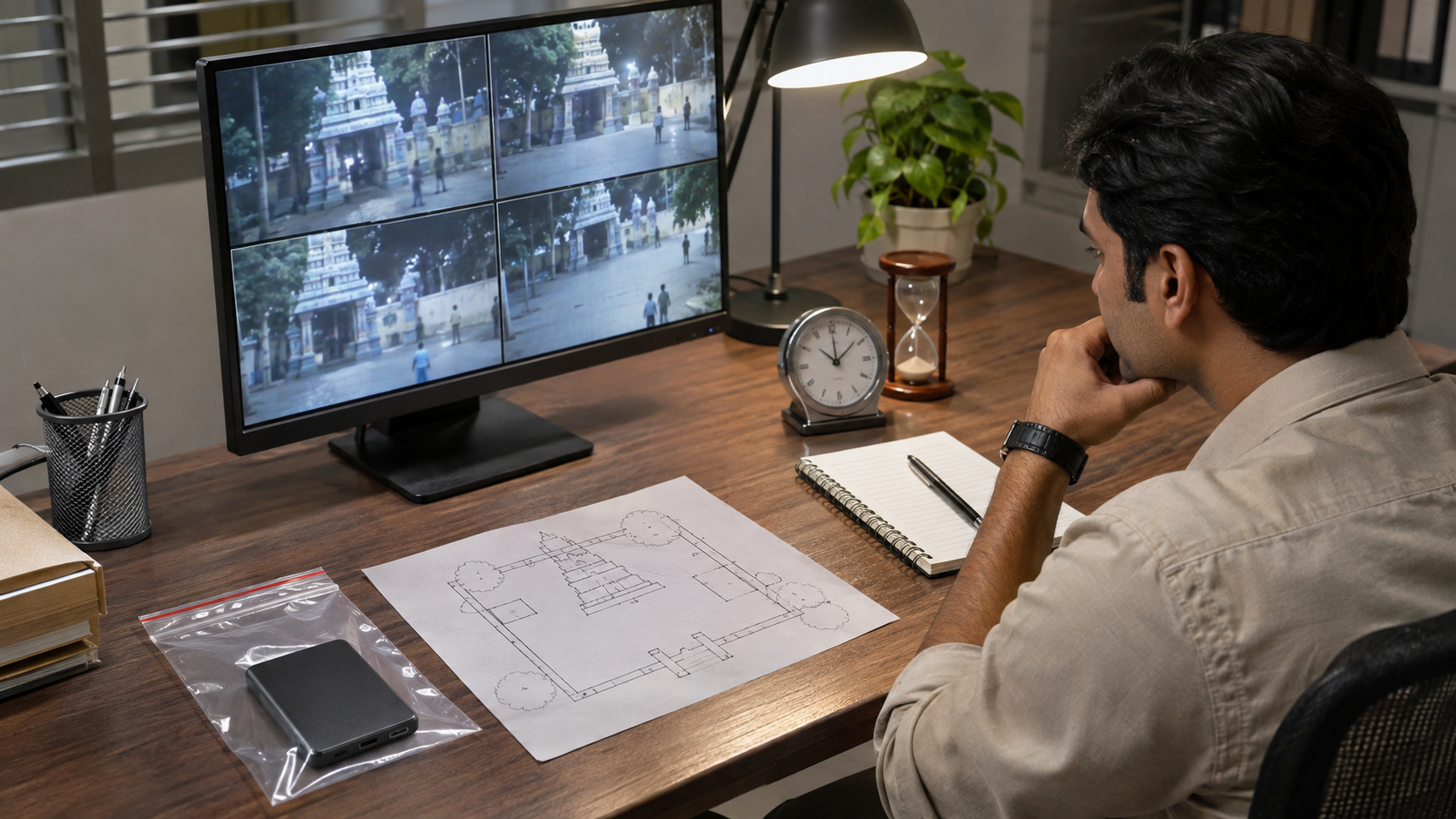
Police have registered an FIR against seven people, including four named individuals and three who had not been identified. Registration of a case means the allegations are being investigated; it is not, by itself, a finding that every accused person committed every alleged act.
Temple personnel allege that several youths tried to leave through a restricted gate. When pujaris and staff asked them to follow the established route, the group reportedly became abusive and threatening before the confrontation turned physical. At least one pujari was injured.
The alleged damage was not confined to the struggle between people. The entrance gate was vandalised and glass panels were shattered after footwear was thrown toward the structure. In a mandir, that conduct carries a religious and emotional weight beyond the cost of replacing glass. It still has to be described precisely, without adding a motive that investigators have not established.
Surveillance cameras reportedly captured the episode, and police are examining the recordings alongside witness statements. Full recordings can help identify participants and distinguish individual actions. A short social-media clip, however, may omit what happened before or after the visible confrontation.
Keep three questions separate. Who can be identified? What did each person do? What motive, if any, can be proved? The available facts support a serious investigation into violence and property damage. They do not yet establish that the incident was planned, connected to another attack or driven by an organised anti-Hindu campaign. Insisting on that distinction does not diminish the offence. It protects the credibility of the demand for justice.
A gate dispute does not excuse violence in a mandir
Reducing this episode to a disagreement about visitor movement misses the essential point. A person may question a rule or complain that a route is inconvenient. No such grievance creates a right to threaten staff, strike a pujari or damage temple property.
A restricted gate is also not a trivial bureaucratic device. Temple routes can separate entrances and exits, prevent opposing crowds from meeting at a bottleneck, and preserve an orderly flow around darshan and seva. When a visitor ignores the route, a pujari or employee who intervenes is protecting the functioning of the mandir, not asserting a personal privilege.
Vrindavan is a dhama shaped by the remembrance and worship of Sri Radha and Sri Krishna. For a devotee, the conduct appropriate to such a place begins before reaching the garbhagriha. It includes patience in a queue, respect for sevayats and compliance with instructions intended to protect worshippers.
Temple management has a corresponding duty. A rule that staff must enforce should be visible before a visitor reaches the disputed point. The permitted alternative should be easy to find. Pujaris should not be left to argue repeatedly with an aggressive group while security waits elsewhere. Sanctity is defended through disciplined conduct and competent arrangements, not through sentiment alone.
The security repair temple committees should make now
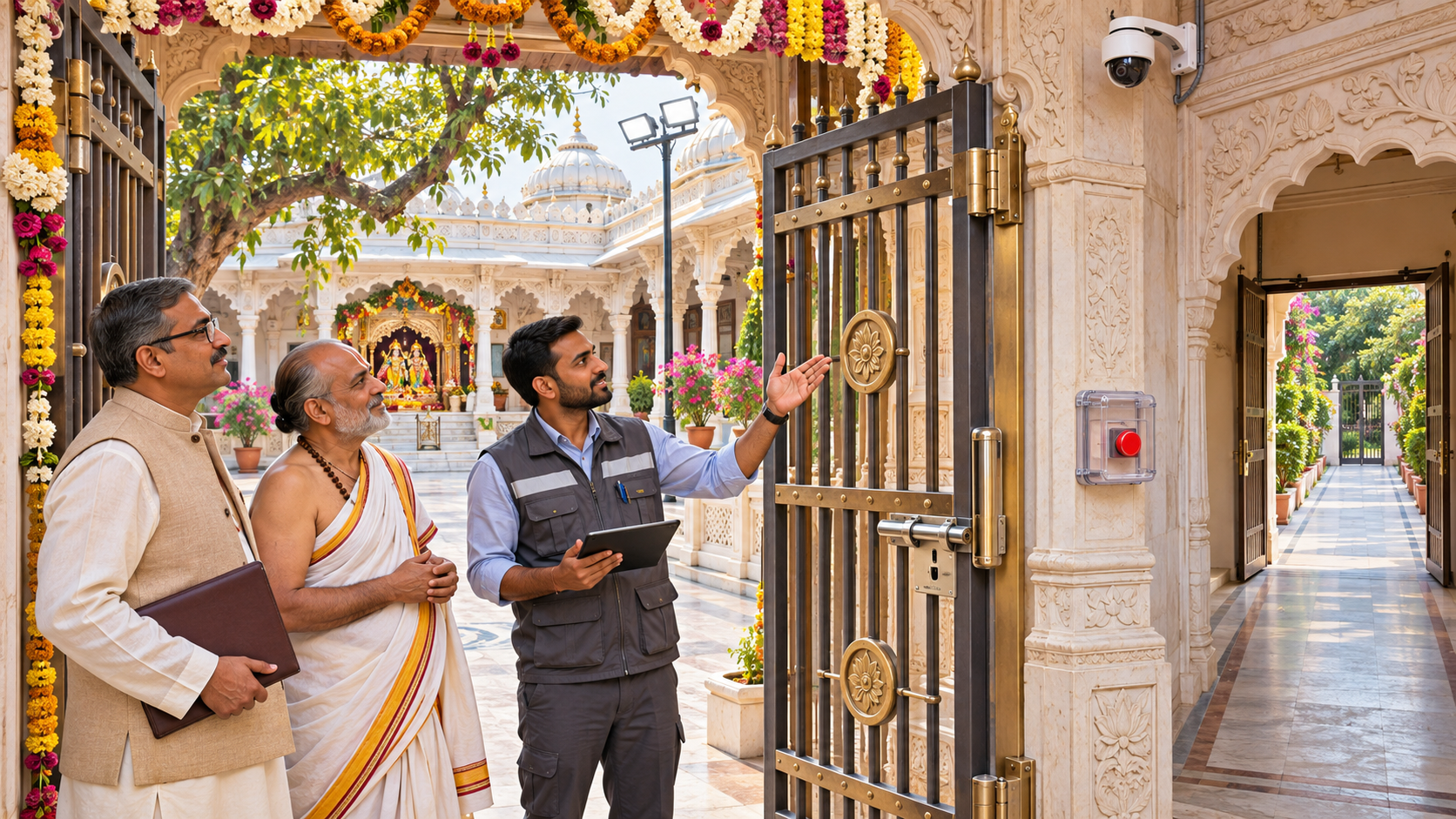
A temple does not need to feel like a fortress. It does need a plan for the predictable moment when confusion becomes defiance and defiance becomes a threat. Committees can use this incident to audit every restricted gate, queue junction and other point where visitors regularly challenge staff.
- Protect people before property. At the first credible threat, move the targeted pujari or employee and nearby worshippers away from the confrontation. Summon the designated security response and call the police when violence appears imminent. An untrained crowd surrounding the aggressors can increase the danger.
- Preserve the complete camera record. Save the relevant period from every camera covering the approach, confrontation and departure. Keep the native files, record the displayed camera times and document who made each copy. Do this before routine storage settings overwrite the footage.
- Collect accounts independently. Each witness should record what they personally saw and heard while the memory is fresh, without trying to harmonise the account with other witnesses. Injuries and damaged property should be documented and supplied to investigators under police guidance.
- Remove ambiguity from visitor routes. Place the restricted-gate notice far enough in advance for a visitor to change direction. Show the permitted exit clearly and use the languages and symbols commonly understood by the temple’s visitors. A sign attached only to the prohibited gate arrives too late.
- Set an escalation ladder. Staff should know whom to call after a visitor refuses the first instruction, who has authority to summon security, and when police assistance is required. The aim is to end the improvised argument before a pujari becomes the only physical barrier.
- Give a precise public update. State what has been reported, what police are investigating, whether the injured have received care, what property is being repaired and which safety controls are changing. Do not announce an unproved motive or declare suspects guilty.
The most important operational change is simple: no sevayat should have to choose between abandoning a temple rule and risking an unsupported confrontation. If management expects a person to enforce a boundary, management must provide the authority, communication link and trained backup needed to enforce it safely.
How devotees and witnesses can help without harming the case
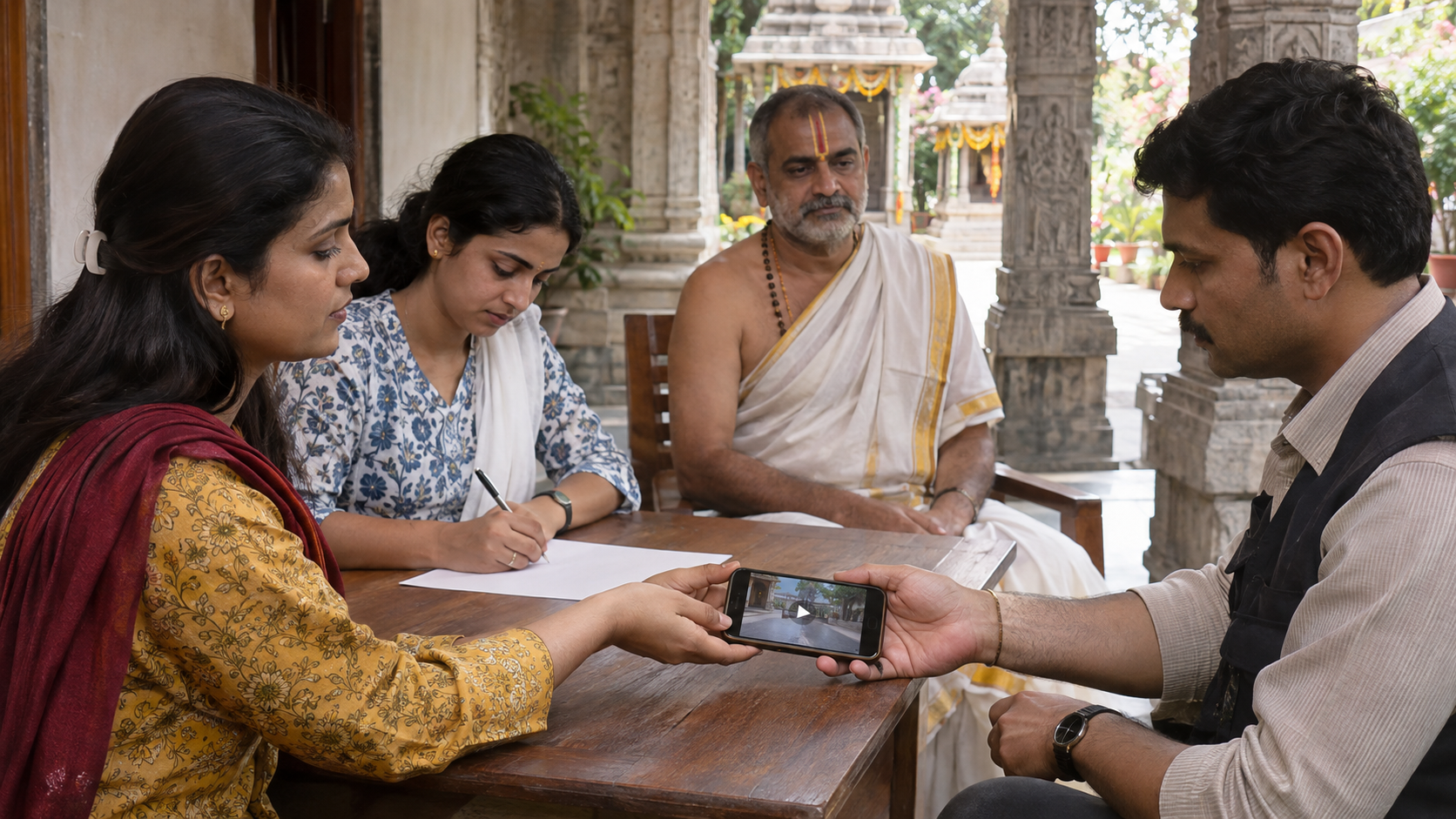
Your response can strengthen the investigation or make it harder. If you directly witnessed the incident, write down the location, sequence, words and actions you personally remember. Separate what you saw from what somebody later told you. Preserve any original photograph or video instead of keeping only an edited or compressed social-media copy.
Provide relevant material to the police and an authorised temple representative. Retain a copy and note when and to whom it was delivered. Do not add captions that identify an unconfirmed person, and do not edit several moments together in a way that changes their sequence. If police request a particular method of submission, follow that instruction.
If you encounter violence during a future visit, move away from the immediate confrontation and help vulnerable family members do the same. Alert temple security and the police. Unless you are trained and intervention is unavoidable to prevent immediate harm, entering a group fight can create another victim and obscure who did what.
If you only saw a clip online, do not crowdsource identities from faces, clothing or family resemblance. Misidentifying someone can expose an innocent person to harassment and distract investigators from the actual participants. Use language that matches the stage of the case: allegations have been made, police have registered a case, and footage is being examined.
You can also ask the temple committee questions that produce real accountability. Has the complete CCTV record been secured? Have witnesses been able to give separate accounts? Is the damaged entrance safe to use? Is the restricted route now marked before visitors reach it? Who responds when a visitor threatens a pujari? What support has been offered to injured or intimidated sevayats?
Public anger can keep attention on an incident, but unsupported claims can weaken that effort. A factual message naming the mandir, the police action and the need for witnesses is more useful than communal abuse, private addresses or declarations of guilt. Restraint is not passivity. A disciplined account is harder to dismiss and less likely to injure an innocent person.
Key takeaways
- Police have registered a case against seven people, four named and three unidentified; the FIR begins an investigation and does not establish guilt.
- Temple personnel allege that resistance to a restricted-exit rule escalated into threats and assault, leaving at least one pujari injured.
- The entrance gate and glass panels were allegedly damaged, making preservation of complete CCTV files and independent witness accounts essential.
- Devotees can demand firm accountability without claiming an organised motive or connection to other incidents before evidence establishes one.
- Temple committees should pair every enforceable visitor rule with clear signage, an obvious alternative route and a defined security response.
The next test is whether the investigation produces evidence-led accountability and whether the mandir converts a frightening episode into better protection for its sevayats. If you possess evidence, preserve it and submit it through the proper channel. If you are a devotee, ask the precise questions that keep both justice and temple safety moving. The dharmic response to disorder is disciplined protection of truth, people and sanctity.
References

Leave a Reply
You must be logged in to post a comment.