
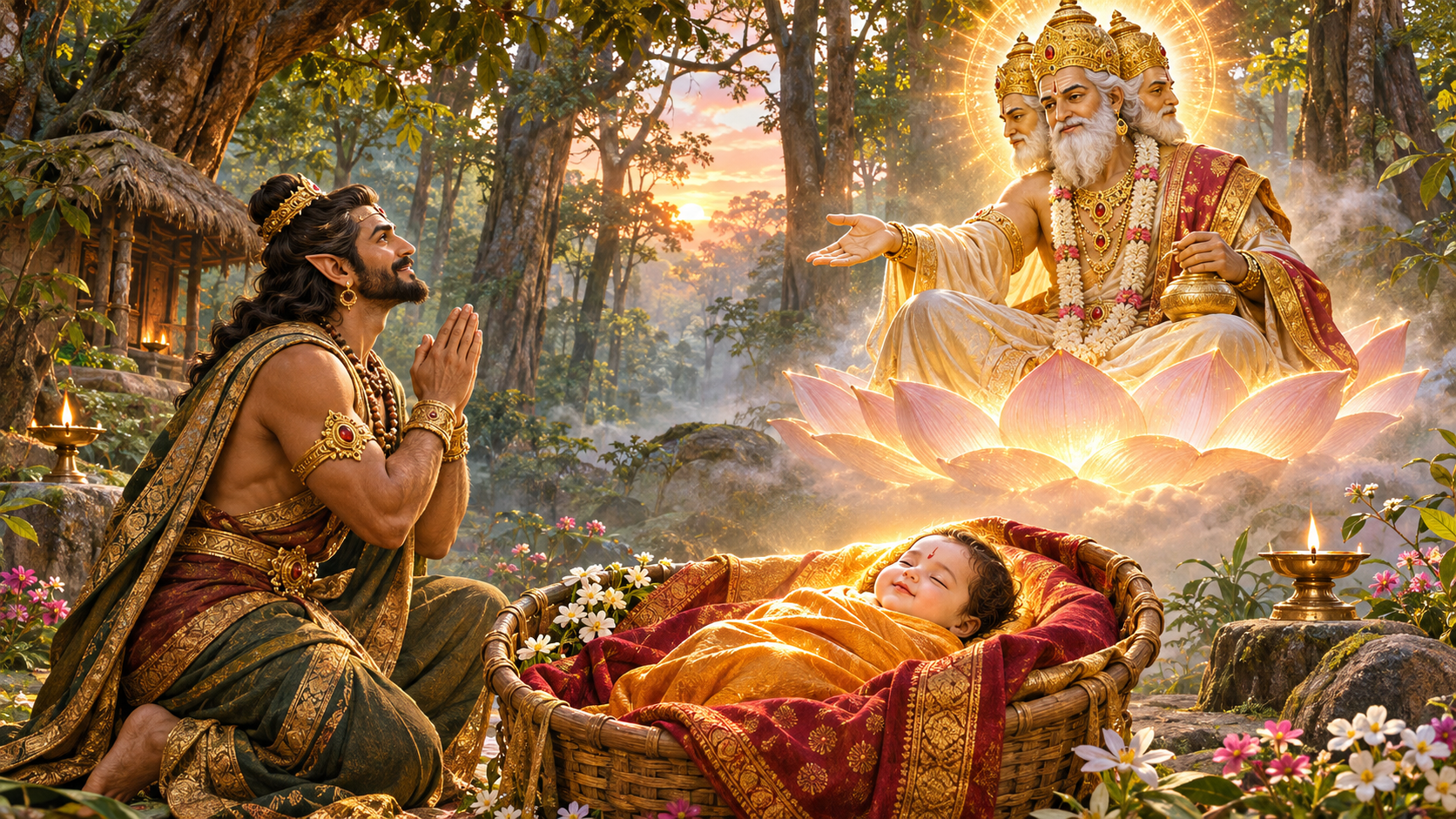
If you know Tadaka only as the powerful female demon who troubled the sages, you are meeting her at the end of a sequence. Her beginning lies with Suketu, a yaksha who wanted a son and received a boon from Brahma.
The distinction matters. Bala Kanda, Chapter 24, does more than attach a name to Rama’s adversary. It places Tadaka within a family history and gives you a disciplined way to separate birth, identity, and later conduct.
The sequence begins with Suketu, not Tadaka
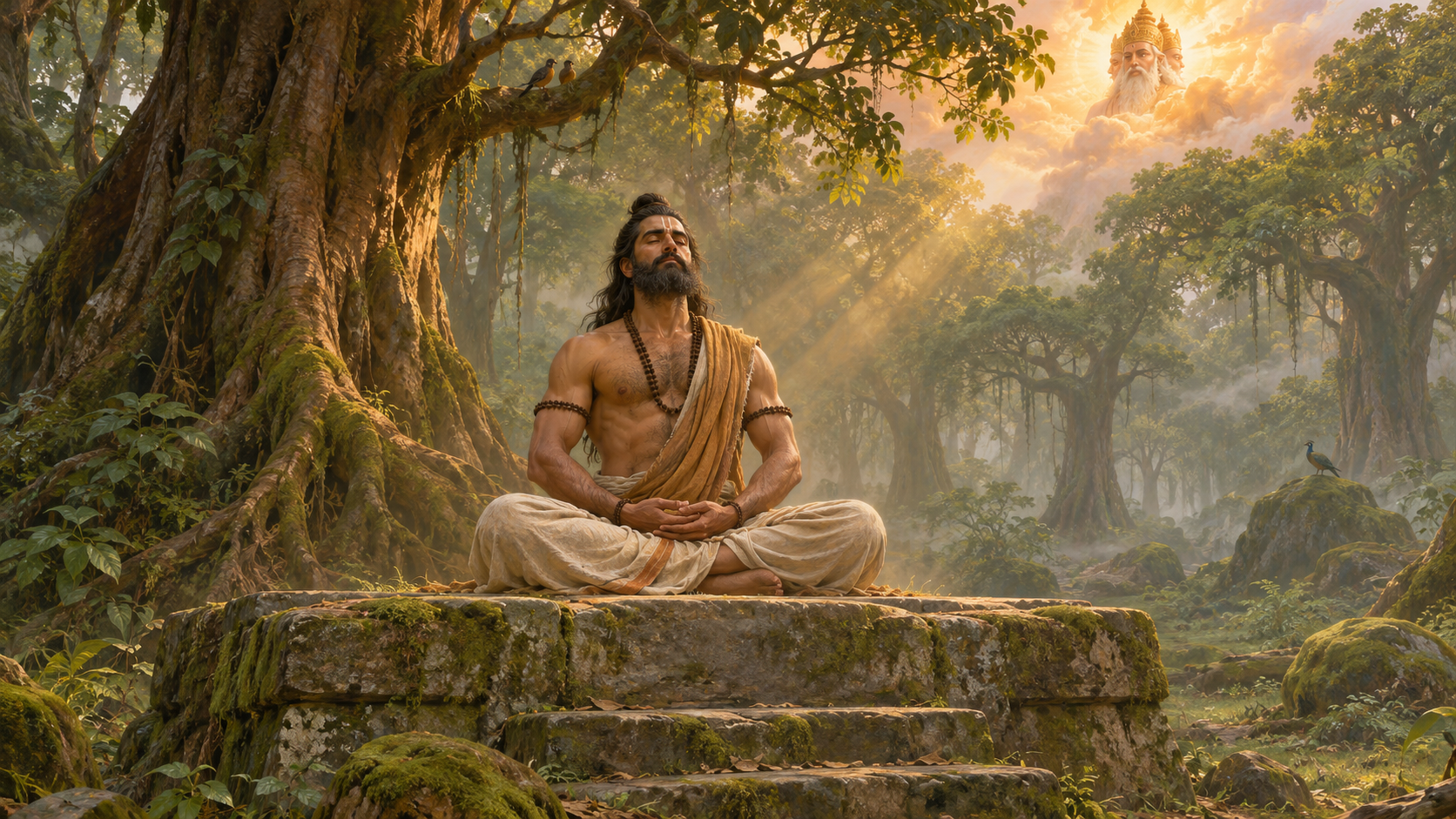
Suketu was a yaksha who desired a son. Brahma granted him a boon, but the child Suketu received was Tadaka, a daughter. She is the figure who would later be known as the powerful female demon troubling the sages.
Keep the roles clear. Suketu is the father who seeks a child. Brahma is the divine giver of the boon. Tadaka is the daughter born from that answered desire. Vishwamitra is the narrator who later explains her origin to Rama and Lakshmana. Confusing any two of those roles makes the episode harder to understand than it needs to be.
The most concise answer to the question of Tadaka’s birth is therefore this: she was born to the yaksha Suketu as the result of Brahma’s boon, even though Suketu had specifically wanted a son.
Why Suketu’s identity as a yaksha matters
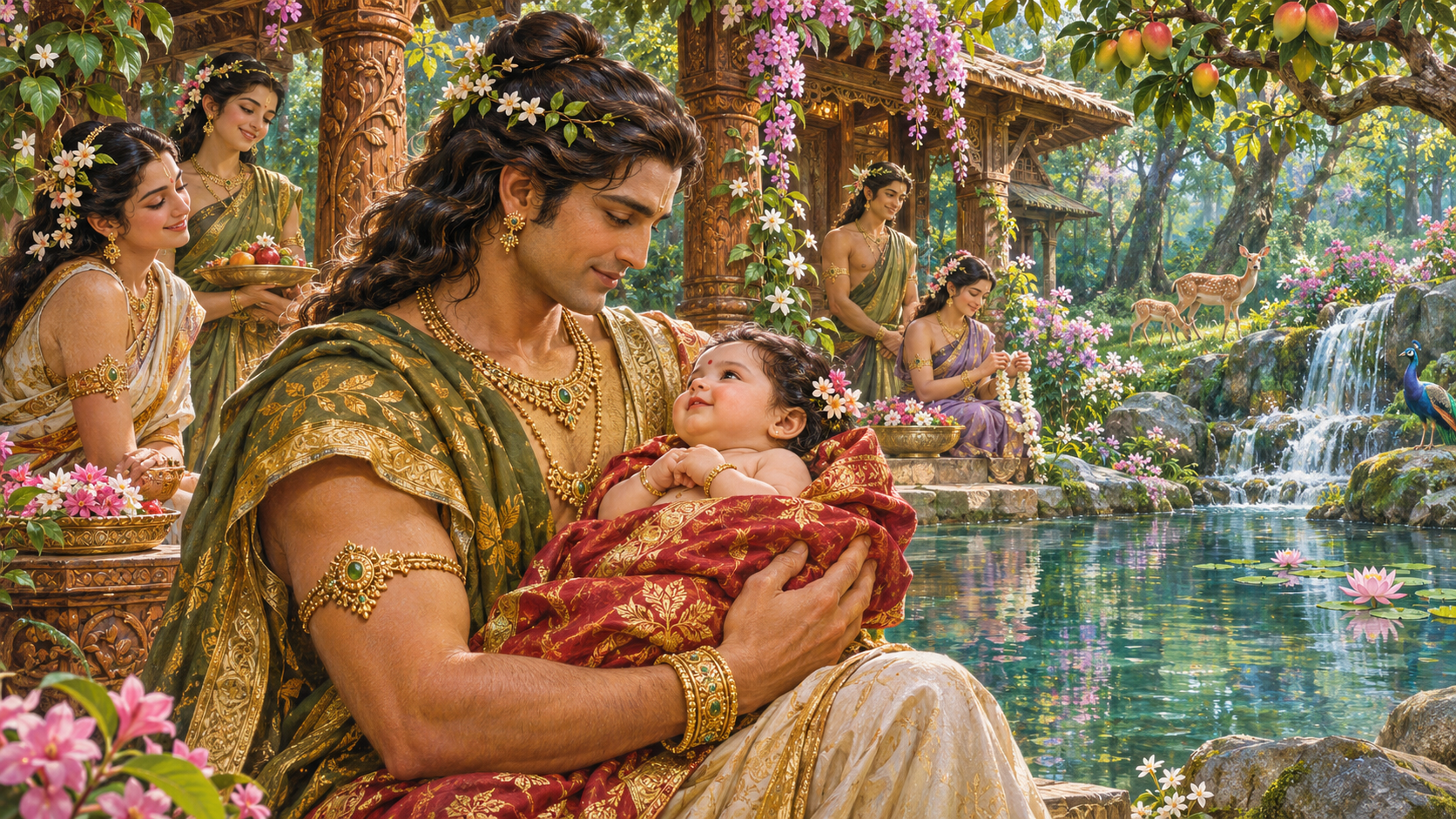
Readers sometimes allow Tadaka’s later description to flow backward into her birth. That produces the misleading impression that the episode begins with an evil being creating another evil being. It does not. Suketu is introduced as a yaksha, while Tadaka is described in relation to the threat she later poses to the sages.
This is not a minor technicality. A genealogy tells you where someone came from; it does not automatically settle the moral meaning of everything that person later does. Tadaka’s birth explains her place in the narrative, but her parentage should not be treated as a verdict on Suketu, on yakshas generally, or on the character of a newborn daughter.
It is therefore more accurate to say that the story explains the origin of the figure later encountered as a female demon. Saying simply that Suketu asked Brahma to create a demon collapses different stages of the narrative and adds an intention that the episode does not give him.
The son Suketu wanted and the daughter he received
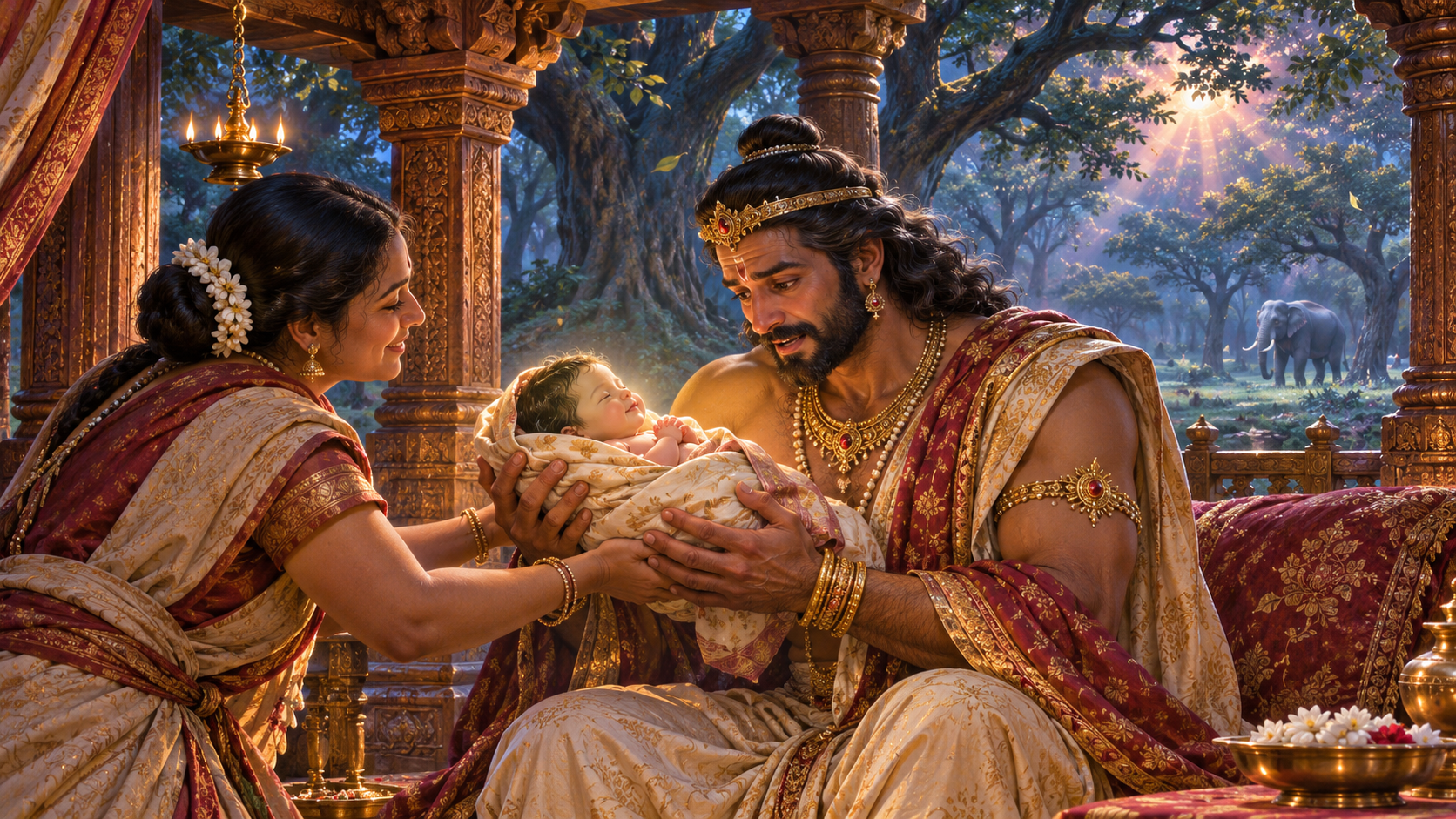
The difference between Suketu’s request and its outcome is one of the sharpest details in the episode. Do not flatten it into the vague statement that he merely wanted a child. He wanted a son; Brahma’s boon brought Tadaka into his life.
At the same time, that difference should not be forced into a lesson the narrative has not stated. It does not justify treating Tadaka as an inferior answer because she was a daughter. Nor does it establish that Brahma was mocking or punishing Suketu. Those conclusions go beyond the facts of the birth account.
A restrained dharmic reading notices something subtler: human desire can be highly specific, while the fruit of a boon need not reproduce that desire in precisely the form imagined. Divine favor and a person’s later conduct are also separate questions. Receiving life through a boon does not turn every future action into an endorsement by the boon-giver.
This protects the episode from two opposite mistakes. You need not interpret Tadaka’s later violence as proof that Brahma’s gift was evil from the beginning. You also need not treat the boon as moral immunity for whatever follows. The account of a birth explains an origin; it does not erase the importance of later choices and consequences.
Vishwamitra’s setting gives you a reading method
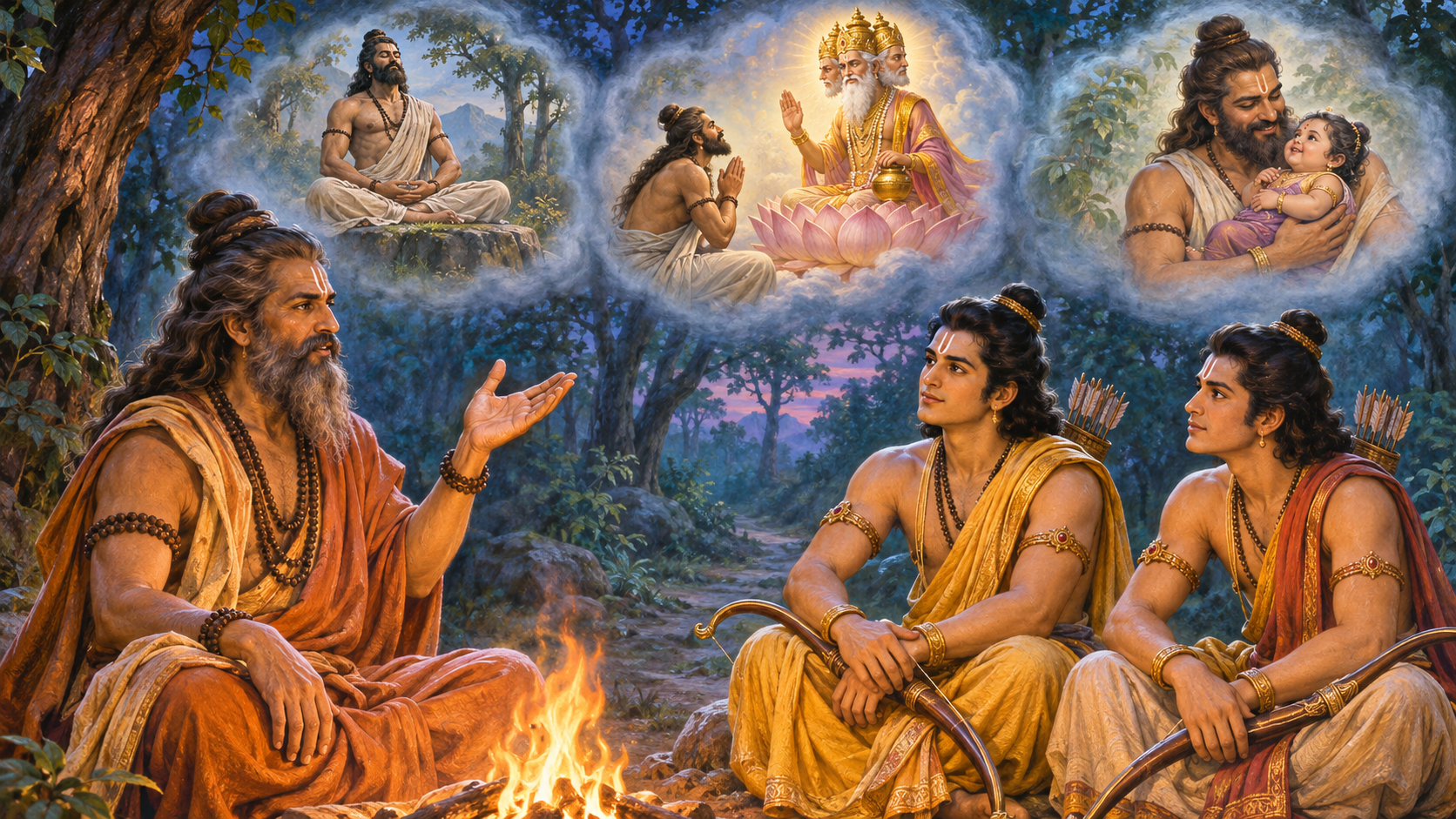
Vishwamitra tells this history to Rama and Lakshmana while they are travelling toward the forest near the sage’s ashram. The setting turns genealogy into preparation. The princes are not hearing detached lore for amusement; they are being taught the background of the place, the danger facing the sages, and the being associated with that danger.
When you read the episode, ask three questions in order. Who is speaking? Vishwamitra. Who is listening? Rama and Lakshmana. Why is the information being given at that moment? They are approaching the forest connected with Tadaka’s disruption of the sages’ lives. Those answers keep the narrative frame visible.
This method also prevents a common error in reading an epic: extracting a single deed while discarding the teaching that precedes it. Vishwamitra first gives Rama and Lakshmana context. The background does not make Tadaka’s harmful conduct irrelevant, but it ensures that the threat has a history rather than appearing as a faceless obstacle.
You can apply the same method elsewhere in the Ramayana. Before interpreting a confrontation, identify the narrator, the audience, the location, and the history being supplied. A story told on a journey often prepares the listener to understand what will be encountered at the journey’s next stage.
Key takeaways
- Suketu was a yaksha who wanted a son.
- Brahma granted Suketu a boon, and Tadaka was the daughter he received.
- Tadaka’s later description as a powerful female demon should not be projected backward onto Suketu or treated as her complete identity at birth.
- Vishwamitra recounts the history to Rama and Lakshmana during their journey toward the forest near his ashram.
- The episode appears in Bala Kanda, Chapter 24.
- The careful reading is to distinguish what the narrative states about birth from what readers infer about character, divine intention, and later conduct.
When you next open this episode, mark four elements in the margin: Suketu’s desire, Brahma’s boon, Tadaka’s birth, and her later identity. Reading them in that order lets the story retain its moral and narrative depth without turning lineage into destiny.
References

Leave a Reply
You must be logged in to post a comment.