
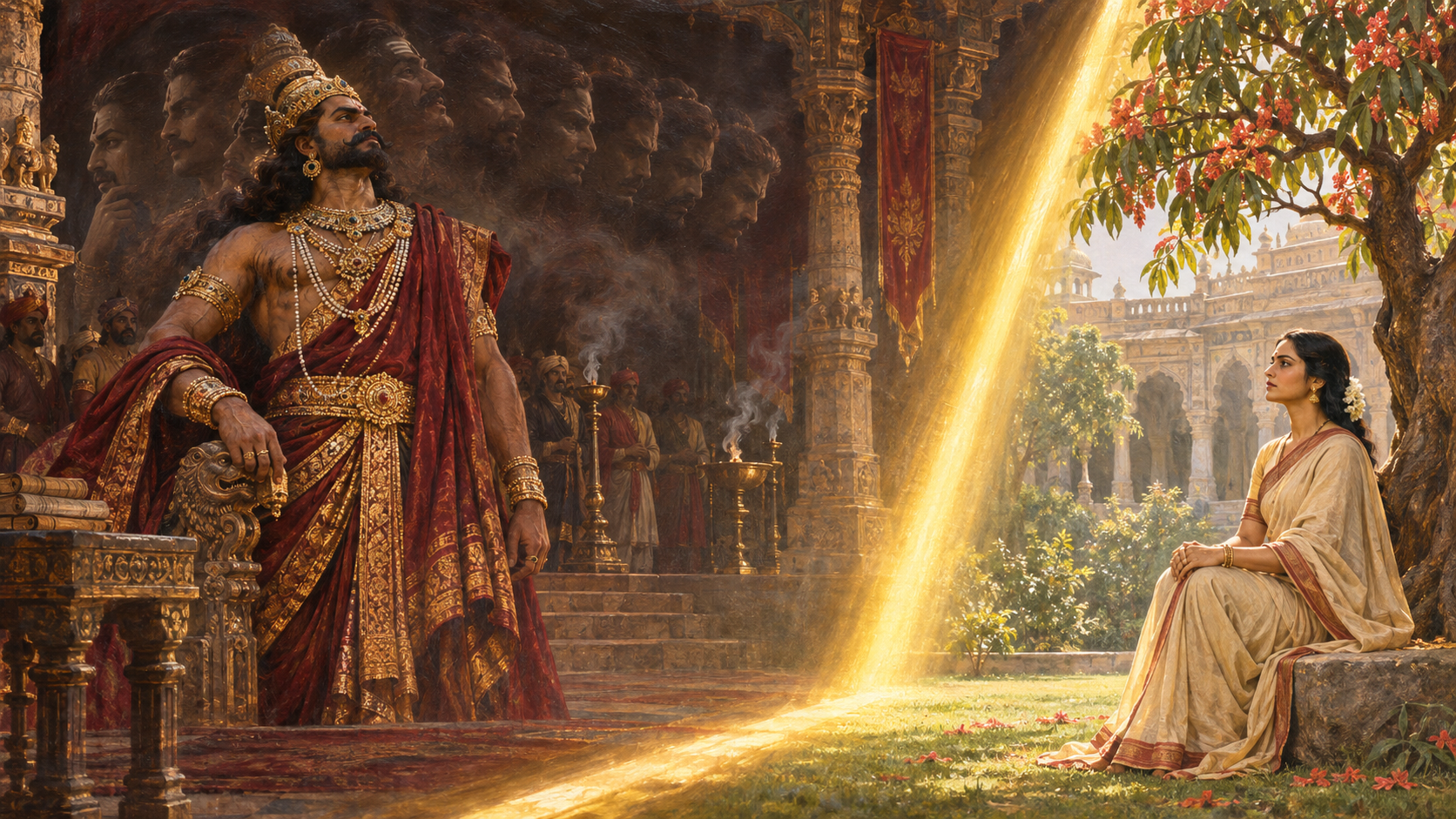
You may leave a Ramayana film impressed by Ravana and still feel uneasy about the way he was presented. Was he given legitimate dramatic depth, or did spectacle quietly turn adharma into heroism? You do not have to choose between a flat villain and an exonerated antihero.
The soundest test is not how much screen time Ravana receives, how imposing he looks, or whether the actor dominates a scene. Ask what the film invites you to admire, what it asks you to excuse, and what it encourages you to forget. That distinction lets you appreciate cinematic craft without surrendering the Ramayana’s moral architecture.
Complexity preserves moral responsibility; glorification dissolves it
Ravana should not be reduced to a featureless monster. His power, scholarship, rulership, knowledge of the shastras, and devotion to Bhagwan Shiva belong to his traditional characterization. So do his abduction of Sita and his attempts to possess her against her will. A faithful portrait has to hold these truths together.
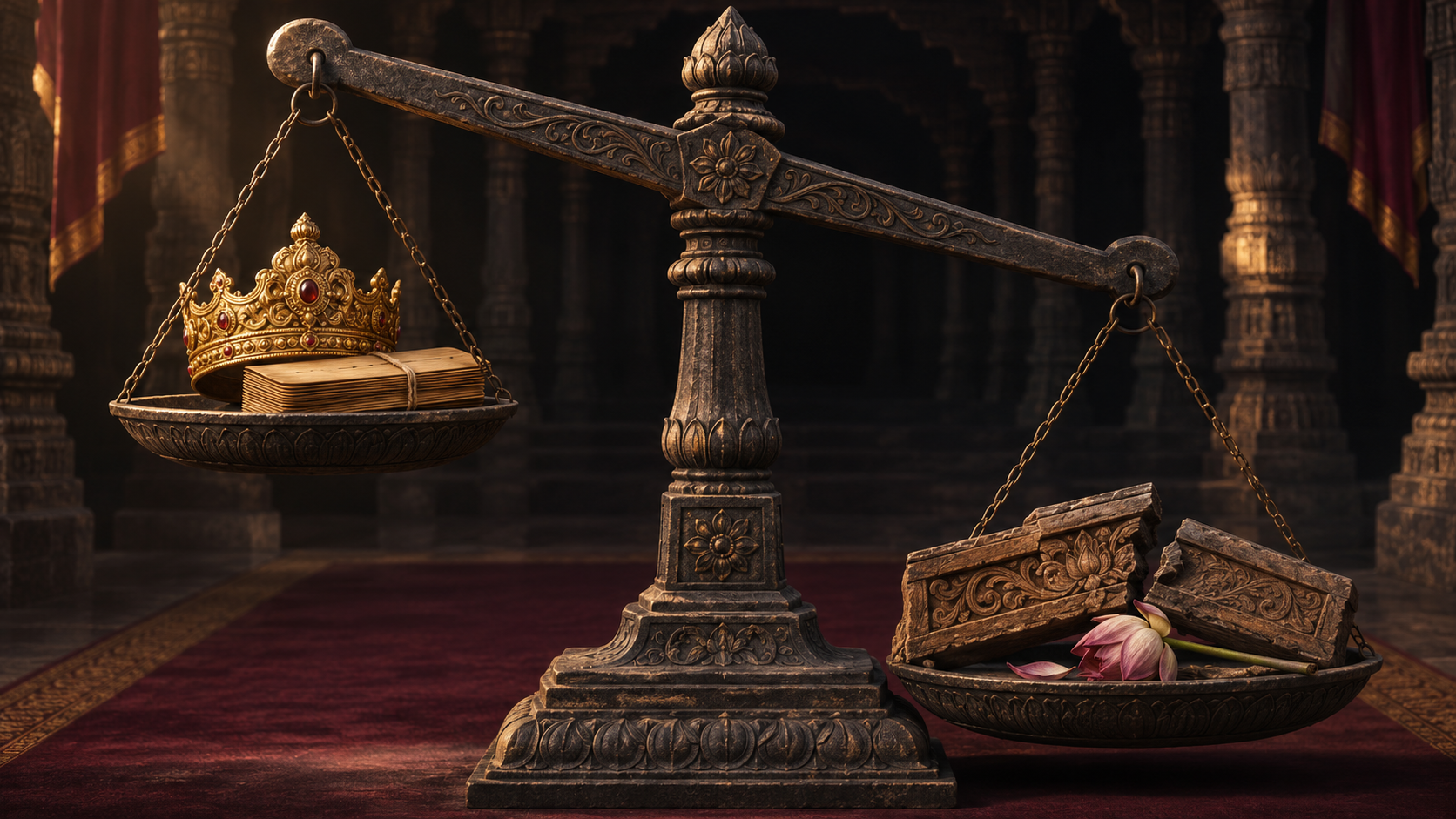
Removing Ravana’s capabilities makes Rama’s adversary smaller and the conflict less meaningful. Removing Ravana’s moral agency does something more serious: it turns characterization into an excuse. His attainments explain why he is formidable. They do not acquit him.
This gives you a practical distinction. Complexity shows how learning, devotion, strength, and status can coexist with a ruinous refusal to govern desire. Glorification converts those accomplishments into moral credit, as though greatness in one sphere cancels adharma in another. In a Dharmic reading, it does not.
- If Ravana’s brilliance raises the stakes while his choices remain clearly his own, the portrayal has depth.
- If every wrongful choice is reassigned to injury, fate, enemies, or family honour, responsibility is being displaced.
- If Sita’s will and suffering recede while Ravana’s wounded pride fills the frame, sympathy has begun to distort the conflict.
- If his devotion is used to prove that his conduct cannot be condemned, spiritual attainment has been confused with ethical discipline.
A compelling Ravana can therefore be more faithful than a crude one. The decisive question is whether his stature deepens the tragedy of his fall or is used to deny that a fall occurred.
Changing Ravana’s motive changes the moral meaning of the abduction
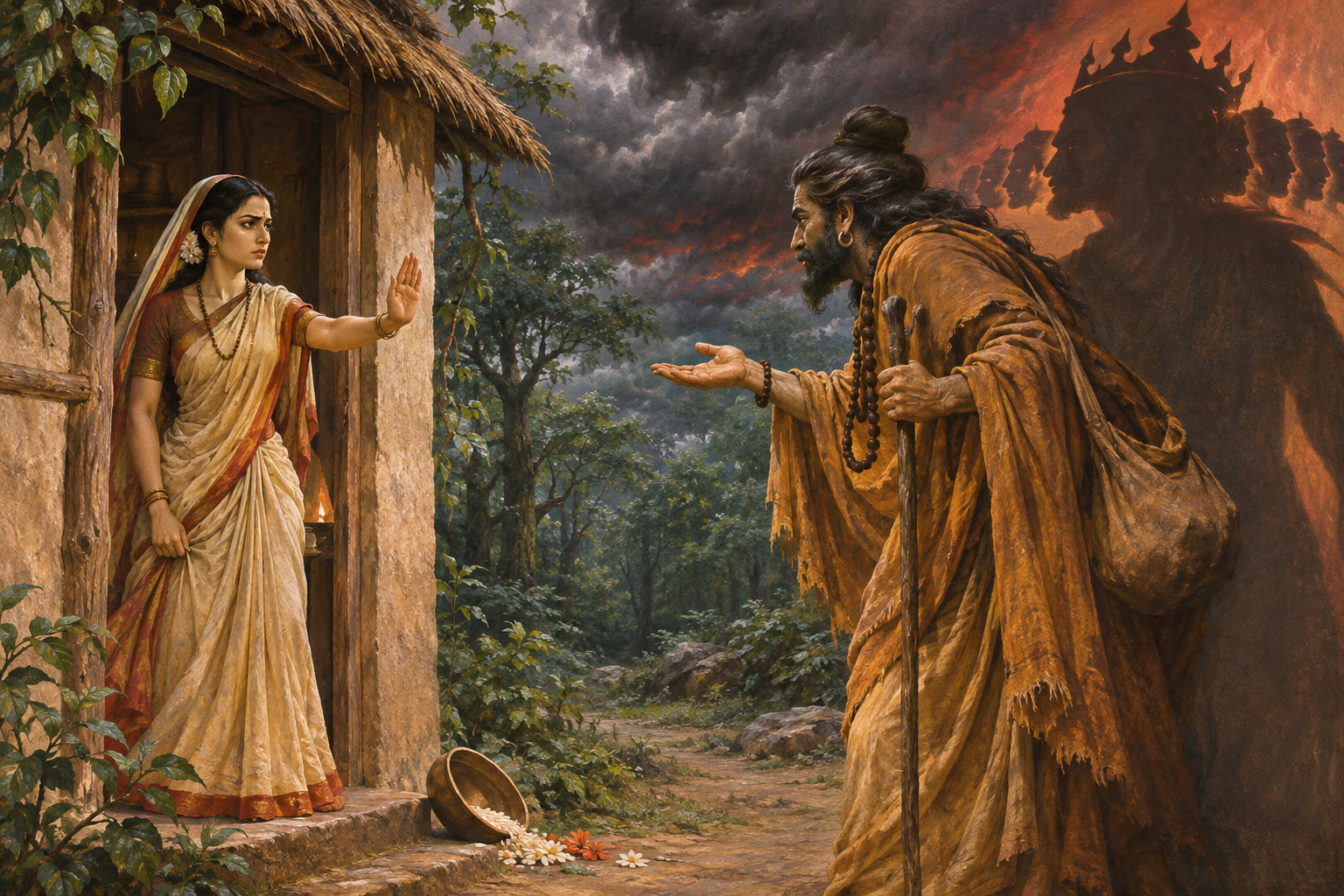
Cinema can alter your judgement of an event without removing the event itself. The simplest way is to change why it happens.
The humiliation of Shurpanakha, the killing of Khara and other Rakshasas, and Ravana’s subsequent involvement form part of the sequence leading to the central conflict. Yet Ravana’s desire for Sita remains essential to the traditional moral account. Circumstances may explain how he enters the conflict; they do not by themselves define the nature of his choice.
If revenge for Shurpanakha becomes the dominant motive, Sita’s abduction can begin to resemble retaliation in a dispute over family honour. Ravana then appears to answer one humiliation with another act in an escalating feud. If his desire to possess Sita remains central, the same abduction exposes a ruler using power against a woman who refuses him. Those are not interchangeable moral stories.
This does not mean revenge must be absent from a screenplay. A character can act from pride, anger, desire, and political calculation at once. The distortion occurs when an understandable grievance is allowed to replace culpable desire, rather than merely accompany it.
When you watch an adaptation, identify the last decision Ravana could have made differently before the abduction. Then notice how the screenplay frames that moment. Does he choose to violate another person’s freedom, or does the film present him as if events leave him no meaningful choice? Does the dialogue reveal desire, or repeatedly redirect you toward Shurpanakha’s injury? Does the narrative keep Sita’s refusal at the centre, or make her primarily an instrument through which two powerful men confront each other?
Motivation is not a minor detail added to the plot. It determines whether the audience sees Ravana’s act as adharma, tragic weakness, justified retaliation, or unavoidable destiny. A film may retain the abduction and still rewrite its ethical meaning.
Rama and Sita reveal what kind of strength the story honours
Ravana’s portrayal cannot be judged in isolation. Cinema defines a character partly through contrast. If Ravana receives grandeur, intelligence, emotional depth, and commanding dialogue while Rama and Sita are flattened, the moral balance changes even when the plot remains recognizable.
Rama’s traditional strength includes composure, humility, restraint, firmness, and dignity. These are not decorative virtues placed beside his courage; they are integral to his identity as Maryada Purushottama. In the confrontation with Parashurama, for example, making Rama mirror another person’s aggression risks relocating his authority from self-command to volume and intimidation.
Rama can be firm without being timid, and restrained without being passive. If an adaptation assumes that a hero must shout, threaten, or dominate the frame to appear powerful, it imports a narrow cinematic grammar into a character whose distinction lies partly in governing himself. Ravana’s force then looks vivid, while Rama’s maryada is treated as insufficiently dramatic.
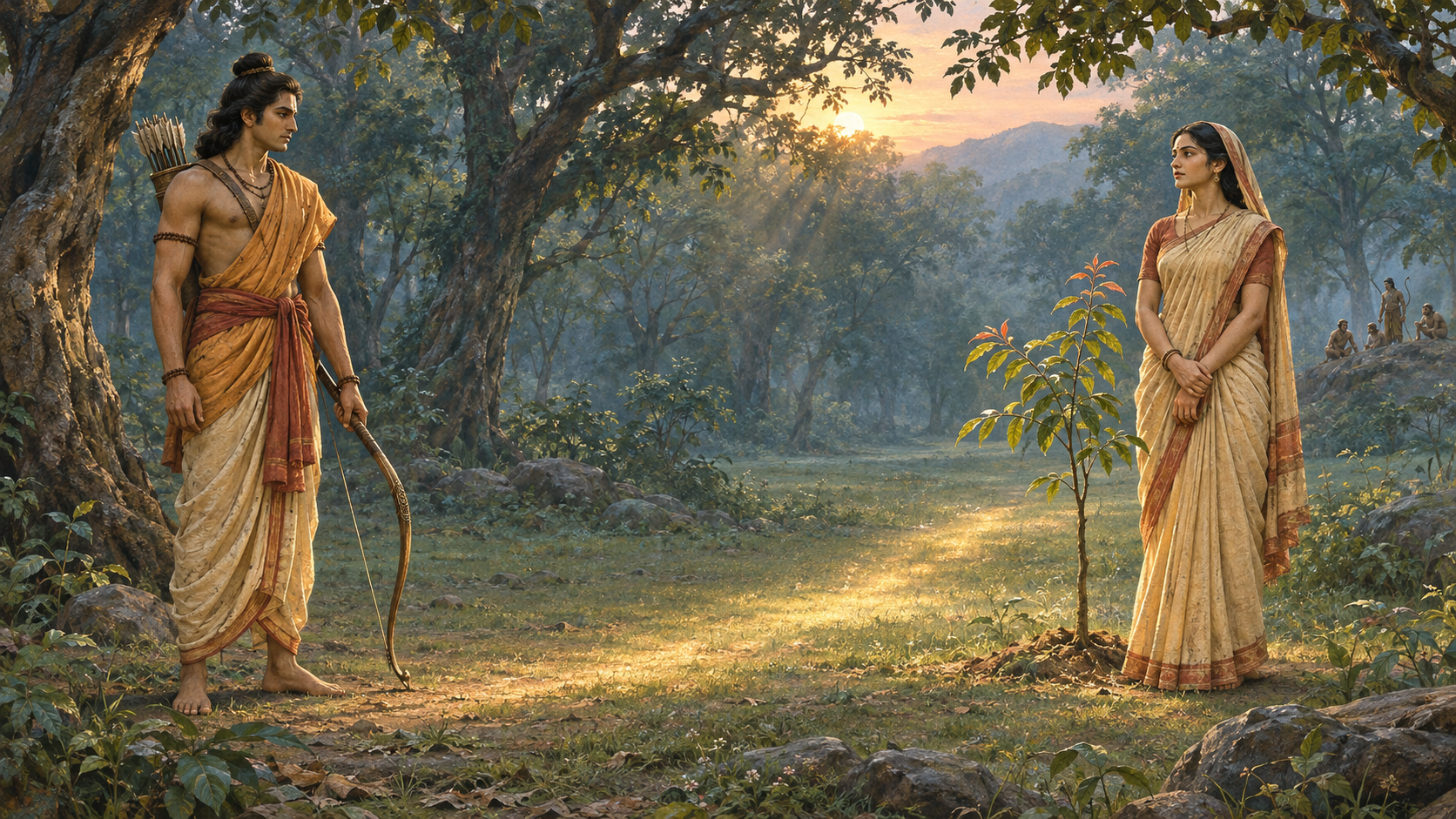
The same problem can affect Sita. Giving her a sword may be intended to demonstrate courage, but physical weaponry is not the only language of strength available to her. Sita’s identity as Bhoomija carries dignity, resilience, conviction, and spiritual force. In her confrontation with Ravana, even a blade of grass can express her refusal to submit. That image does not make her helpless. It shows a power Ravana cannot command: the authority of an unbroken will.
There is nothing inherently wrong with portraying Sita as physically capable. The problem arises when a weapon is treated as the proof that she is strong, as though moral courage, spiritual stature, and resistance without domination were lesser forms of power. That choice can make a supposedly modern Sita less distinctive, not more.
As you watch, separate three kinds of strength:
- Capacity: what a person is able to do through knowledge, rank, weapons, or force.
- Self-mastery: what a person refuses to do despite possessing power.
- Moral resistance: the ability to reject coercion without accepting the coercer’s values.
Ravana can possess extraordinary capacity while failing in self-mastery. Rama’s restraint can express power rather than weakness. Sita’s refusal can defeat Ravana’s claim over her even before the external conflict is resolved. Once you see these distinctions, spectacle no longer gets the final word on who is strong.
A living tradition permits variation, but not unlimited moral reversal
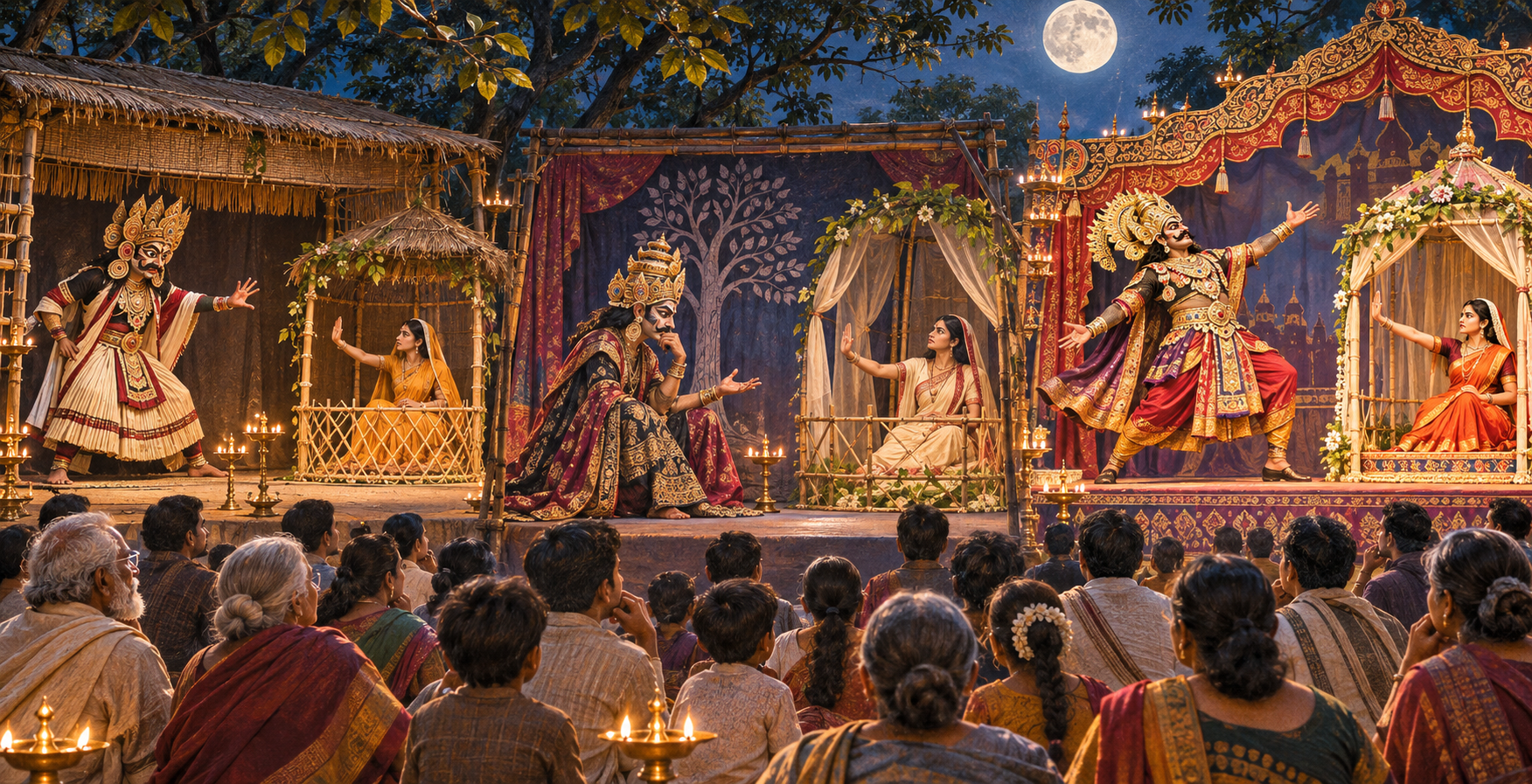
Ramayana tradition is larger than any single cinematic screenplay. It includes supplementary accounts that emphasize different aspects of Ravana’s pride and humiliation. One such narrative tells of Sage Mandavya cursing Ravana to be slapped by a vanara. Stories of this kind show that inherited narration can expand around the epic’s characters without turning every addition into a new moral centre.
Variation, however, is not a blank cheque. A filmmaker has to select episodes, compress events, and translate verbal or spiritual ideas into images. Those are normal acts of adaptation. The important task for the viewer is to identify the level at which a change operates.
- Selection: An episode is included, omitted, combined, or shortened while the characters’ governing choices remain recognizable.
- Emphasis: One motive or quality receives greater weight, changing the audience’s sympathy even though the principal events remain.
- Inversion: An act traditionally understood as adharma is reframed as justified, or a Dharmic virtue is made to look like weakness or hypocrisy.
The first category is usually unavoidable. The second deserves close attention. The third demands a clear defence from the filmmaker because it changes what the story teaches, not merely how the story moves.
This framework also prevents a sterile debate over whether every visible detail appears in one preferred telling. Fidelity is not mechanical reproduction. Ask what function a change performs. An inherited supplementary episode may illuminate Ravana’s arrogance. A newly amplified grievance may generate sympathy. A rewritten motive may transfer responsibility. The same creative freedom can serve very different ends.
Key takeaways for judging a cinematic Ravana
- Do not mistake grandeur for glorification. Scale, charisma, and intelligence can make Ravana a credible adversary without making him righteous.
- Do not mistake complexity for acquittal. His virtues and attainments should coexist with, not erase, responsibility for abducting Sita.
- Track motive carefully. Revenge may explain part of Ravana’s anger, but allowing it to displace desire changes the moral nature of his act.
- Watch how Rama’s restraint is filmed. Composure should not automatically be coded as weakness beside Ravana’s aggression.
- Watch how Sita’s agency is expressed. Her refusal, dignity, and spiritual resolve matter more than whether the screenplay gives her a conventional action-hero gesture.
- Distinguish selection, emphasis, and inversion. Not every departure is a betrayal, but a reversal of the story’s moral judgement is more than adaptation.
- Base criticism on a precise creative decision. Naming the changed motive, contrast, or consequence is more useful than declaring an entire film faithful or offensive.
After your next Ramayana adaptation, write four short answers: What does Ravana want? Which choice makes him responsible? What does Rama’s restraint accomplish? How does Sita’s refusal remain visible? If the film leaves those answers clear, an imposing Ravana can remain a compelling antagonist. If it obscures them, spectacle has begun to displace dharma. That is the conversation worth having after the screen goes dark.
References
- Hindu Post – Ramayana on the big screen: A spectacular cinematic experience, but is Ravana being glorified at the cost of Rama’s dharma?
- Hindu Blog – Ramayana Story Of Sage Mandavya Cursing Ravana To Get Slapped By Vanara

Leave a Reply
You must be logged in to post a comment.