
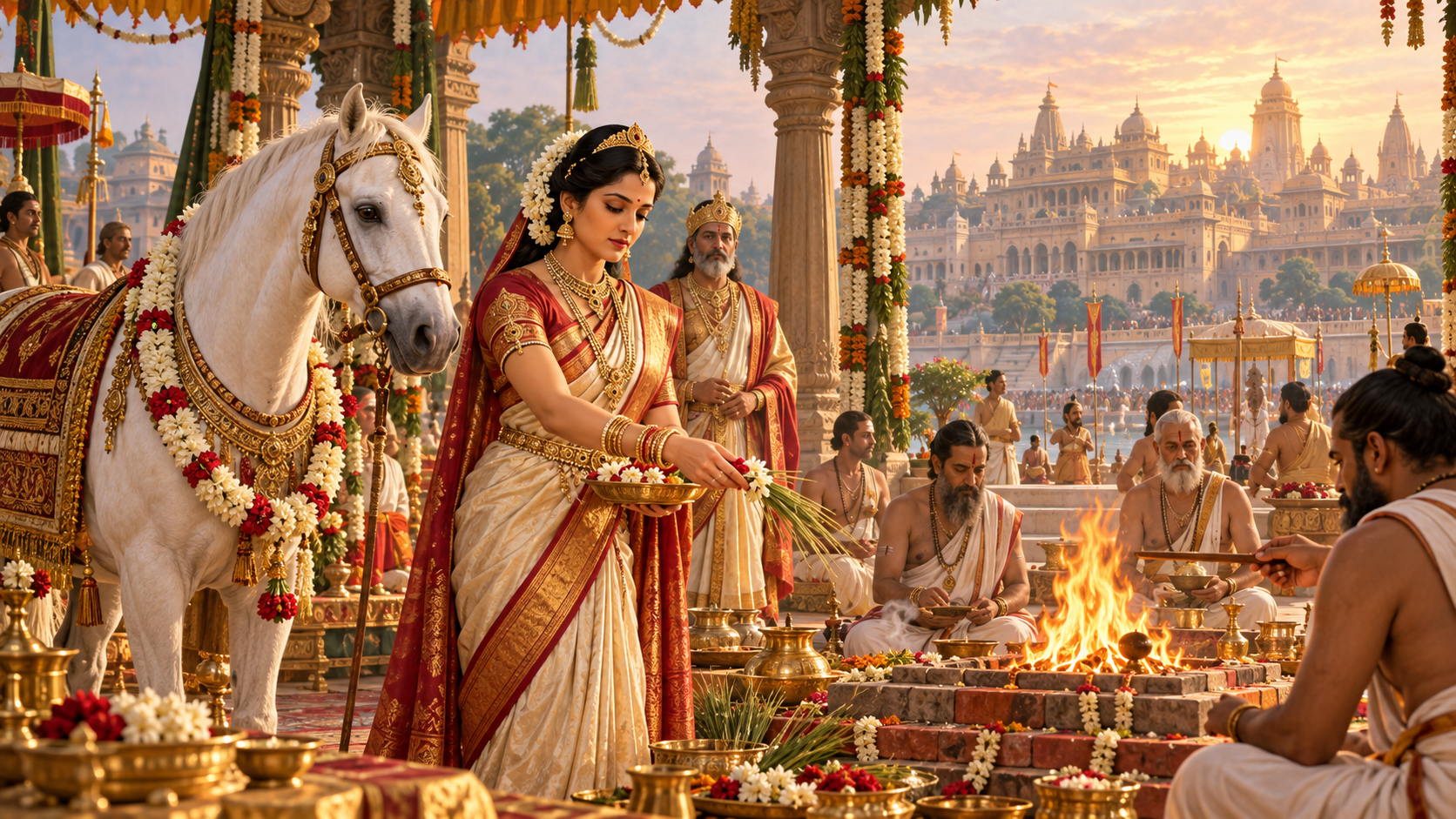
If you are trying to understand Kausalya’s role in Dasharatha’s Ashvamedha, the first mistake to avoid is treating her as a spectator who merely waited for the king’s sacrifice to produce a son. Her place was inside the ritual action.
The concise answer is that Dasharatha undertook the Ashvamedha, the sages provided ritual direction, and Kausalya carried the leading queenly role associated with the sacrificial horse. She did not officiate over the entire yajna, but neither was she simply present as Dasharatha’s wife.
Kausalya was a ritual participant, not a royal onlooker
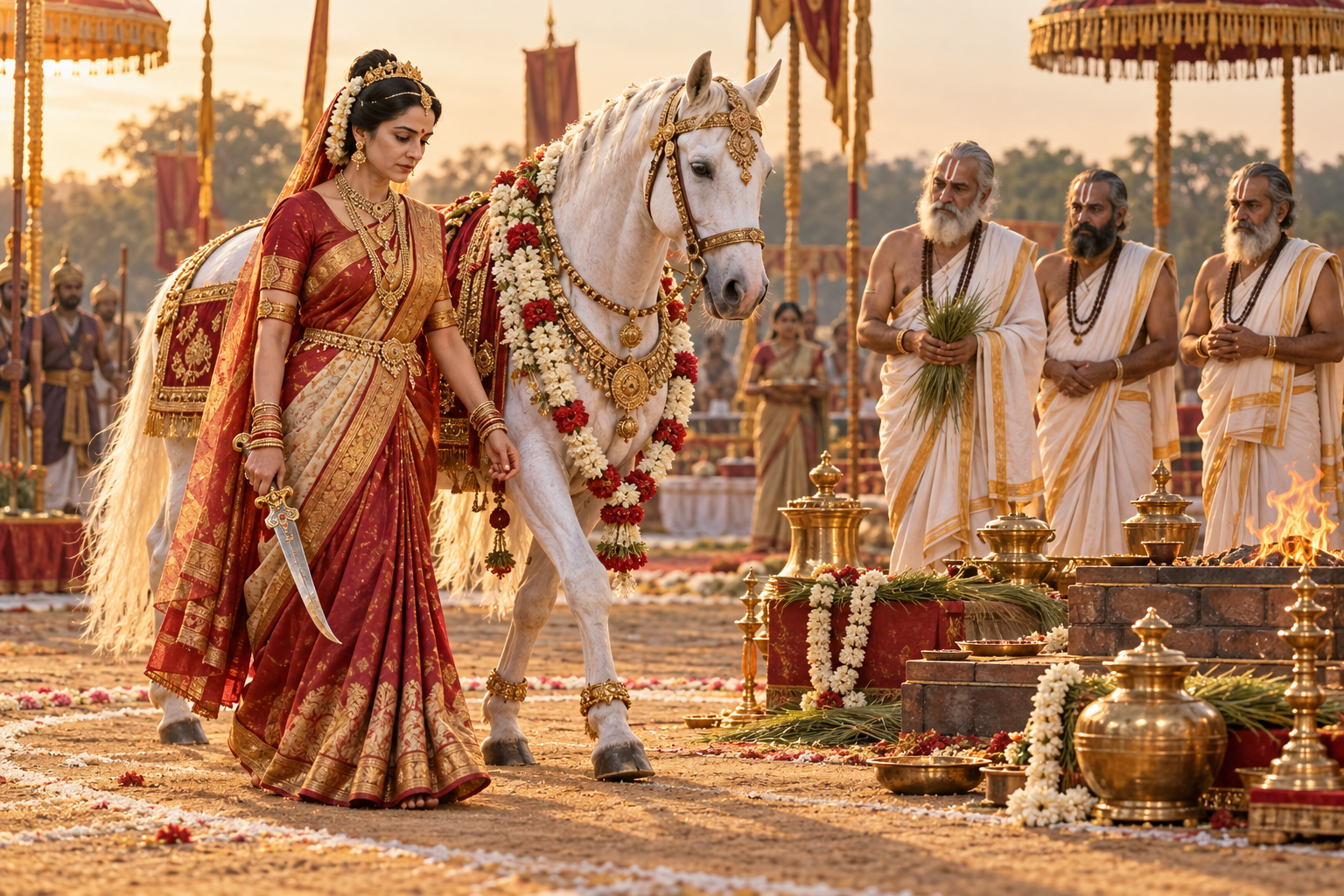
In the Valmiki Ramayana narrative, Dasharatha has no son, and this causes him profound sorrow. After receiving counsel from Vasishtha and other sages, he decides to undertake a great yajna. That undertaking begins with an Ashvamedha in which Kausalya has the leading queenly role connected with the sacrificial horse.
The distinction between participation and observation matters. A queen appearing at a royal rite could be described loosely as attending it, but that language is inadequate here. Kausalya’s position carries ritual responsibility. Her presence is not decorative, and her importance does not arise only from eventually becoming Rama’s mother.
At the same time, saying that Kausalya “led the sacrifice” should not be expanded into the claim that she independently conducted the whole Ashvamedha. A large royal yajna involves different responsibilities. Dasharatha is the king who resolves to undertake it. The sages counsel and direct. Kausalya performs the leading role assigned to the chief queen at the stage involving the horse. These forms of agency complement one another.
The Ashvamedha and the following rite are distinct stages
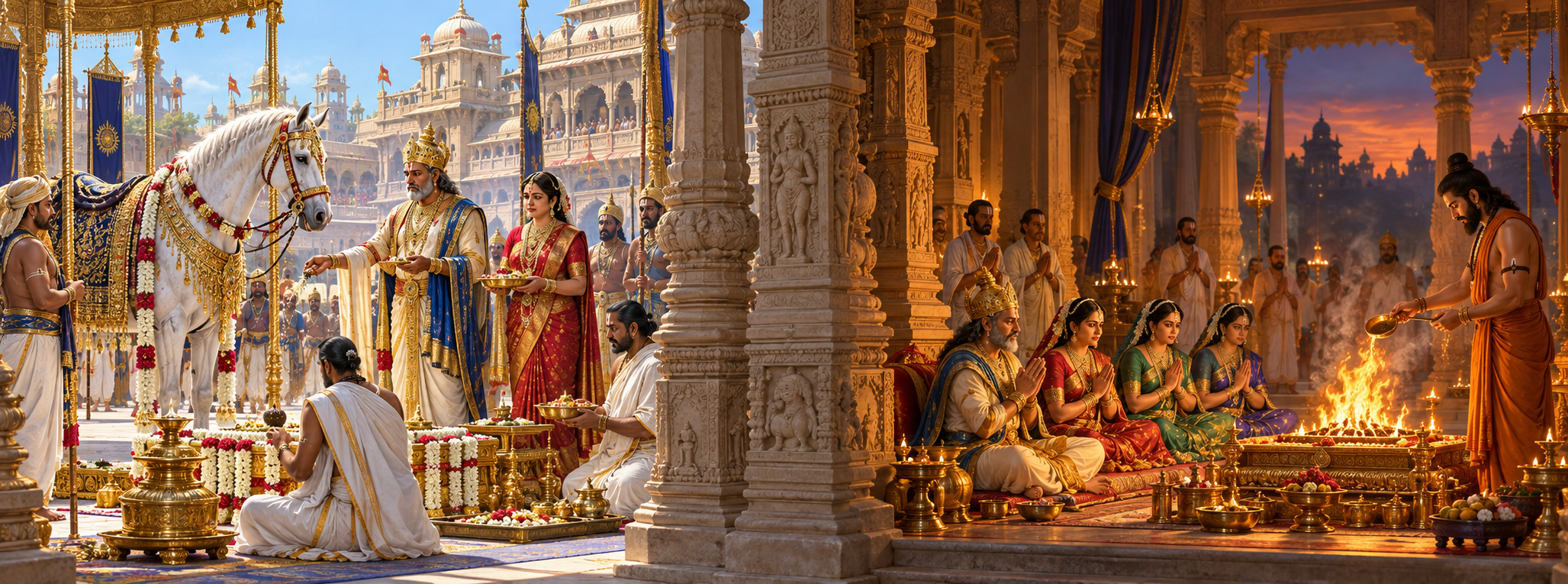
A second common mistake is to compress every ritual in Dasharatha’s quest for sons into one ceremony. The sequence is more precise:
- Dasharatha grieves because he has no son.
- Vasishtha and other sages advise him to undertake a great yajna.
- The royal undertaking begins with the Ashvamedha, where Kausalya assumes the central queenly role associated with the horse.
- After the Ashvamedha, Rishyashringa performs the further rite directed toward Dasharatha’s desire for children.
This order tells you where to locate Kausalya’s distinctive action. Her prominent role belongs to the Ashvamedha stage. The subsequent rite under Rishyashringa continues the king’s quest for descendants, but it should not be used to blur what Kausalya did in the preceding sacrifice.
When explaining the episode, therefore, avoid the shorthand that the Ashvamedha alone was simply a request for Rama’s birth. Dasharatha’s undertaking forms a ritual sequence: the royal horse sacrifice comes first, and the child-oriented rite follows. Keeping those stages separate makes Kausalya’s role easier to see rather than harder.
What her role reveals about dharma in the royal household
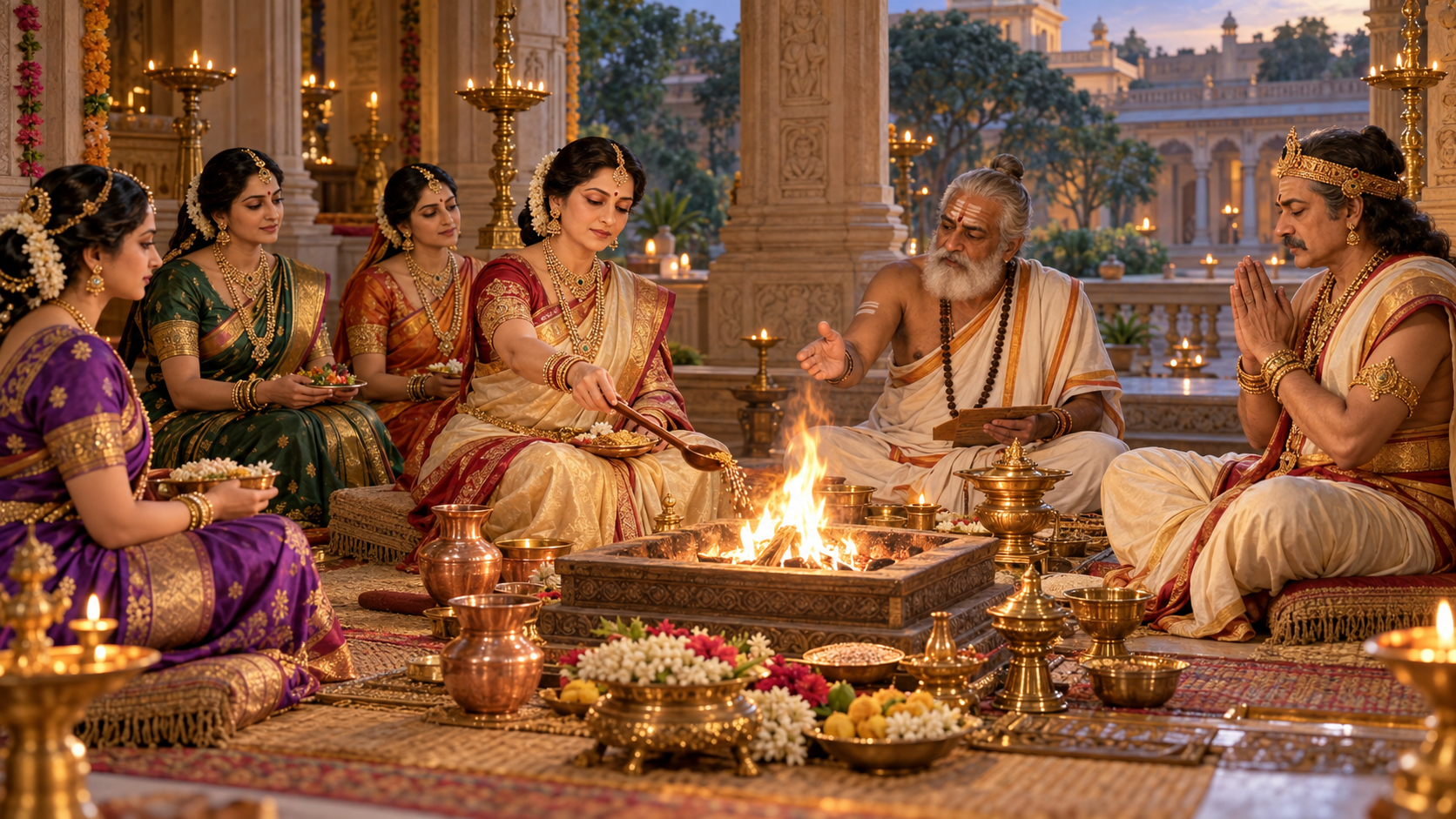
Kausalya’s participation shows that royal dharma in this episode is not enacted by an isolated king. Dasharatha initiates the undertaking, but the royal household’s ritual obligations are distributed among persons with defined roles. The queen is not absorbed into the king as though only his agency mattered.
This gives you a better interpretive frame than either of two extremes. One extreme reduces Kausalya to passive piety: she waits, receives a blessing and later gives birth. The other turns her leading part into sole control of the entire sacrifice. The narrative supports neither simplification. Her agency is real, but it is exercised within the ordered responsibilities of the yajna.
That is also why “symbolic” can be a misleading description if it is taken to mean unimportant. Ritual roles work through prescribed acts, relationships and status. Kausalya acts as the chief queen of the royal household at a decisive moment in its sacred undertaking. Her queenly identity does not diminish her participation; it defines the responsibility she carries.
If you are teaching or discussing the passage, use three different verbs: Dasharatha undertakes the Ashvamedha, the sages direct its ritual order, and Kausalya performs the leading queenly part involving the horse. That wording preserves each participant’s role without erasing Kausalya or overstating her authority.
Key takeaways
- Kausalya is an active participant in Dasharatha’s Ashvamedha, not a spectator waiting outside the ritual process.
- Her distinctive responsibility is the leading queenly role associated with the sacrificial horse.
- Dasharatha remains the king who undertakes the yajna, while the sages supply counsel and ritual direction.
- The Ashvamedha comes before the further rite performed by Rishyashringa for Dasharatha’s desire for children; the two stages should not be collapsed.
- Kausalya’s role presents the royal household’s dharma as shared through differentiated responsibilities rather than concentrated in the king alone.
When you next encounter a shortened retelling, ask three questions: Who undertakes the rite? Who directs it? What does the queen actually contribute? In Dasharatha’s Ashvamedha, those questions restore Kausalya to her proper place: neither sole sacrificer nor passive beneficiary, but a necessary royal participant carrying her own ritual responsibility.
References

Leave a Reply
You must be logged in to post a comment.