
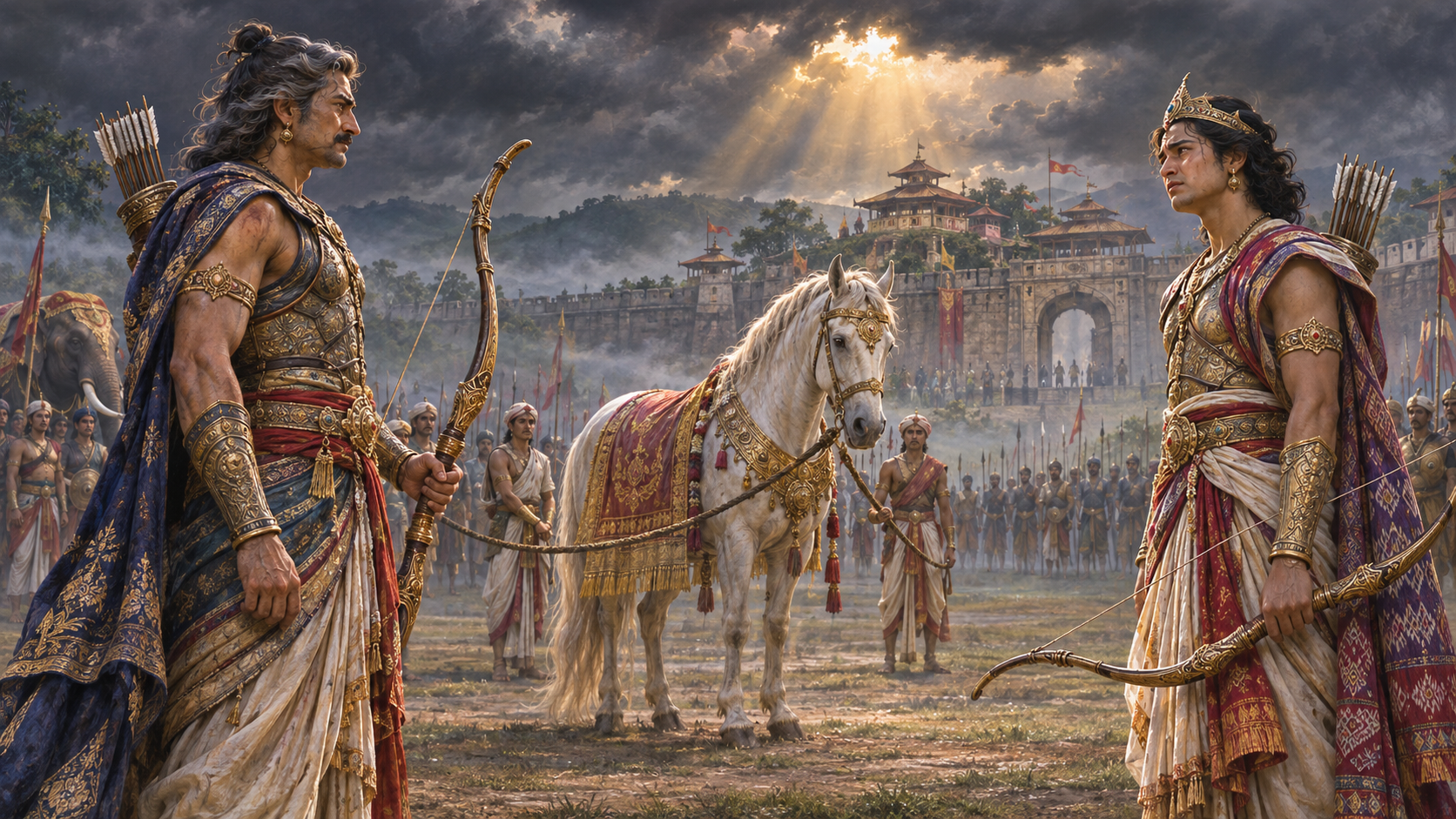
You may know this Mahabharata episode only through its most startling claim: Arjuna was killed by his own son. That statement is true within the story, but it can also mislead you if it is separated from Babruvahana’s upbringing, royal identity, and connection to Manipur.
The useful question is not simply, “How could a son kill his father?” It is: who was Babruvahana when he met Arjuna, and what does that identity change about the way you read their encounter?
The direct answer: Babruvahana was Arjuna’s son
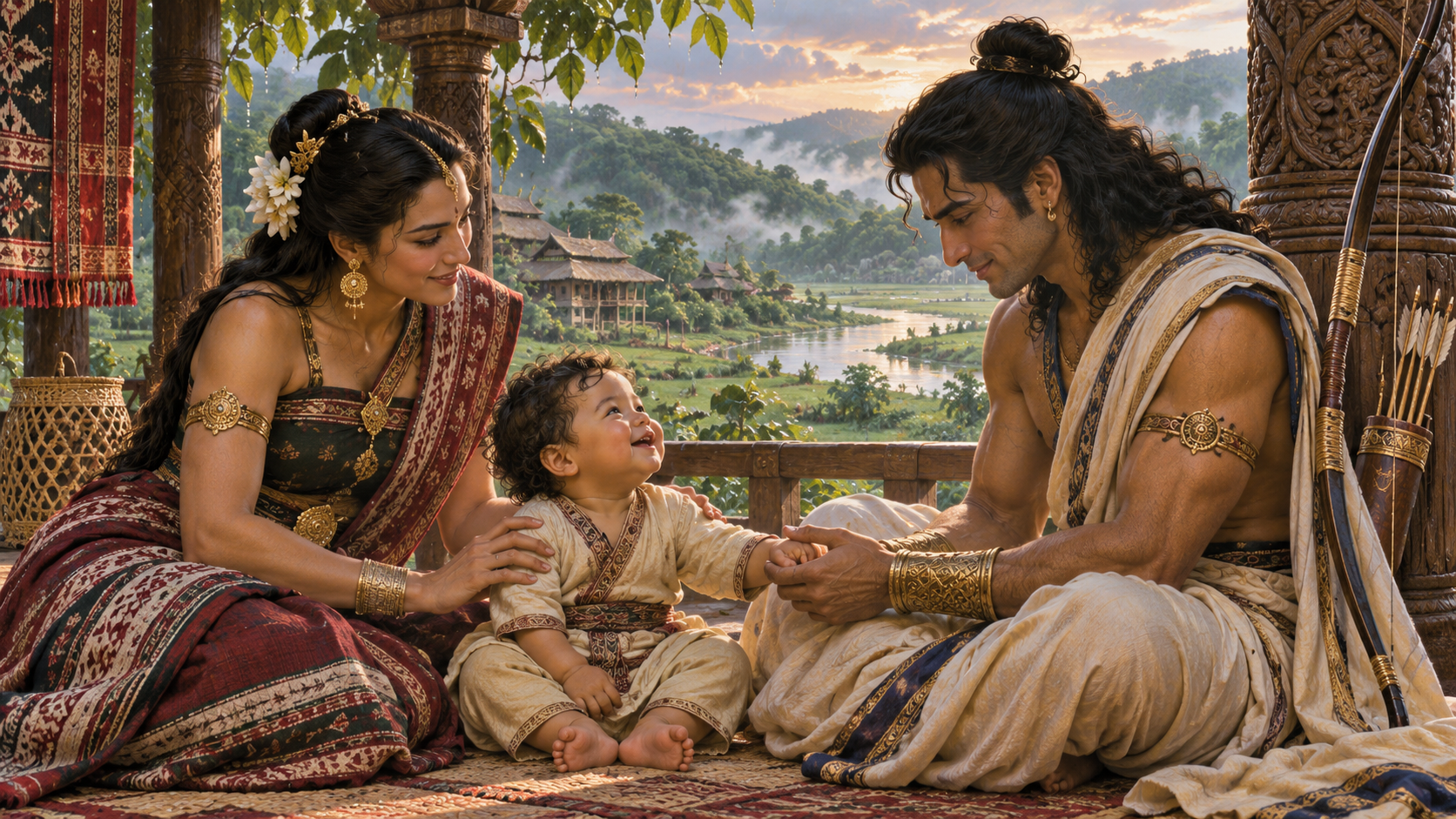
Babruvahana was the son of Arjuna and Chitrangada, the princess of Manipur. He was raised in Manipur because of a promise Arjuna had made to Chitrangada’s father. Babruvahana later became the king of that land and acquired a reputation for wisdom, justice, and martial skill.
He therefore did not approach Arjuna merely as a child standing before a famous parent. He had already been formed by another royal household and entrusted with a kingdom. His maternal lineage was not an incidental detail added to Arjuna’s biography. It supplied Babruvahana with his home, education, public role, and political identity.
When the two eventually fought, Babruvahana’s skill proved sufficient to kill Arjuna. That is the secure core of the episode. The sensational description “a son kills his father” is accurate, but incomplete: a trained king defeated another warrior who was also his father.
Why Babruvahana grew up in Manipur
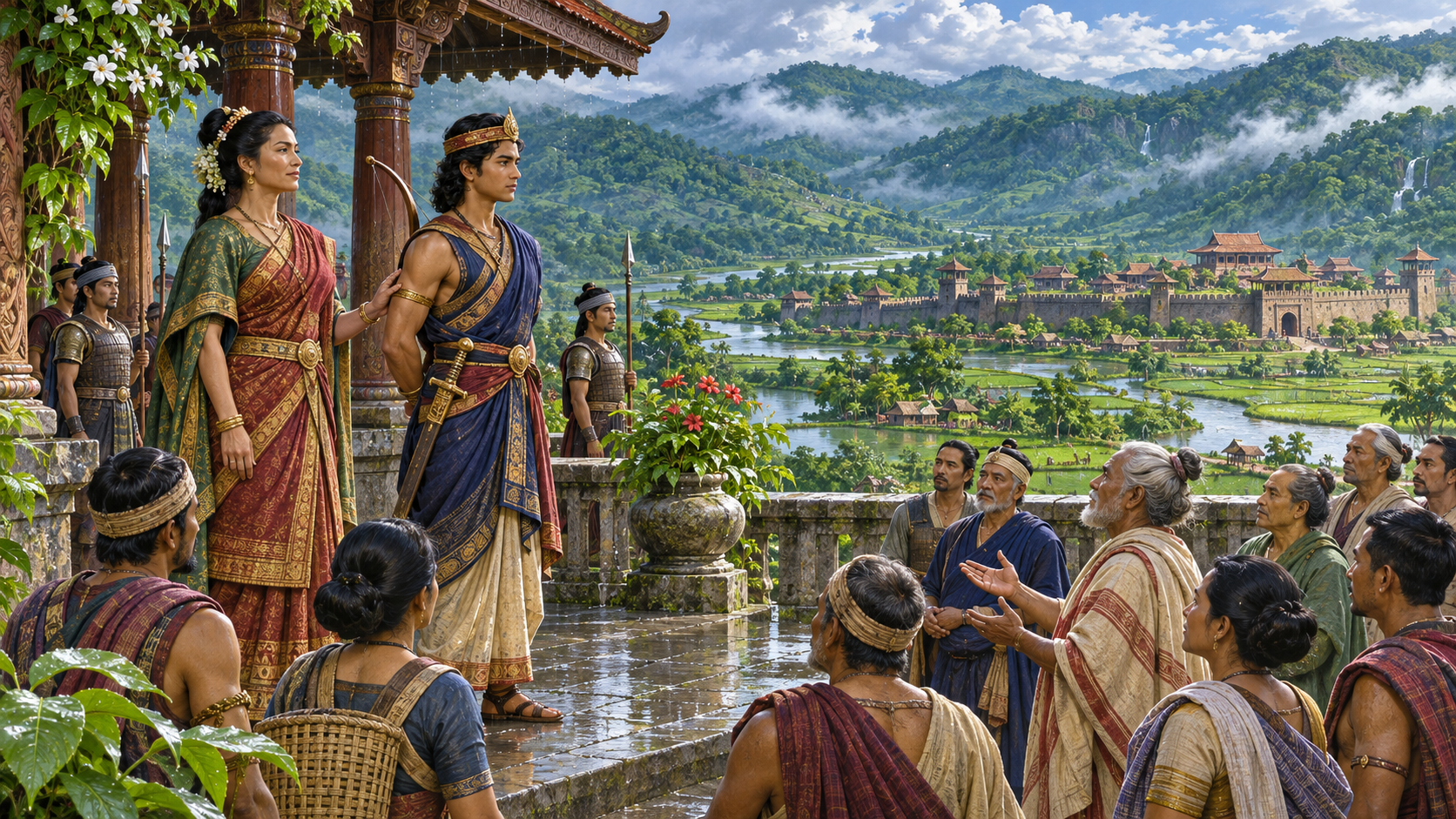
The promise to Chitrangada’s father is the hinge of Babruvahana’s early life. It explains why he remained in Manipur rather than being raised within Arjuna’s better-known family circle. You should read that separation as an agreed dynastic arrangement, not automatically as evidence that the son was unwanted or abandoned.
This distinction matters because modern summaries often treat physical separation as emotional rejection. The facts support a different and narrower conclusion: Arjuna’s promise connected the child to Chitrangada’s paternal house, and Babruvahana grew into the ruler of that land. They do not, by themselves, tell you everything about the private emotions of Arjuna, Chitrangada, or their son.
Keep Chitrangada in the frame as well. If you remove her and Manipur from the account, Babruvahana becomes little more than “another son of Arjuna.” Restore them, and he appears as a prince shaped by his mother’s lineage who later holds authority in his own right. That is the identity he carries into the fatal encounter.
The killing should not be reduced to simple rebellion
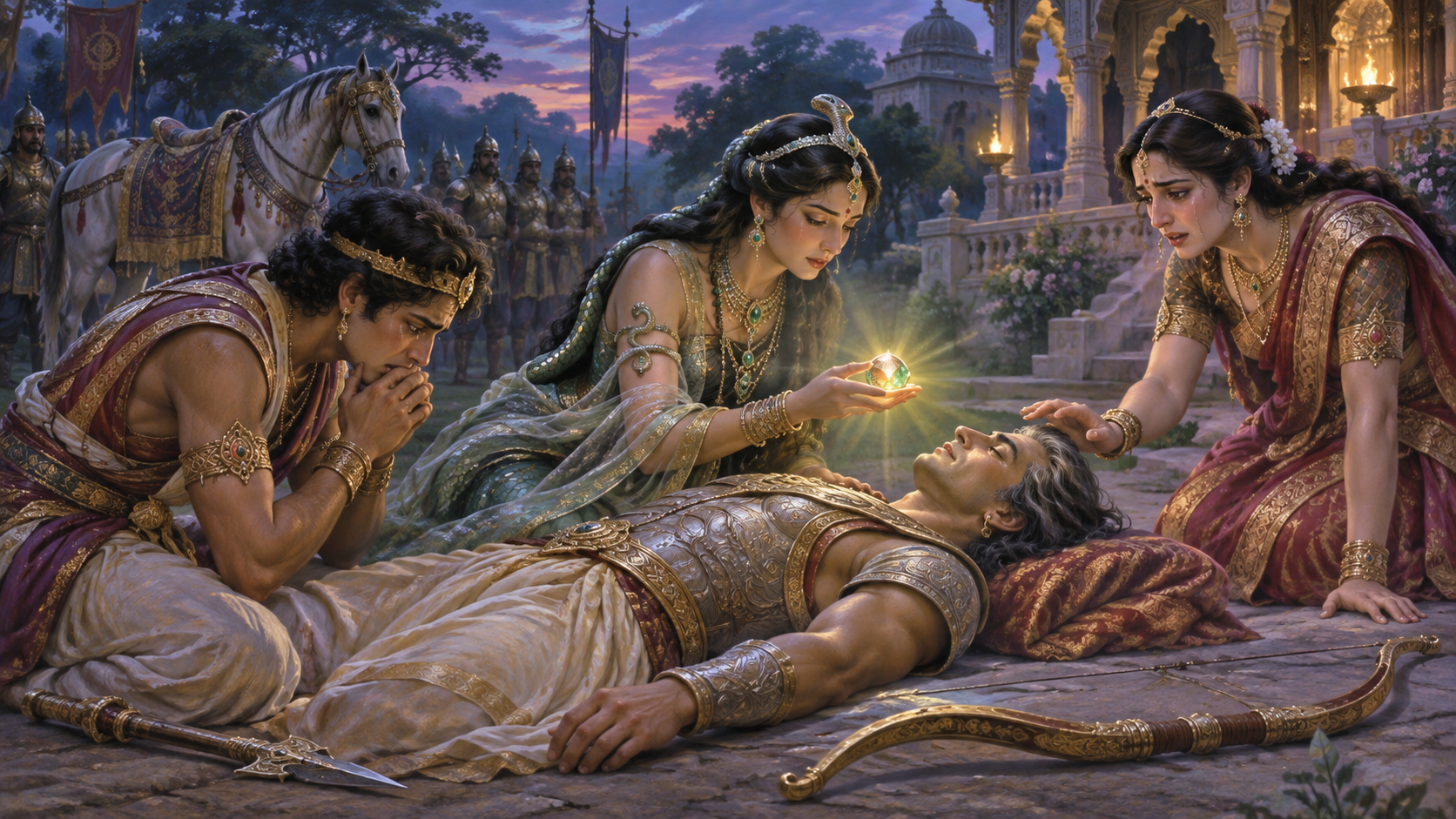
It is tempting to turn the confrontation into a familiar domestic drama: an absent father returns, an angry son takes revenge, and tragedy follows. That interpretation supplies a motive before establishing it. Babruvahana’s separate upbringing does not prove resentment, and his victory over Arjuna does not by itself prove that he rejected his father.
Nor should you imagine Babruvahana as an impulsive youth who succeeds through an accident. His established qualities are directly relevant: he was a capable king, a just ruler, and a skilled warrior. The result becomes more intelligible once you take that competence seriously.
The phrase “Babruvahana killed Arjuna” answers who prevailed, but it does not establish every detail of how the fight began, which precise weapon delivered the decisive injury, or what later developments a particular retelling may include. When those details matter, check the version being quoted. Do not combine additions from different retellings and then present the mixture as though every element belonged to one continuous account.
What the episode asks you to notice about dharma
Babruvahana stands at the meeting point of several real relationships. He is Arjuna’s son, Chitrangada’s son, the grandson of her father, and the king of Manipur. None of those roles cancels the others. If you look only at biological paternity, you miss the household and kingdom that actually raised him.
This is one reason the episode resists a flat moral label. “Obedient son” and “faithful king” can sound simple when considered separately. In an epic setting, however, family loyalty, a prior promise, royal status, and martial duty can all make claims upon the same person. Dharma becomes difficult precisely where valid obligations meet rather than where good and evil are already easy to distinguish.
You do not need to force the story into a modern slogan to make it relevant. Its sharper lesson is about identity. A person formed within one family and polity cannot always be understood solely through the fame of an absent parent. Babruvahana deserves to be read as a moral and political actor, not merely as an extension of Arjuna.
A careful way to evaluate retellings of the encounter
When you encounter a dramatic video, short post, or oral retelling, separate the stable core from the added interpretation. Begin with four questions: Does it identify Babruvahana’s parents? Does it explain his connection to Manipur? Does it preserve the promise that shaped his upbringing? Does it recognize that he became a wise, just, and skilled king?
If those elements disappear, the retelling will probably overemphasize the shock of patricide. If a motive is asserted, ask what action or passage establishes it. If an exact method of killing is supplied, ask which textual or regional version is being followed. This is not needless pedantry. Small narrative additions can completely change whether Babruvahana appears dutiful, resentful, manipulated, heroic, or blameworthy.
Use the same discipline with moral conclusions. The victory demonstrates Babruvahana’s martial capacity; it does not automatically prove hatred. His upbringing in Manipur establishes a distinct identity; it does not automatically prove estrangement. Arjuna’s promise explains the arrangement; it does not give us permission to invent the private thoughts of everyone involved.
Key takeaways
- Babruvahana was the son of Arjuna and Chitrangada, the princess of Manipur.
- He was raised in Manipur because of Arjuna’s promise to Chitrangada’s father.
- He later ruled Manipur and was known as a wise, just, and skilled king.
- His killing of Arjuna should be read as the victory of an accomplished warrior, not reduced to an unsupported tale of an angry child taking revenge.
- Chitrangada, her lineage, and Manipur are essential to understanding Babruvahana’s identity.
- Exact motives and combat details should be tied to the particular textual or regional version in which they appear.
The next time you meet this episode, begin one step before the duel. Recover Babruvahana’s mother, upbringing, promise-bound place in Manipur, and kingship. Once those are visible, the encounter with Arjuna stops being a piece of Mahabharata trivia and becomes a serious question about lineage, duty, and the identities a person must hold at the same time.
References

Leave a Reply
You must be logged in to post a comment.