
If you are trying to decide whether Nepal’s Hindu-nation campaign deserves Dharmic support, do not let one celebrated sentence make the decision for you. The decisive question is not whether a politician identifies as Hindu. It is whether the proposed national identity is defined clearly enough to preserve Sanatan continuity, protect religious freedom and earn legitimate public consent.
Former prime minister Sher Bahadur Deuba’s declaration, "Ma Hindu ho" – "I am Hindu", became much more than a personal statement. Hindu organizations treated it as momentum for recognizing Sanatan Dharma as Nepal’s national identity. That makes the declaration politically meaningful, but it is evidence of an opening, not proof that the argument has been settled.
Why "I am Hindu" became a test of political intent
A personal declaration acquires political weight when it comes from a senior leader whose previous public posture pointed in another direction. Deuba had emphasized Nepal as a country of religious freedom, while his Hindu declaration was understood as a departure from his party’s established line. Hindu activists therefore heard more than self-identification: they heard the possibility of a major political opening.
Yet the words answer only one question: how the speaker identifies himself. They do not tell you what he wants the state to recognize, what institutional changes he would support or whether his party will adopt the position. A pro-Hindu audience should welcome honest identification without promoting it prematurely into a national commitment.
Use a three-level evidence test whenever a prominent figure invokes Hindu identity:
- Personal identification: The leader says, "I am Hindu." This may be sincere and culturally important, but it binds only the speaker.
- Organizational commitment: A party or movement adopts precise language through its authorized bodies. This converts sentiment into a political position.
- Public mandate: Citizens are given a clear proposal and a legitimate way to accept, reject or revise it. Only this level can support a claim about Nepal’s national choice.
The practical rule is simple: celebrate level one as level one. Then watch whether the leader does the slower work required to reach levels two and three. Speeches reveal direction; resolutions, public language and accountable procedures reveal commitment.
Three different claims are hiding inside "Hindu nation"
The phrase "Hindu nation" can sound precise while carrying several different propositions. Disagreement becomes needlessly hostile when participants use the same phrase for different ends. Before supporting or opposing the demand, separate these claims.
- The civilizational claim: Sanatan Dharma is central to Nepal’s inherited national character and should not be treated as a private preference with no public significance.
- The recognition claim: Nepal’s public institutions or foundational language should explicitly acknowledge that inheritance.
- The political claim: A particular party, faction or leader should be entrusted with carrying out that recognition.
You may accept the civilizational claim without automatically endorsing every constitutional formula advanced in its name. You may also support public recognition without handing permanent ownership of Sanatan identity to one political bloc. Hindu identity is older and broader than any party organization; a party must demonstrate that it can serve that identity without reducing it to a factional instrument.
This distinction also prevents a common shortcut. Calling Sanatan Dharma Nepal’s national identity does not, by itself, explain the legal status of other faiths, the responsibilities of public institutions or the relationship between cultural recognition and individual conscience. Those questions are not hostile interruptions. They are the work required to turn a resonant phrase into a durable settlement.
Religious freedom and Hindu civilizational identity are not necessarily opposites. A nation can acknowledge its inherited character while protecting people who worship differently or do not worship. Conversely, an officially neutral label does not by itself guarantee that inherited traditions will be understood, maintained or treated fairly. The actual rules and institutional conduct matter more than the reassuring label chosen by either side.
What the Kathmandu mobilization proves – and what it does not
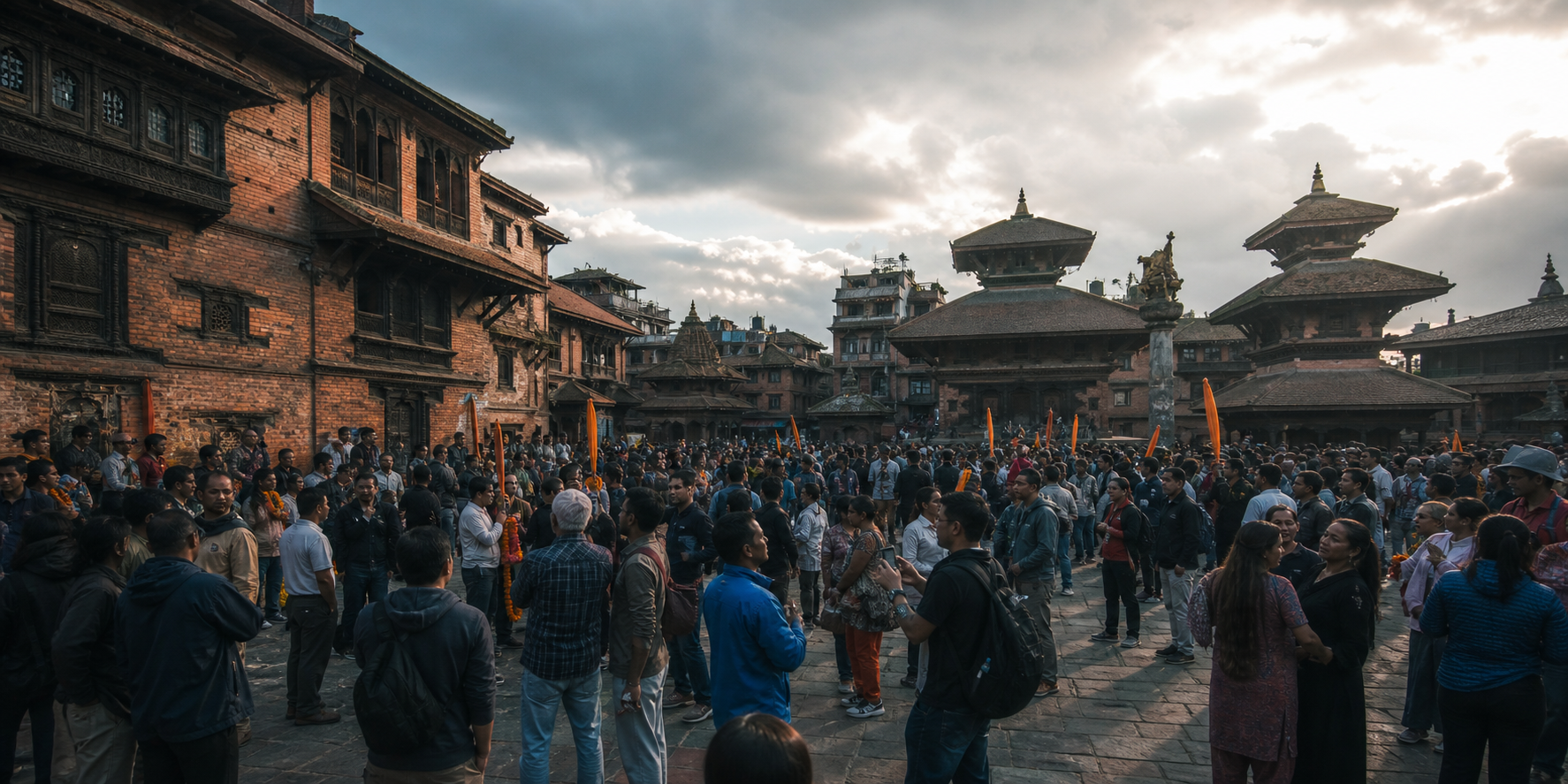
The political setting around Deuba’s declaration matters. A Kathmandu convention brought together supporters from most of Nepal’s districts and received support from Shashank Koirala. That demonstrates organization, geographic reach within the gathering and the presence of recognizable political backing.
At the same time, Nepali Congress president Gagan Thapa and leading members of the party executive stayed away. Deuba’s faction had already felt marginalized after Thapa took charge, and the new Hindu-national emphasis raised the possibility of a deeper party division. The episode therefore has two dimensions at once: a genuine Hindu-identity mobilization and an internal struggle over political leadership.
Neither dimension automatically cancels the other. Factional rivalry does not prove that the Dharmic demand is insincere. Dharmic language does not prove that factional incentives are absent. Mature support requires you to hold both possibilities in view and judge subsequent conduct.
After any major rally or convention, ask four concrete questions:
- Did an authorized party body adopt a formal resolution, or did individual leaders merely voice support?
- Is the proposed wording available for citizens to examine, or is the campaign still organized around slogans?
- Do the speakers explain what national recognition would change and what it would leave untouched?
- Are internal objections answered in public, or are dissenters simply treated as enemies of Hindu identity?
Until those questions have answers, the most accurate description is a significant Hindu-national push within a contested political environment. Attendance and enthusiasm show capacity to mobilize. They do not, by themselves, establish a national mandate.
A pro-Hindu test for any national identity proposal

A pro-Hindu reader does not need to retreat into vague neutrality. You can affirm Nepal’s Sanatan inheritance while demanding a proposal worthy of it. Apply the following test to every leader, party resolution or campaign document that seeks your support.
- Demand a definition. Does "Hindu nation" mean civilizational recognition, an official religious designation, specific duties for the state or some combination of these? If the meaning changes with the audience, the campaign is not ready for constitutional or institutional power.
- Ask what would actually change. A credible proposal should identify the language, institutions, educational policies, cultural responsibilities or public practices it seeks to alter. It should also say what will remain unchanged. Undefined transformation invites both exaggerated hope and exaggerated fear.
- Require explicit protection of conscience and worship. Sanatan confidence does not need coerced sameness. The campaign should explain how people outside the Hindu fold, as well as Hindus belonging to different sampradayas and practices, will retain equal security and freedom.
- Respect the wider Dharmic family without erasing distinctions. Hindu, Buddhist, Jain and Sikh traditions have important civilizational relationships, but each possesses its own identity and institutions. Shared inheritance should invite cooperation, not forced absorption.
- Separate the cause from the claimant. Supporting Hindu civilizational recognition is not the same as granting a blank cheque to the politician who invokes it. Examine the leader’s formal commitments, allies, methods and willingness to be held accountable.
- Look for democratic authorization. A durable national identity cannot rest only on applause at a convention. It needs transparent wording, deliberation through legitimate institutions and a public means of consent.
- Test whether the proposal can survive a factional change. If it belongs only to a bloc that feels excluded from party leadership, it may disappear when internal power shifts again. A serious settlement must be intelligible and defensible beyond one leader’s immediate struggle.
This is a demanding standard because national identity should be harder to manipulate than an election slogan. Sanatan Dharma is not merely a campaign brand. It embraces varied schools, disciplines, communities and modes of worship that no temporary coalition can exhaust. Political recognition should reflect that depth instead of converting it into a loyalty test.
Watch the vocabulary used by advocates as carefully as the headline demand. When a leader says "restoration," ask what precise public condition is to be restored. When a leader says "identity," ask whether the term describes heritage, citizenship, state duties or personal belief. When a leader promises "religious freedom," ask how that freedom will operate when an unpopular community or a minority practice needs protection. Definitions expose whether the speaker has a governing idea or only an emotionally effective phrase.
Key takeaways for judging the Hindu-national demand
- Deuba’s "Ma Hindu ho" declaration is a meaningful political signal, but personal identity is not yet party policy or national consent.
- The civilizational case for Sanatan recognition must be evaluated separately from the fortunes of any Nepali Congress faction.
- A Kathmandu gathering with support from many districts demonstrates mobilizing strength, not an automatic mandate for Nepal as a whole.
- Hindu national identity and religious freedom can coexist in principle; the proposed institutional rules determine whether they coexist in practice.
- A credible campaign must define "Hindu nation," name the changes it seeks, protect plural practice and submit its program to legitimate public judgment.
When the next declaration arrives, take five minutes and write down five things: what the speaker personally believes, what the party has formally adopted, what institutions would change, what freedoms would be protected and who has authorized the proposal. If you cannot fill in the last four lines from public commitments, treat the declaration as an opening bid rather than a completed national program.
You can support the principle of Sanatan recognition while reserving political endorsement until the structure matches the slogan. That discipline does not weaken Nepal’s Hindu cause. It gives the cause a better chance of becoming clear, just and durable.

References
