
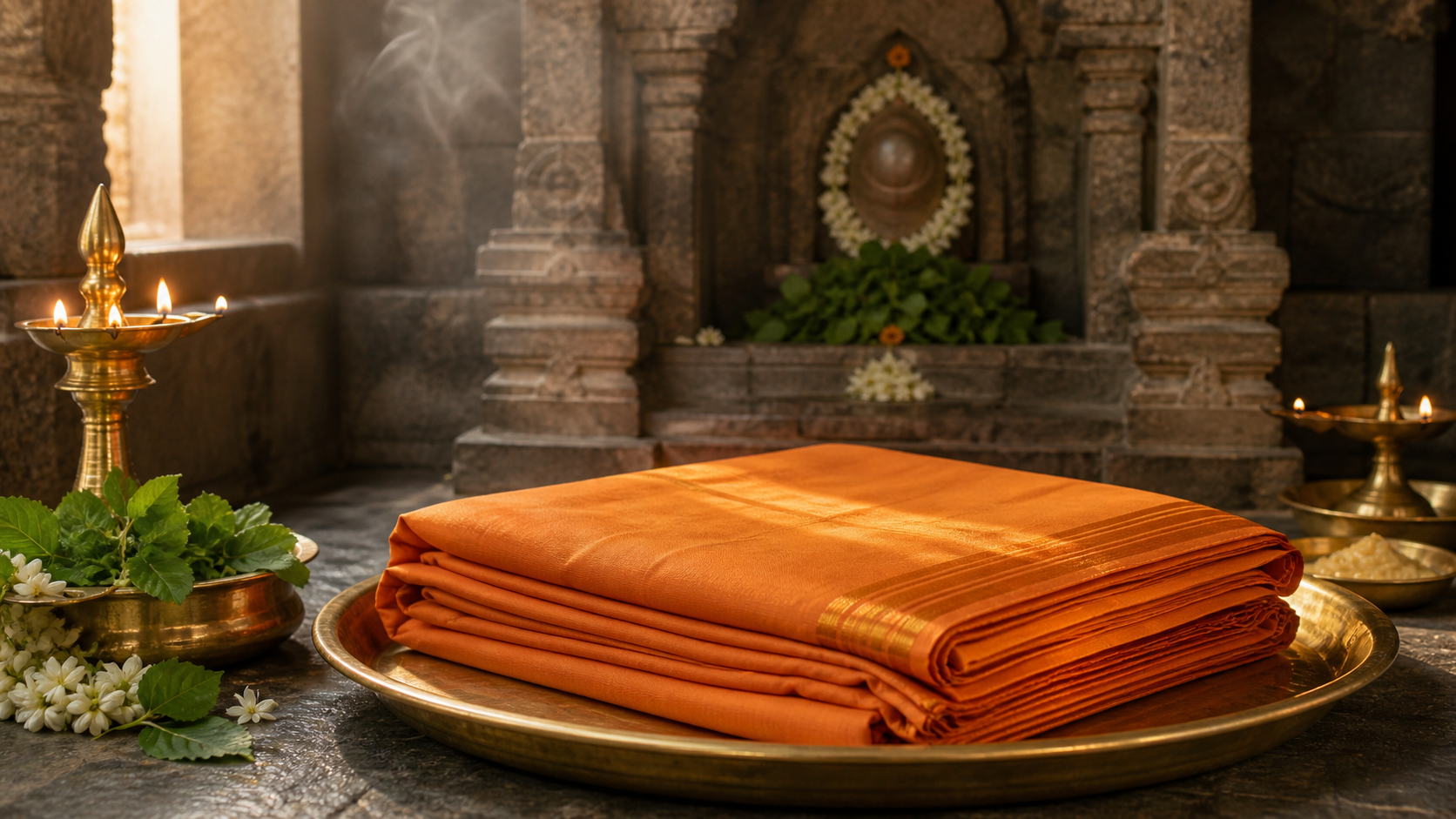
You want to offer a saffron dhoti to Guru Raghavendra Swamy, but a simple question can quickly become a tangle of choices: cotton or silk, Mantralayam or a local mutt, an ordinary day or Aradhana, modest or expensive. The central answer is reassuringly clear. Choose a suitable dhoti within your means, confirm what the receiving mutt accepts, and let bhakti determine the offering rather than price.
Devotees offer saffron dhotis at the Brindavana in Mantralayam and at branches of the Raghavendra Swamy Mutt as an expression of love and respect for the Guru affectionately called Rayaru. A modest cotton dhoti is not a spiritually inferior substitute for silk. It can be the more truthful offering when it reflects your circumstances.
Key takeaways
- Pure cotton and silk are both customary choices for a saffron dhoti offering; silk is an option, not a measure of greater devotion.
- Ask the intended mutt about its preferred fabric, dimensions, shade, border and method of submission before you purchase anything.
- If you plan to offer during the annual Aradhana, confirm the exact observance dates with the destination mutt; the festival usually falls during August, but a month is not a usable travel or delivery date.
- A dream may inspire a personal offering, but it does not require extravagance, debt or neglect of your existing duties.
What the saffron dhoti means in Rayaru worship
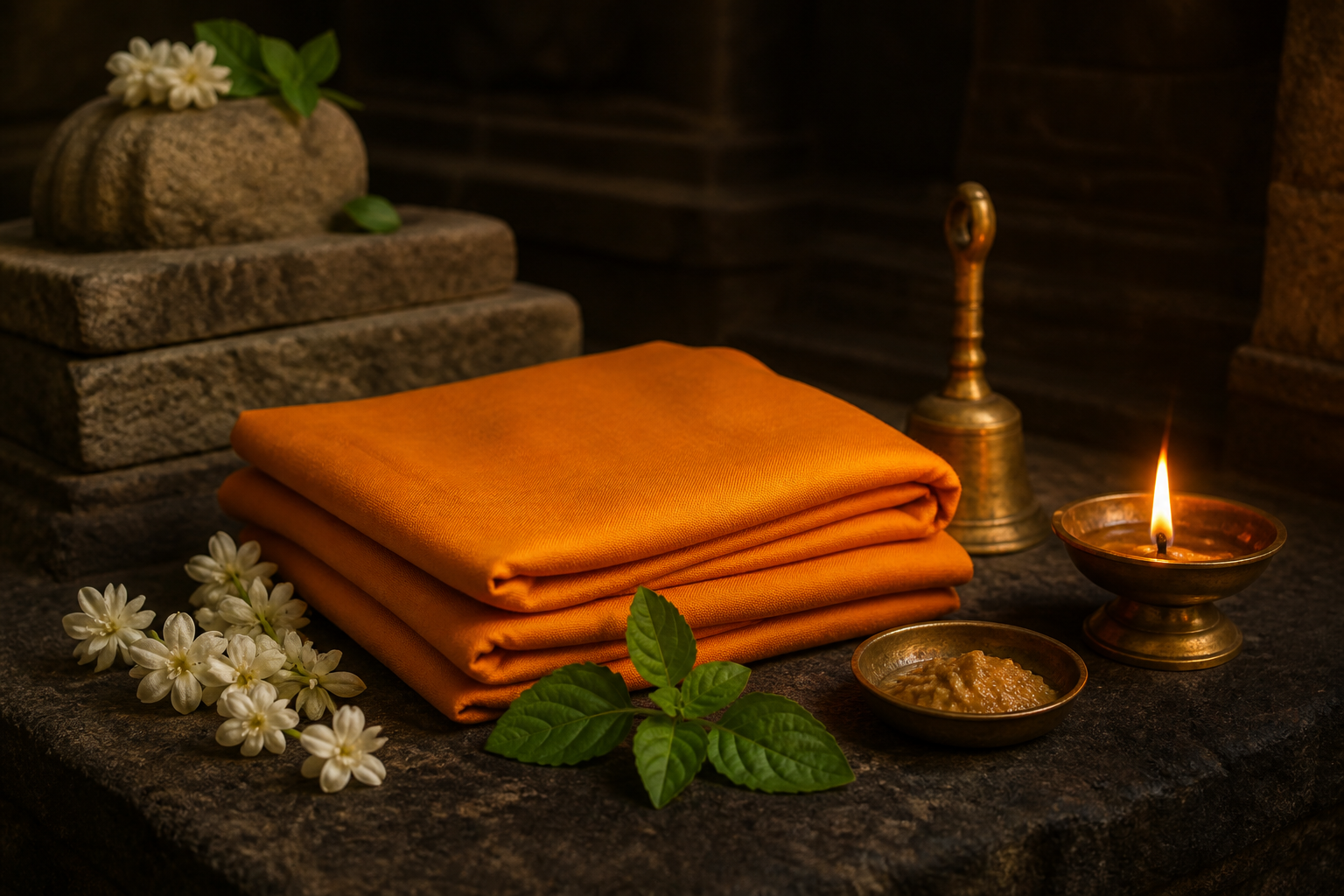
Saffron carries a recognisable meaning across Dharmic traditions. It evokes renunciation, discipline and a life directed toward spiritual realization. When a devotee dedicates a saffron dhoti to a Guru, the cloth therefore says more than its material value could say: it honours the Guru’s spiritual vocation and the devotee’s willingness to remember it.
In the worship of Guru Raghavendra Swamy, the dhoti is revered as a sacred item associated with his spiritual power and religious significance. It is also a personal gift. A garment offered to the Brindavana converts an inward feeling into a visible act of seva and dana.
That does not make the dhoti a commodity with which you purchase grace. The offering is meaningful because of the relationship it expresses. If price becomes the main question, the symbol has been turned upside down: the devotee is meant to honour the Guru, not display purchasing power before other devotees.
Choose the offering by suitability, not prestige
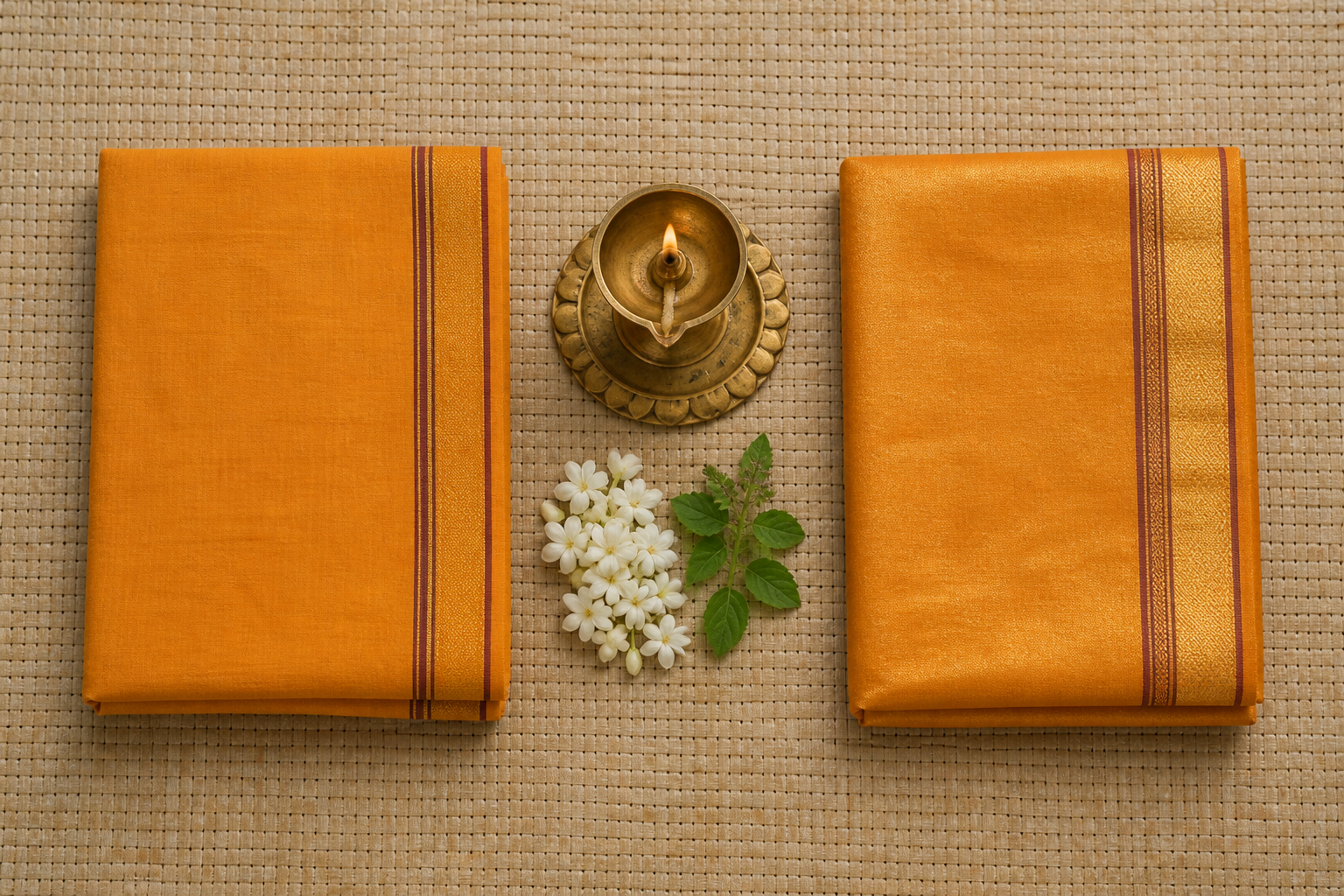
The customary material choices are pure cotton or silk in saffron. Start with the requirements of the place receiving the offering. Different institutions can have practical preferences, and an item selected by guesswork may be less useful than a simpler one purchased after a brief enquiry.
- Choose cotton when it fits your budget and the mutt accepts it. Cotton is entirely appropriate for a sincere offering. Its lower cost does not reduce the bhakti carried by it.
- Choose silk when you freely wish to offer it and can comfortably afford it. Do not treat silk as a spiritual upgrade or as a condition for Rayaru’s favour.
- Confirm the practical details. Ask about the required length, width, shade of saffron, border style, packaging and whether the mutt is currently accepting dhotis. Do not assume that every branch follows identical procedures.
- Set your limit before shopping. Decide what you can give without borrowing, postponing an essential payment or creating strain at home. Then select the best compliant dhoti within that limit.
The governing devotional principle is that the Guru receives the devotee’s faith rather than judging the market value of the gift. This is why a modest cotton offering can be complete in itself. You do not have to apologize for it or explain its price.
An in-kind donation can also help when you are hesitant to give cash because you want a more concrete connection between your contribution and worship. Even then, ask whether the dhoti is needed. Giving an object the institution can properly receive is more thoughtful than sending an unsolicited item merely because it feels tangible.
A practical way to make the offering
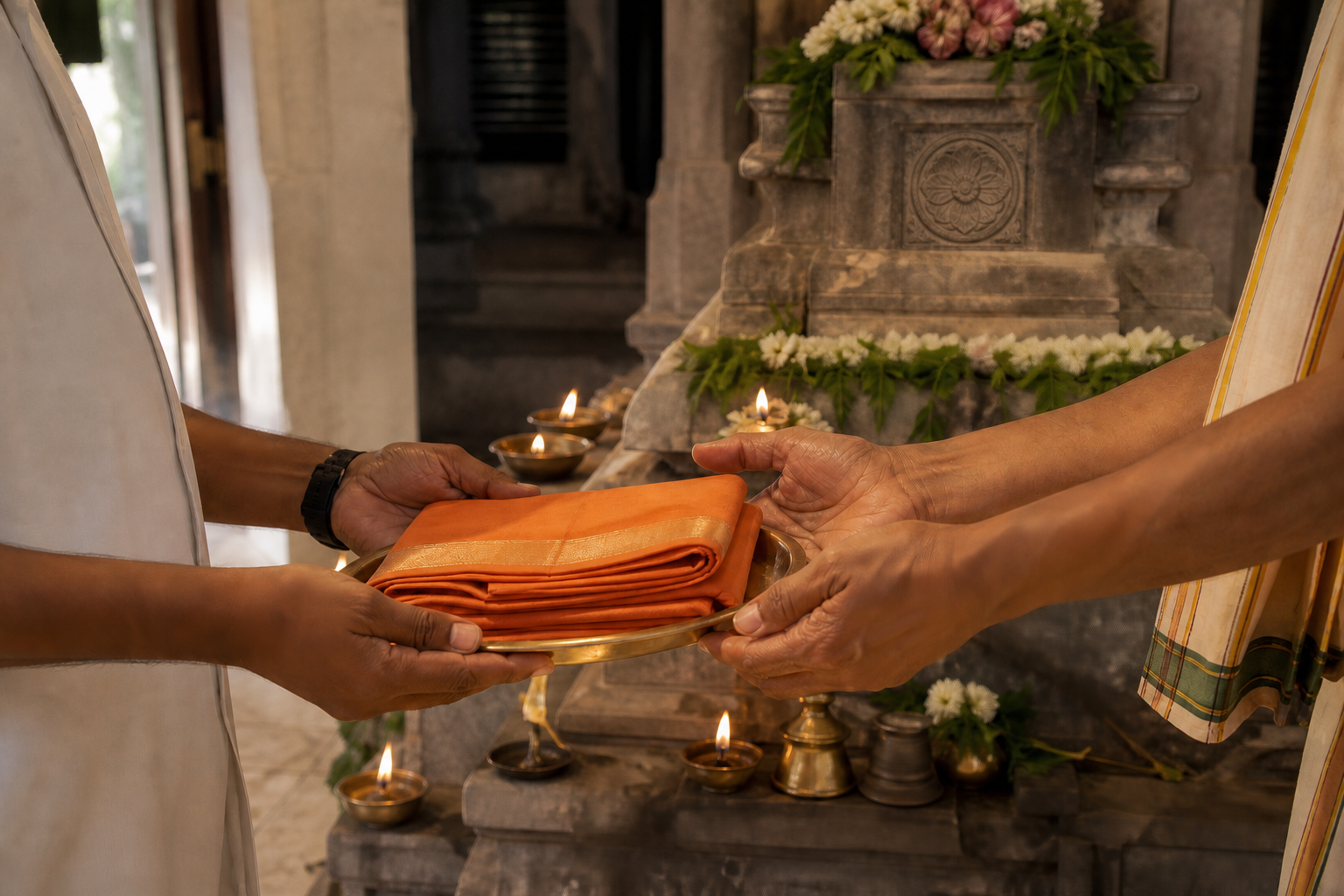
You do not need an elaborate private ceremony before approaching the mutt. What matters is that the offering is suitable, respectfully handled and submitted through the institution’s accepted channel.
- Choose the destination. Decide whether you will offer at the Brindavana in Mantralayam or at a particular branch of the Raghavendra Swamy Mutt.
- Contact that institution directly. Ask what kind of dhoti it currently accepts, whether it has prescribed specifications and where offerings must be handed over.
- Purchase only after confirming the details. Select an unused pure cotton or silk dhoti in the requested saffron colour. Stay within the budget you established.
- Follow the authorised handover process. If you are visiting, take it to the counter or representative identified by the mutt. If you hope to send it, first confirm that remote delivery is accepted and obtain the official address from the institution itself.
- Offer it with a clear prayer. You can express gratitude, seek guidance or dedicate the act to a dharmic intention. Plain words said attentively are enough.
- Release the transaction. Once accepted, do not demand a particular use, public recognition or a guaranteed result in return. Dana becomes cleaner when it is not a contract with the Guru.
Aradhana is a particularly cherished time for this act, and devotees frequently offer dhotis during the annual festival period. Because it generally occurs in August, anyone planning travel or delivery should check the exact dates and submission arrangements in advance. Do not purchase tickets or promise a delivery date on the strength of the month alone.
If you cannot visit Mantralayam, offering through a recognised branch mutt is not a lesser act. The essential decision is whether you can make the offering properly where you are, not whether you can stage the most impressive journey.
How to respond if the wish begins with a dream
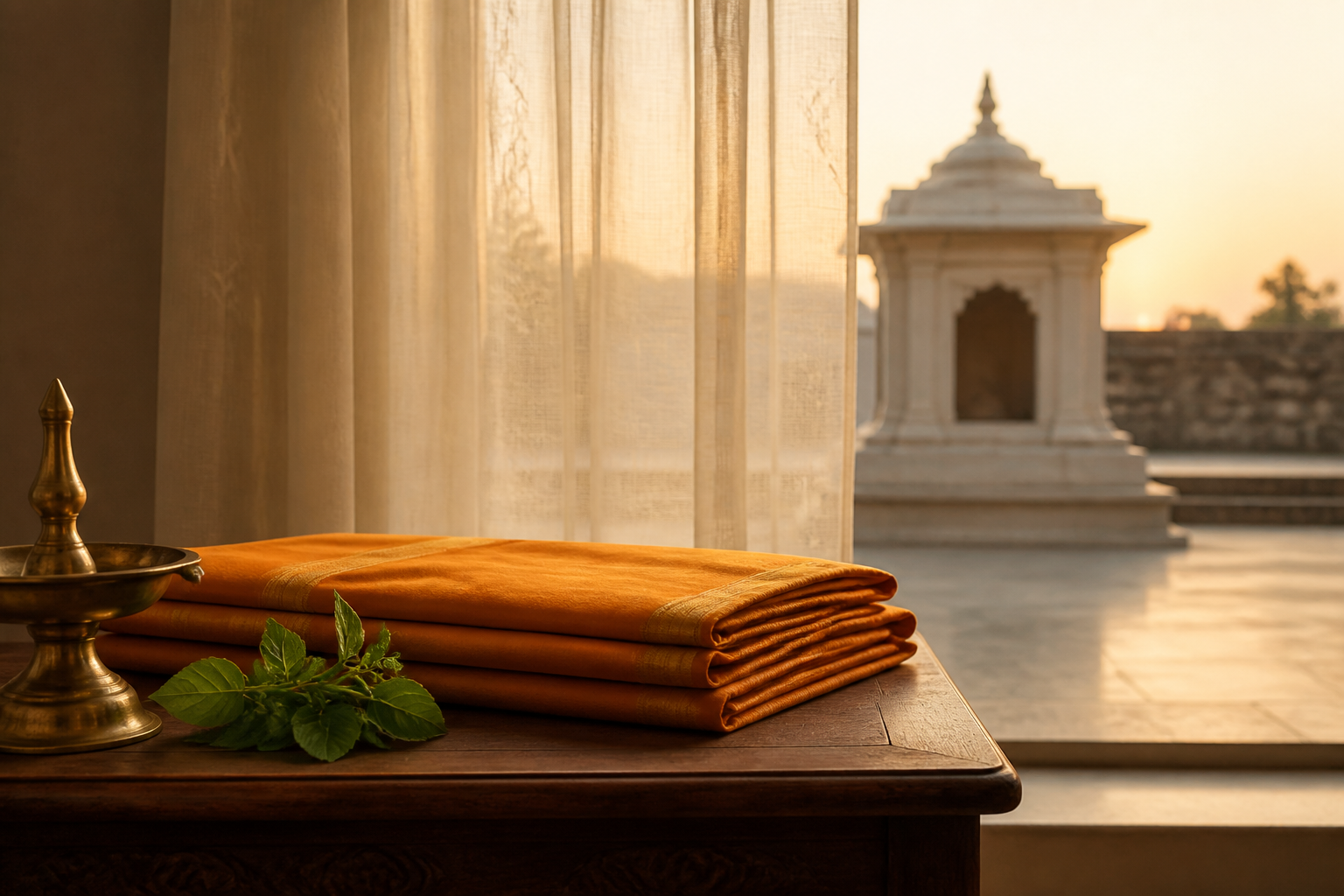
Devotional accounts sometimes speak of Rayaru appearing in a sincere devotee’s dream and asking for a cotton or silk dhoti. Such an experience can feel intimate and compelling. It should still be approached with steadiness.
A dream is a personal spiritual experience, not a public rule and not proof that one devotee ranks above another. You do not need a dream before offering a dhoti. Conversely, having one does not oblige you to buy the most expensive silk available.
Test your intended response by three simple questions. Is it consistent with dharma? Is it within your honest means? Can you perform it without harming your responsibilities to family, health or livelihood? If the answers are yes, a modest offering can be a calm response. If the dream produces fear, financial pressure or confusion, discuss it with a trusted elder and an authorised representative of the mutt before acting.
Do not convert the dream into a bargain: “If I offer silk, this result must follow.” Offer because remembrance of the Guru has moved you toward reverence and generosity. That orientation preserves the difference between bhakti and spiritual consumerism.
If you want to proceed, write down three things today: the mutt you intend to contact, the maximum amount you can comfortably spend and the practical questions you need answered. Once the requirements are confirmed, buy the simplest suitable dhoti and make the offering without anxiety about whether it looks costly enough.
References
