
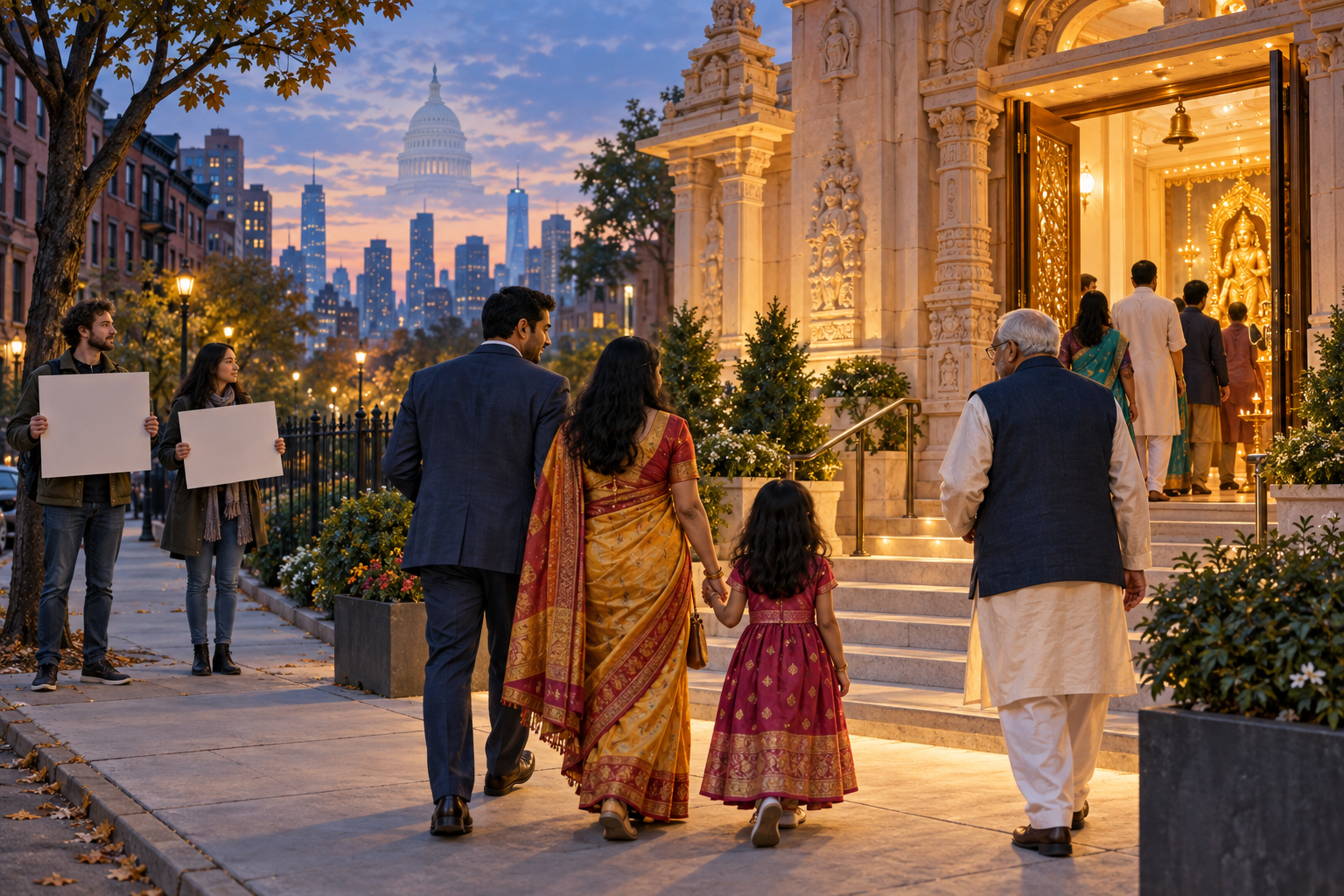
If you came here wondering whether the Right to Worship Act is a New York law, start with one important distinction: the proposal under debate is federal, not a New York-only measure. New York has a prominent connection because Rep. Tom Suozzi, a Democrat from the state, is one of its two House co-leads.
For a temple trustee, devotee, parent, or civil-liberties advocate, the practical question is not whether worship matters more than speech. It is whether Congress can protect people entering religious services from coercive conduct without turning peaceful disagreement into an offence. You can support the first goal while insisting on precise safeguards for the second.
The proposal is federal, specific, and still pending
As of September 18, 2026, the Right to Worship Act was being advanced as bipartisan, bicameral legislation. Its House co-leads are Rep. Tom Suozzi of New York and Rep. Brad Knott, a Republican from North Carolina. Sens. Ted Cruz, a Republican from Texas, and Elissa Slotkin, a Democrat from Michigan, introduced a Senate companion measure.
Those details matter because bipartisan sponsorship is not the same as enactment. Treat the measure as legislation under consideration, not as protection that a congregation can already invoke. Before circulating an endorsement, opposing it, or advising worshippers about their rights, obtain the latest bill text and current congressional status. A press announcement or advocacy flyer cannot tell you whether wording changed during the legislative process.
The proposal has four central features in its public description:
- It would establish a 100-foot buffer around a house of worship.
- The buffer would operate during religious services, rather than as a permanent exclusion zone.
- It would target intimidation and disruption affecting worshippers.
- Peaceful expression protected by the First Amendment would be excluded from the prohibited activities.
That is narrower than a general ban on demonstrations near religious property. Do not describe it as a 24-hour zone in which criticism of a religion becomes illegal. Its stated focus is conduct around services, and its peaceful-expression exception is central to the proposal’s legitimacy.
At the same time, the phrase “protest-free buffer zone” can sound broader than the First Amendment exception. That tension cannot be resolved by a slogan. The enacted language, definitions, enforcement mechanism, and treatment of borderline cases would determine how the measure works in practice.
Hindu institutions have a direct stake, but the bill is not a complete safety plan
Hindu communities have reason to take access to worship seriously. In making the case for federal action, CoHNA cited a dozen Hindu temples that it says were desecrated, vandalized, threatened, or, in one instance, shot at since 2022. That is an advocacy organization’s account rather than a complete national incident database, so it should be presented with attribution. It nevertheless identifies a concrete concern: attacks on one mandir can make families far beyond that congregation wonder whether attending worship is safe.
A service-time buffer would address only part of that problem. As described, it is aimed at intimidation and disruption around active worship. It would not replace lighting, cameras, trained ushers, an emergency plan, careful incident records, or police response to credible threats. Nor would a service-time rule, by itself, prevent vandalism when a building is empty.
This distinction should shape what you ask of a temple board. Do not ask merely whether it supports the bill. Ask what conduct has occurred at the site, when it occurs, whether entrances have been obstructed, how threats are escalated, and which problems the proposed federal rule would actually solve. A law should occupy one defined place in a wider safety plan.
The case for protecting worship is also broader than any one sampradaya or religion. More than 30 national organizations have endorsed the measure, including the Anti-Defamation League, Islamic Society of North America, United Sikhs, U.S. Conference of Catholic Bishops, National Association of Evangelicals, Church of Jesus Christ of Latter-day Saints, and CoHNA. Buddhist, Sikh, Jewish, Muslim, Mormon, Hindu, and Jain representatives also participated in an interfaith gathering supporting it.
That breadth matters politically because it frames safe worship as a reciprocal American freedom, not a special concession to one community. It does not, however, prove that every clause is well drafted. A serious coalition should be able to defend both its principle and its mechanism.
The real civil-liberties test lies in the definitions
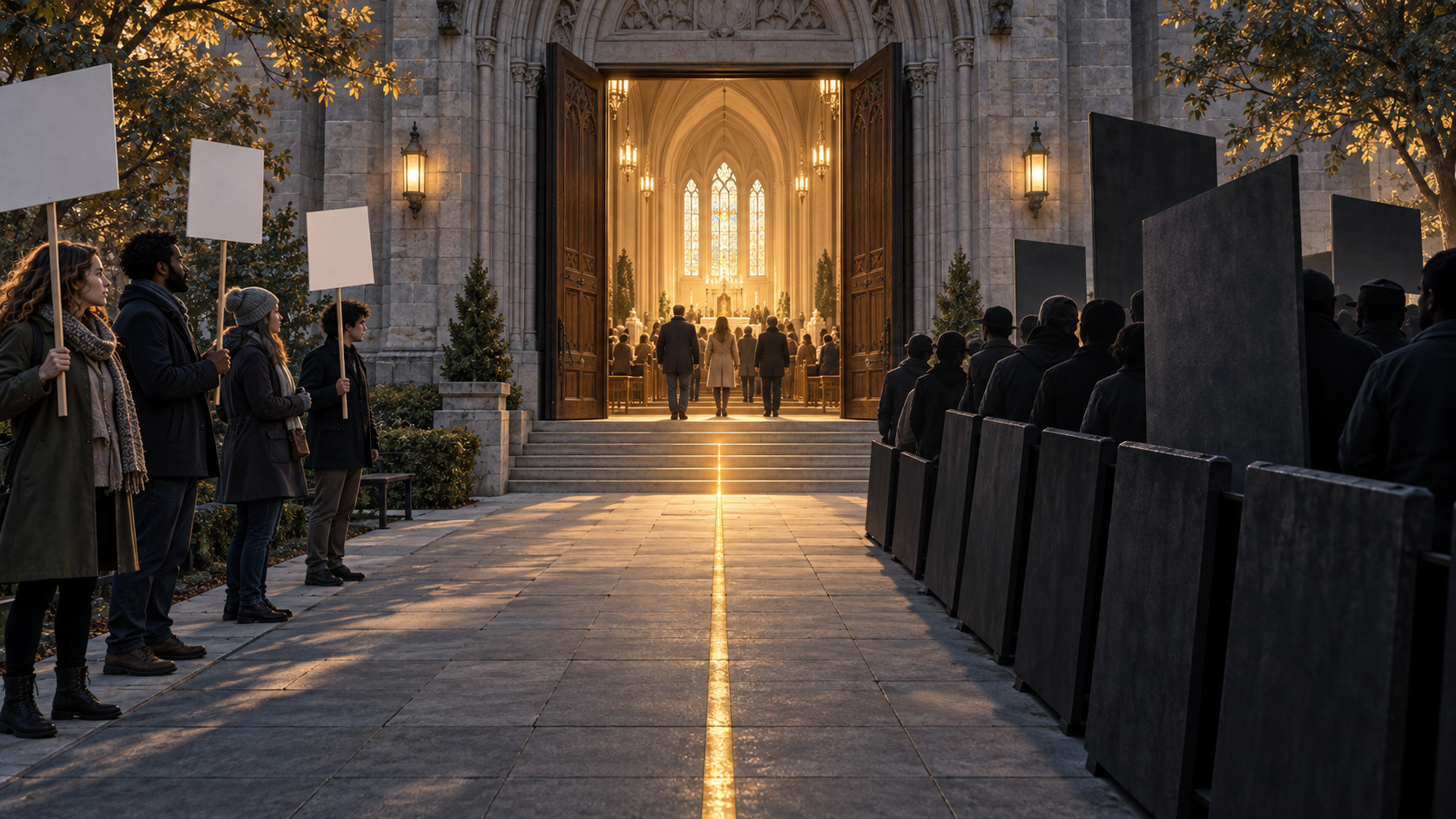
A useful way to assess the bill is to separate conduct from message. The state has a strong reason to address blocked access, threats, or conduct that prevents a service from proceeding. It has a very different role when someone merely expresses an unpopular view. The proposal’s peaceful-expression exception appears designed to preserve that distinction, but the exact definitions must do the real work.
Test the language against ordinary situations rather than an idealized rally. Consider a person silently holding a critical sign within 100 feet of an entrance; chanting that can be heard inside while every entrance remains open; a group occupying the only accessible walkway; someone offering leaflets without following or surrounding worshippers; or a procession passing an adjacent business during a service. The label “protest” does not answer whether any one of these situations is protected, restricted, or fact-dependent.
Before taking a firm position, ask the sponsors or your congressional office for clear answers to these questions:
- From what physical point is the 100-foot distance measured: the property line, every entrance, or another boundary?
- When does a religious service legally begin and end, and how would the public know that the temporary restriction is active?
- What conduct qualifies as intimidation or disruption?
- How does the bill protect peaceful signs, leafleting, conversation, prayer, or silent presence?
- How would it handle people who live, work, travel, or operate businesses inside the affected area?
- Who may initiate enforcement, and what evidence would officers need before acting?
- What penalties or remedies would apply, and are they proportionate to the prohibited conduct?
These are not delaying tactics. On a compact city block, a 100-foot radius may reach sidewalks, neighbouring entrances, residences, parking areas, or transit access. Mapping the distance at an actual New York worship site can expose consequences that remain invisible in an abstract debate.
Do not assume that the proposal would cover a particular incident, or that conduct inside the proposed zone would automatically become unlawful. Those are legal conclusions that depend on the final text and the facts. A congregation facing recurring demonstrations or threats should have qualified counsel review its situation rather than treating a general explanation as legal advice.
Key takeaways for New Yorkers
- The Right to Worship Act at issue is a federal proposal, with New York Rep. Tom Suozzi serving as a House co-lead.
- As of September 18, 2026, it was pending legislation. It should not be presented as an existing legal protection.
- Its proposed 100-foot buffer is tied to religious services and is intended to address intimidation and disruption.
- Peaceful First Amendment expression is expressly excluded from the activities the measure seeks to prohibit.
- Its interfaith support is broad, but endorsements do not settle questions about boundaries, definitions, enforcement, or penalties.
- Even if enacted, the measure would be one part of congregational security, not a substitute for immediate safety procedures.
Turn concern into a precise local plan
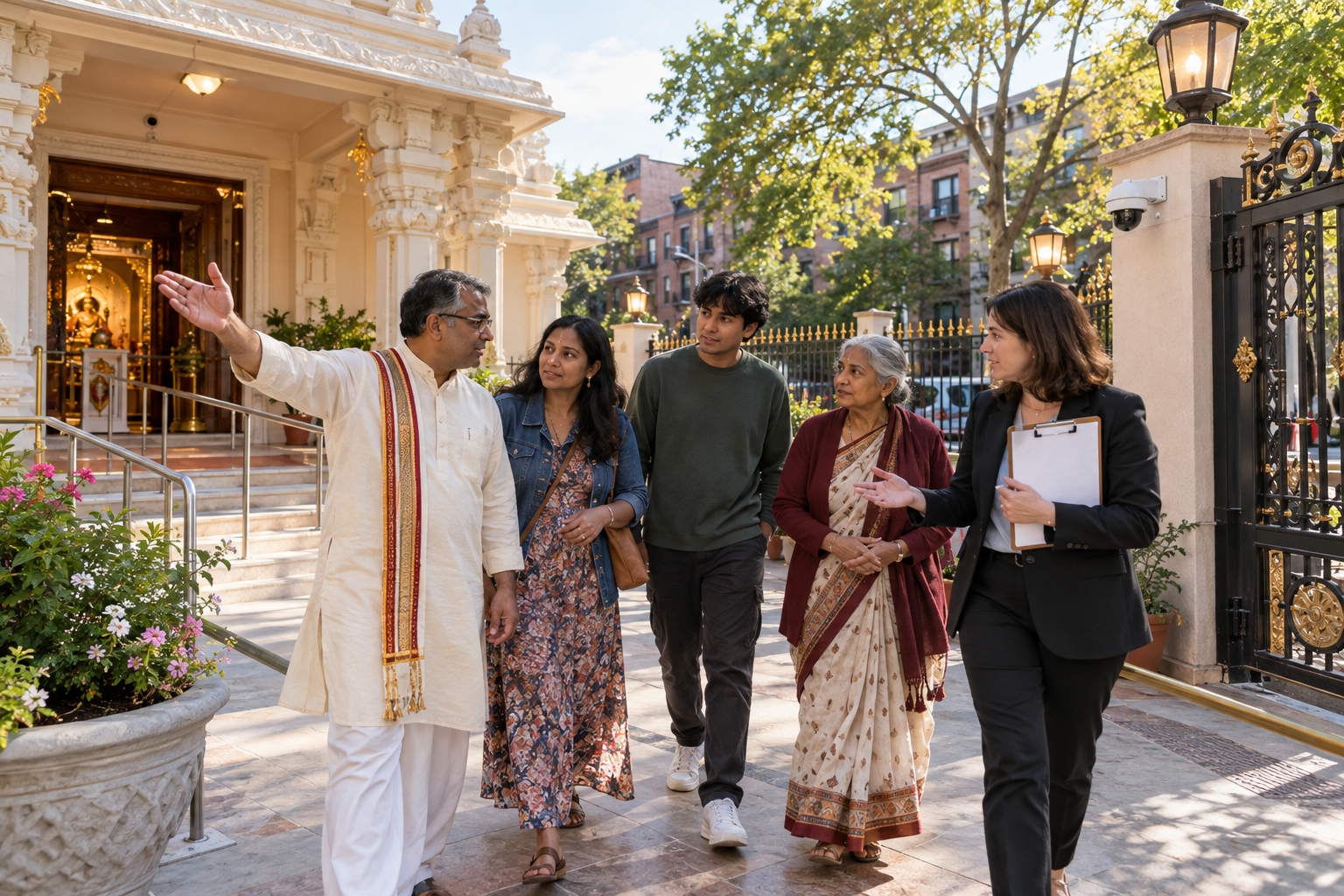
If you help lead a mandir, gurdwara, vihara, Jain centre, or another house of worship, you do not need to wait for Congress to clarify your own needs. Use one scheduled service to conduct a focused access review:
- Get the current text. Ask the sponsoring office or your member of Congress for the bill number, latest version, status, and a section-by-section explanation. Confirm that the wording matches the claims being made about it.
- Map the proposed distance. Mark 100 feet from each entrance used by worshippers, including an accessible entrance, parking access, and any shared driveway. Note homes, shops, public paths, and other institutions that fall within the radius.
- Write a scenario sheet. List conduct your congregation has actually encountered or reasonably needs clarified: blocked doors, threatening messages, loud but non-obstructive protest, leafleting, following families, property damage, or an unrelated passer-by. Ask how each case would be treated under the exact bill language.
- Create one incident protocol. Designate who receives reports, who contacts emergency services, and who preserves records. Log the date, time, entrance, specific conduct, witnesses, available images, and any police report number. Distinguish discomfort or criticism from a threat, obstruction, damage, or physical contact.
- Build a reciprocal coalition. Invite nearby religious communities to examine the same scenarios. A credible interfaith position should protect a Hindu devotee entering a mandir and a peaceful critic standing nearby under the same neutral rule.
- Send a one-page position. Tell legislators which principle you support, which clauses you want retained, what needs clarification, and what wording concerns you. A precise request is harder to dismiss than a generic demand to protect religion or defend speech.
If you are an individual worshipper, ask your congregation whom to contact when an incident occurs and where to enter during a disruption. Report observable conduct rather than speculating about motives. If there is an immediate threat, call emergency services and move to safety; do not confront the person or rely on a pending bill to protect you.
The strongest pro-dharma position does not ask government to silence peaceful criticism, and it does not ask devotees to accept coercion at the door of a sacred space. It defends the right to worship and the right to peaceful expression with equal precision. Obtain the current text, test it against a real New York site, and give your representatives a specific position before Congress decides.
References

Leave a Reply
You must be logged in to post a comment.