
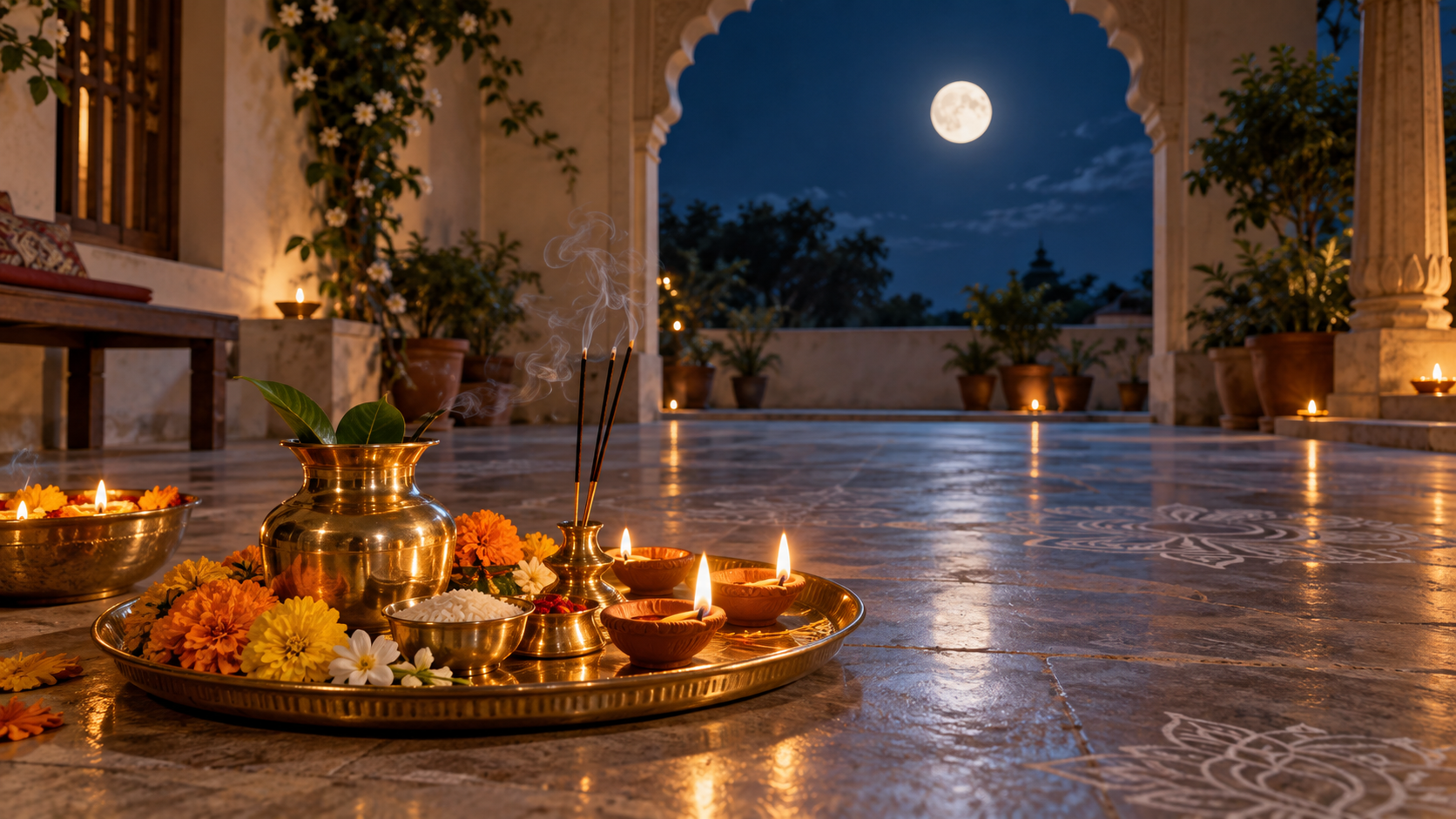
If you are arranging puja, vrata, or a family observance for Saturday, September 26, 2026, the important detail is a late-evening tithi change. Purnima governs most of the civil date, but it does not continue throughout the night.
The cutoff tells you which tithi is present when you perform an observance. It does not, by itself, identify an auspicious muhurta or decide which date a tradition-specific vrata should follow.
September 26 tithi timings at a glance
| Period | Tithi | How to read it |
|---|---|---|
| Saturday, September 26, until 10:05 PM | Purnima | The full-moon tithi remains in effect through most of the date. |
| After 10:05 PM on September 26 until 9:21 PM on September 27 | Krishna Paksha Pratipada | The first tithi of the waning phase has begun. |
These timings are given for most regions covered by the Indian Panchang entry. If you live in another time zone, do not carry the clock readings over unchanged. Check a Panchang calculated for your city.
Why one civil date contains two tithis
A tithi is a lunar calendar division, so its boundary does not have to coincide with midnight. The weekday follows the ordinary civil calendar, while the tithi can change at any clock time. That is why Saturday, September 26, can contain both Purnima and Krishna Paksha Pratipada.
Read the wording precisely. Purnima is already running on September 26 and lasts until 10:05 PM. The timing does not mean that Purnima begins at midnight. Once that boundary passes, the current tithi is Krishna Paksha Pratipada, even though the civil date is still September 26.
This distinction matters when a sankalpa or ritual record names the tithi. Calling the whole date simply “Purnima” is convenient shorthand, but it becomes inaccurate for an activity performed after the transition.
How to apply the timing to puja or vrata
- Start with your location. Use the published timing only if its regional clock context applies to you; otherwise consult a city-specific Panchang.
- Place the intended ritual time on the correct side of the 10:05 PM boundary.
- For an activity before the transition, identify the current tithi as Purnima. For one after it, identify the tithi as Krishna Paksha Pratipada.
- If you are keeping a formal vrata or festival observance, follow the date assigned by your sampradaya, temple, or household calendar. Such rules may depend on the tithi prevailing at a prescribed part of the day, not merely on whether the tithi touches the civil date.
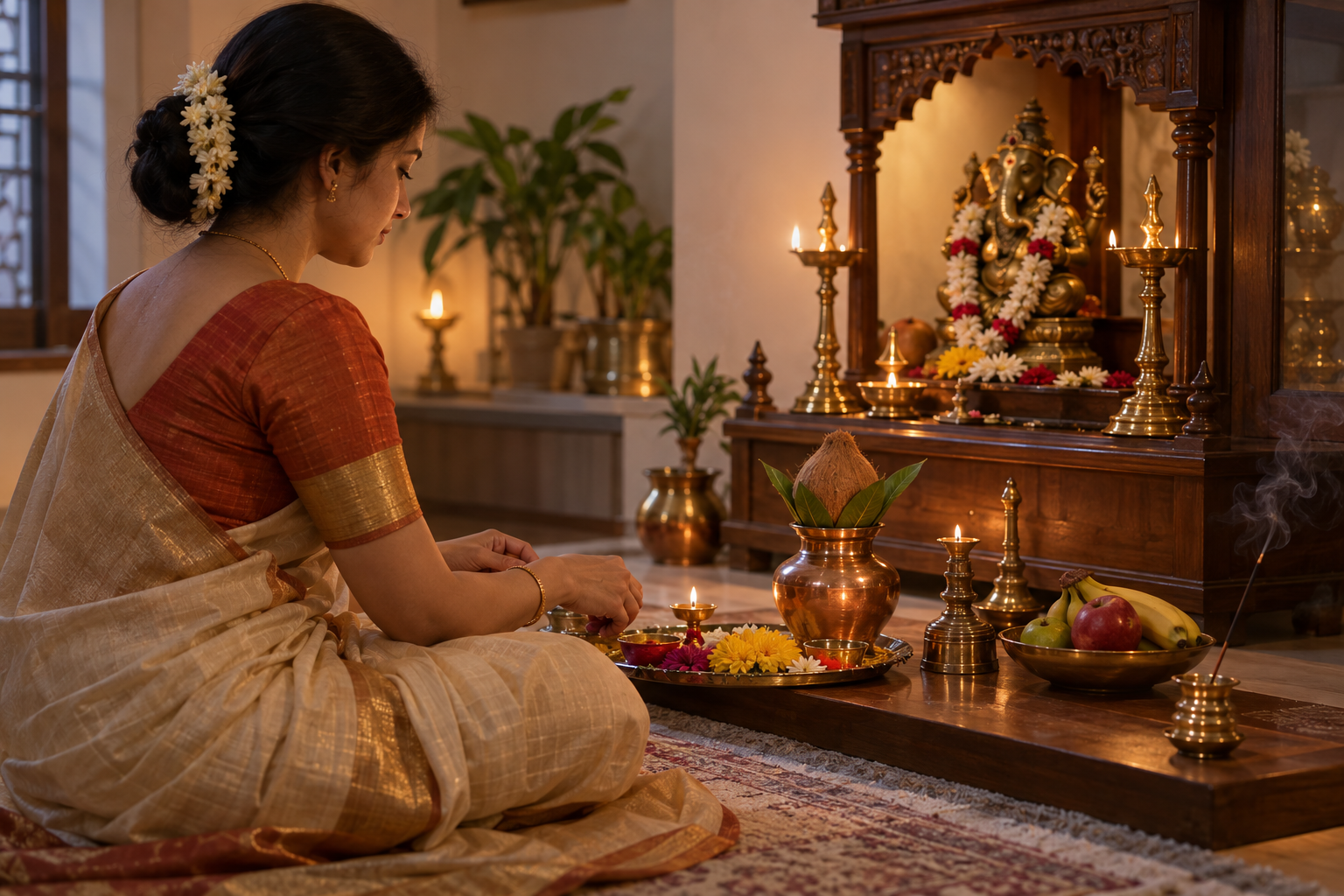
- If your family’s sankalpa names the current tithi, use the form and pronunciation taught in your tradition rather than improvising from an English calendar label.
The practical point is simple: a tithi transition helps you describe the ritual moment, but it does not replace the observance rule. Two families can use the same transition time yet follow different date assignments because their established traditions apply different ritual criteria.
Do not mistake the tithi cutoff for a muhurta
The 10:05 PM boundary is not a universal auspicious-time deadline. It says only that Purnima ends and Krishna Paksha Pratipada begins. It does not establish whether every moment before the boundary is suitable for every purpose.
A complete Panchang decision can also require information such as the applicable nakshatra, rashi, and purpose-specific time window. No value for those factors can be derived from the tithi transition alone. Their omission must not be interpreted as “applicable all day.”
For ordinary daily worship, identifying the current tithi may be all you need. For a rule-bound vrata, samskara, or other event for which you specifically need a muhurta, check the complete local Panchang and the convention your family or temple follows.
Key takeaways
- September 26, 2026 falls on a Saturday.
- Purnima continues until 10:05 PM on September 26.
- Krishna Paksha Pratipada begins after that transition and lasts until 9:21 PM on September 27.
- The transition changes the tithi; it does not automatically create or end an auspicious muhurta.
- Use a city-specific Panchang if the published regional timing does not match your location.
- For a formal vrata or festival, let your sampradaya’s observance rule determine the civil date.
Put the 10:05 PM boundary beside your plan before fixing the ritual time. If the observance falls close to the change, takes place outside the covered region, or follows a formal vrata rule, confirm it against your local temple or tradition’s calendar before proceeding.

References

Leave a Reply
You must be logged in to post a comment.