
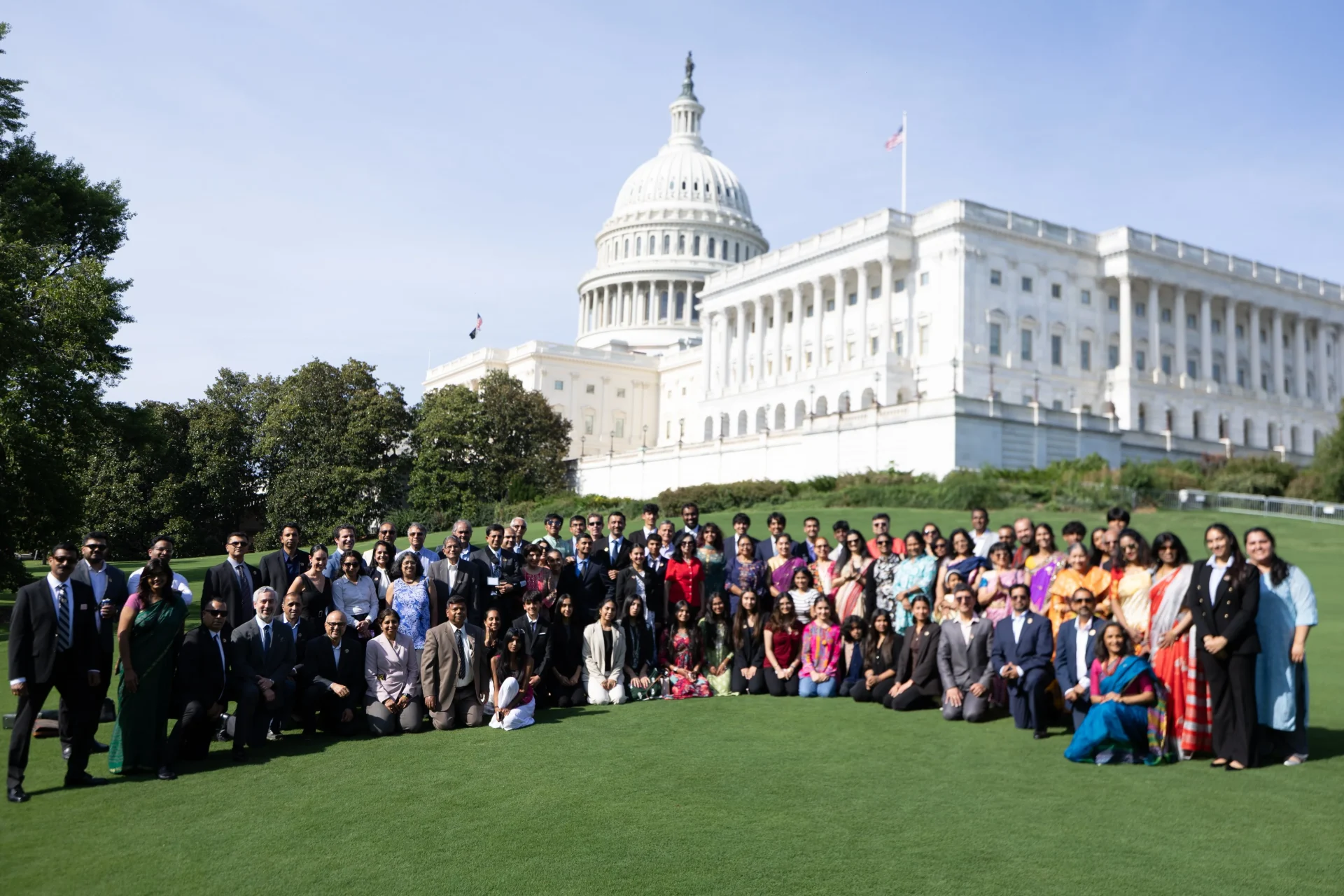
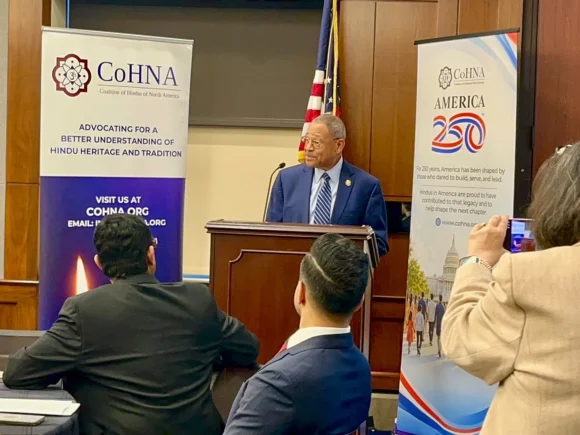
CoHNA’s fifth Day of Advocacy placed Hindu American concerns before lawmakers while connecting religious freedom, national belonging and resistance to anti-Hindu hate. According to the organization, the July 3, 2026 gathering in Washington, D.C., also marked America’s 250th anniversary.
The event offers a useful case study in how a Dharmic community can move from reacting to prejudice toward building durable civic influence. Its central lesson is that confident Hindu identity, democratic participation and cooperation with other communities can reinforce one another.
A civic campaign built on direct contact
CoHNA reported that more than 130 Hindus from 15 states attended, alongside seven congressional representatives and 12 staff members from both parties. Before the main program, delegates reportedly conducted more than 50 meetings with congressional staff and visited over 120 offices to introduce themselves, explain community concerns and connect lawmakers with Hindu constituents.
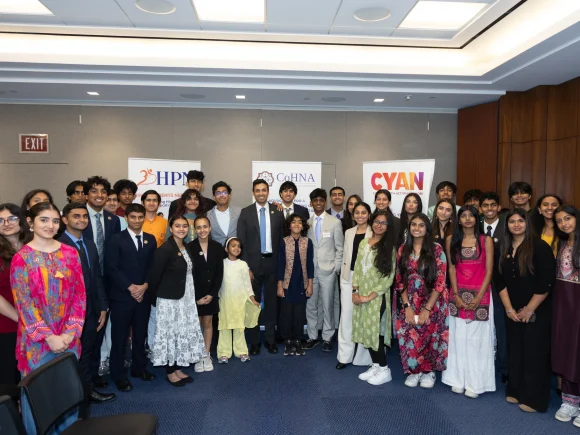
Those figures matter because advocacy is rarely secured through a single speech. Office visits, constituent meetings and annual follow-up turn an abstract demographic into identifiable citizens with local relationships. Participants represented varied occupations and life experiences, helping present Hindu Americans as a broad civic community rather than a narrow professional or political bloc.
Bipartisan concern centered on hate and religious freedom
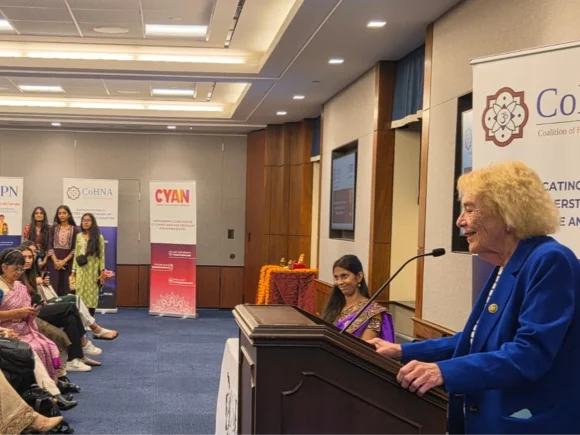
CoHNA’s account says lawmakers from both parties addressed temple vandalism, hostile rhetoric and other issues affecting Hindu Americans. Rep. Buddy Carter emphasized freedom of religion and condemned attacks on temples. Rep. Sanford Bishop described Hinduphobia as “un-American,” while Rep. Brian Jack pointed to Georgia’s recognition of anti-Hindu hate and stressed the value of sustained advocacy.
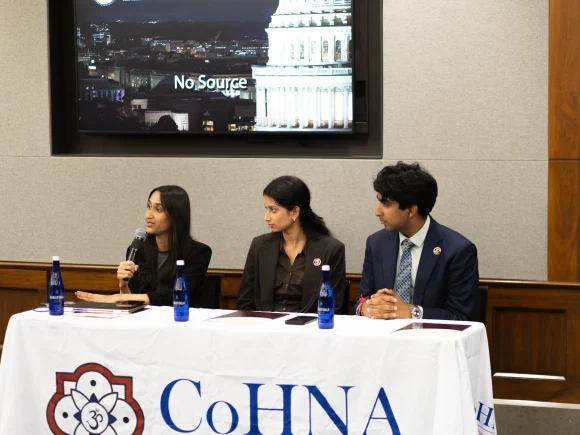
Other speakers connected dignity with participation. Rep. Shri Thanedar urged Hindu Americans to seek recognition for their contributions in fields including science, medicine, academia and politics. Rep. Suhas Subramanyam encouraged young Hindus to challenge hatred and remain proud of their identity. Rep. Rich McCormick praised the community’s work, family life and achievements.
Bipartisan attendance does not establish agreement on every policy question. It does, however, indicate that opposition to temple attacks and anti-Hindu hostility can be framed as a shared civil-rights and religious-freedom responsibility rather than a partisan demand.
Youth, service and allies widened the public case
The program did more than place elected officials at a podium. CoHNA reported that Rutgers University members of its Youth Action Network described a multi-year progression from seeking campus representation and opposing events they considered Hinduphobic to engaging administrators and organizing an academic conference on Hinduism.
Hindu veteran Ruchir Bakshi connected his Army service in Afghanistan and Iraq with lessons he drew from the Bhagavad Gita: disciplined action, integrity and service without attachment to results. Armenian and Jewish allies also participated, demonstrating how communities with different histories can cooperate against religious hatred without surrendering their distinct identities.
The wider Dharmic lesson is coalition without erasure. Hindus, Buddhists, Jains and Sikhs need not collapse their separate teachings or institutions to cooperate on religious literacy, fair treatment and protection from hate. Unity is strongest when it respects genuine difference while defending a common right to live openly by one’s tradition.
Policy claims require both representation and scrutiny
Evidence was another theme of the gathering. CoHNA says Dr. Joel Finkelstein challenged efforts to incorporate caste into American law and curricula, arguing that policymakers should demand stronger evidence before accepting activist narratives about Hindu life. Rep. Zoe Lofgren similarly warned, according to the source, that caste-specific legislation could deepen discrimination rather than resolve it.
Prasiddha Sudhakar presented research that, as summarized by CoHNA, interpreted parts of the immigration debate as coordinated religious targeting of Hindus, their festivals and temples. Anang Mittal presented the Citation Integrity Dashboard, described at the event as an independent, nonpartisan tool for examining the transparency, methodology and evidentiary support behind institutional claims.
These are consequential and potentially disputed claims. The source provides an advocacy organization’s account rather than a complete record of methods, counterarguments or responses. Readers should therefore distinguish between the fact that these presentations occurred and the separate task of evaluating their evidence. That distinction strengthens Hindu advocacy by making accuracy, due process and intellectual openness part of the case.
Key takeaways for Dharmic civic engagement
- Repeated constituent contact can convert occasional visibility into durable relationships with public institutions.
- Personal testimony becomes more persuasive when paired with transparent evidence and clearly defined policy concerns.
- Youth leadership is essential because campuses often shape both public narratives and future civic participation.
- Interfaith and inter-Dharmic cooperation can oppose hatred while preserving each tradition’s independent identity.
- Bipartisan engagement helps keep religious freedom and protection from hate from becoming the property of one political camp.
A constructive civic Hindutva can be rooted in this democratic discipline: represent Hindu civilization without apology, test public claims carefully, serve the wider society and build principled alliances. The next measure of progress will be whether annual gatherings produce year-round participation by informed, confident and mutually supportive Dharmic communities.
Inspired by this post on CoHNA.

Leave a Reply
You must be logged in to post a comment.