
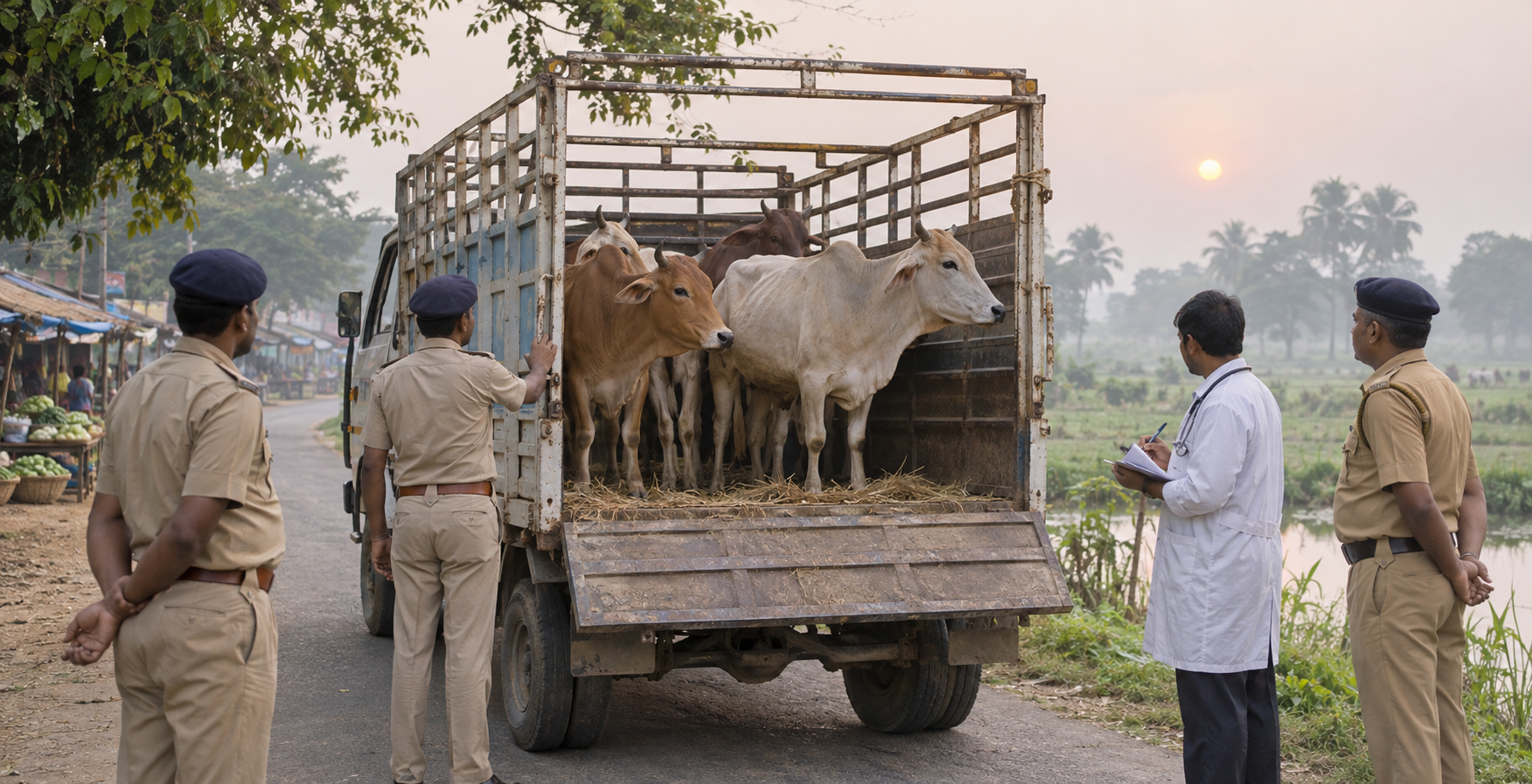
If you are asking whether West Bengal has finally moved from promises to enforceable cow protection, watch the chain of action rather than the arrest count alone. A police operation can be significant, but durable enforcement is demonstrated through clear legal authority, properly investigated cases, humane custody of rescued animals and outcomes that withstand judicial scrutiny.
On 25 November 2026, four people were reported arrested in Murshidabad as Chief Minister Suvendu Adhikari declared cow protection a top priority and said his government would not permit indiscriminate cow slaughter. That is a concrete enforcement signal. It is not yet proof of a completed legal reform or a sustained statewide system.
Key takeaways
- Four reported arrests show that police acted in Murshidabad; they do not establish guilt, conviction or the number of alleged slaughter incidents.
- A promise to tighten cow-slaughter laws may mean legislation, administrative instructions or more active use of existing provisions. Look for the actual legal instrument before calling it a change in law.
- Judge enforcement by the progress of cases from complaint to investigation, charge or closure, court orders and final disposition.
- If you witness suspected cruelty, illegal slaughter or unlawful transport, preserve objective evidence and report it through official channels. Do not confront, chase, trespass or punish anyone yourself.
- Cow protection worthy of a Dharmic society must protect Gau Mata while also preserving truth, public peace, humane animal care and due process.
What the Murshidabad arrests do and do not show
An arrest records police action against a person. It is not a judicial finding that the person committed the alleged offence. The exact allegations, legal provisions invoked, evidence recovered, custody status and later court outcome still matter. Until those details are available from official records, the careful description is that four people were reportedly arrested – no more and no less.
The political announcement also needs to be separated into three distinct questions:
- Has the text of the law changed? Look for an Act, amendment, rule or notification, together with its effective date and scope.
- Has enforcement policy changed? A government can direct police and administrative agencies to give greater priority to existing law without amending that law. A written order, standard procedure or official circular would help establish what officers have actually been told to do.
- Was this a single operation? One district action can be important without proving that the same standard is being applied consistently across West Bengal.
This distinction protects the credibility of cow-protection advocacy. If only an enforcement action has been documented, call it an enforcement action. If the government later publishes a legal amendment or formal order, identify that instrument precisely. Inflating an announcement into a legal change makes it easier for opponents to dismiss a legitimate concern.
Measure enforcement from complaint to court outcome

Arrest totals are the easiest figures to publicise and among the least complete measures of performance. Serious monitoring follows each case through the justice process. For the Murshidabad action and any later operations, look for these records as they become lawfully available:
- A police case or complaint reference that connects public claims to an identifiable proceeding.
- The alleged conduct and the legal provisions police say apply, rather than assumptions circulated on social media.
- A documented inventory and custody trail for animals, vehicles or other seized material.
- The investigating agency’s later decision to file charges, add or remove allegations, or close the matter.
- Court orders on custody, bail, evidence and the eventual disposition of the case.
- Information about the condition, veterinary care and lawful placement of any animals taken into protective custody.
Do not count the same matter repeatedly as several successes. A complaint, an arrest, a charge and a judgment are stages of one process, not interchangeable results. Four people arrested in one operation are not four convictions, and they do not necessarily represent four separate incidents.
Patterns matter more than isolated publicity. Over time, ask whether cases are being investigated consistently across districts, whether evidence is strong enough to proceed in court, whether accused persons receive due process and whether rescued cattle remain safe after seizure. A lack of public information does not prove that nothing happened, but it does prevent citizens from verifying the government’s claims. That is why transparent, periodic reporting is essential.
If you witness a suspected violation, report it safely

Your first responsibility is not to conduct an investigation. It is to avoid injury, preserve what you can lawfully observe and give accurate information to the competent authorities. Confrontation can endanger people and animals, contaminate evidence and expose you to legal consequences.
- Stay at a safe and lawful distance. Do not enter private property, block a road, pursue a vehicle, restrain a person or attempt a rescue yourself. Contact police or emergency services when there is an immediate threat.
- Record observations, not conclusions. Note the time, location, direction of travel, vehicle description and visible registration details when you can do so safely. Describe what you actually saw or heard. Do not add a person’s religion, community or motive unless it is directly relevant and verifiable.
- Preserve original files. Keep unedited photographs or video with their original date and metadata. Do not crop, add captions or forward compressed copies as your only evidence.
- Use an official reporting channel. Give police the factual sequence and ask how to submit digital material. Request an acknowledgement, diary entry or complaint reference when the applicable process allows one.
- Limit public accusations. Do not publish names, faces or claims of guilt merely because someone was detained or appeared in a recording. Misidentification can harm an innocent person, inflame communal tension and weaken a legitimate case.
- Follow the reference, not rumours. If you seek an update, use the recorded complaint or case details. Preserve the response and any further information you lawfully receive.
If you are personally involved as a complainant, witness, animal owner or accused person, obtain advice from a qualified lawyer in West Bengal. General reporting steps cannot determine your rights, obligations or exposure in a particular case.
What a credible cow-protection policy must contain
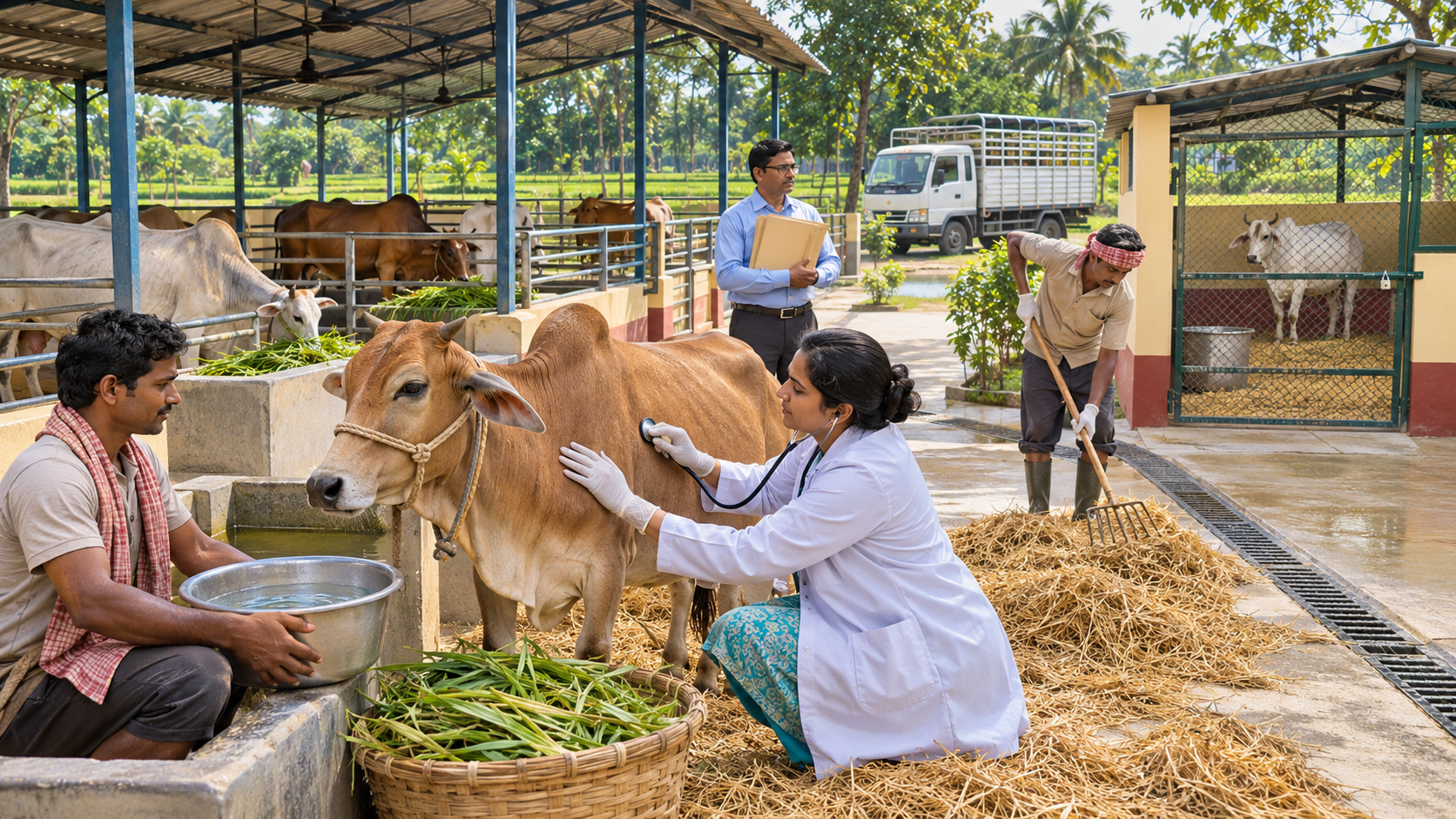
For many Hindus, the cow is Gau Mata, not merely a unit of livestock. That reverence deserves serious public administration rather than episodic spectacle. It also imposes discipline on those who act in its name. Dharma cannot be defended through false accusation, mob punishment or reckless conduct that places animals and people in greater danger.
A credible West Bengal policy should make compliance and accountability visible. Citizens should be able to obtain clear answers to the following questions:
- What law, rule or administrative order is presently operative, and from what date?
- What conduct is prohibited, what permissions or documents may apply, and which authority is responsible for enforcement?
- What standard procedure governs inspection, seizure, evidence handling and the transfer of animals?
- Who pays for feed, shelter, transport and veterinary treatment while an animal remains in official custody?
- How can lawful cattle owners, farmers and transporters learn the requirements before an enforcement action occurs?
- How are knowingly false or malicious complaints examined without discouraging genuine reports?
- What safeguards prevent vigilantism, communal retaliation, extortion or selective enforcement?
- Will the government publish district-level figures that distinguish complaints, arrests, charges, closures, court outcomes and animal-care results?
These are not procedural distractions from cow protection. They are what turn a declaration into a system capable of surviving changes in officers, districts and political conditions. Humane custody is particularly important: removing an animal from suspected danger is not a success if it is then left without adequate feed, shelter, treatment or lawful placement.
The next useful public step is a written request to the West Bengal government for the operative legal instrument, the official basis of the Murshidabad action where disclosure is lawful, the arrangements made for any animals involved and a schedule for publishing case outcomes. Keep the language exact and retain the response. That moves the debate from slogans to records and gives responsible cow-protection advocates something they can verify.
References

Leave a Reply
You must be logged in to post a comment.