
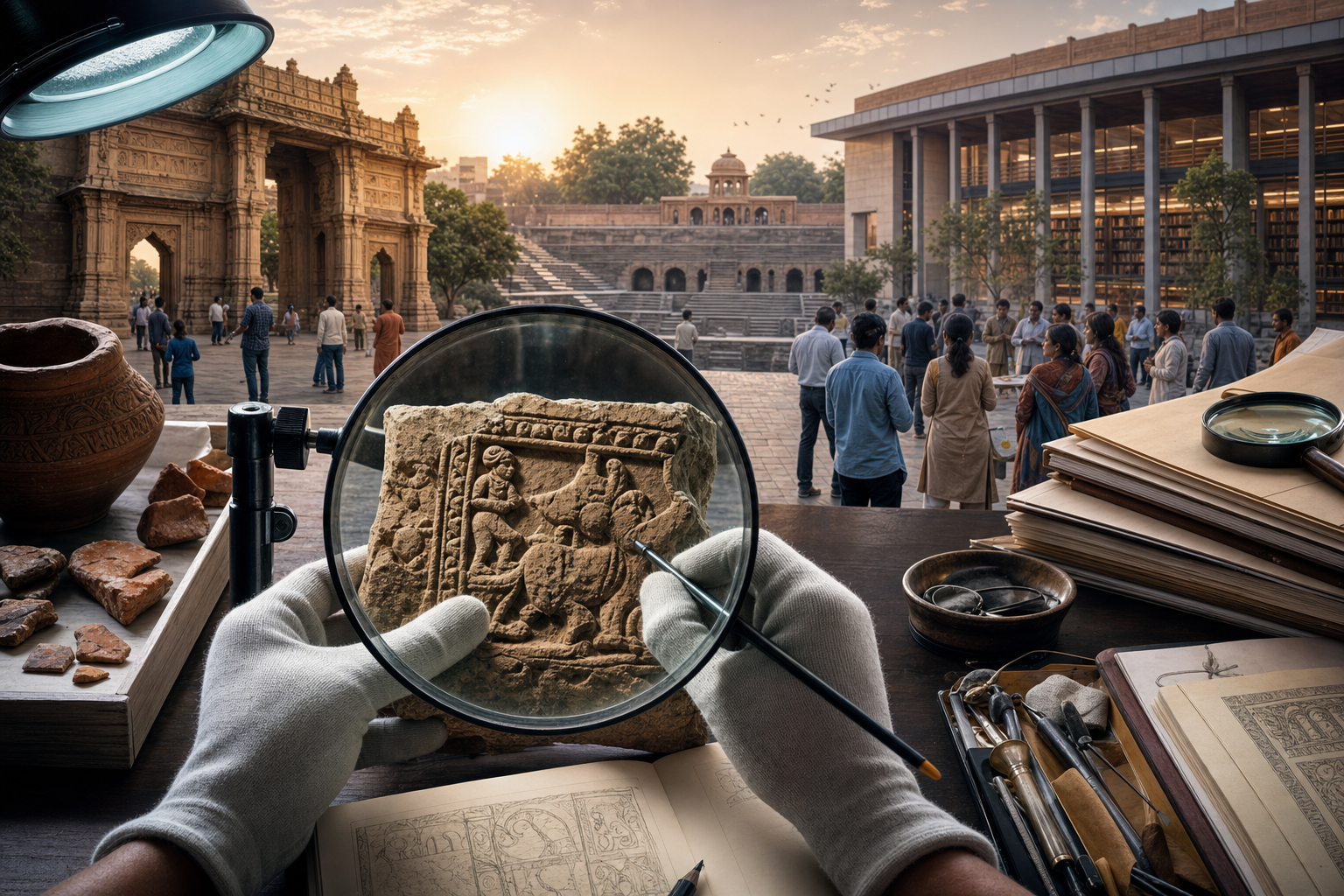
You may believe that Bharat’s civilizational inheritance deserves a confident public voice and still feel uneasy when every archaeological dispute, campus argument or street protest becomes a loyalty test. That unease is useful. It points to the real challenge: defending continuity without confusing conviction with proof, and opposing ideological manipulation without treating dissent as treachery.
When a claim reaches you, don’t begin by asking whether it helps your side. Ask what kind of claim it is, what evidence could establish it, and what action would be proportionate if it were true. That discipline makes civilizational advocacy harder to manipulate and harder to dismiss.
First identify the kind of claim in front of you
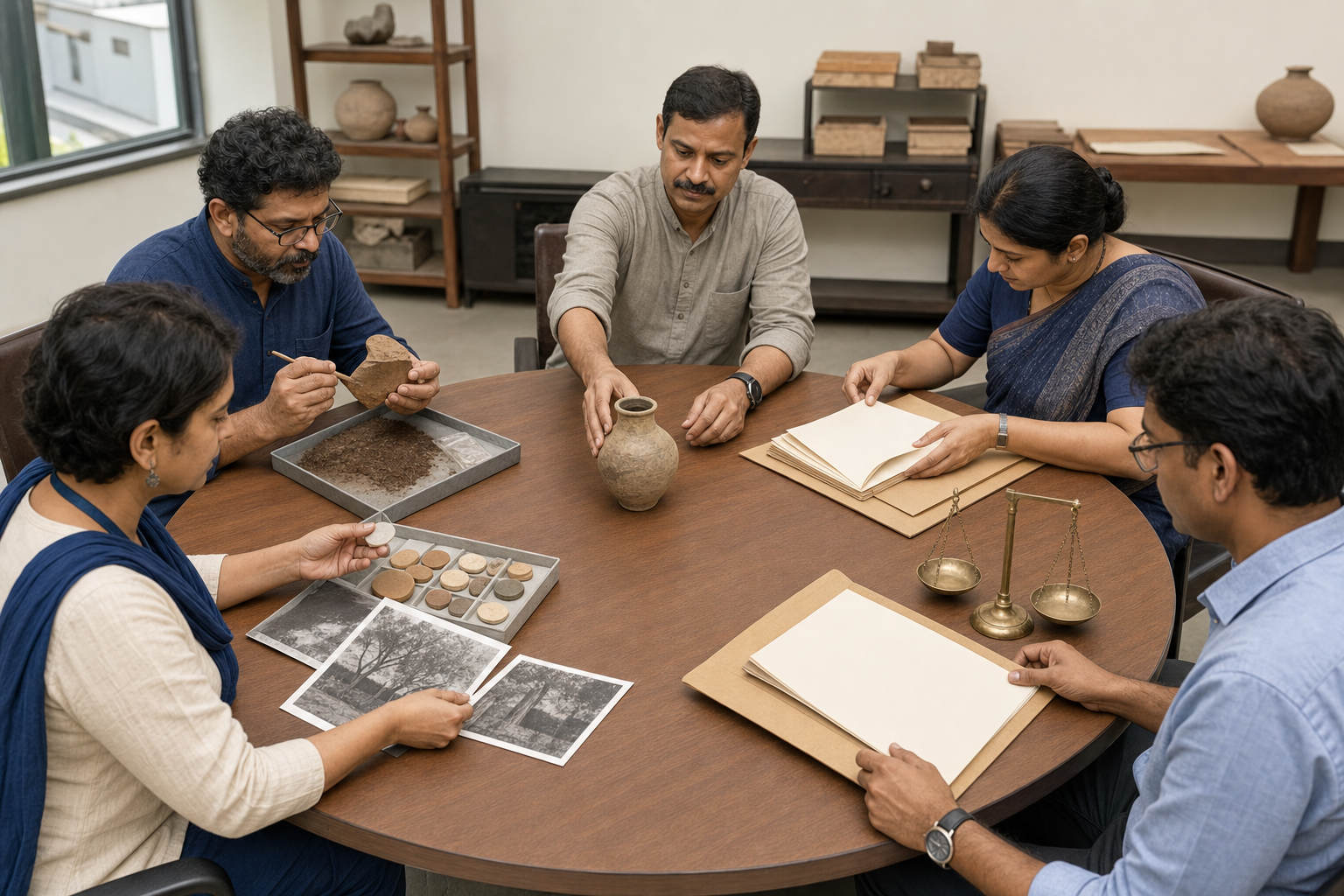
Civilizational politics often compresses three different activities into one emotionally charged statement: investigating the past, interpreting its meaning and mobilizing people in the present. Separate them before you agree, object or share.
Evidence asks what can be established
The evidentiary layer includes excavation, material remains, inscriptions, historical geography, genetics and river studies. In Bharat’s continuity debate, the contested terrain includes the name given to the Indus or Sindhu Sarasvati civilization, the Harappan Pashupati seal, the Saraswati River and the relationship between ancient populations and later Indian culture.
Each form of evidence answers a limited set of questions. Archaeology can establish where an object was found, its material context and its relation to other remains. Genetics can help describe population relationships. River studies can investigate old channels and changing landscapes. None of these, by itself, proves the theological identity of a figure, the meaning of a symbol or the borders of a modern political community.
When someone says that one discovery proves an entire civilizational thesis, write the exact claim in one sentence. Then ask which part is directly observed and which part has been inferred. The gap between those two is where ideological certainty usually enters.
Interpretation asks what the evidence means
Interpretation connects fragments into a larger account. A seal can be interpreted through posture, animals, later iconography and ritual parallels. A river can become part of historical geography and sacred memory. A recurring cultural form can support continuity without proving that every later belief existed in an identical form at the earliest date.
This distinction lets you make a stronger case. You don’t need to claim that nothing changed in order to defend civilizational continuity. Languages change. Institutions rise and fall. Rituals acquire regional forms. Continuity can consist in the transmission, adaptation and renewal of a civilizational grammar across those changes.
Mobilization asks what people should do now
The political layer concerns curricula, museum labels, public commemorations, research funding, cultural diplomacy and national identity. Those are legitimate public questions, but a desired policy cannot establish a historical proposition. A movement may have an honourable goal and still use a weak argument. An inconvenient finding may be sound even when an ideological opponent cites it.
Use four labels in your own notes: established, plausible, contested and speculative. Apply the label to the individual proposition, not to an entire camp. This prevents a familiar mistake in which one doubtful assertion is used to discredit every continuity claim, or one persuasive finding is made to carry a whole political programme.
Make the civilizational case at its strongest defensible level
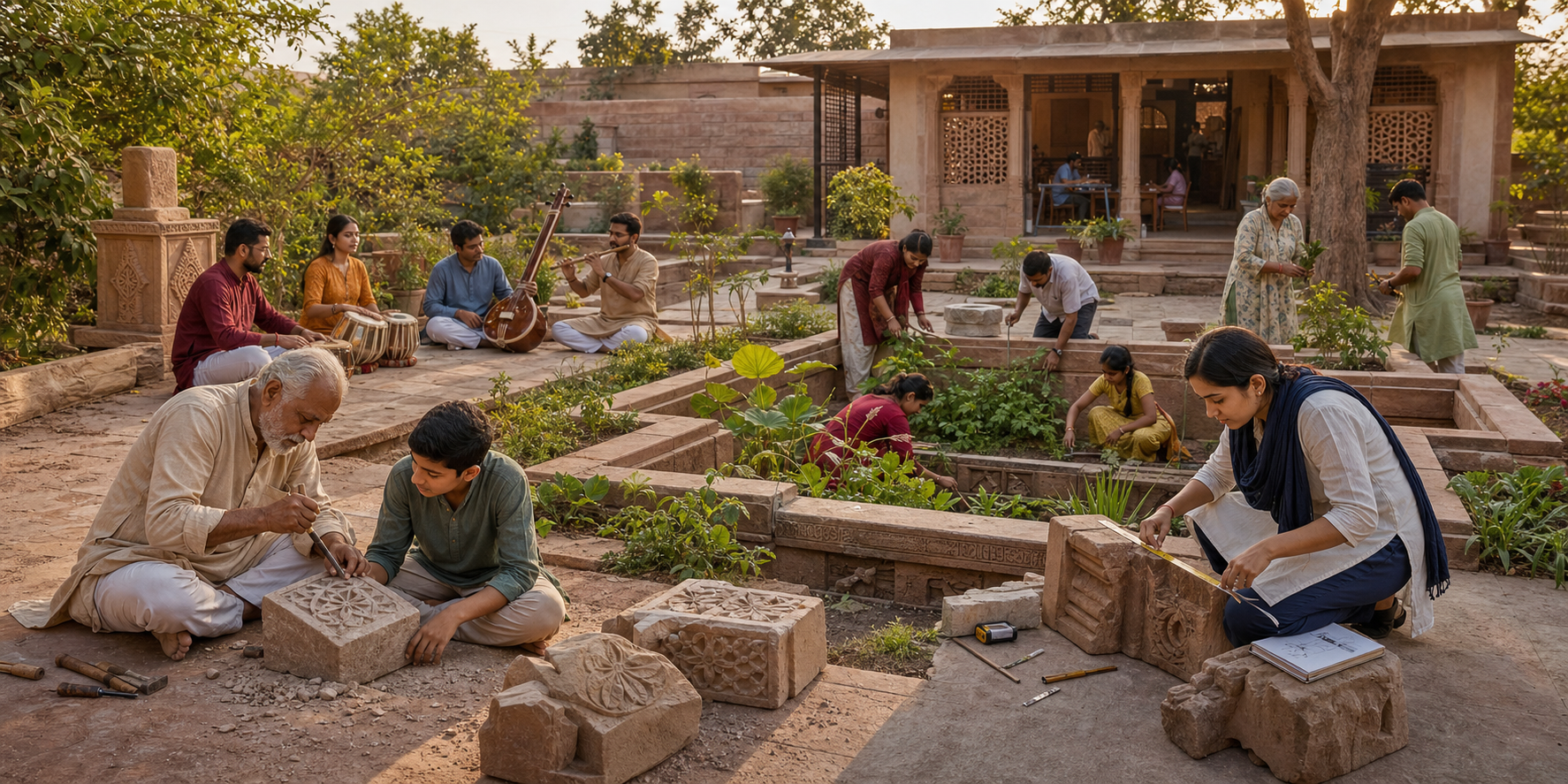
Bhartiyata does not depend on pretending that every historical question is closed. For many Indians, it names a living sense of belonging to a civilization extending from the ancient past into the present. That proposition can be examined through accumulated cultural patterns rather than made to stand or fall on a single artefact.
Start with terminology. Calling the civilization the Indus Valley Civilization emphasizes one river and a familiar archaeological label. Calling it the Sindhu Sarasvati Civilization emphasizes a wider cultural geography and a different understanding of civilizational memory. The choice can shape public imagination, but a preferred name is not a substitute for demonstrating settlement patterns, chronology and geographical reach.
Handle the Pashupati seal with the same care. A weak formulation says that the seal unquestionably proves the complete presence of later Shaiva theology. A stronger formulation says that the figure has been interpreted as Pashupati or a proto-Shiva form, that the identification remains disputed, and that its significance should be assessed alongside other evidence of cultural continuity. The second statement gives an opponent less rhetorical excess to attack while preserving the real question.
Apply that discipline to Akhand Bharat as well. Before arguing about the phrase, ask what the speaker means by it. It can refer to a remembered civilizational sphere, cultural bonds across present borders, solidarity among related communities or a proposed territorial programme. Those meanings are not interchangeable. If you mean cultural recovery, say so. If someone alleges territorial intent, ask for evidence rather than allowing a map or slogan to decide the question.
Some resistance to Bharat’s continuity claims may reflect colonial-era assumptions, civilizational hierarchies or the national interests of neighbouring states. Yet identifying a possible bias does not refute an argument. Show where the inherited assumption enters: perhaps in the terminology, the chronology, the treatment of indigenous memory or the demand for a standard of proof not applied elsewhere. Critique the premise and method, not merely the nationality or institution of the person making the claim.
You can improve almost any civilizational argument with three questions:
- What is the narrowest claim that the available evidence directly supports?
- Which additional conclusion is interpretive, and how confident should we be about it?
- What new finding would weaken or strengthen the conclusion?
A claim that can state its limits is not timid. It is durable. It can survive a hostile seminar, a partisan television debate and a future discovery that complicates the picture.
Audit activism without criminalizing disagreement
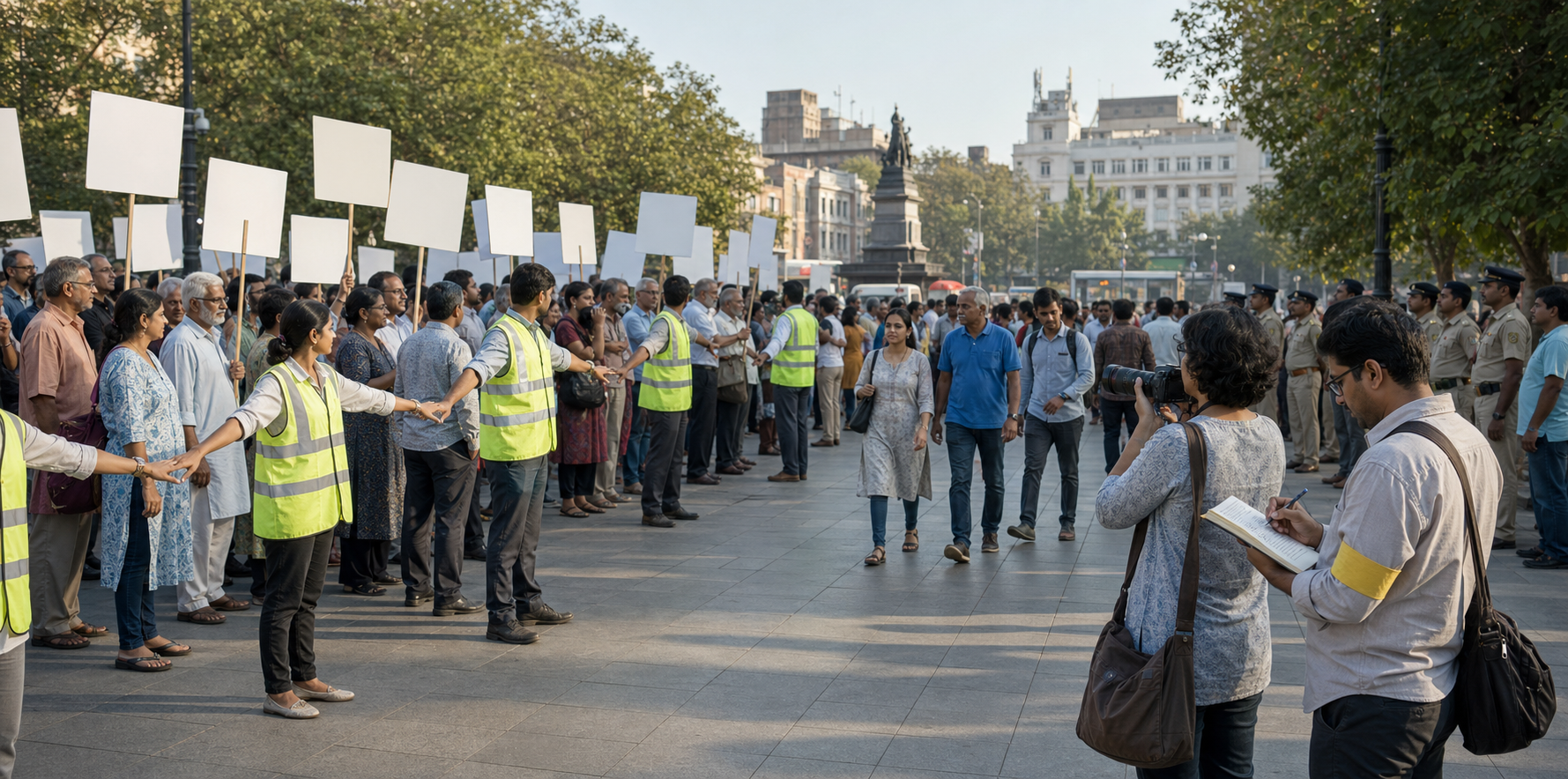
Ideological activism is easiest to detect when you begin with the legitimate grievance rather than the suspected conspiracy. If examinations are manipulated, papers are leaked or students’ futures are compromised, offenders should face consequences and the government should be held accountable. Peaceful protest, demands for resignations and other constitutional remedies are part of democratic life. That legitimate starting point must remain distinct from allegations of coordinated disorder, foreign direction or regime-change activity.
A politically useful grievance can be appropriated, but appropriation must be demonstrated. Shared slogans do not prove common command. A foreign association does not by itself prove foreign control. An activist’s political affiliation may reveal a conflict of interest, but it does not make the underlying complaint false. Conversely, a genuine complaint does not excuse fabricated quotations, concealed coordination, intimidation or deliberate damage.
The May 2026 controversy around the word “cockroach” shows why context matters. One side maintained that Chief Justice Surya Kant’s remark concerned lawyers practising with fake degrees and was later clarified; the hostile framing presented it as an insult directed at Indian youth. Before repeating either political conclusion, locate the full judicial context, the complete recording or transcript, and the clarification attributed to the judge. A cropped quotation should not become the foundation for action against the judiciary.
Use the following audit when a protest is described either as pure democratic dissent or as an organized destabilization campaign:
| Question | Evidence of accountable dissent | Reason for closer scrutiny |
|---|---|---|
| What is the grievance? | A verifiable harm, an identifiable affected group and facts that remain stable under correction | The grievance changes after key facts fail, or unrelated causes are attached to preserve momentum |
| What is being demanded? | A specific, lawful remedy connected to the harm | Maximal political disruption with no clear connection to the original complaint |
| How is evidence handled? | Primary material, full context and visible corrections | Cropped clips, mistranslations or disputed claims repeated after correction |
| Who is accountable? | Named organizers, stated affiliations, transparent decision-making and lawful funding | Concealed control, contradictory identities or an unexplained chain of resources and instructions |
| What tactics are used? | Peaceful assembly, persuasion, legal petitions and protection of non-participants | Dehumanization, intimidation, incitement or chaos treated as an end in itself |
These warning signs justify investigation; they are not a verdict. Serious claims involving a “deep state,” foreign funding or a regime-change plan require records of money, instruction, coordination or operational support. The more serious the accusation, the less acceptable it is to rely on association, insinuation or an opponent’s nationality.
The same standard must apply to the state and to movements. Authorities should protect peaceful assembly, investigate fraud and punish actual violence under law. Activists should disclose material interests, correct falsehoods and keep tactics connected to the stated grievance. Civilizational confidence is not demonstrated by fearing criticism. It is demonstrated by answering criticism while defending the constitutional order from documented subversion.
Build institutions that can outlast an outrage cycle

A civilizational revival becomes credible when it produces better scholarship, translation, archives, museum interpretation, education and civic leadership. Online rebuttals may interrupt a false narrative for a day. They cannot replace the patient institutions that decide what evidence is preserved, what questions are researched and what the next generation learns.
Before you publish, forward or organize around a claim, run this sequence:
- State the claim in one sentence without slogans or insults.
- Locate the earliest available primary material: an excavation record, image, transcript, judgment, financial disclosure or full recording. If you only have commentary, label it as commentary.
- Separate observation from inference. Write down what the material directly shows, then what you think it means.
- Find the strongest counter-reading rather than the weakest opponent. Record which fact would decide between the two readings.
- Choose a proportionate action. An unresolved historical interpretation may justify more research; it does not justify defaming a scholar. Evidence of examination fraud may justify investigation and protest; suspicion alone does not justify accusing named people of treason.
- Return to the claim when new material appears. Correcting your own side strengthens the civilizational case because it shows that truth ranks above faction.
Your role determines the most useful output. A student can maintain an annotated reading file separating artefacts, interpretations and political uses. A teacher can mark disputed claims explicitly instead of presenting either colonial inheritance or nationalist correction as unquestionable doctrine. A community organization can publish its purpose, organizers, funding rules and code of conduct before a demonstration. A writer can link the full context and state the uncertainty in the same paragraph as the claim.
Also watch your language. Terms that reduce opponents to vermin, traitors, puppets or enemies may excite an audience, but they destroy distinctions you need for sound judgment. There is a difference between an uninformed critic, an ideologically committed scholar, a partisan activist, an undisclosed foreign intermediary and an operative participating in unlawful coordination. Name the category only when you have evidence for it.
We should expect civilizational recovery to produce disagreement, including disagreement within Dharmic communities. That is not failure. The failure would be allowing inherited academic authority to close inquiry on one side, or political urgency to close it on the other. A confident Bharat can investigate its past, interpret its inheritance and defend its institutions without collapsing those tasks into one campaign.
Key takeaways
- Separate evidence, interpretation and political mobilization before judging a civilizational claim.
- Defend continuity as transmission and renewal; it does not require claiming that every practice remained unchanged.
- Use labels such as established, plausible, contested and speculative for individual propositions.
- Protect constitutional protest while demanding proof for allegations of foreign direction, concealed coordination or regime-change activity.
- Prefer primary records, transparent organizations and visible corrections to slogans that merely confirm your allegiance.
- Build archives, scholarship, education and civic institutions that can carry Bhartiyata beyond the next controversy.
The next time a civilizational or activist claim reaches your screen, pause before choosing a camp. Write the proposition plainly, identify its evidence level and decide what response that evidence actually warrants. Do that consistently, and you will contribute something more valuable than another burst of outrage: a public culture capable of defending Bharat because it has learned how to think clearly about Bharat.
References
- Hindu Post – Why Bharat’s Civilizational Revival Unsettles the Gatekeepers
- Hindu Post – जंतर-मंतर के मुखौटों के पीछे का सच