
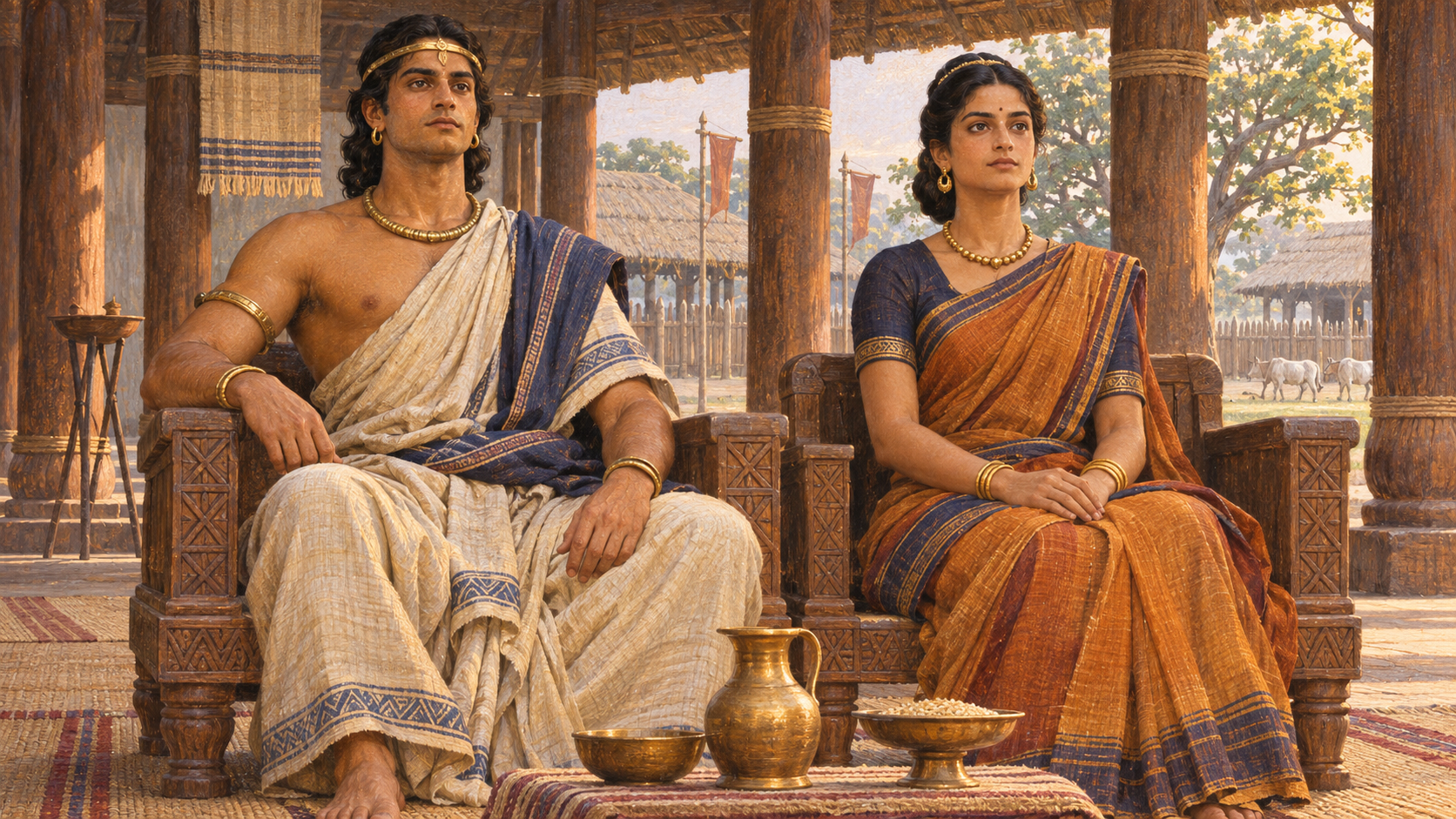
If you encountered Janamejaya and Vapushtama together in a Kuru genealogy, you probably want a clean answer: who were they, what does their marriage establish, and how much of their story can you safely repeat?
The answer is shorter than many retellings make it. Janamejaya was the young son who succeeded King Parikshit, while Vapushtama was his queen. That gives us a definite royal relationship and a place in the Kuru line. It does not give us permission to invent a courtship, wedding ceremony, political alliance, or detailed biography for Vapushtama.
The clear relationship between the three names
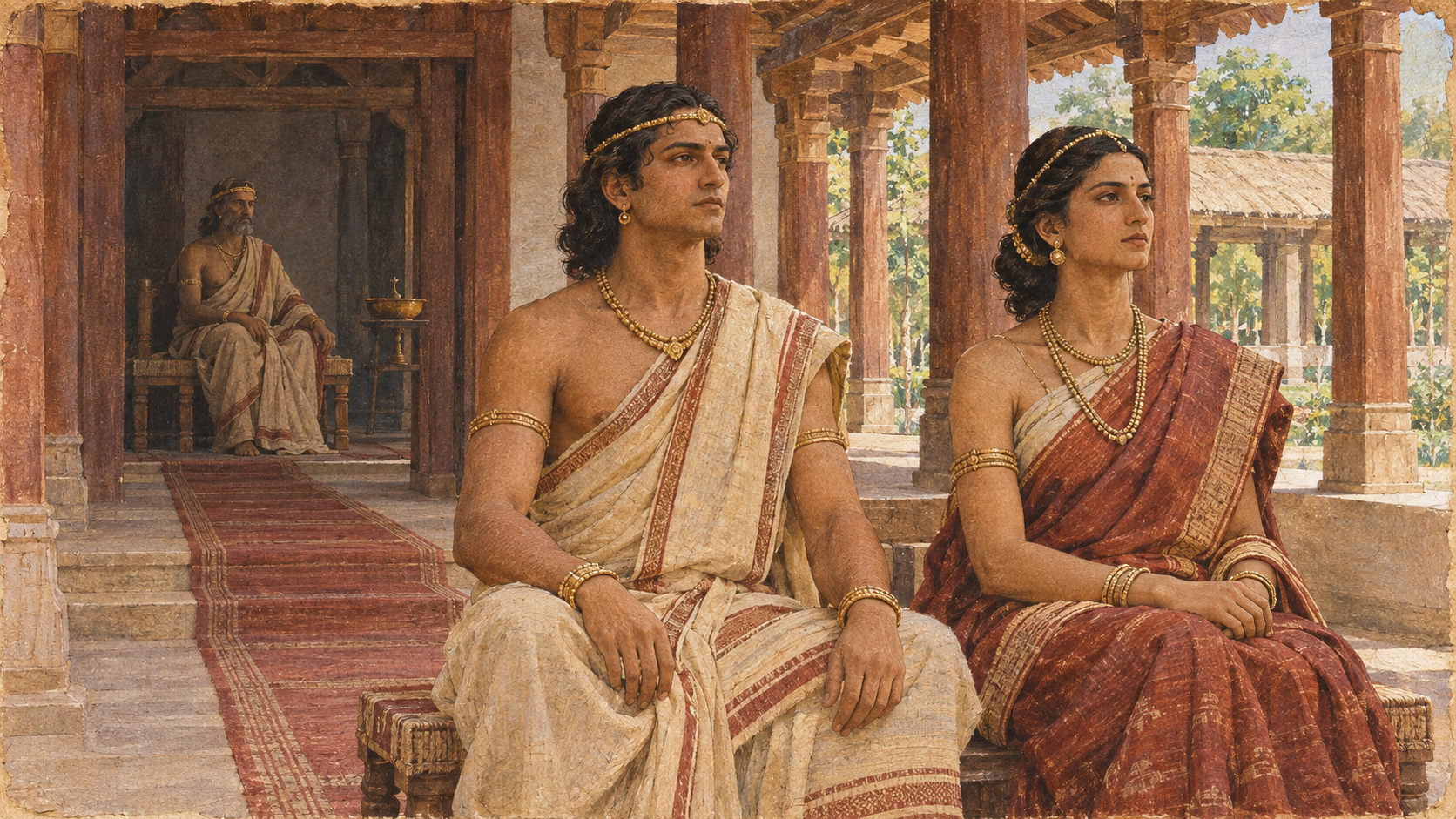
The most defensible outline is compact. After King Parikshit’s death, his young son Janamejaya was placed on the throne of the Kuru kingdom and was remembered as wise, brave, and respected; Vapushtama was his queen.
For a family note, classroom explanation, or introductory talk, use this four-part map:
- Parikshit: Janamejaya’s father and the king whose death preceded the succession.
- Janamejaya: Parikshit’s young son and successor to the Kuru throne.
- Vapushtama: Janamejaya’s queen.
- The Kuru lineage: the dynastic setting in which their marriage is remembered.
This simple map prevents two common mistakes. It keeps Parikshit in the correct generation, and it preserves Vapushtama’s name instead of reducing Janamejaya’s marriage to an unnamed royal relationship.
What the marriage tells you, and what it does not

In royal genealogy, marriage is not merely a romantic detail. Naming a queen places the ruler inside a household and a continuing dynasty. Janamejaya was not remembered only as an isolated monarch; he also appears as Parikshit’s son and Vapushtama’s royal partner.
That is the useful conclusion. The queen’s title establishes Vapushtama’s position beside Janamejaya, but it does not establish the circumstances of their marriage or the extent of her authority. Without additional evidence, you should not supply:
- the names of Vapushtama’s parents or her kingdom of origin;
- a motive for the marriage, such as diplomacy or military alliance;
- the place, date, or rites of the wedding;
- private conversations, feelings, or acts attributed to the royal couple;
- children or descendants merely because a genealogy seems to require them.
This restraint matters because a plausible addition can quickly become a repeated falsehood. If you need to go beyond the basic relationship, attach each added detail to a named primary text, translation, or scholarly authority. A familiar-sounding story is not evidence by itself.
How to read Janamejaya’s royal descriptions
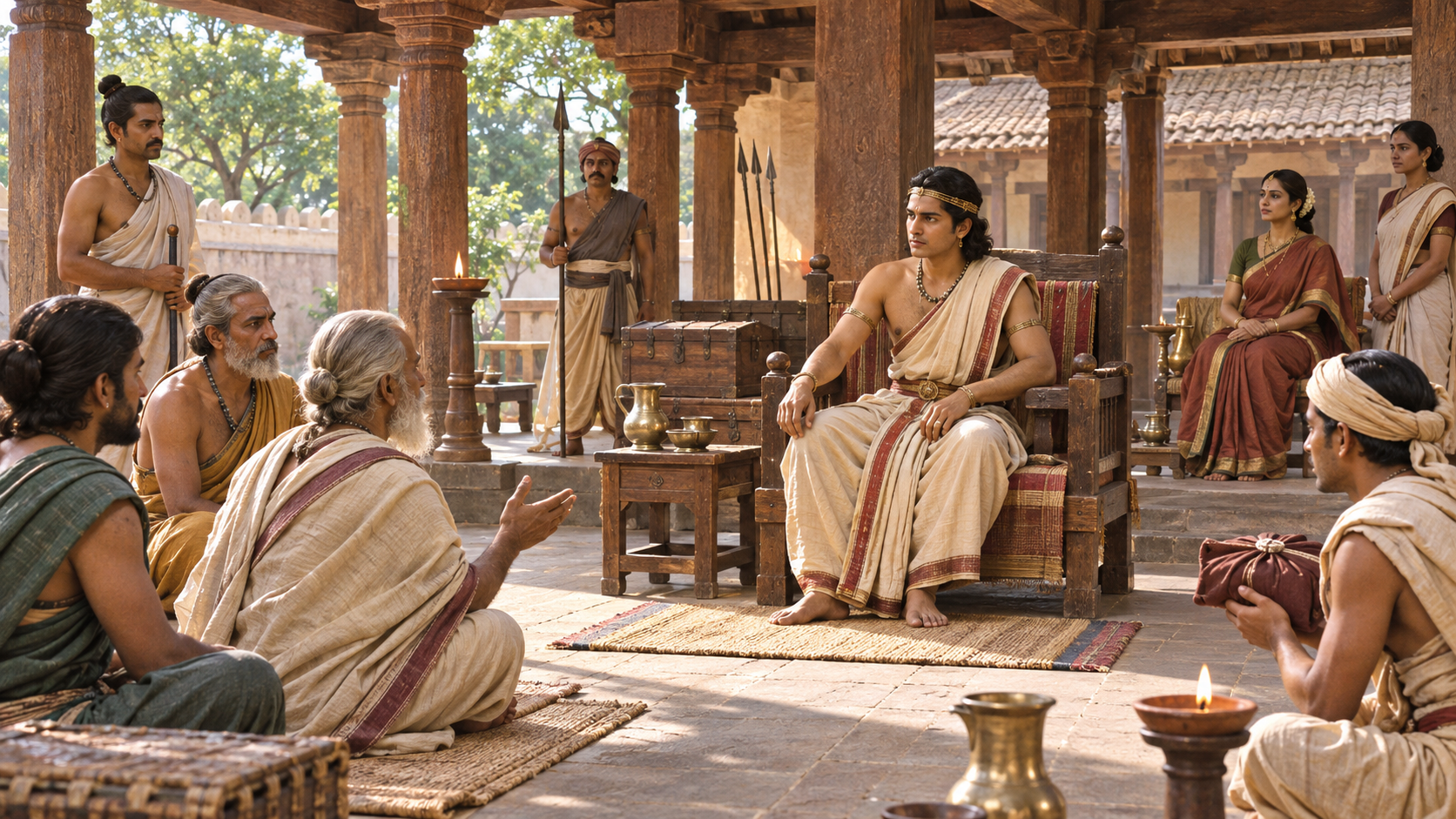
Janamejaya is praised as wise and brave and is given the martial designation slayer of enemies. These expressions tell you how royal character was presented: intelligence, courage, victory, and fitness to rule belonged together in the image of an esteemed Kuru king.
Do not turn the martial designation into an undocumented battle. An epithet can communicate royal stature without identifying a particular enemy, campaign, or date. If a retelling connects it to a specific event, that event needs its own evidence.
Two further descriptions require equal care. Janamejaya was young when he received the throne, yet he is also described as the eldest among the Kurus of his time. Those statements do not provide an exact age, a list of living relatives, or details of how the kingdom was administered during his youth. Repeat what is established, but do not manufacture a regent, council, or succession crisis to fill the space.
His childhood accession nevertheless gives you an important point to notice: Kuru continuity rested on lineage even when the heir was young. The transition from Parikshit to Janamejaya therefore belongs at the centre of the story, not in a passing introductory sentence.
How to keep Vapushtama visible without inventing her life
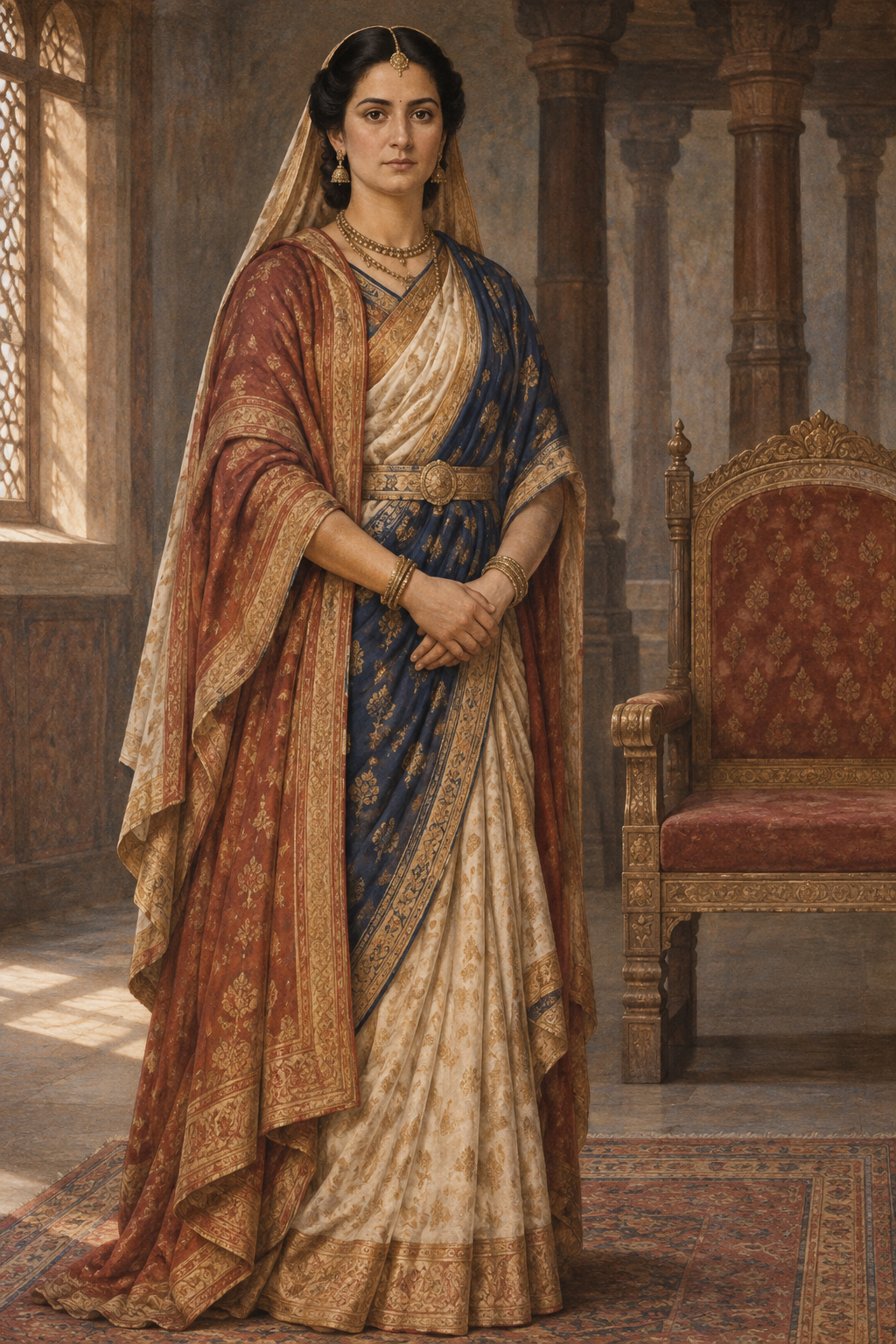
Vapushtama receives much less biographical detail than Janamejaya. The responsible response is neither to erase her nor to compensate with imaginative claims. Preserve the fact that is actually available: she was the queen named with Janamejaya in the Kuru royal line.
If you are preparing a family tree, label her directly beside Janamejaya rather than placing her in a footnote. If you are teaching the episode, pronounce and display her name instead of referring vaguely to Janamejaya’s wife. If you are writing a devotional or cultural retelling, distinguish your reflection from any claim about her recorded actions.
This approach respects both sides of the problem. Vapushtama does not disappear from dynastic memory, but readers are not handed an embellished biography disguised as tradition. Sometimes fidelity means allowing a named person to remain partly unknown.
Key takeaways
- Janamejaya was the young son of King Parikshit and succeeded him on the Kuru throne.
- Vapushtama was Janamejaya’s queen, placing their marriage within the Kuru dynastic line.
- Janamejaya’s descriptions as wise, brave, respected, and a slayer of enemies express an ideal of royal character; they do not identify specific events by themselves.
- A childhood accession does not establish an exact age, a regency, or the structure of government.
- Vapushtama should be named wherever the royal relationship is discussed, but details of her origin, wedding, authority, or descendants require additional evidence.
When you next encounter these names, begin with the four-part relationship map: Parikshit, Janamejaya, Vapushtama, and the Kuru line. Keep that core intact. Add further detail only when you can identify where it comes from. That small discipline produces a clearer account and protects Dharmic memory from both erasure and embellishment.
References

Leave a Reply
You must be logged in to post a comment.