
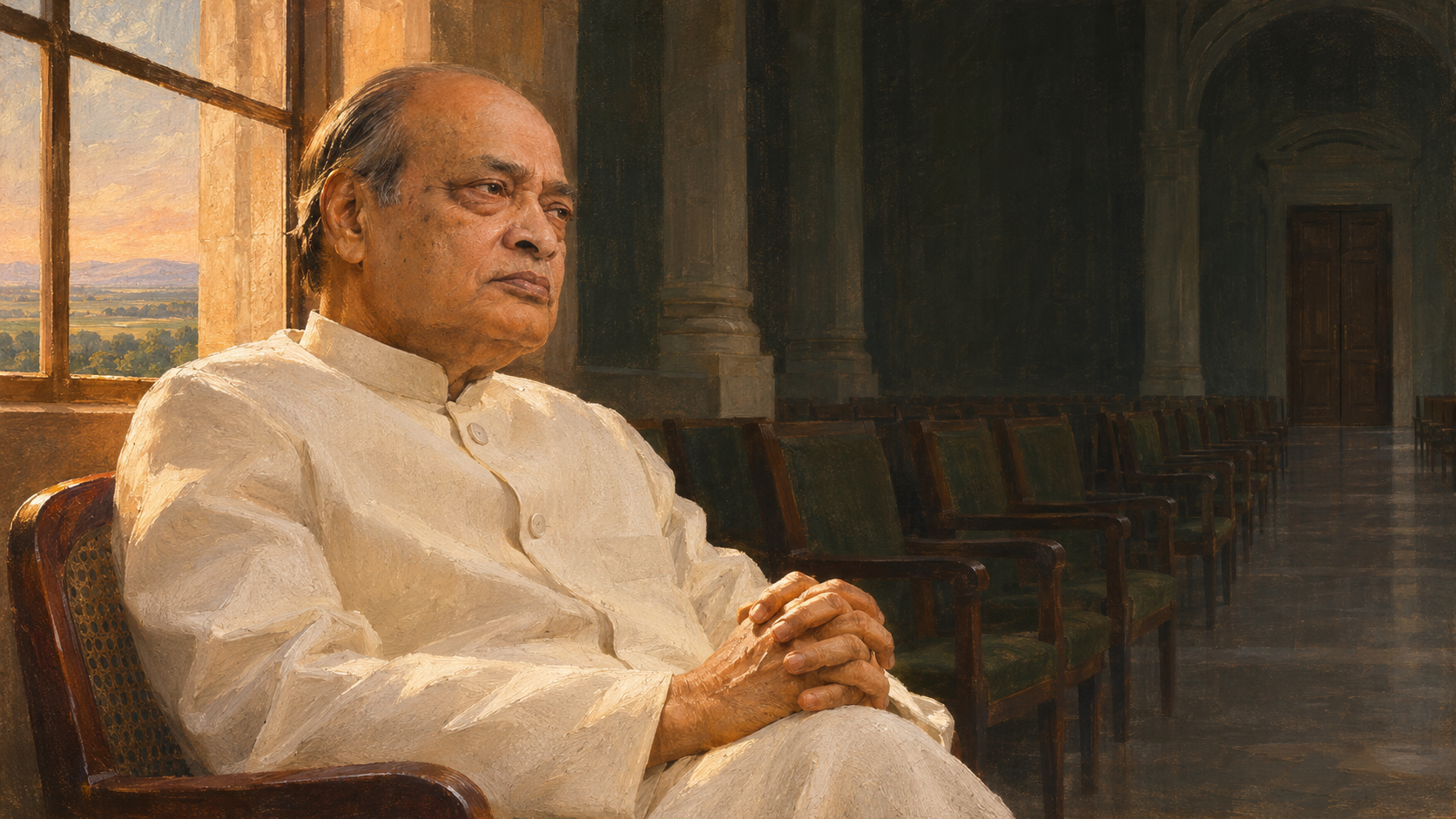
If you are trying to decide whether Congress genuinely neglected P. V. Narasimha Rao, focus on what its leadership did at the end of his life and after his death. You do not need to accept every claim about private motives to reach a clear judgement about the public conduct.
The essential distinction is between three things: Rao’s treatment by the party establishment, partisan explanations for that treatment, and the recognition he later received from the Indian state. Keeping those questions separate produces a stronger conclusion than repeating either Congress apologetics or anti-Congress rhetoric.
The short answer: Congress failed Rao at an institutional level
Congress did not merely disagree with a former leader or allow his influence to fade. When Rao’s mortal remains reached 24, Akbar Road, they were reportedly kept outside the party headquarters for about half an hour and were not admitted. His family ultimately took his body to Hyderabad for cremation.
That episode matters because a party headquarters is not an ordinary building during the funeral of a former prime minister drawn from that party. Admission would have enabled Congress members to pay their respects under the party’s institutional banner. Refusing it communicated exclusion at precisely the moment when political disagreement should have yielded to basic dignity.
You can therefore describe Congress’s treatment of Rao as a serious institutional snub without claiming access to every private conversation behind it. The visible action is sufficient for that conclusion.
Two public moments define the controversy
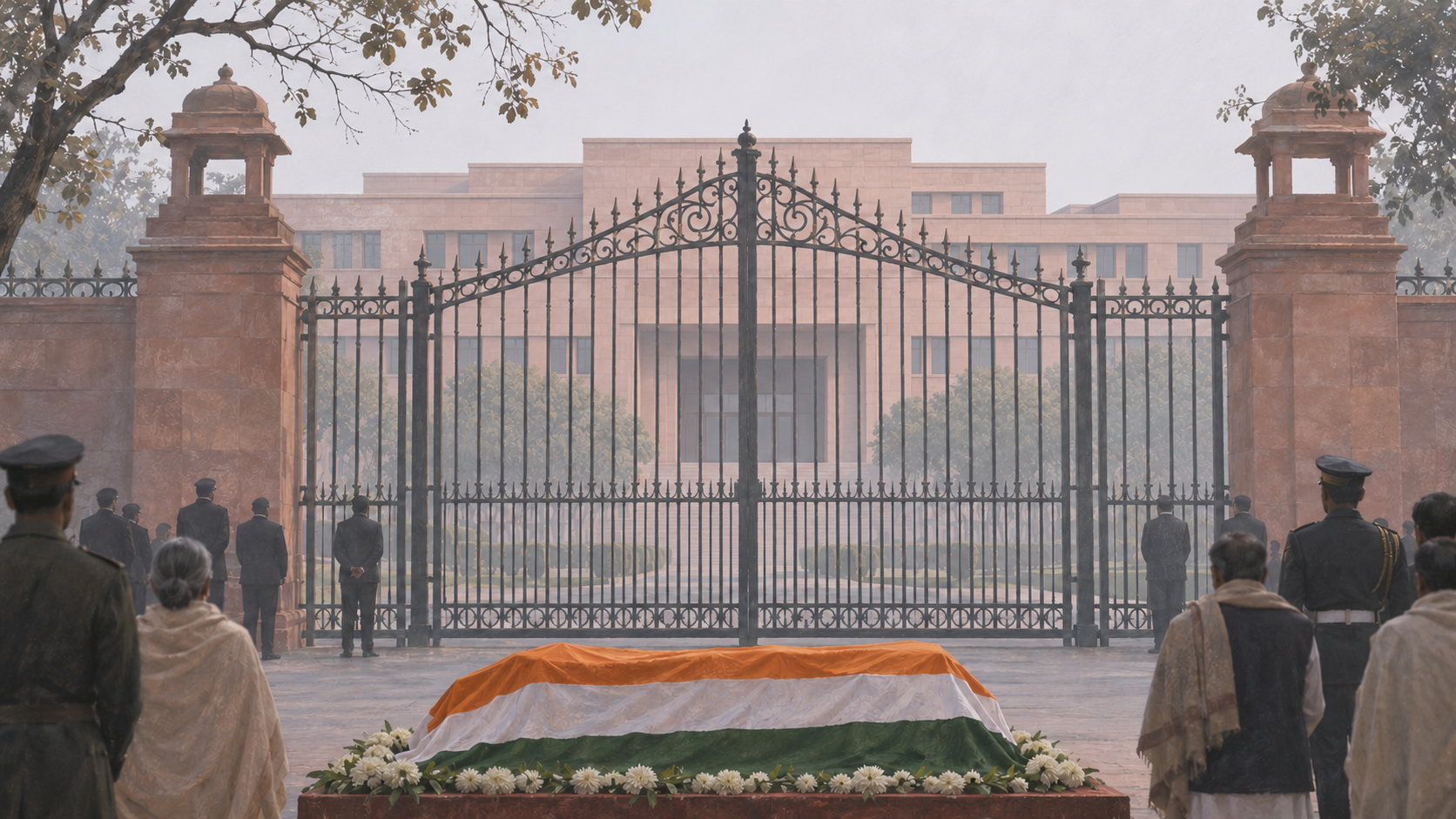
The first moment came after Rao’s death: the closed gates at 24, Akbar Road, followed by the decision to take his remains to Hyderabad. The second came two decades later, when Prime Minister Narendra Modi’s government conferred the Bharat Ratna on Rao posthumously in 2024.
These events should not be collapsed into a simple contest over which party “owns” Rao. A national honour does not erase an earlier indignity, and the earlier indignity does not turn every later tribute into political theatre. Read each act for what it is. The funeral episode reveals how Rao was treated by the Congress establishment at a moment of final farewell. The Bharat Ratna records the Indian state’s later recognition of his national stature.
The contrast nevertheless raises a legitimate question for Congress: why did another government provide a level of formal recognition that Rao’s own party leadership had conspicuously withheld at his funeral? Congress cannot answer that question merely by pointing out that Rao belonged to the party. Membership makes the treatment harder to explain, not easier.
The closed gate was more than a breach of funeral courtesy
Political parties preserve memory through ceremonies, anniversaries, portraits, speeches and access to symbolic spaces. These choices tell members which kinds of leadership the organisation considers worthy of honour. A closed headquarters gate can therefore reveal more about an institution than a later commemorative statement.
Rao had served as prime minister after being chosen to lead in 1991, when Congress faced the demands of a minority government. Whatever later disputes arose, he was not a marginal functionary seeking an honour to which he had no plausible claim. Denying his remains entry into the national party headquarters placed factional estrangement above institutional memory.
This is also why the controversy cannot be reduced to whether Rao’s family was eventually able to conduct a cremation in Hyderabad. The practical completion of the funeral does not answer the symbolic question. The issue is what Congress communicated by declining to receive one of its own former prime ministers in its central political home.
For you as a reader, that provides a useful test whenever a party claims a historic leader: look beyond retrospective speeches. Ask who controlled the institution when respect carried a cost, what decision was made at that moment, and whether the party later acknowledged the decision honestly. Commemoration is most credible when it confronts inconvenient conduct rather than editing it out.
Separate observable conduct from claims about Sonia Gandhi’s motives

Sonia Gandhi’s relationship with Rao sits at the centre of the political explanation. One strongly critical interpretation holds that she initially regarded Rao as a manageable leader but turned against him after he demonstrated political independence. That interpretation may help explain the hostility attributed to the Congress high command, but it remains an interpretation of motive rather than a publicly demonstrated fact about her original intentions.
The same caution applies to labels such as “pliable leader” or “rubber-stamp prime minister.” They are political judgements, not neutral descriptions. Repeating them as established facts weakens the case because it invites an argument over rhetoric when the reported funeral conduct is already concrete.
A careful assessment should therefore make three separations. First, the refusal to admit Rao’s remains is an alleged act with a specific place, duration and consequence. Second, the claim that Sonia Gandhi personally despised Rao describes an internal attitude and must be presented as a political account, not verified psychology. Third, the broader charge that Congress privileges the Nehru-Gandhi family over independent leaders is an institutional interpretation that should be tested against patterns of honour, authority and remembrance.
This calibrated approach is not a defence of Congress. It is how you make the criticism harder to dismiss. State the conduct plainly, identify where inference begins, and do not ask speculation to carry a case that the public record can carry on its own.
Key takeaways for judging the Congress record
- The central charge is institutional: Rao’s mortal remains were reportedly kept outside 24, Akbar Road and were not permitted inside the Congress headquarters.
- The location matters: refusing entry prevented the party’s formal political home from becoming a place of collective farewell for a former Congress prime minister.
- The motive is less certain than the conduct: hostility from Sonia Gandhi is a prominent political explanation, but claims about her private intentions should not be treated as proven merely because they fit the visible snub.
- The 2024 Bharat Ratna sharpened the contrast: Rao received the country’s highest civilian honour posthumously roughly two decades after the headquarters episode.
- Recognition is not ownership: the honour conferred under Modi does not make Rao the property of the BJP, just as Rao’s Congress career does not absolve Congress of how its leadership treated him.
- The right standard is consistency: judge a party by how it treats major leaders when they are independent, inconvenient or no longer useful—not only by the tributes it offers once history has settled their stature.
If Congress wants to reclaim Rao as part of its legacy, the credible path is not selective celebration. It is an honest acknowledgement of the closed-gate episode, a clear explanation of who made the decision, and institutional remembrance proportionate to the office he held. Until then, you should treat the funeral snub as evidence of a deeper failure: the party establishment allowed internal power and estrangement to determine whether a former prime minister received basic respect from his own political organisation.
When the next tribute to Rao appears, apply one simple test. Ask whether it confronts that failure or merely borrows his name. The answer will tell you whether Congress is recovering its history or continuing to manage it.
References

Leave a Reply
You must be logged in to post a comment.