
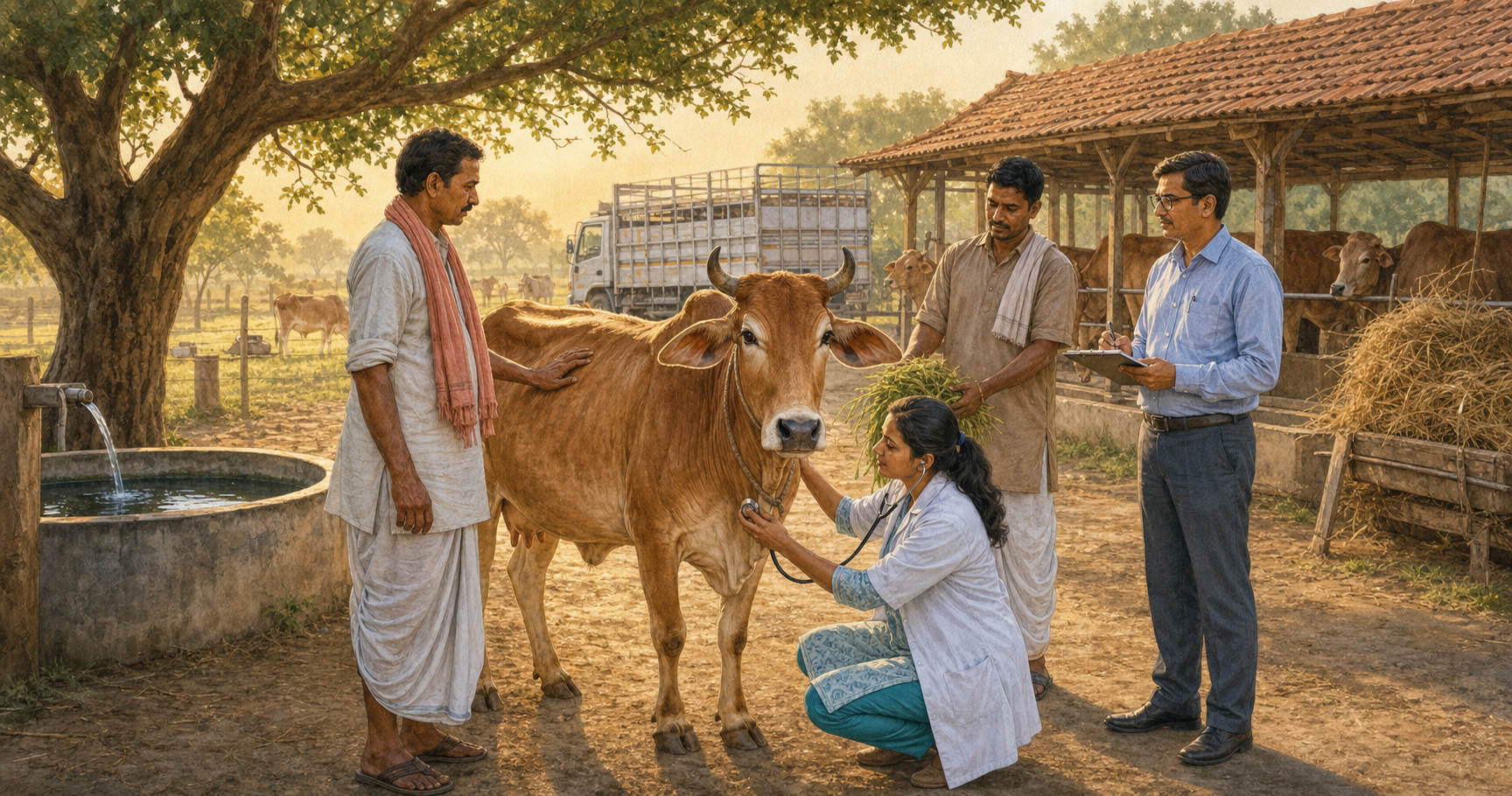
If you support gau raksha, the difficult question is no longer whether protecting the cow expresses dharma. It is whether a proposed rule improves an animal’s whole life without transferring an impossible burden to farmers, gaushalas, transporters, or public officials.
That is the practical test behind the Varanasi demand for an enforceable cow-slaughter ban in Uttar Pradesh and examination of a national beef-export ban. You should look beyond the prohibition itself and ask whether the policy provides care, funding, traceability, due process, and a workable trade transition.
Protect the animal’s whole life, not only its final moment
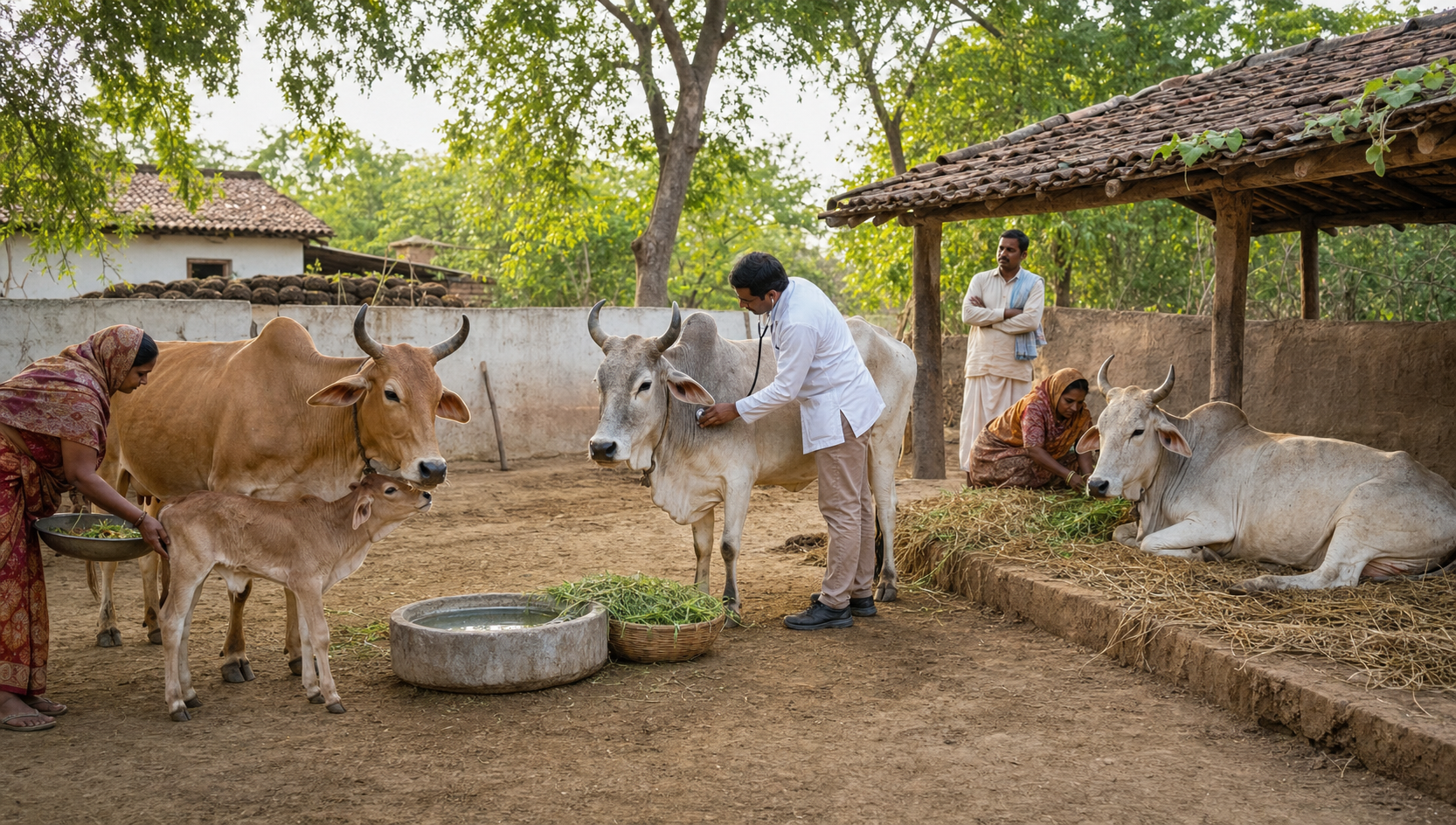
A ban addresses one form of harm. It does not automatically prevent hunger, untreated illness, abandonment, overcrowding, or distress during transport. A dharmic policy must therefore follow the animal from birth through productive life, old age, illness, and natural death.
Ahimsa is not passive sentiment. It asks which forms of avoidable suffering a policy removes and which new pressures it might create. Hindus, Buddhists, Jains, and Sikhs need not hold identical theological views to share a public language of restraint, stewardship, and responsibility toward living beings.
Before you endorse a cow-protection proposal, check whether it answers these operational questions:
- Who remains responsible for feeding and housing an animal when milk income declines or ends?
- Where may an owner lawfully transfer an animal that the household can no longer maintain?
- How will veterinary care reach farms and shelters before an illness becomes an emergency?
- What happens when a gaushala reaches safe capacity?
- How will natural deaths and the handling of remains be documented lawfully and respectfully?
If those answers are absent, the proposal protects an ideal at one point in the animal’s life while leaving the rest to chance. That is not complete gau raksha.
Put the cost of compassion into the policy
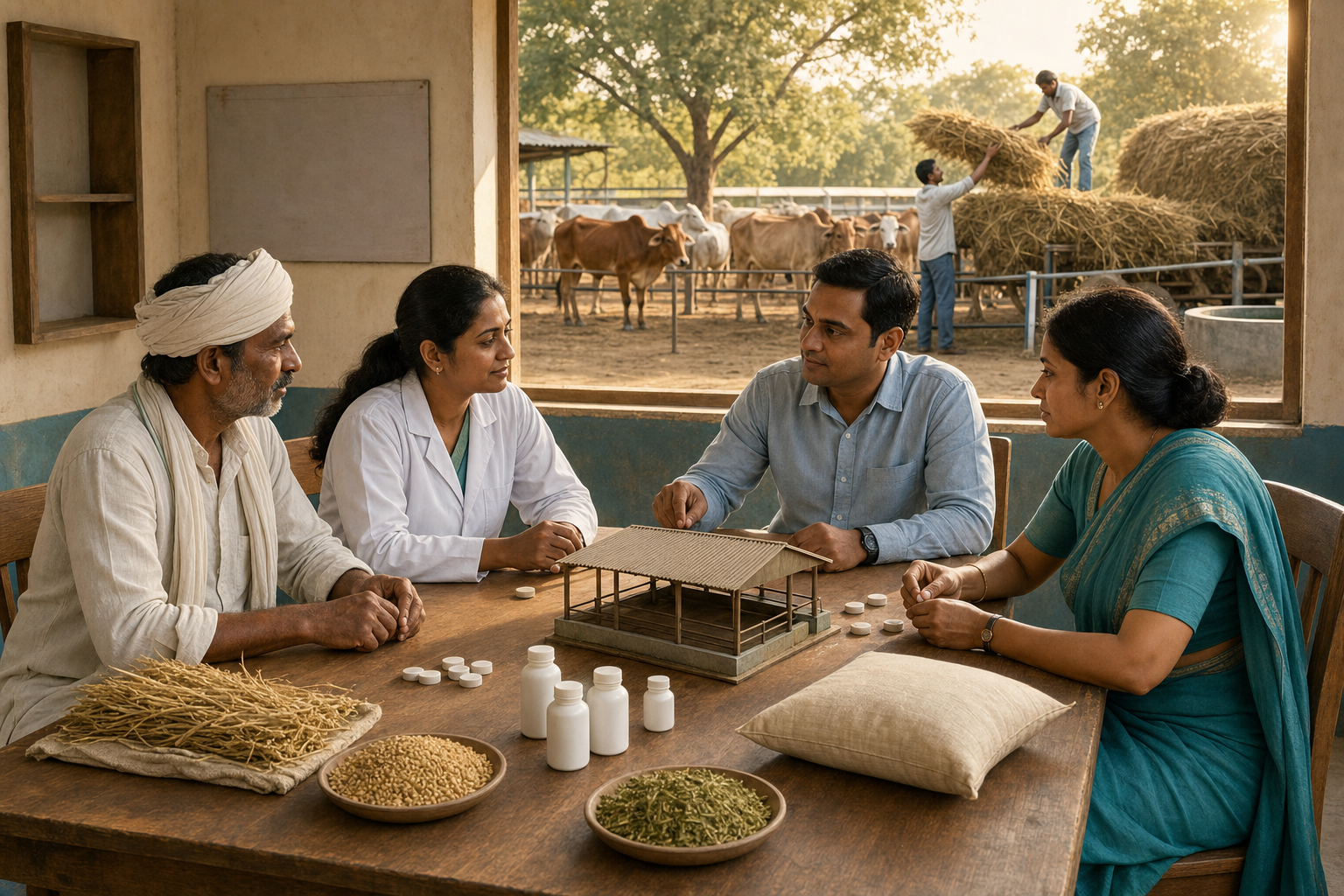
The daily cost of cattle care does not disappear when slaughter or sale is restricted. It moves to a farmer, a dairy cooperative, a family, a shelter, or the state. If lawmakers do not decide who carries that responsibility, the burden will fall on whoever has the least ability to refuse it.
This is why farmer viability and animal welfare belong in the same policy. A farmer facing feed, space, and veterinary costs needs a lawful and affordable path for an animal that no longer produces income. A gaushala needs predictable resources, trained care, realistic capacity limits, and scrutiny of how funds are used. Sustainable dairy incentives should reward long-term husbandry rather than measure success only by short-term production.
A serious reform process should assign a distinct job to each participant:
- Farmers and dairy cooperatives: identify actual care costs, seasonal pressures, and the points at which owners are most likely to need assistance.
- Gaushalas: disclose capacity, intake rules, care standards, veterinary access, funding needs, and what happens to every animal admitted.
- Veterinarians and animal-welfare specialists: define observable standards for nutrition, shelter, treatment, transport, and humane end-of-life care.
- Law-enforcement and logistics personnel: identify smuggling routes, documentation gaps, unsafe transport practices, and practical custody arrangements for intercepted animals.
- Trade and legal specialists: clarify the scope of restrictions, compliance duties, transition risks, and the division of administrative responsibility.
- Dharmic leaders: keep the moral purpose visible while insisting that compassion applies to animals, farmers, workers, officials, and accused citizens alike.
Funding should be tied to verified care rather than the mere existence of a shelter. Registration alone cannot show whether animals are fed, treated, protected from overcrowding, or tracked after admission. Public money requires auditable records and inspection focused on welfare outcomes.
Replace legal gray zones with precise, fair rules
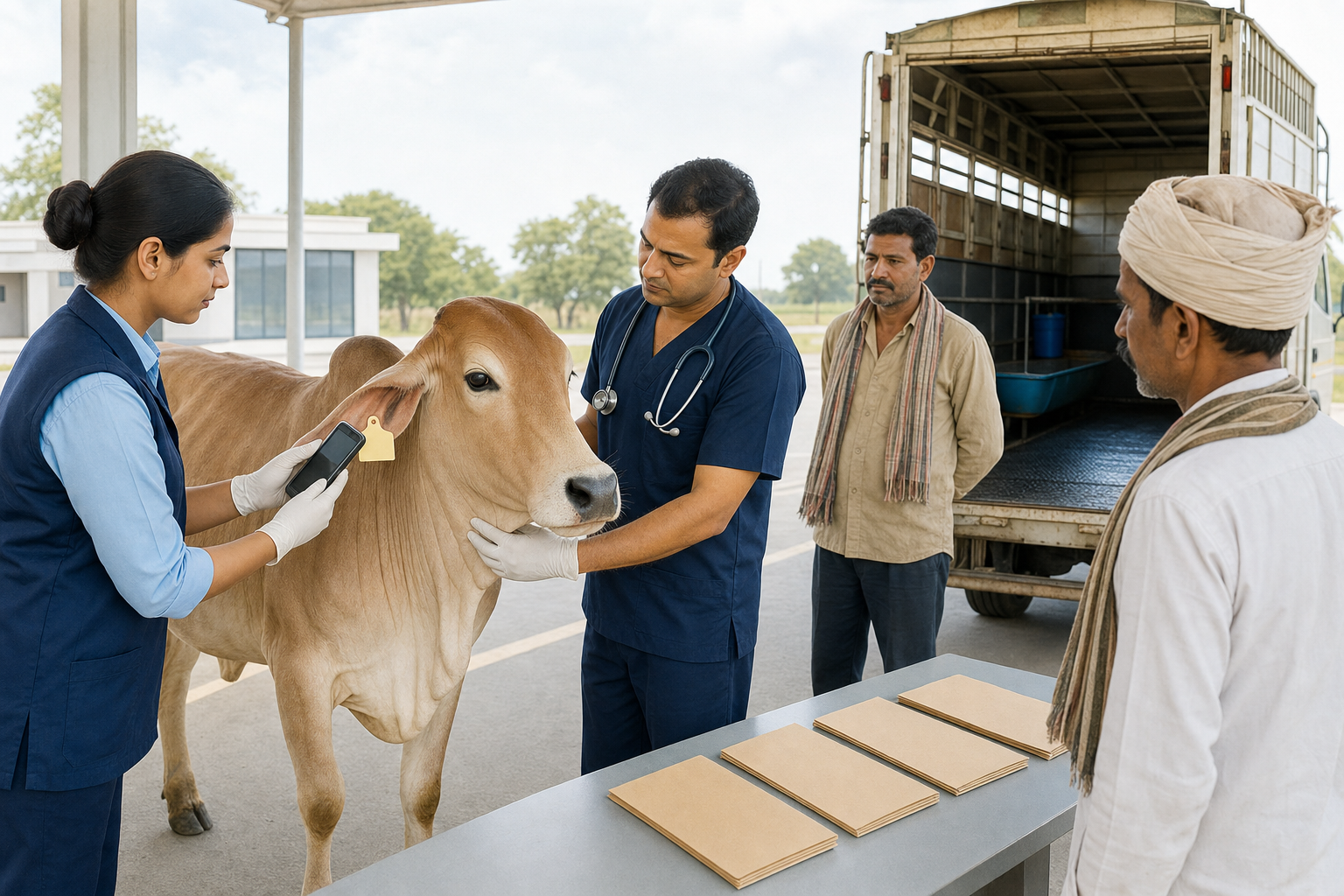
“Comprehensive ban” is a moral and political objective, not a complete legal instruction. The operative text must say exactly what is covered, who must comply, which authority enforces it, and how a disputed action will be reviewed.
Do not allow a proposal to switch casually among cow, cattle, calf, bull, buffalo, meat, and other animal-derived products. These terms cannot be treated as interchangeable in legal drafting. The rule must also distinguish slaughter, possession, sale, transport, transfer, processing, and international export. A person should be able to determine from the published text whether an act is prohibited and which documents demonstrate compliance.
The drafting checklist should cover:
- the animals, products, transactions, and territories within scope;
- the duties of owners, carriers, shelters, traders, officials, and other regulated parties;
- the documents or traceability records required at each transfer;
- the authority to inspect, stop transport, seize an animal, or begin proceedings;
- safe custody, veterinary examination, feeding costs, and final disposition after a seizure;
- the treatment of lawful exceptions, if any;
- notice, evidence, appeal, complaint, and correction procedures; and
- penalties that are clear enough to be applied consistently.
Because these choices can create criminal, civil, and financial consequences, the final language requires review by qualified legal professionals familiar with the relevant jurisdiction. Farmers, carriers, and traders should rely on the enacted official text and competent legal advice before making a transaction or transporting an animal; political speeches and social-media summaries are not safe substitutes.
Fair enforcement is part of cow protection, not a concession against it. Officers need verifiable records, documented inspections, receipts for seized property, proper animal custody, and a review mechanism when an error occurs. Public reporting should use aggregated information and reasoned outcomes rather than exposing unproven accusations.
You should also reject the idea that gau raksha authorizes private intimidation. If you suspect smuggling or cruelty, preserve lawful evidence and report it to the responsible authorities. Do not stop a vehicle, threaten a person, or attempt a private seizure; doing so can endanger people and animals while creating serious legal exposure. Humane governance must protect the animal from unlawful harm and the citizen from arbitrary accusation at the same time.
Reform trade without displacing cruelty into hidden channels

A state cow-slaughter rule and a national beef-export reform are connected, but they are not interchangeable. The first concerns conduct and enforcement within a state framework. The second reaches a wider trade chain involving origin records, aggregation, transport, processing, border controls, contracts, and livelihoods. Each needs its own legal authority, administrative plan, and measure of success.
The word “beef” is not an implementation plan. A national proposal must specify the animals and products it covers, the transactions treated as export, the agencies responsible for verification, and how officials will distinguish compliant goods from prohibited goods. Without that clarity, honest participants face uncertainty while deliberate evasion becomes harder to identify.
An ethical trade-reform sequence should proceed in this order:
- State the objective. Say whether the policy is intended to prevent slaughter, remove export demand, strengthen animal welfare, close a particular enforcement gap, or combine these aims. Each objective requires a different test of effectiveness.
- Define the scope. Publish precise definitions for covered animals, products, transactions, territories, and regulated parties.
- Map the affected chain. Identify where animals and products change hands, where records are created, and where responsibility can disappear between agencies.
- Build the transition. Give farmers, workers, cooperatives, shelters, transporters, and lawful businesses clear instructions and viable routes to compliance. Any treatment of existing stock or contracts must be resolved in the legal framework rather than improvised during enforcement.
- Verify outcomes. Use traceability, inspections, audits, and transparent case records to determine whether the reform reduces targeted harm instead of merely moving it elsewhere.
Where demand and price incentives remain after lawful channels close, evasion may become more attractive. The answer is not to abandon protection. It is to concentrate trained, accountable enforcement at identifiable supply-chain points while providing lawful alternatives for cattle owners and workers. Preventing smuggling requires useful records and coordinated administration, not only harsher rhetoric.
Communication matters as much as drafting. Government should publish a plain-language rulebook, the operative legal text, responsible offices, required documents, complaint channels, and the date on which each obligation takes effect. Predictable rules allow people to comply; ambiguity rewards rumor and selective enforcement.
Measure care, compliance, and public trust
Announcements cannot show whether cattle are safer. Uttar Pradesh can demonstrate national leadership only by publishing a baseline, setting visible milestones, and reporting outcomes on a fixed public schedule.
A useful public dashboard would track:
- registered gaushala capacity, actual occupancy, intake, transfer, and final disposition;
- animal-condition findings, veterinary access, treatment records, and mortality patterns;
- public funds received, the timing of disbursement, expenditure categories, and audit findings;
- animals intercepted in suspected smuggling, where they were housed, and what ultimately happened to them;
- traceability coverage and recurring points at which records fail;
- enforcement actions, complaints, appeals, corrected errors, and unresolved custody problems; and
- the effects of trade changes on farmers, cooperatives, shelters, workers, and lawful businesses.
The wrong metric can conceal failure. A rising number of seizures, for example, says nothing by itself about animal welfare, accurate enforcement, or the final result of a case. Officials should connect every enforcement count to animal condition, lawful custody, adjudication, and final disposition.
Oversight should combine veterinary inspection, financial audit, legal review, and public feedback. A shelter can pass an accounting check while failing animals, just as a well-run shelter can be damaged by delayed funds. Looking at only one record produces false confidence.
Key takeaways
- Judge gau raksha by the animal’s entire life, including care after its productive years.
- Pair every restriction with a funded, lawful route for farmers and owners who can no longer maintain an animal.
- Demand exact definitions, documented authority, safe custody procedures, and meaningful appeal rights.
- Treat state slaughter regulation and national export reform as related but distinct administrative tasks.
- Use traceability and accountable public enforcement; never substitute private coercion for law.
- Measure animal welfare and final outcomes, not announcements, registrations, or seizures alone.
If you are deciding whether to support a proposal, ask its sponsor for the draft text, care budget, transition plan, enforcement protocol, and public reporting schedule. If one is missing, press to complete the design rather than abandon the moral aim. Gau raksha becomes credible statecraft when compassion survives every handoff – from farm to shelter, checkpoint to court, and market to ministry.
References
