
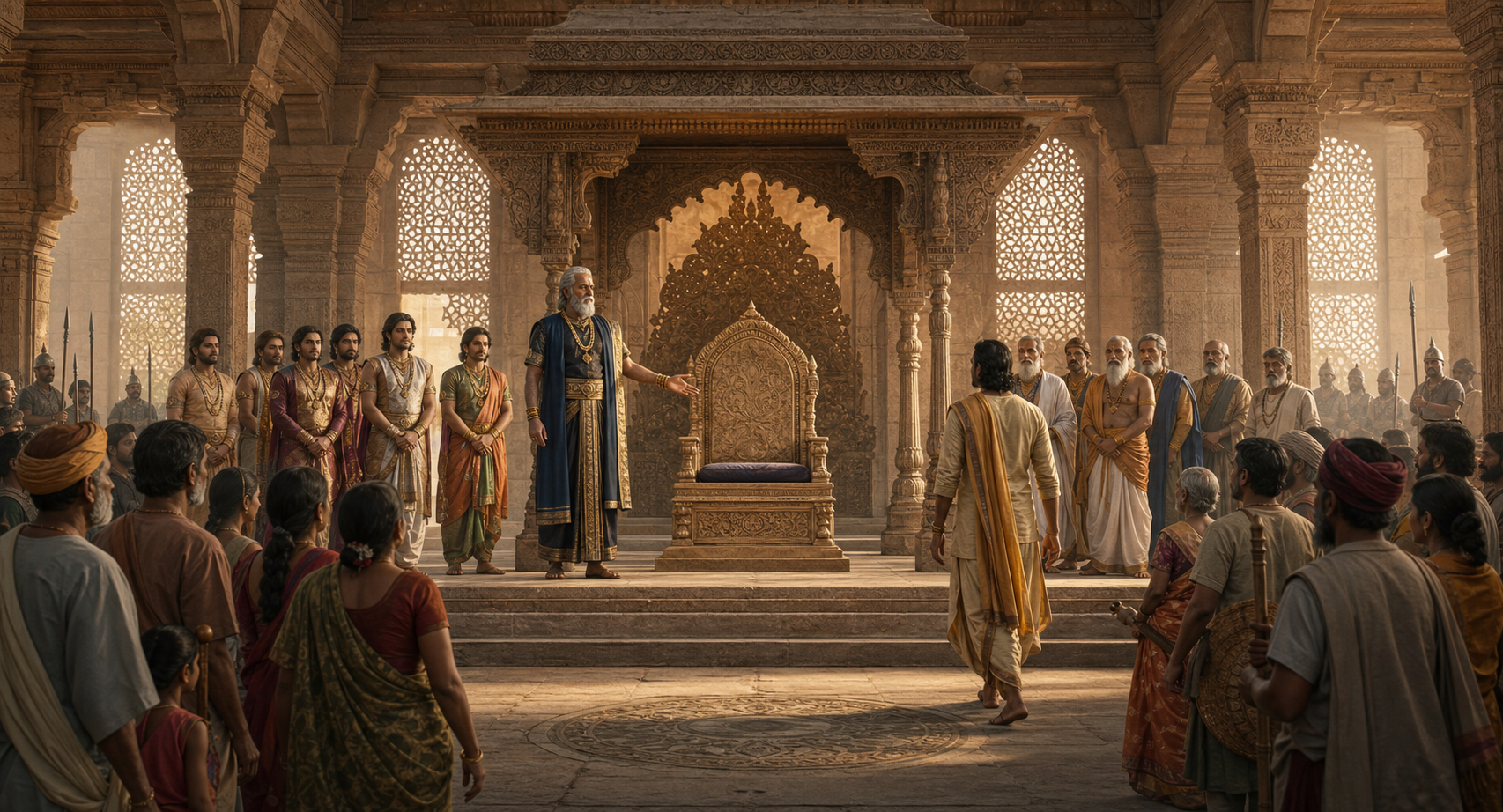
If you are asking whether Bharata’s legacy supports hereditary rule at any cost, Vitatha gives a sharp answer: descent may identify a candidate, but it cannot manufacture fitness. A position carrying public duty cannot be treated as private property simply because a family has held it before.
That is why the remembered transition from Bharata to Vitatha still matters. It places the obligations of the throne above the comfort of automatic inheritance. For you, the useful question is not whether an ancient royal succession can be copied literally. It is whether the same standard can expose entitlement, nepotism, and weak leadership in institutions that claim to serve a larger cause.
The succession question Vitatha forces us to face
Chakravartin Bharata is remembered as the son of Dushyanta and Shakuntala, a ruler distinguished by valour, dharmic conduct, and a vast realm. The association of Bharatavarsha with Bharata gives his succession more than family significance: the conduct of the ruler becomes part of the civilisation’s account of itself.
At the centre of the Vitatha episode is a conflict between two kinds of continuity. One is biological: the next generation inherits because it descends from the previous one. The other is dharmic: the person entrusted with authority must be capable of carrying its duties. The memory of Vitatha as Bharata’s adopted and worthy heir makes the second claim decisive.
The point is easily overstated. This episode does not prove that every kingdom in ancient Bharat followed a uniform meritocratic constitution. It does not describe a competitive examination, an election, or an open appointment process in the modern sense. Nor does it establish that ancestry had no place in royal life. Its narrower and more defensible lesson is also the stronger one: ancestry alone was not treated as sufficient moral justification for succession.
That distinction protects you from turning a meaningful Dharmic teaching into a slogan. Vitatha should not be invoked to claim that all ancient succession was merit-based. He should be invoked to show that inherited status could be judged against a standard higher than itself.
Merit is fitness for duty, not prestige with a new label
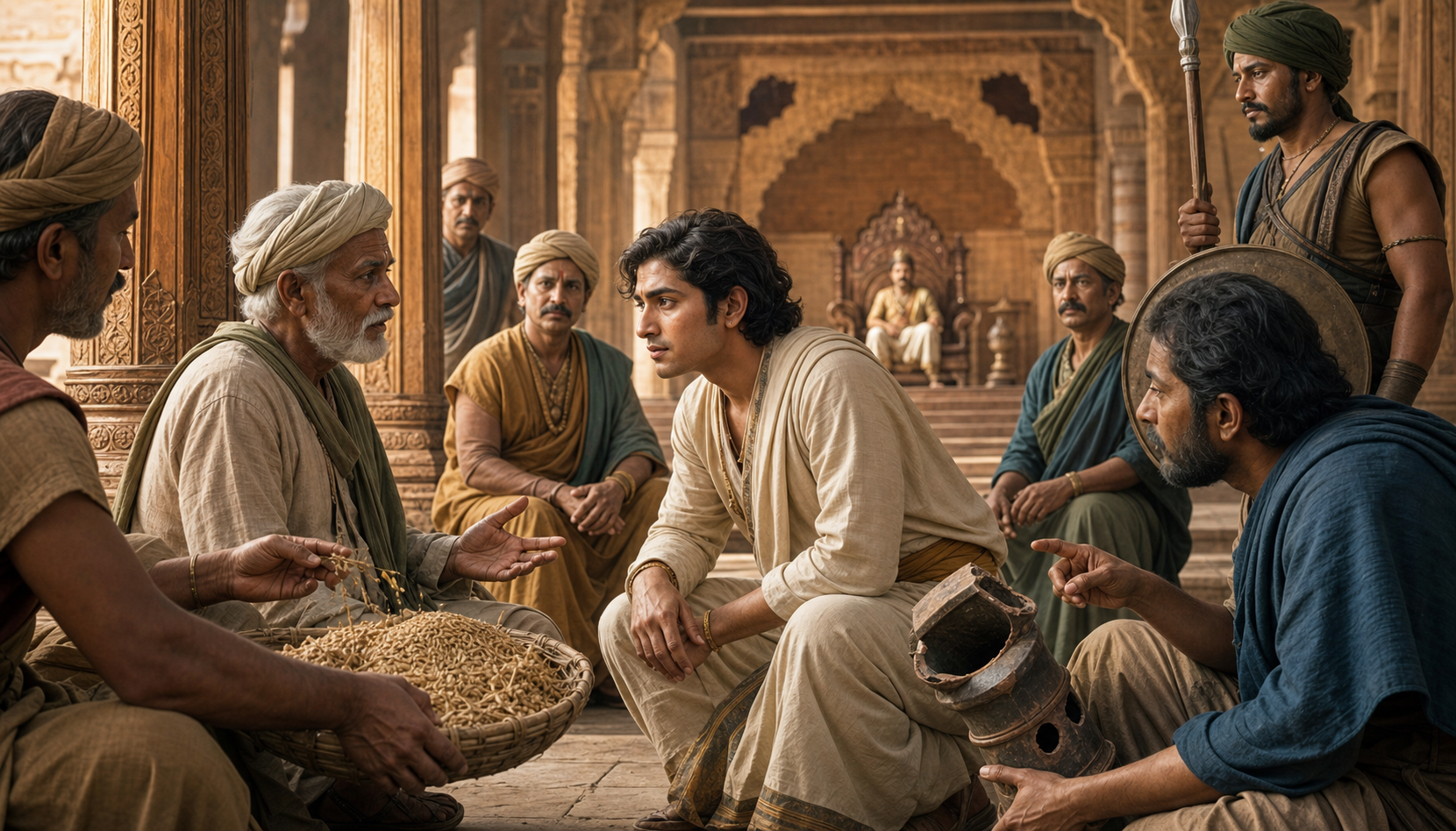
The word merit can conceal as much as it reveals. In modern speech, it may mean test scores, professional credentials, popularity, wealth, eloquence, or the approval of whoever controls the appointment. None of those, by itself, establishes worthiness for a role defined by dharma.
In a succession governed by rajadharma, the relevant question is fitness to bear the burden of rule. Authority is not merely an honour received by the successor. It is an obligation owed to everyone who will live under the successor’s decisions. That changes the direction of evaluation: you begin with the duties of the office, not the desires of the claimant.
If you want to use Bharata’s choice as a practical standard, ask four questions:
- Can the candidate actually perform the role’s essential duties, or is the claim resting mainly on ancestry, access, or reputation?
- Has the candidate shown judgement and restraint when personal interest conflicts with institutional duty?
- Will the candidate preserve what is worth preserving while correcting what has become weak or unjust?
- Can the selection be defended in terms that apply equally to a favoured candidate and an unfavoured one?
These questions separate qualification from preference. A person raised within a family or tradition may possess valuable preparation, memory, and formation. That can be evidence of fitness. It cannot be a substitute for evidence. Lineage may explain why someone deserves consideration; it does not settle why that person deserves command.
This is also why merit must not become a decorative word attached to a predetermined result. If selectors announce that the chosen person is worthy but cannot name the duties, evidence, or standard behind that judgement, inherited entitlement has merely changed its vocabulary.
Turn Bharata’s principle into a selection rule
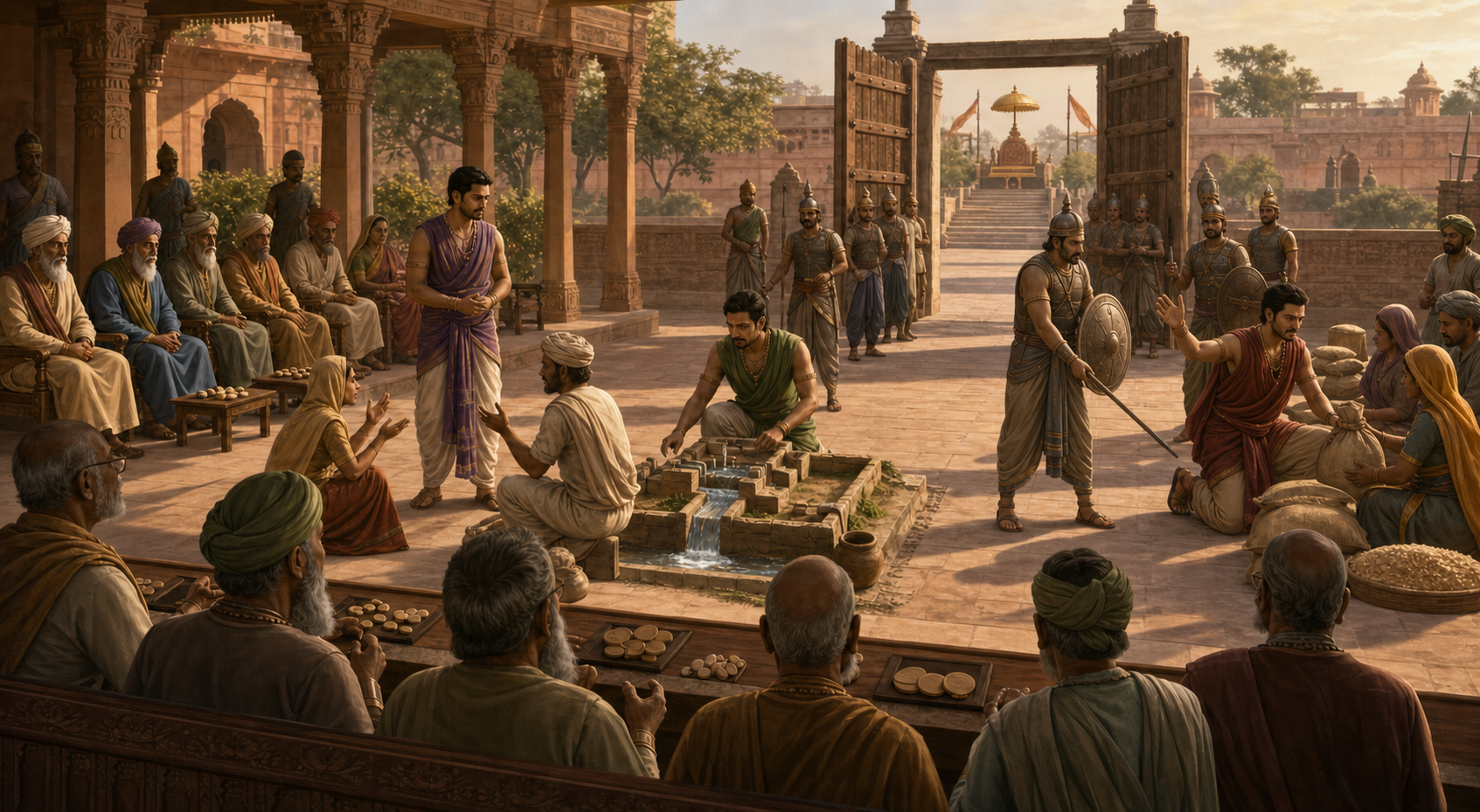
The Vitatha lesson becomes useful when a community has to choose an actual successor: the next head of a cultural organisation, trustee of a temple institution, leader of a family enterprise, custodian of a teaching lineage, or bearer of a long-running public responsibility. The settings differ, but the temptation is similar. People start debating names before agreeing on what the role requires.
Reverse that order. A workable succession process can follow five steps:
- Write down the office’s duties before discussing candidates. Include the work that consumes time, the decisions that carry consequence, and the obligations that cannot be delegated.
- Separate eligibility from selection. Eligibility determines who may be considered; selection determines who is best fitted among those candidates. Family connection, seniority, or initiation may be relevant to eligibility without deciding the final choice.
- Ask for evidence from past conduct. Look for decisions made under pressure, treatment of less powerful people, stewardship of shared resources, and willingness to accept correction.
- Record the reason for the choice. The explanation should connect the candidate’s demonstrated qualities to the written duties of the office. If the reasoning cannot survive outside a closed room, the standard is probably too vague.
- Prepare more than one capable person. A succession plan that depends on a single favourite remains fragile, even when that favourite is competent. Training several people protects the institution from illness, withdrawal, conflict, and unforeseen incapacity.
The adoption at the heart of Vitatha’s place in Bharata’s lineage adds another important insight: continuity need not mean biological duplication. A tradition can consciously recognise, form, and entrust a bearer who is capable of preserving its responsibilities.
That principle should operate within the legitimate rules of the institution concerned. An ancient royal memory cannot override a modern constitution, an organisation’s governing documents, a trust’s legal duties, or the rights of members. Its role is to sharpen the moral standard used inside a lawful process, not to replace the process with someone’s personal claim to superior judgement.
Four misreadings that empty the story of its force

The first error is to turn one remembered succession into a sweeping claim that ancient Bharat was always meritocratic. That is more than the episode can establish. A tradition is not honoured by making it carry historical claims it does not need in order to teach its lesson.
The second error is to read the episode as hostility to family. The problem is not kinship. The problem is automatic entitlement. A relative who is genuinely prepared should not be disqualified merely for being related, just as an unrelated candidate should not be declared superior merely for appearing independent. Apply the same duties and the same evidentiary test to both.
The third error is to romanticise the selector’s discretion. A ruler who can set aside an unsuitable biological claim can also favour an unsuitable outsider. The identity of the chosen person does not prove the fairness of the choice. Worthiness needs stated criteria, observable conduct, and some means of accountability.
The fourth error is selective anti-nepotism. People often condemn inheritance when it benefits a rival and defend continuity when it benefits their own family, faction, or guru-circle. Bharata’s standard becomes demanding only when you apply it to the candidate you already want. If your preferred person would fail the test you impose on others, the test is not dharmic; it is tactical.
This is the deeper discipline in Bharata’s legacy. The worthiness test is directed not only at the prospective successor but also at the person making the choice. The selector must be willing to place the entrusted order above affection, pride, fear, and the desire to perpetuate a private name.
Key takeaways
- Vitatha represents a succession in which adopted worthiness takes priority over automatic biological entitlement.
- The episode offers a moral principle, not proof that every ancient Bharatiya kingdom used one uniform merit-based system.
- Dharmic merit begins with fitness for duty: capacity, judgement, restraint, stewardship, and accountability matter more than prestige alone.
- Lineage can supply preparation and institutional memory, but it remains evidence to examine rather than a verdict to obey.
- A sound succession process defines the office first, evaluates conduct second, records its reasoning, and prepares more than one capable successor.
- The standard must be applied most rigorously to the candidate you personally favour.
When you next face a succession dispute, take one sheet of paper and divide it into two columns. In the first, write the non-negotiable duties of the position. In the second, write verifiable evidence that each candidate can fulfil them. Leave ancestry, personal affection, and factional loyalty out until that comparison is complete. You may still choose someone from the established line, but you will know whether you are preserving a living responsibility or merely protecting an inherited claim.
That is a practical way to carry Bharata’s remembered preference for worthiness over bloodline into the present. The legacy of a great name is secured not by giving authority to whoever bears it next, but by ensuring that whoever receives authority is equal to its duties.
References
