

You have a decision in front of you, but neither choice feels clean. One part of you wants to act now simply to end the tension. Another part wants to wait until certainty arrives. Neither impulse, by itself, tells you what dharma requires.
The useful question is more precise: is your next honest action a decision, a protective step, or an intentional pause? When no clear duty is being neglected, deliberate waiting can become sadhana. It trains attention, restrains ahankara, and gives reality time to reveal what agitation keeps obscuring.
Waiting becomes a practice when it has a container
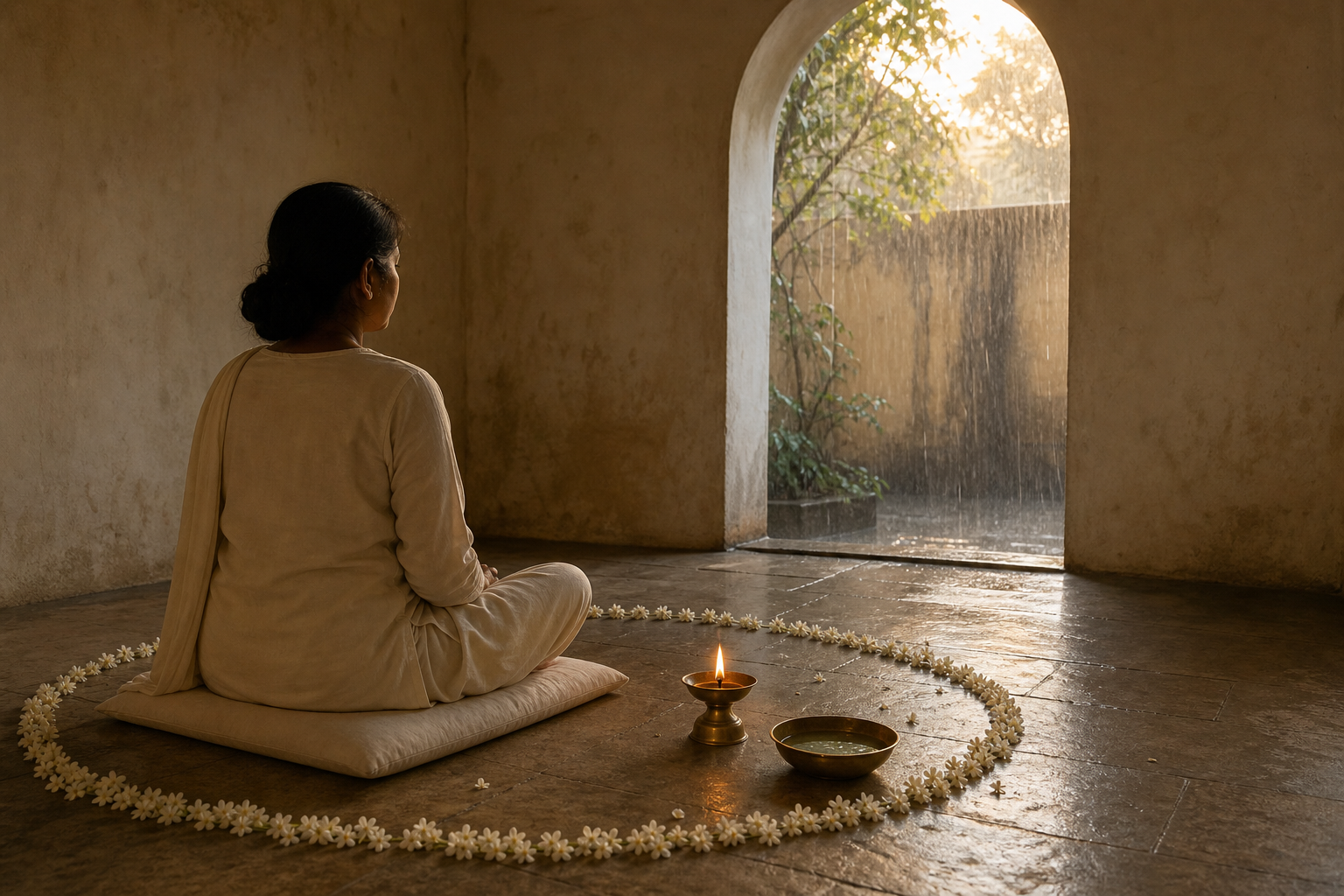
Passive waiting says, perhaps something will happen. Deliberate waiting says, this matter is not clear enough for a final decision, so I will remain attentive without forcing an answer. The difference lies in discipline, not duration.
The mind often prefers an imperfect decision to the discomfort of not knowing. A decision seems to restore control, even when it is poorly timed. Deliberate waiting interrupts that bargain. You stop using action as a sedative for uncertainty.
Give the pause three boundaries: a precise question, a standard of conduct while you wait, and a condition that will reopen the decision. Without those boundaries, waiting easily becomes drift.
- The question: State the actual decision in one sentence. If you cannot name it, you are probably wrestling with a cloud of related fears rather than one choice.
- The conduct: Decide what duties continue during the pause. You may postpone a commitment without neglecting your work, misleading another person, or abandoning ordinary responsibilities.
- The review condition: Name what will bring you back to the decision: new information, a promised conversation, the completion of an existing obligation, or the settling of a strong emotional reaction.
This uncertain threshold is sometimes called a liminal space between possibilities. Its value is not that it guarantees the answer you want. Its value is that it lets your perception adjust before you choose a direction.
That makes waiting an exercise in non-grasping. You are not bargaining with the universe for a preferred result. You are consenting to see more clearly, including the possibility that the right answer will disappoint your present desire.
Before you wait, separate clear duty from felt pressure

A spiritual name does not make avoidance virtuous. A Dharmic practice must remain answerable to conduct. If a responsibility is already clear, waiting for a special feeling can become a way of refusing it.
Before postponing a decision, ask three direct questions:
<!– wp:list {