
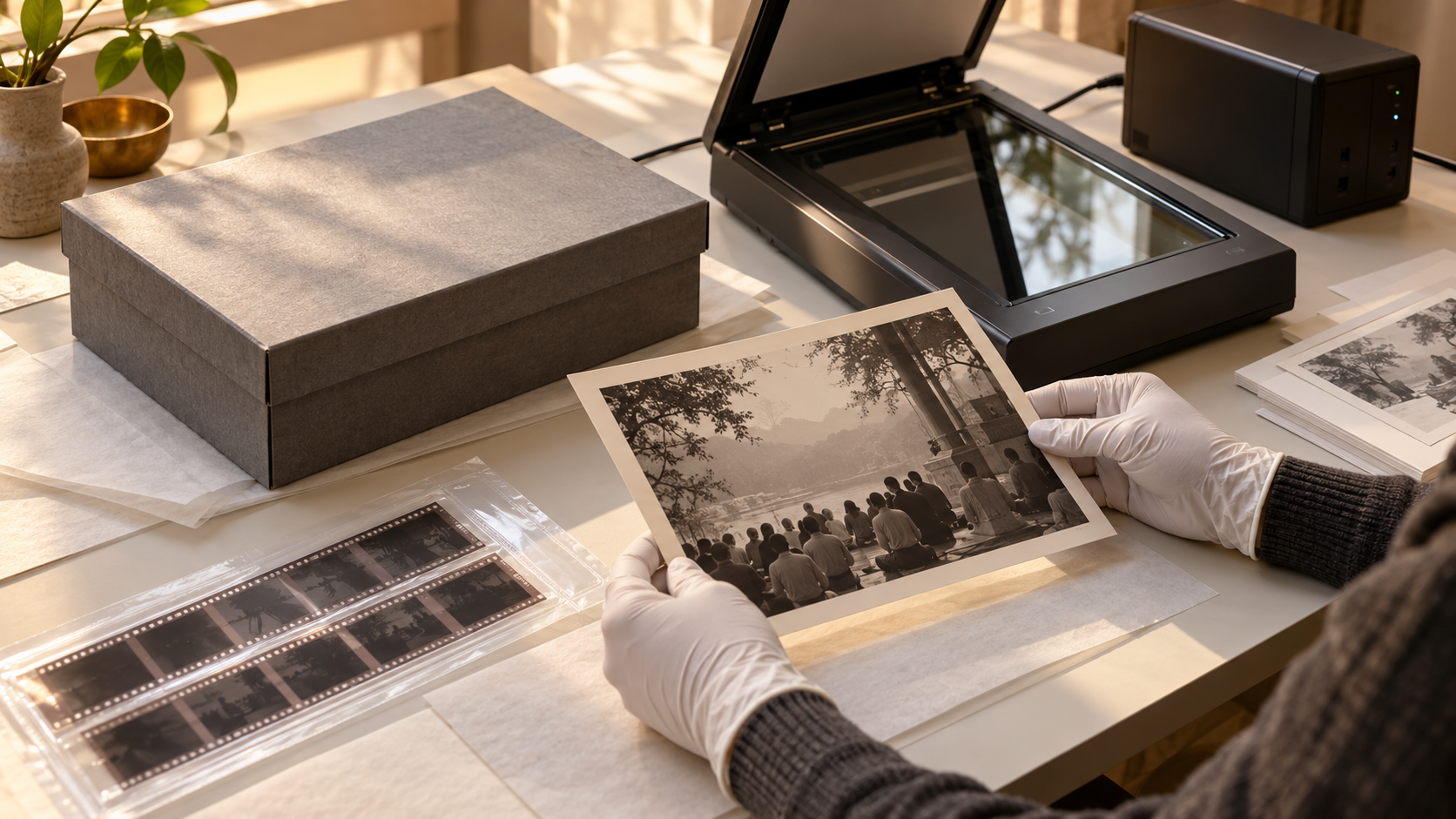
If you are deciding whether to donate, volunteer, or trust that digitisation has already solved the problem, begin with one distinction: making an image visible is not the same as preserving it.
Srila Prabhupada’s photographic legacy survives through original materials, catalogue records, protective enclosures, controlled storage, usable copies, and infrastructure that continues working during an outage. Miss one link and the rest become less useful. Here is how you can recognise a complete preservation plan and direct your support where it will do lasting work.
The collection is a chain, not a stack of photographs
The Bhaktivedanta photographic collection grew from a few black-and-white pictures in a simple file cabinet into a much larger body of black-and-white and colour material. Much of it was produced for Back to Godhead, while photographs and art transparencies also served books and other BBT publications. That publishing history matters because the archive contains more than familiar finished pictures. It also holds the physical materials and contextual records behind their use.
A useful preservation plan therefore has five linked layers. Spending heavily on one layer does not compensate for neglecting another.
| Preservation layer | What can be lost | Practical control |
|---|---|---|
| Identity | Names, dates, places, events, and publication history | Give each object a stable identifier and connect it to catalogue and logbook records |
| Physical housing | Protection from abrasion, handling, and damaged old enclosures | Rehouse the object without separating it from its label or identifier |
| Environment | The long-term stability of the photographic material | Match controlled storage to the particular kind of film |
| Access | The ability to study and publish an image without repeatedly handling the original | Create and manage appropriate access copies while retaining the original |
| Continuity | Temperature and humidity control during an interruption | Provide automatic backup power, fuel, monitoring, and a response plan |
Scanning addresses the access layer. It does not automatically identify an image, repair a damaged enclosure, protect the original film, or keep cold storage running. For a dharmic archive, reverence is not a substitute for method. Reverence is the reason to insist on method.
Cataloguing protects meaning before storage protects film
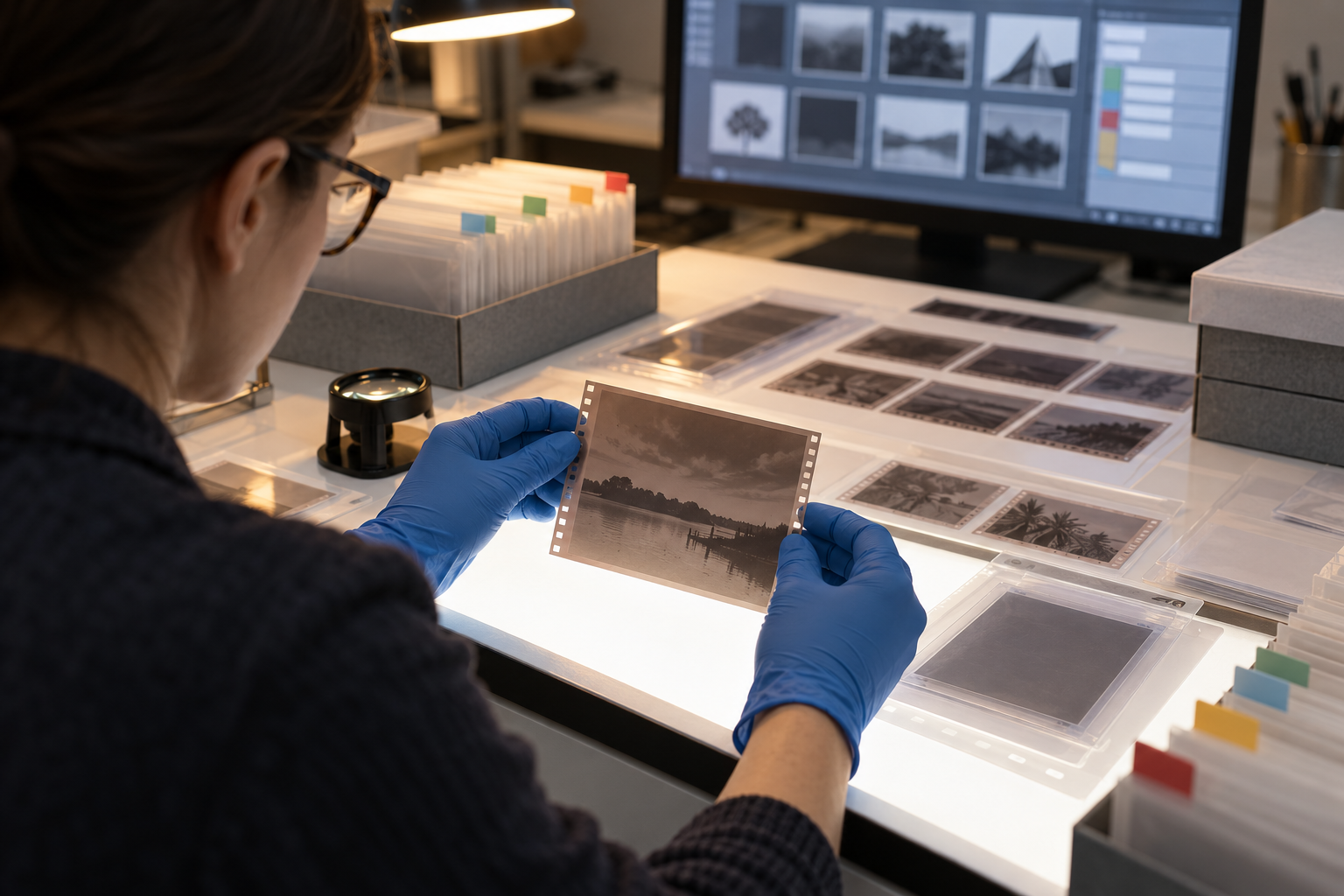
The collection includes logbooks carrying metadata for portions of the photographic holdings. Those records may be as important to interpretation as the image itself. A photograph can remain visually beautiful after its names, place, date, and purpose have been forgotten, but its value as historical evidence has then narrowed sharply.
If you are helping with a temple, publisher, or community collection, use this order of work:
- Assign a stable identifier to the object. Put the identifier on its enclosure or approved accompanying record, not casually on the photographic material.
- Copy existing captions, labels, spellings, and annotations before changing the housing. Do not silently correct an old label; preserve the original wording and add a separate clarification.
- Record the useful fields: photographer if known, people shown, place, event, date or date range, photographic format, condition, publication use, credit information, and physical storage location.
- Connect the object to every relevant logbook entry and publication record. If the image appeared in a magazine or book, record enough information to find that appearance again.
- Mark uncertainty honestly. Use terms such as “unidentified,” “possible,” or “date range” instead of converting a plausible memory into a settled fact.
Identification sessions with devotees who remember early people and events can recover valuable context, but memory should enter the catalogue as evidence with a contributor’s name, date, and confidence level. If two identifications conflict, retain both until better evidence resolves them. The goal is not to make every record look complete; it is to keep later researchers from mistaking confidence for certainty.
Create a working copy of fragile or unique catalogue records as well. That copy helps staff search without repeatedly handling the original logbook, but it should remain visibly connected to the authoritative record and its corrections.
Match storage and handling to the photographic material
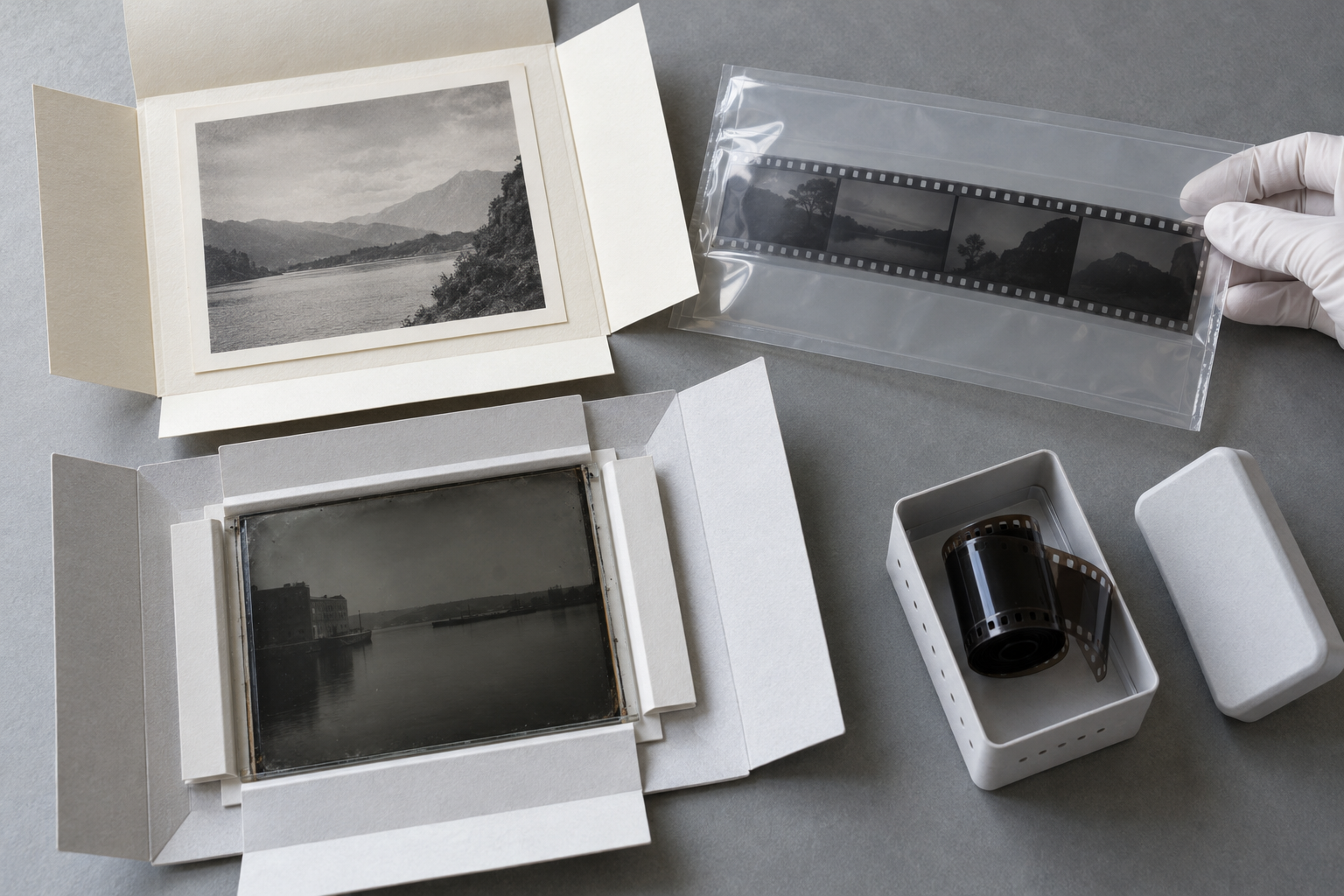
There is no honest one-temperature prescription for this collection. Different kinds of film require conditions ranging from cool storage to freezing. Identifying the material must therefore come before choosing the storage environment.
Housing is a separate decision. Art transparencies used in BBT books have been moved from worn, dog-eared holders into new sleeves. Rehousing can reduce direct handling and replace failing protection, but it must not break the connection among the object, its old label, its catalogue entry, and its new location.
Do not take the phrase “freezing film” as an instruction to place unidentified photographs in a household freezer. The film type, enclosure, packaging, moisture control, and retrieval procedure all matter. A poorly planned freeze-and-thaw cycle can create a new preservation problem. Have a qualified photographic conservator or archivist establish the procedure before cold storage begins.
A sound handling workflow should answer four questions before an original moves:
- Has the photographic format and its present condition been identified?
- Will every caption, number, and other contextual clue remain linked during rehousing?
- Is the new enclosure suitable for the material and the intended storage environment?
- Is there a controlled procedure for bringing cold material to the access area before its package is opened?
Digitisation belongs after those questions, not in place of them. Keep a high-quality master copy unchanged, make separate derivatives for web or routine publication, maintain more than one managed copy, and preserve the physical original. A digital file increases access, but it also creates a new collection that needs naming, storage, backup, and future management.
Backup power is part of the preservation system
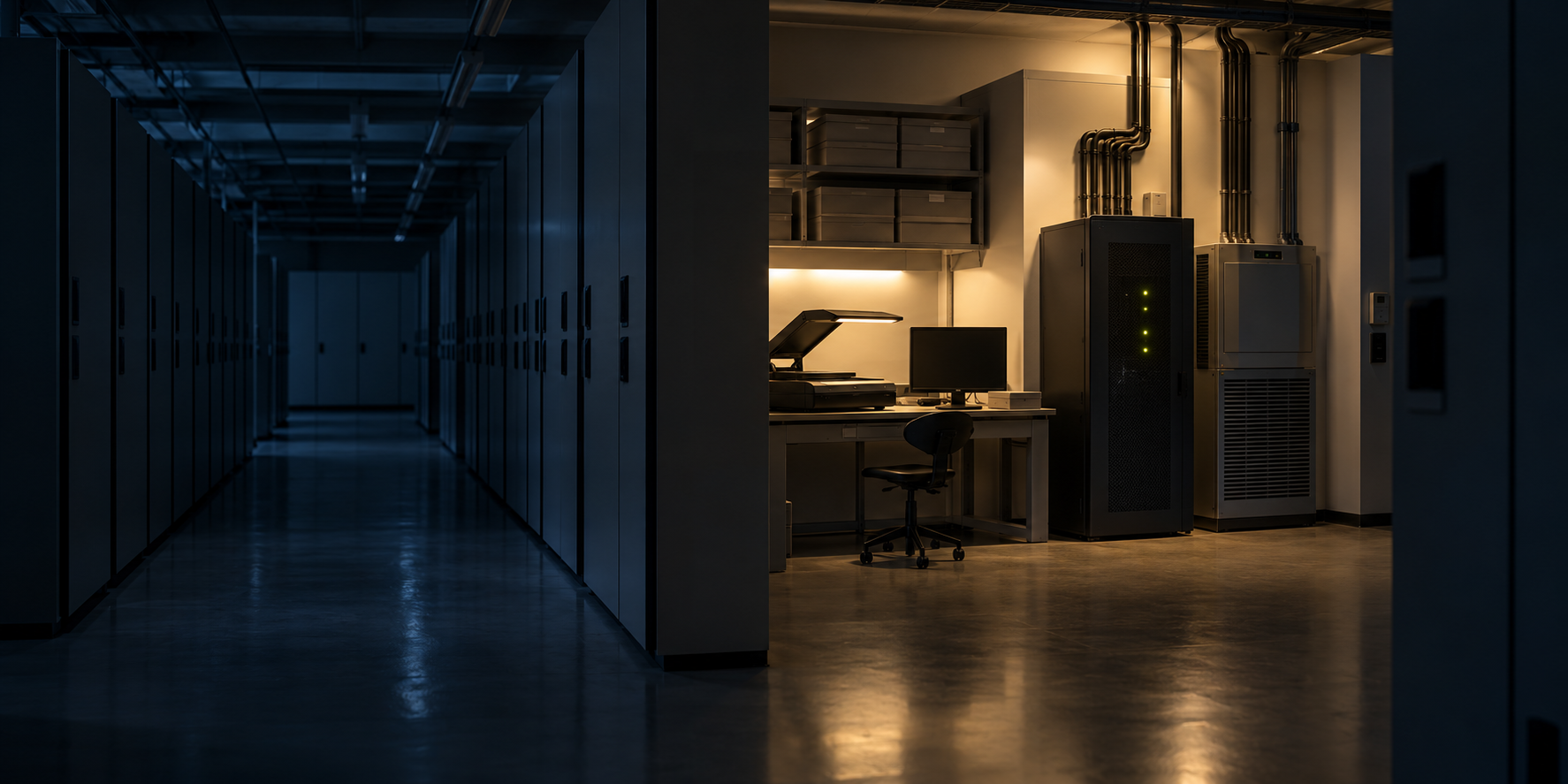
In October 2026, after installing a new commercial freezer and refrigerator for original images of Srila Prabhupada and early ISKCON, the Bhaktivedanta Archives identified a backup generator as the next requirement for maintaining temperature and humidity control during an outage. This is not an administrative extra. Once preservation depends on powered environmental equipment, power continuity becomes part of the archive itself.
The planned arrangement is specific: a 200-amp SE-rated automatic transfer switch would disengage the main supply and allow the generator to take over, while the generator would draw propane from an already installed 500-gallon tank. Each component answers a different failure point. The refrigerator and freezer create the environment; the transfer switch changes the power path; the generator supplies electricity; and the propane tank supplies fuel.
If you are considering financial support, do not ask only, “Has a generator been purchased?” Ask whether the whole continuity chain is ready:
- Is backup-power funding still the current priority, or has the need changed since October 2026?
- Does the funded work include the transfer switch, installation, and integration with the storage equipment?
- How will responsible staff be alerted if power, temperature, humidity, or the storage equipment falls outside its intended condition?
- Who will test the changeover, maintain the generator, and verify that usable fuel is available?
These questions are not distrustful. They distinguish an equipment purchase from a functioning preservation system. A complete gift should close a defined risk, not merely add a machine to the premises.
Key takeaways: five questions to ask before you help
- Can every original be found through a stable identifier, catalogue record, and exact storage location?
- Are logbook entries, old captions, and magazine or book appearances connected to the corresponding image?
- Has the kind of film been identified before anyone selects cool or frozen storage?
- Are damaged enclosures being replaced without losing labels, sequence, or provenance?
- Can temperature and humidity control continue automatically through a power interruption?
If you oversee a small temple or community collection, test these questions on one shelf before launching a large scanning project. Inventory first, preserve existing labels, and do not freeze unidentified material yourself. A small, reliable catalogue is a stronger beginning than thousands of files whose originals and identities can no longer be traced.
If you want to support the Bhaktivedanta Archives, first confirm its current priority. The documented immediate requirement in October 2026 was backup power for the new environmental storage. If that gap remains, support aimed at the complete continuity system can protect not just one famous photograph but the controlled conditions on which the collection depends. If you volunteer, offer disciplined work such as label transcription, catalogue reconciliation, or matching photographs to known publications under the archive’s own procedures.
The next useful act is simple: ask which link in the preservation chain is weakest now, and help close that link without bypassing professional archival care.
References
- Dandavats – Bhaktivedanta Photo Archives Explained
- Dandavats – Latest Newsletter, October 2026, from the Bhaktivedanta Archives

Leave a Reply
You must be logged in to post a comment.