

You may want Hindu cinema that strengthens your connection to dharma, yet still hesitate when a film advertises itself with saints, temples or epic imagery. Reverence matters, but reverence alone cannot tell you whether a story has anything spiritually serious to say.
If you are deciding what deserves your ticket, family viewing night or community discussion, use a harder test: does the story turn dharmic values into choices with costs, and does it help you see another person’s dignity more clearly? Sant Tukaram gives us a useful case through which to apply that test.
Key takeaways
- Religious symbols identify a film’s world; difficult choices reveal its spiritual philosophy.
- A saint’s household should not disappear behind his halo. Look for the labour, convictions and agency of the people around him.
- Cultural authenticity depends on an inhabited moral and social world, not costumes and devotional language alone.
- A biographical drama can open the door to history, but it should not become your only evidence for historical claims.
- The most useful question after a spiritual film is not whether it felt uplifting, but what it asks you to notice or do differently.
Dharma has to become a difficult choice
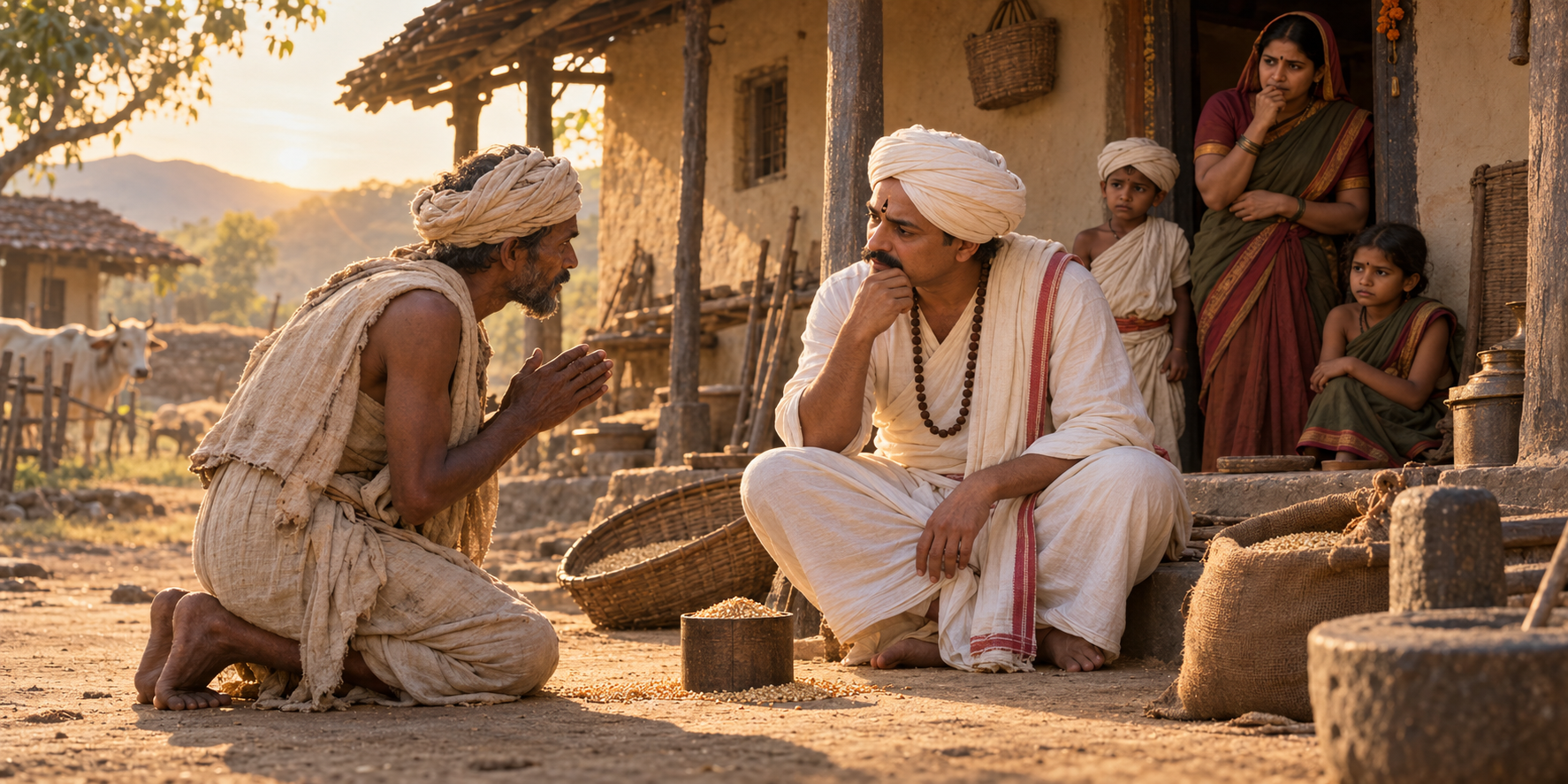
A saint can be made flawless on screen. That may make him easy to venerate, but it often makes him harder to learn from. If every decision is obvious, every opponent is malicious and every sacrifice arrives without a human cost, the film has replaced moral drama with an illustrated tribute.
Meaningful spiritual cinema places a value under pressure. Compassion has to survive insult. Equality has to operate when hierarchy offers an advantage. Devotion has to shape conduct toward people who are inconvenient, excluded or easy to ignore. The viewer should be able to see not only what a character professes, but what that profession makes him risk.
That is why it matters that the cinematic account of Sant Tukaram binds devotion to compassion, equality and opposition to social discrimination. These are not separate themes added to make an old life appear contemporary. Within the film’s moral argument, devotion becomes credible through its consequences for human relationships.
Use a simple removal test while watching. Imagine that the temple bells, sacred clothing, devotional music and familiar names have been removed. Is there still a recognisably dharmic struggle involving duty, self-mastery, compassion, truth or the dignity of another being? If nothing remains except a generic victory story, the spiritual imagery may be decorative.
Then apply the test in reverse. Could the conflict be moved into any setting without losing anything important? If so, the film may have made its message so generic that the particular tradition no longer contributes to it. Good Hindu cinema needs both halves: a moral question with universal force and a civilizational setting that changes how the question is understood.
Pay special attention to minor characters. A film cannot convincingly affirm divinity within every individual while giving inner life only to the saint. Notice who receives patience, who is permitted to speak, whose suffering changes the protagonist and whose presence merely decorates the saint’s greatness. The camera’s distribution of dignity is part of the teaching.
Avali Jijabai provides the household test
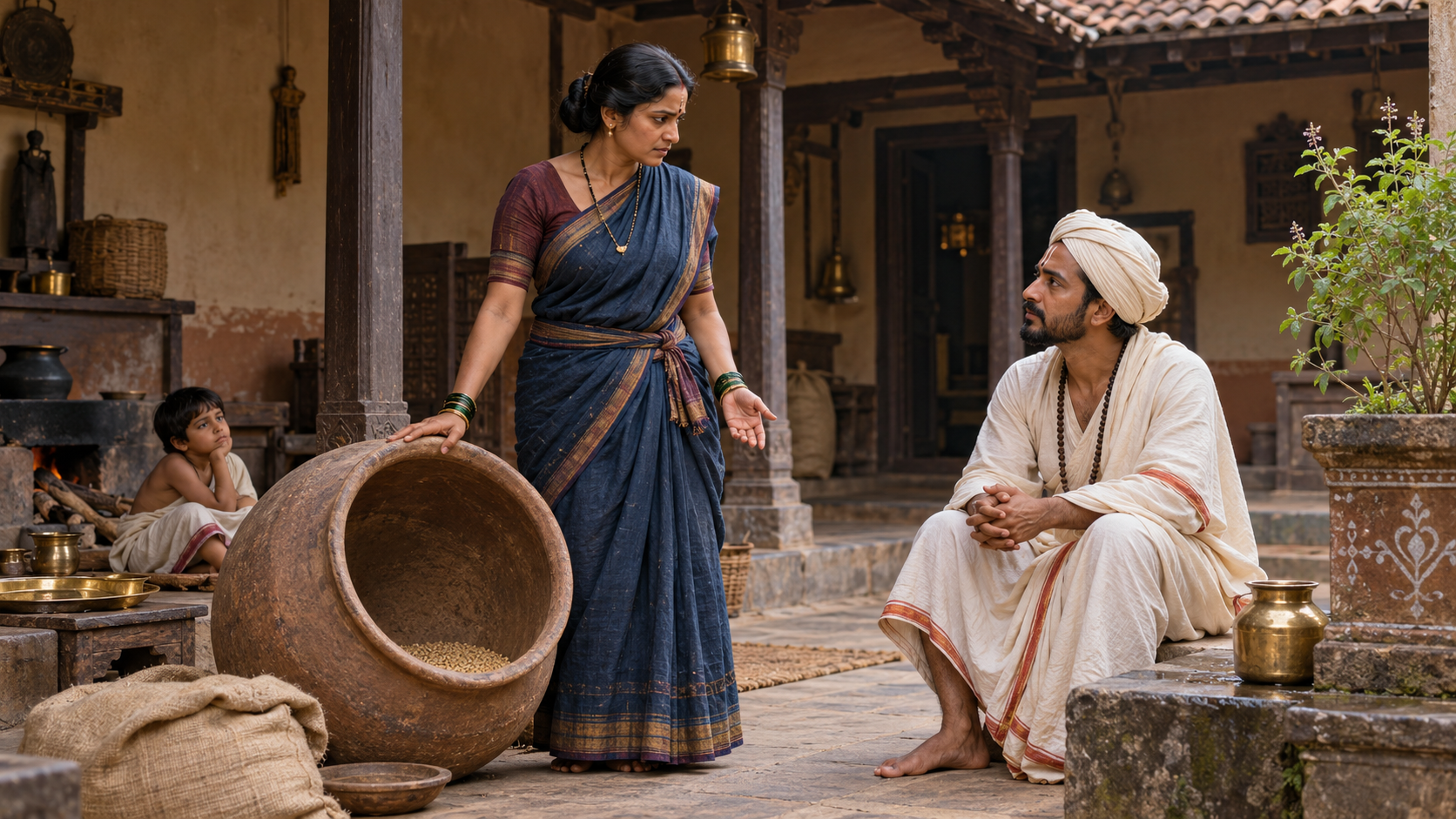
Spiritual biographies face a recurring temptation: everyone around the saint becomes a witness to his greatness. The wife waits, the family suffers, the community misunderstands and the saint alone possesses moral depth. This arrangement may produce reverence, but it conceals the relationships through which spiritual claims are tested.
Avali Jijabai matters because the portrayal does not reduce her to silent support. She is presented as a woman of strength, conviction, dignity and participation in struggles for social change. That gives you a better way to read the saint’s life. You can ask what devotion looks like from inside the household, where food, labour, disagreement, responsibility and spiritual aspiration meet.
Sheena Chohan’s preparation for the role also points toward a practical standard for authenticity. She spent time with rural families, shared meals and worked alongside village women in order to understand the routines and perspectives that could shape Avali’s presence. That kind of preparation cannot, by itself, establish the historical accuracy of every scene. It can, however, help a performance emerge from an inhabited life rather than from a stock image of the dutiful wife.
When you watch any film about a saint, ask four household questions:
- Who performs the ordinary work that makes the protagonist’s spiritual life possible?
- Are family members allowed to disagree for morally intelligible reasons, or is disagreement automatically treated as spiritual inferiority?
- Does a woman’s anger reveal a real conflict, or does the film dismiss it as attachment, ignorance or obstruction?
- Do supporting characters change the saint, or do they exist only so that he can instruct them?
These questions are not an attempt to drag a spiritual story down to the merely domestic. They expose whether the film understands dharma as relational. A person may speak beautifully about compassion in public; the household shows whether that compassion survives obligation and intimacy. When other people’s labour is erased, saintliness can appear costless. Restoring those lives to the frame makes the spiritual journey more demanding and more credible.
Cultural loyalty should raise your standard

A culturally rooted film deserves a fair hearing. It does not deserve freedom from judgment. In fact, respect for Bharatiya civilization should make us more attentive to craft, because these stories carry traditions that can be trivialised by careless celebration as easily as by open hostility.
There is now renewed audience interest in films rooted in devotion, spirituality, history and cultural heritage. That creates an opportunity for neglected lives and teachings to return to public memory. It also creates an incentive to use sacred imagery as branding. Your task as a viewer is to distinguish cultural recognition from cultural understanding.
Judge that understanding at four levels:
<!– wp:list {
Leave a Reply
You must be logged in to post a comment.