
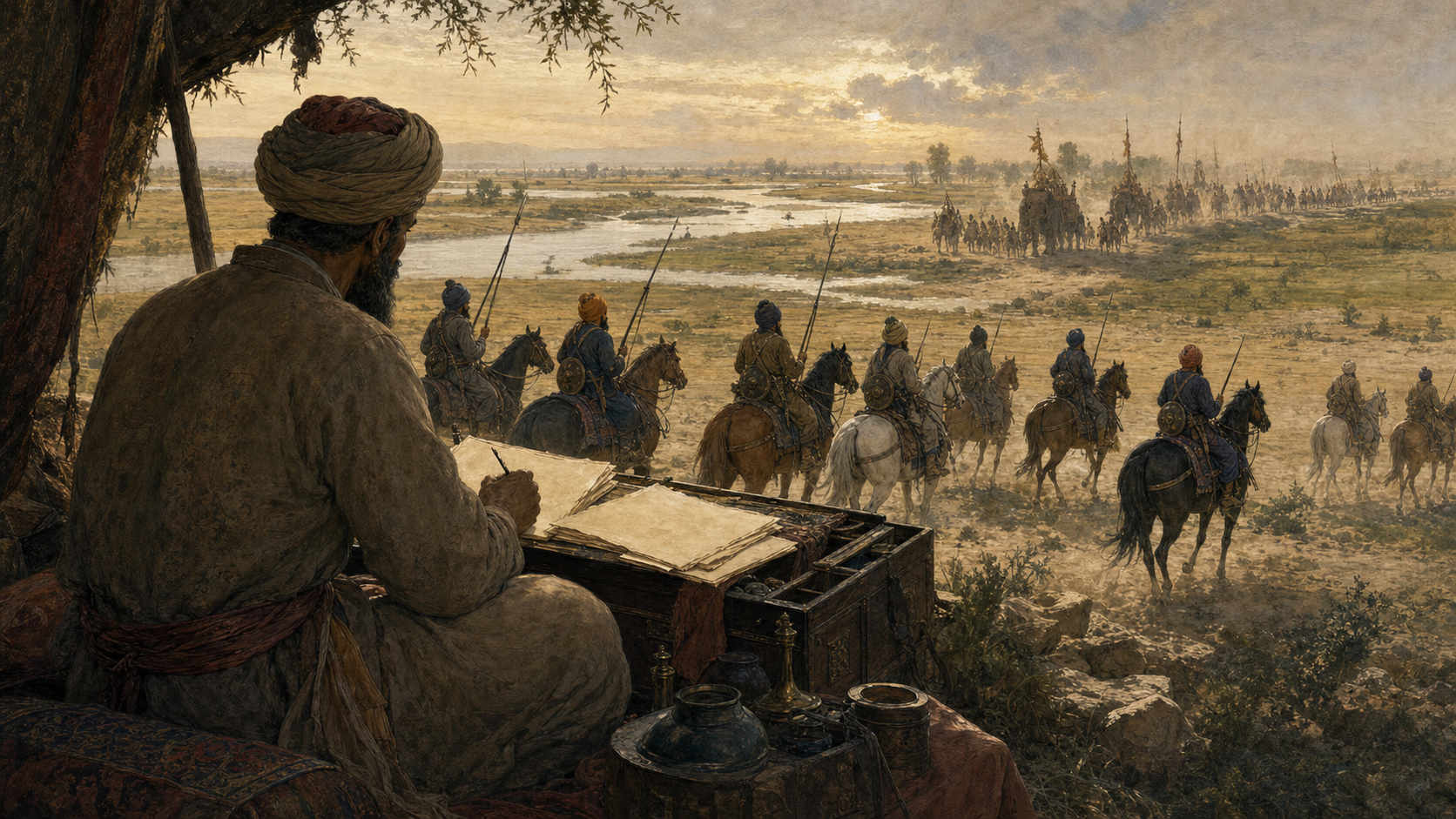
Qazi Nur Muhammad’s Jangnama is valuable not because it supplies a neutral portrait of the Sikhs, but because it records a hostile observer struggling to explain their growing power. Its mixture of campaign testimony, polemic, poetry and reluctant admiration makes it especially revealing about both eighteenth-century Punjab and the writing of history.
Read critically, the work helps answer several connected questions: what Sikh military success looked like to an opponent, why imperial campaigns did not necessarily produce lasting control, and how historians can recover evidence from a text shaped by prejudice and literary convention.
A war narrative that is also a political artifact
The source article identifies Jangnama as a narrative associated with Ahmad Shah Durrani’s 1764-1765 campaign, the Baloch contingent connected to Nasir Khan of Kalat, and conflict with the Sikh misls. It presents Qazi Nur Muhammad as a participant or near-participant rather than a detached historian writing from a later archive. That proximity gives the account evidentiary importance, but it does not make every statement transparent or impartial.
A jangnama, literally a narrative of war, belonged to a Persianate literary environment in which descriptions of events could coexist with praise, denunciation, religious judgement and poetic ornament. The form was therefore doing more than recording troop movements. It interpreted a campaign, assigned moral meaning to victory and danger, and positioned its author within a world of political loyalty and patronage.
This combination changes how the work should be used. A detail about a crossing, pursuit or ambush may preserve an observation about campaigning; an accusation may reveal more about the author’s ideological commitments than about its target; and a dramatic image may serve poetic expectation as much as factual description. These layers cannot be separated by labelling the entire chronicle either reliable or biased. They must be evaluated passage by passage.
What a hostile witness can and cannot establish
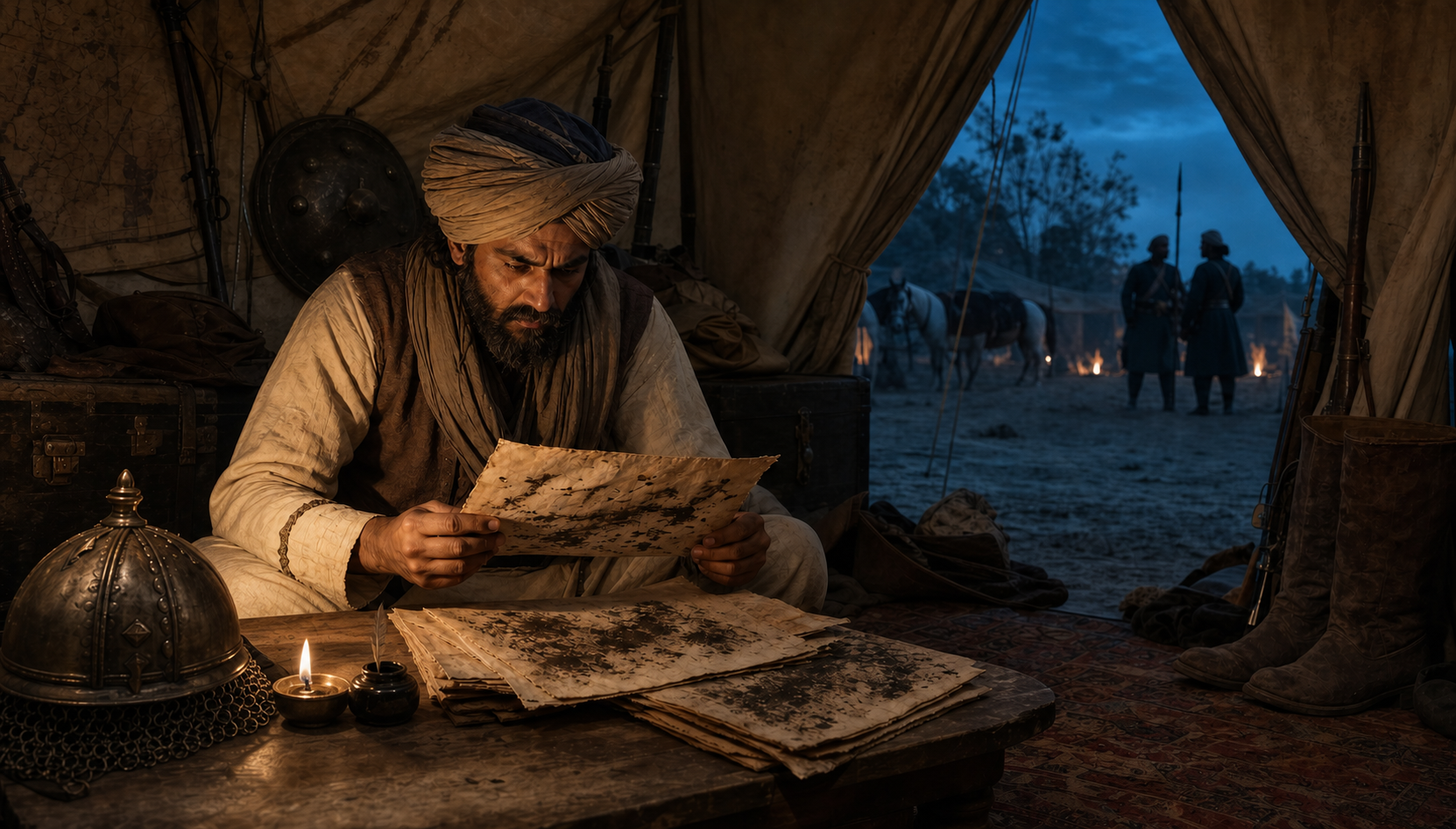
The most consequential tension identified by the source article is the coexistence of anti-Sikh polemic with acknowledgement of Sikh courage, discipline and military ability. Such reluctant recognition has particular value because it runs against the chronicler’s expressed hostility. Battlefield experience appears to have compelled him to recognize qualities that his political and religious framework otherwise encouraged him to condemn.
That does not turn hostile praise into unquestionable proof. An opponent may misunderstand motives, generalize from a single encounter or shape admiration through familiar conventions about formidable enemies. What the testimony can establish more securely is that Sikh effectiveness had become difficult for an adversarial narrator to dismiss. The language of hostility also supplies evidence of its own: it shows the anxiety produced when an armed religious-political community no longer fit inherited categories such as rebel, raider or subordinate local chief.
The account is therefore most useful in comparison with Sikh memory rather than as a substitute for it. The source article argues that observations concerning bravery, tactical coherence and restraint can help historians triangulate community traditions about martial ethics. The agreement is meaningful precisely because the sources would approach those traditions from different moral and political positions. Yet similarity still requires contextual comparison: an external observer’s description of conduct in one campaign cannot by itself define an entire community across time.
Military detail reveals a different kind of sovereignty
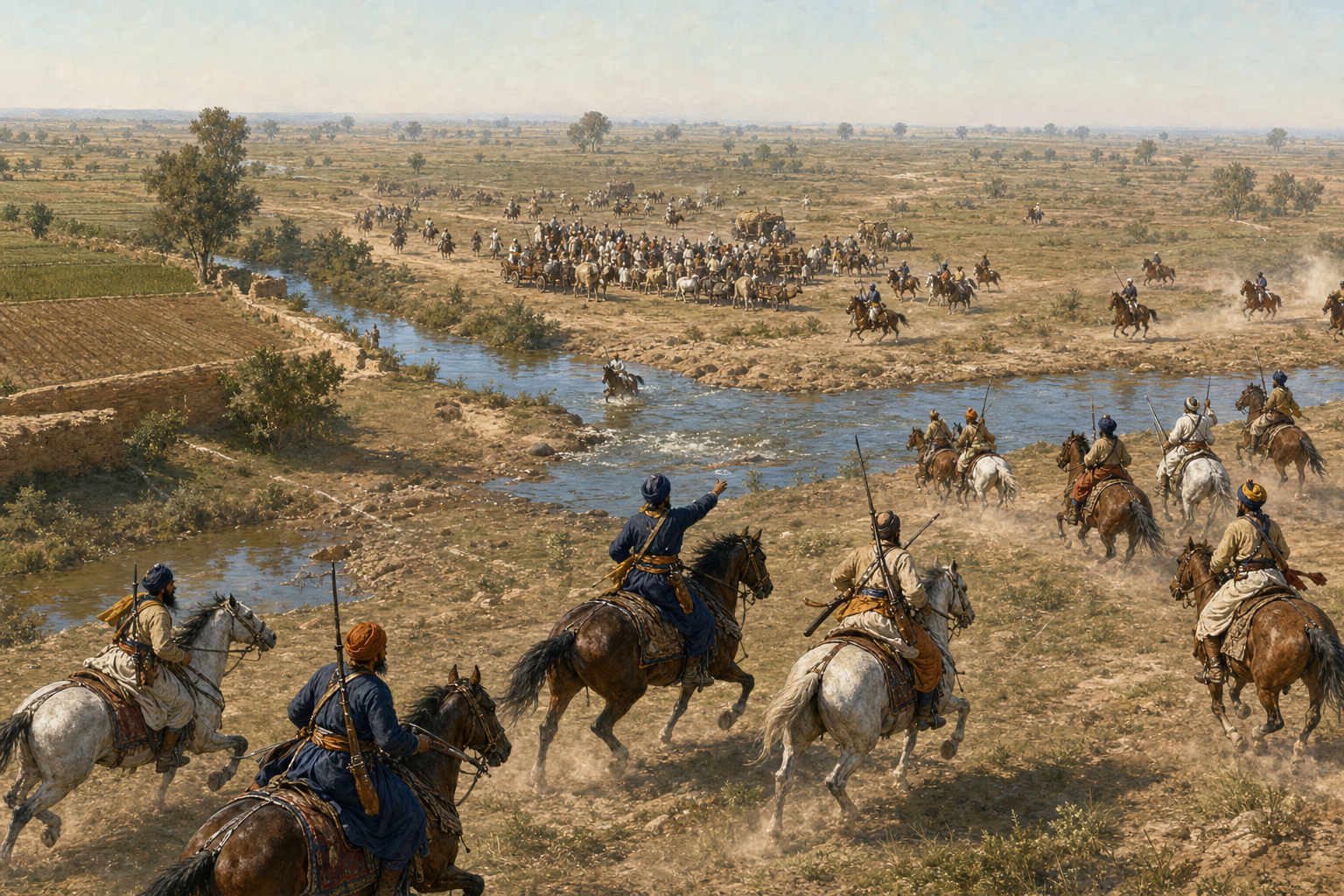
The campaign material matters beyond battlefield reconstruction. According to the source article, Jangnama preserves glimpses of movement, positioning, river crossings, pursuit, ambush and pressure on baggage. It contrasts a more conventional Durrani imperial formation with Sikh forces able to use mobility, local knowledge, withdrawal and regrouping. That pattern helps explain how an army might prevail in particular engagements without converting those successes into durable political control.
This distinction between winning a field and governing a region is central to the chronicle’s historiographical value. The Sikh misls did not depend upon a single monarch, capital or decisive confrontation. As characterized in the supplied article, their strength rested on distributed leadership, mobile armed groups, local relationships, revenue claims, sacred centres and the shared discipline of the Khalsa. A dispersed structure could absorb setbacks and return after an imperial army had moved on.
Seen from this perspective, Jangnama complicates a familiar account of the eighteenth century as little more than Mughal decline, the Maratha defeat at Panipat in 1761, Afghan invasion and eventual British expansion. Punjab emerges instead as a region in which political authority was being actively reconstructed. Sikh power was not simply filling an empty space left by a retreating empire; it was developing practices of confederated action that imperial categories could not easily describe.
The source article consequently treats the chronicle as evidence for the prehistory of later Sikh state formation. It cautions against imagining the rule associated with Maharaja Ranjit Singh as an abrupt beginning in 1799. The earlier misl period represented decades of military adaptation and political experimentation. Jangnama captures that less-centralized phase from the viewpoint of forces attempting, and struggling, to contain it.
A layered method for reading the chronicle

A responsible reading begins by distinguishing kinds of claims. Operational details may be tested against geography and other campaign accounts. Numbers and sweeping declarations demand particular caution because war literature often magnifies armies, losses or victories. Moral labels reveal the chronicler’s worldview, while admissions inconvenient to his position may deserve closer attention without receiving automatic acceptance.
Genre must also be treated as part of the evidence. Meter, metaphor, invocation, praise and lament were not decorative material surrounding an otherwise plain report. They helped decide which events appeared significant and how readers were expected to judge them. The literary form can therefore illuminate the emotional and moral organization of war even when it cannot independently settle the exact sequence of an engagement.
The source article recommends comparison with Persian, Punjabi, Sikh, Maratha, Afghan and later colonial materials. Such comparison should ask not only whether two texts report the same event, but also why they name participants differently, attribute success to different causes or remain silent about different groups. Contradictions can disclose competing political vocabularies; silences can expose the limits of an author’s position; and convergence across opposed traditions can increase confidence in a carefully bounded claim.
This method avoids two symmetrical errors. Rejecting the chronicle because it is prejudiced discards evidence about both the campaign and the prejudices structuring its narration. Accepting its martial praise while ignoring its polemical framework extracts agreeable passages from the conditions that gave them meaning. Historiography gains more when observation, ideology and literary construction remain visible together.
Key takeaways
- Jangnama should be read simultaneously as campaign testimony, Persianate war poetry and a partisan political intervention.
- Its hostile acknowledgement of Sikh discipline and effectiveness is significant, but it supports bounded comparisons rather than unqualified conclusions.
- Its military episodes show why mobility, local knowledge and distributed organization could frustrate an imperial force even after individual setbacks.
- Its polemical vocabulary records the strain placed on older imperial categories by the emergence of the Sikh misls as a durable political power.
- Its strongest historical use comes through passage-level analysis and comparison with accounts produced in other linguistic, political and communal settings.
Future study can build on this layered approach by placing particular passages beside independent campaign records and Sikh sources, preserving disagreement instead of forcing the texts into a single voice. In that comparative setting, Jangnama can illuminate not only what happened in eighteenth-century Punjab, but also how a changing political order became thinkable to those confronting it.