

Two disputes reported from Shamli place adult religious choice, family intervention, alleged unlawful conversion, and property claims in the same frame. Their similarities have encouraged a single public narrative, but the available account shows that they occupy markedly different evidentiary and procedural stages.
The useful comparison is therefore not whether the allegations sound alike, but what has actually been reported in each case, which assertions remain contested, and what evidence would distinguish a voluntary relationship from coercion, fraud, intimidation, or property-motivated exploitation.
Key takeaways
- The Ayush Malik matter had advanced to an FIR, arrests, judicial custody, and an announced Special Investigation Team, according to the source report.
- Ayush reportedly first defended his conversion and marriage as voluntary, then appeared in a family-released video after returning to Hinduism; the change does not, by itself, establish coercion in either direction.
- The Bhaukhada family’s complaint was at a preliminary stage in the source account: relatives alleged conversion, threats, and pressure involving 35 bighas of ancestral land, while an FIR had reportedly not yet been registered.
- Property is the common allegation linking the disputes, but neither a relationship nor a conversion proves a property conspiracy. The conversion question and the property question require connected but distinct evidence.
Similar allegations, different investigative postures

In the first case, the DharmaRenaissance Blog report states that Devaraj Malik filed an FIR at Shamli’s Kotwali police station on June 6, 2026. He alleged that his son, Ayush Malik, had been drawn into a relationship with Chandni Qureshi, converted to Islam, married through a purported Nikah, and isolated from his family as part of a wider conspiracy. The complaint reportedly named Chandni, members of her family, and three clerics, while also alleging forged documents, intimidation, and a motive involving the Malik family’s business and property interests.
The same report says police arrested Chandni Qureshi and her father, Islam Qureshi, on June 7 and that they were sent to judicial custody. It also attributes to Superintendent of Police Narendra Pratap Singh an announcement that an SIT would investigate. The reported FIR invoked provisions concerning cheating, forgery, conspiracy, and threats, as well as the Uttar Pradesh law governing unlawful religious conversion. These procedural developments do not prove the complaint, but they mean that the first case had moved beyond an unregistered family allegation.
The Bhaukhada matter was less developed. According to the source, a Rajput family approached Swami Yashveer Maharaj on July 1, 2026 and alleged that its only son had left with a Muslim woman about a year and a half earlier, had been converted, and was being used to pressure the family to transfer 35 bighas of ancestral land. The relatives also alleged telephone death threats. They claimed that a written complaint had been given to Jhijhana police, but the source reported that an FIR had not yet been registered. The district police chief reportedly directed the station officer to investigate.
This procedural difference is central. The Ayush case included named accused persons, arrests, and competing public statements from the adult directly involved. In the Bhaukhada account, the family’s claims had yet to be verified, and the adult son’s own version was not reported. Similarity between the accusations cannot fill those evidentiary gaps.
Adult consent remains the pivotal disputed fact

As summarized by the source, the Uttar Pradesh Prohibition of Unlawful Conversion of Religion Act, 2021 distinguishes a change of faith from one produced through misrepresentation, force, coercion, undue influence, allurement, or fraud. That distinction matters because an adult’s voluntary religious decision cannot be converted into a criminal offence merely through family disapproval. Conversely, an adult’s nominal consent does not end an inquiry if credible evidence points to threats, deception, confinement, document fraud, or targeted financial inducement.
Ayush’s reported statements make that distinction difficult to resolve through public videos alone. He initially told the media that he had embraced Islam voluntarily, denied coercion and inducement, and said he had concealed his conversion and marriage because his sisters were not yet married. He also reportedly said that he intended to seek his wife’s release.
By the end of June, however, reports cited in the source said Ayush had returned to Hinduism. A family-released video reportedly showed him performing puja and saying that he had returned voluntarily after witnessing his mother and family’s suffering. The later statement does not automatically disprove the earlier one, just as the earlier statement does not exclude the possibility that evidence may reveal unlawful conduct. Both were made amid intense familial, legal, and community attention.
A reliable assessment would need independently recorded statements, authenticated conversion and marriage documents, communications from the relevant period, and a chronology showing when any alleged pressure occurred. In the Bhaukhada case, obtaining the adult son’s account would be a foundational step. Until that perspective and supporting evidence are available, descriptions such as “taken away” remain the family’s allegation rather than an established account of his circumstances.
Property claims must be proved independently

The property dimension is the clearest connection between the two disputes. Devaraj Malik reportedly alleged an attempt to gain control over family assets that included pharmacies and other holdings. The Bhaukhada family alleged pressure to place 35 bighas of ancestral land in the woman’s name. In both instances, however, the source presented these as accusations requiring investigation, not demonstrated transfers or completed dispossession.
The shared pattern creates an investigative hypothesis, not a legal shortcut. A relationship, marriage, or conversion does not by itself establish an intention to capture property. Investigators would need to connect conduct to motive through property records, proposed or executed documents, financial transactions, messages, calls, witnesses, and the timing of demands. The alleged forged documents in the Ayush FIR would require authentication. The reported threats in the Bhaukhada complaint would similarly need corroboration through records and testimony.
The issues must also remain logically separate. A conversion could be voluntary even if someone later attempted financial exploitation. Conversely, evidence of property pressure could support a criminal allegation without proving that the original relationship or every religious decision was coerced. Only evidence connecting inducement or intimidation to the act of conversion would resolve the specific unlawful-conversion question.
This separation protects both interests at stake: an adult’s freedom of conscience and a family’s right to seek investigation of credible fraud, threats, or interference with its property. Treating either interest as automatically decisive would obscure the conduct the law is meant to test.
Public mobilisation cannot substitute for findings
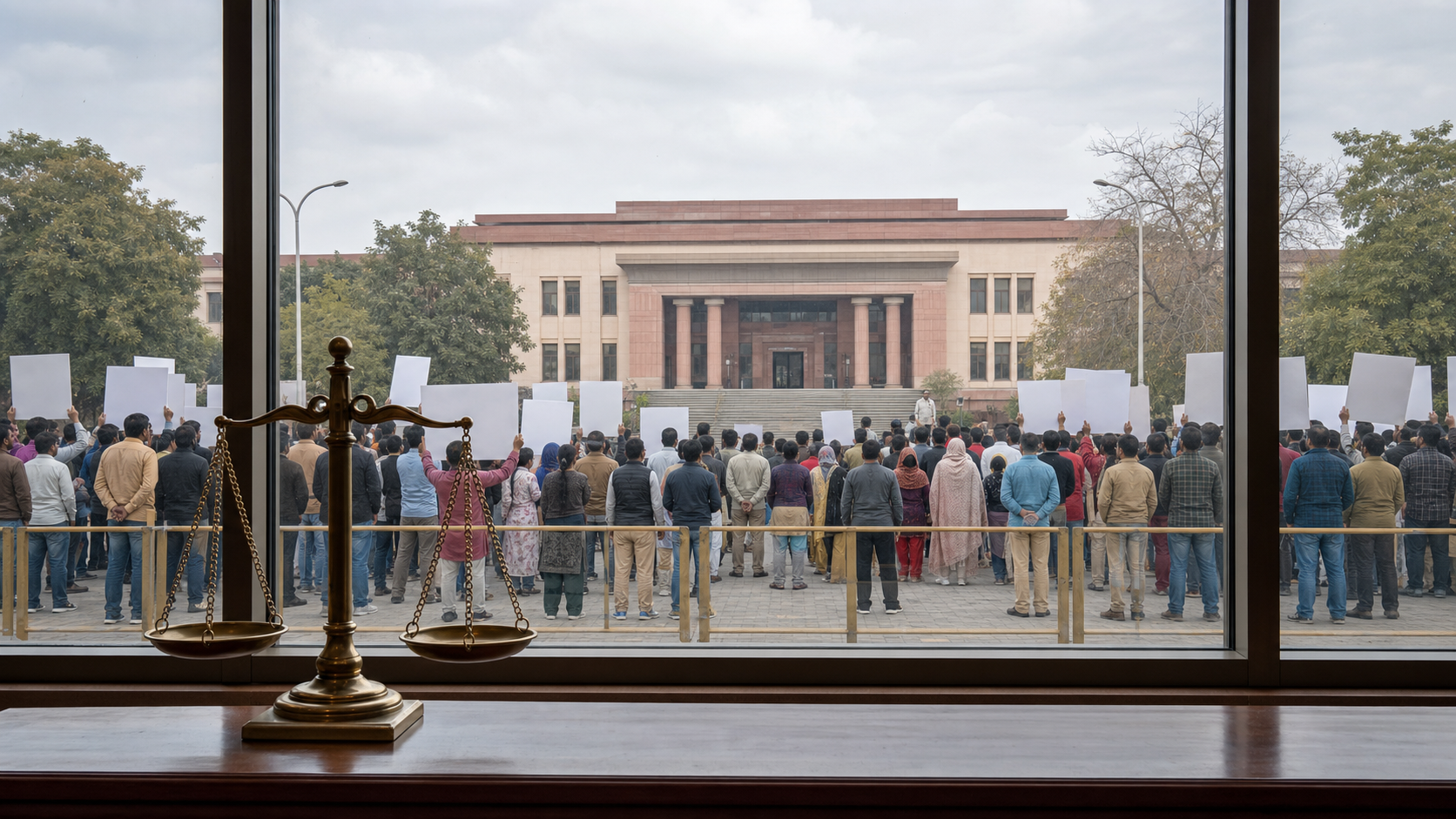
The source reports that Swami Yashveer Maharaj publicised the Ayush allegations before the FIR, issued an ultimatum to the administration, and announced a Hindu Mahapanchayat in Shamli’s Qureshi locality. Heavy police deployment reportedly helped avert or postpone a broader confrontation. In the Bhaukhada matter, he called for an FIR and a fair investigation and warned of a protest if official action did not follow.
Such intervention can bring attention to a family’s complaint, especially when relatives believe the police have been slow to respond. It can also intensify pressure before investigators have established whether an adult left voluntarily, whether a conversion occurred, whether statutory requirements were followed, or whether threats and property demands can be corroborated. Community mobilisation should therefore be treated as part of the surrounding public-order context, not as evidence of the alleged offences.
A credible resolution requires the authorities to apply the same sequence in both matters: establish the adult’s circumstances and wishes without outside pressure; authenticate the relevant documents; examine communications and property records; test each alleged threat or inducement; and distinguish verified findings from family or activist claims. Procedural updates can help contain rumours, but they should not prejudge guilt or expose the individuals involved to additional pressure.
The next meaningful development will not be another competing video or public gathering, but a documented account showing which allegations withstand scrutiny. Until that evidence emerges, the two Shamli disputes should remain separate cases rather than proof of a broader conclusion.
References
- DharmaRenaissance Blog – Shamli Conversion Alarm: Property Claims, Police Probe, and Community Fears