
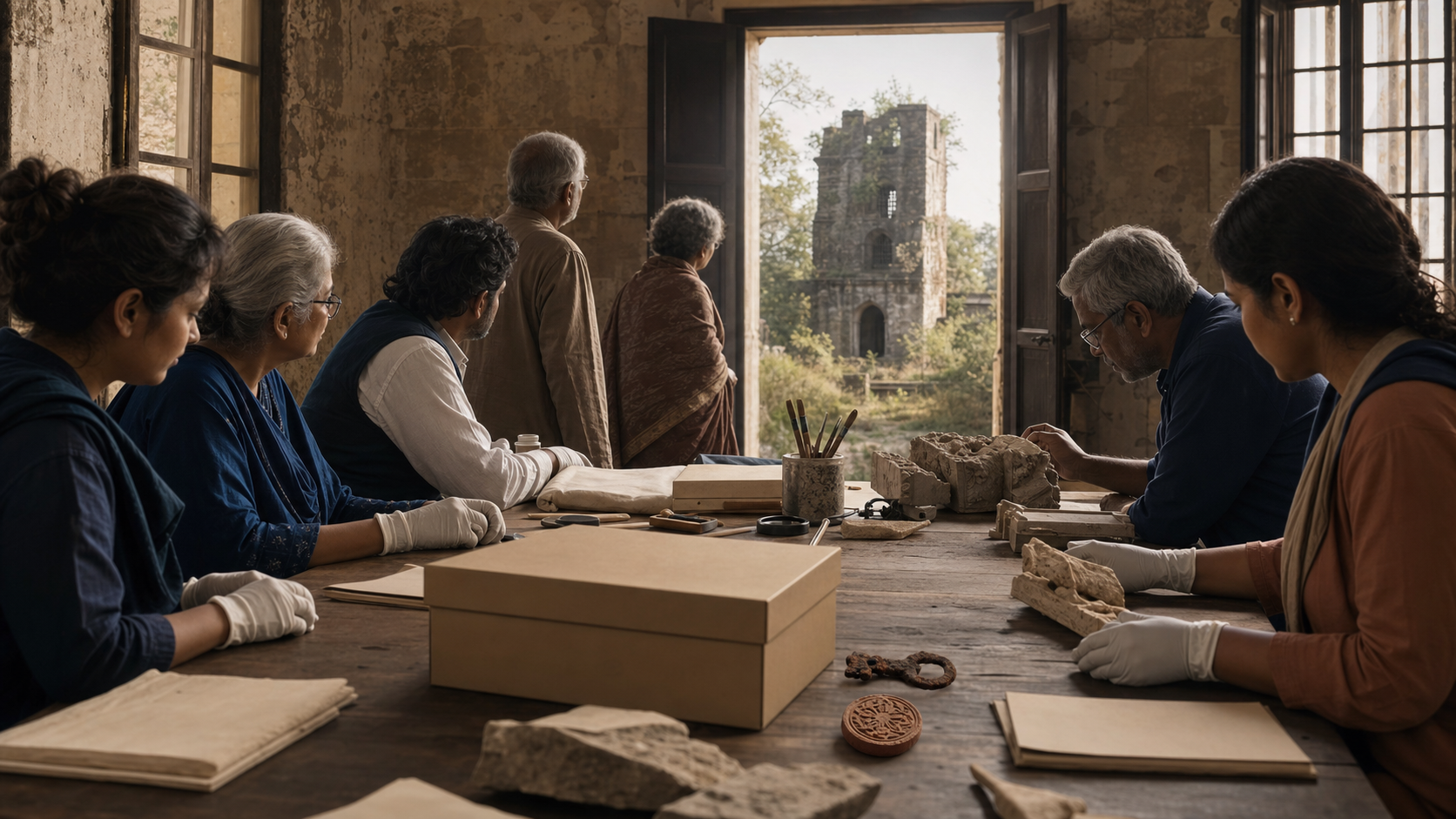
You are asked to support a renaming campaign, defend an old place-name, approve a memorial plaque, or take students to a reenactment of colonial punishment. The moral impulse may seem obvious. The practical decision is not. A charged name can preserve a community’s memory, but it can also carry an unverified explanation. A dramatic display can make suffering comprehensible, but it can also reduce suffering to spectacle.
You do not have to choose between erasure and exaggeration. A sound culture of remembrance preserves the evidence first, states uncertainty honestly, explains how persecution worked, and refuses to transfer historical guilt to people living now. That standard protects Hindu and wider dharmic memory because it makes the public record harder to dismiss, manipulate, or forget.
Stop erasure before deciding on the final interpretation
The first question in a dispute over a historic name should not be whether the name is offensive, heroic, or politically useful. Ask what will become harder to investigate if it disappears.
In Goa, Hat Katro Khamba survives as a place-based anchor of oral tradition and community recollection. Its precise origin is debated. That uncertainty is not a reason to treat every story associated with the name as proven. It is also not a reason to discard the name as meaningless. A toponym can establish that a memory became attached to a location even when it cannot, by itself, prove every claimed event.
This distinction is essential: preservation is not endorsement. Retaining an old name does not require the government, a museum, or a local community to certify one disputed etymology. It keeps a historical clue connected to its landscape while investigation continues.
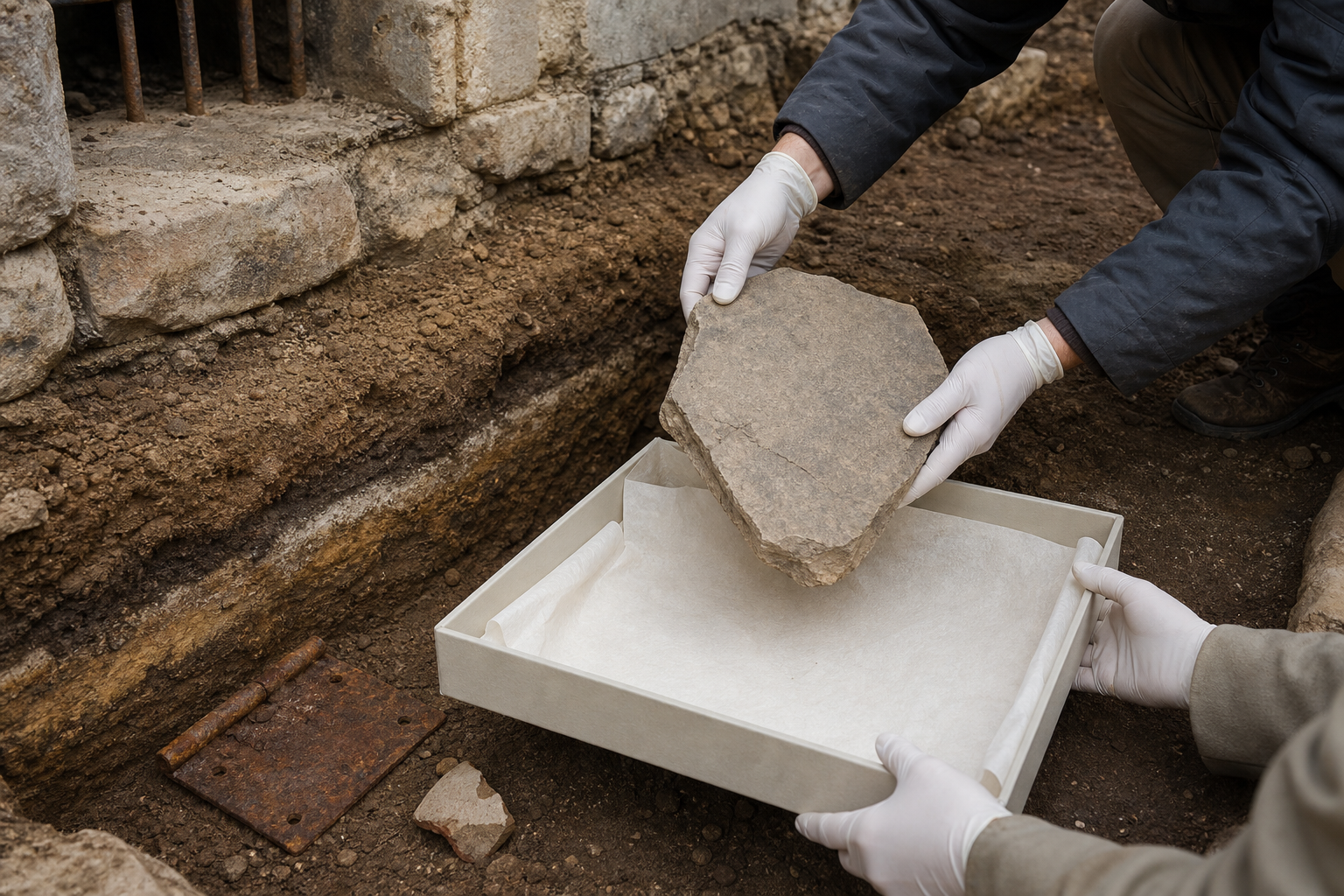
- Pause the irreversible change. Ask for renaming, demolition, relocation, or surface restoration to wait until the existing name, object, and setting have been documented.
- Record the present state. Photograph the whole site, close details, inscriptions, surrounding roads, nearby structures, and current signage. Record the location and date with every image.
- Define the claim precisely. Separate the fact that a name exists, the date when its use can first be traced, the stories told about it, and the historical event those stories are said to describe.
- Preserve spoken memory in the speaker’s own language. Keep the original recording or transcript alongside any translation. Note who supplied the account, how that person learned it, and whether it is family memory, community tradition, or personal recollection.
- Publish an interim explanation. A temporary sign can say that the historic name is being retained while its origins and associations are examined. Silence invites rumor; premature certainty damages trust.
If a new civic name is eventually adopted, the older name should remain in the official record, on an interpretive panel, and in searchable maps or catalogues. Otherwise, later generations may not know which archival references, family accounts, and physical location belong together.
This preservation-first rule also protects against political mood swings. A future administration can revise an interpretation. It cannot easily reconstruct a removed inscription, an undocumented marker, or a place-name severed from local use.
Build an evidence chain that another person can audit
A memorial becomes trustworthy when a student, resident, journalist, or historian can follow its claims back to identifiable evidence. The aim is not to collect only records that confirm a preferred account. It is to preserve the whole chain, including gaps, contradictions, and records created by the persecuting institution itself.
For Inquisition-era Goa, that chain may include Portuguese administrative material, ecclesiastical proceedings, legal edicts, traveler accounts, vernacular literature, inscriptions, architectural traces, oral histories, and family chronicles. Relevant holdings are dispersed across repositories in India, Portugal, and elsewhere. No single category can carry the entire history.
- Physical evidence includes pillars, stones, inscriptions, buildings, altered structures, routes, and the spatial relationship between a marker and its surroundings.
- Institutional records show what authorities ordered, prohibited, investigated, punished, or recorded. They may reveal official procedure while omitting experiences that officials did not consider worth preserving.
- Personal testimony and family memory show how policy entered homes, rituals, bodies, and relationships. Memory must be preserved faithfully, but it should not be mislabeled as a contemporary administrative record.
- Later interpretation connects the surviving fragments. It should identify the interpreter, the evidence used, and the point at which documented fact gives way to inference.
These are different kinds of evidence, not a ladder of human worth. An official decree is not morally superior to a grandmother’s recollection. It simply answers a different question. The decree may establish what an institution intended; the recollection may preserve what a family carried forward. Good public history tells you which kind is supporting each claim.
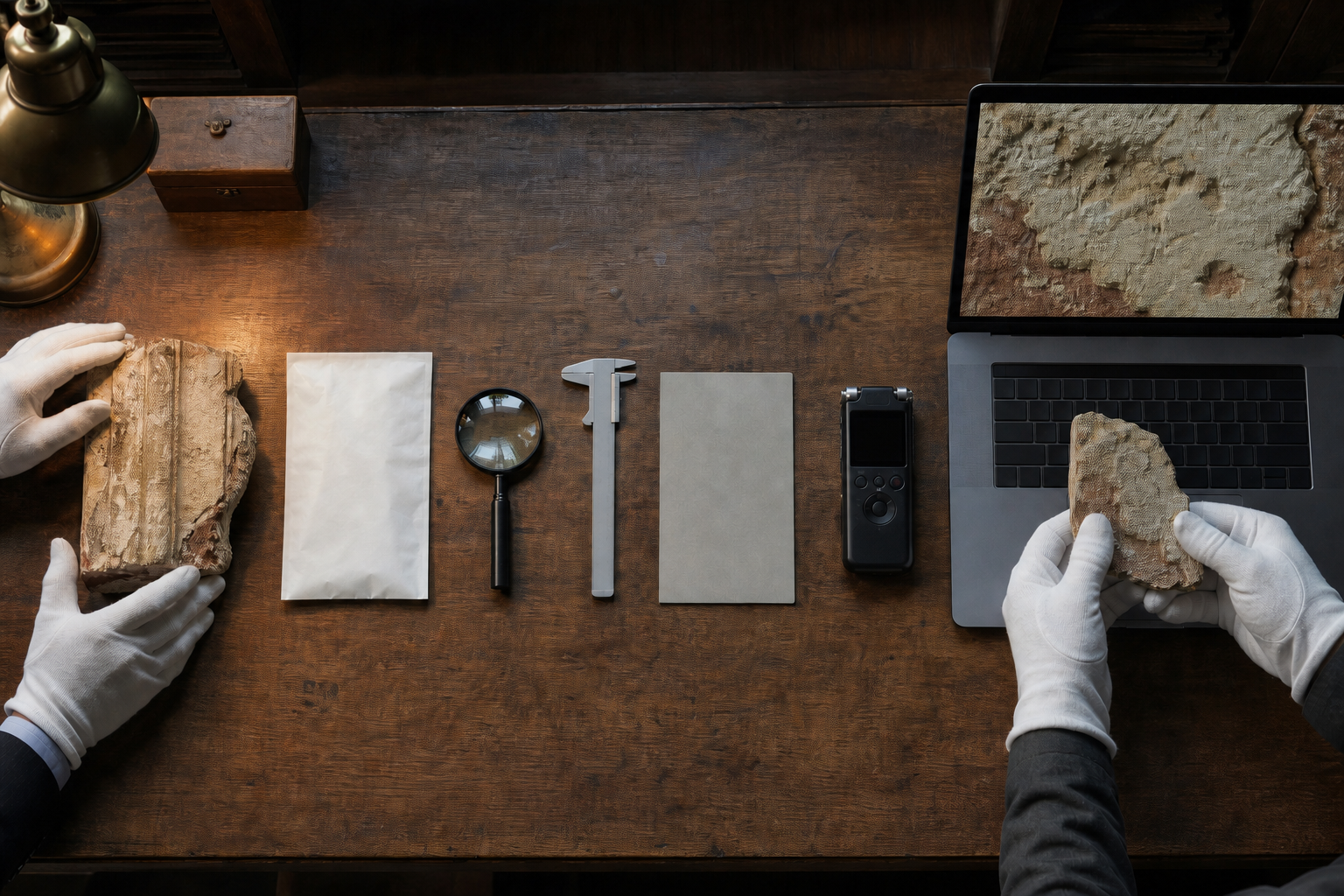
Give every item a stable identity. A useful catalogue entry records what the item is, where it came from, where it is held, its language, its approximate or established date, who created the digital copy, and what remains uncertain. Keep the original-language text beside the transcription and translation. A polished English summary should never become the only surviving version.
Digital preservation should supplement physical conservation, not be mistaken for it. High-resolution photography, photogrammetry, 3D scanning, and geographic mapping can preserve the recorded form and location of vulnerable evidence. They cannot replace the original surface, material, setting, or chain of custody. Keep more than one managed copy, document later edits, and make the public-facing catalogue searchable wherever rights and conservation needs allow.
Do not make a QR code the only explanation at the site. Websites move, links fail, and phones run out of power. Place the core facts, the degree of certainty, and the reason for preservation on durable multilingual signage. Use the digital layer for scans, translations, maps, timelines, longer testimony, and a correction history.
The ICOMOS charters, the Nara Document on Authenticity, the Burra Charter, and UNESCO’s work on intangible heritage all support attention to context, authenticity, layered meaning, and community participation. In practice, that means consulting historians, archivists, conservation specialists, educators, and affected communities before fixing a final narrative. It does not mean allowing any one group to veto documented facts.
Separate established fact, inherited memory, and inference
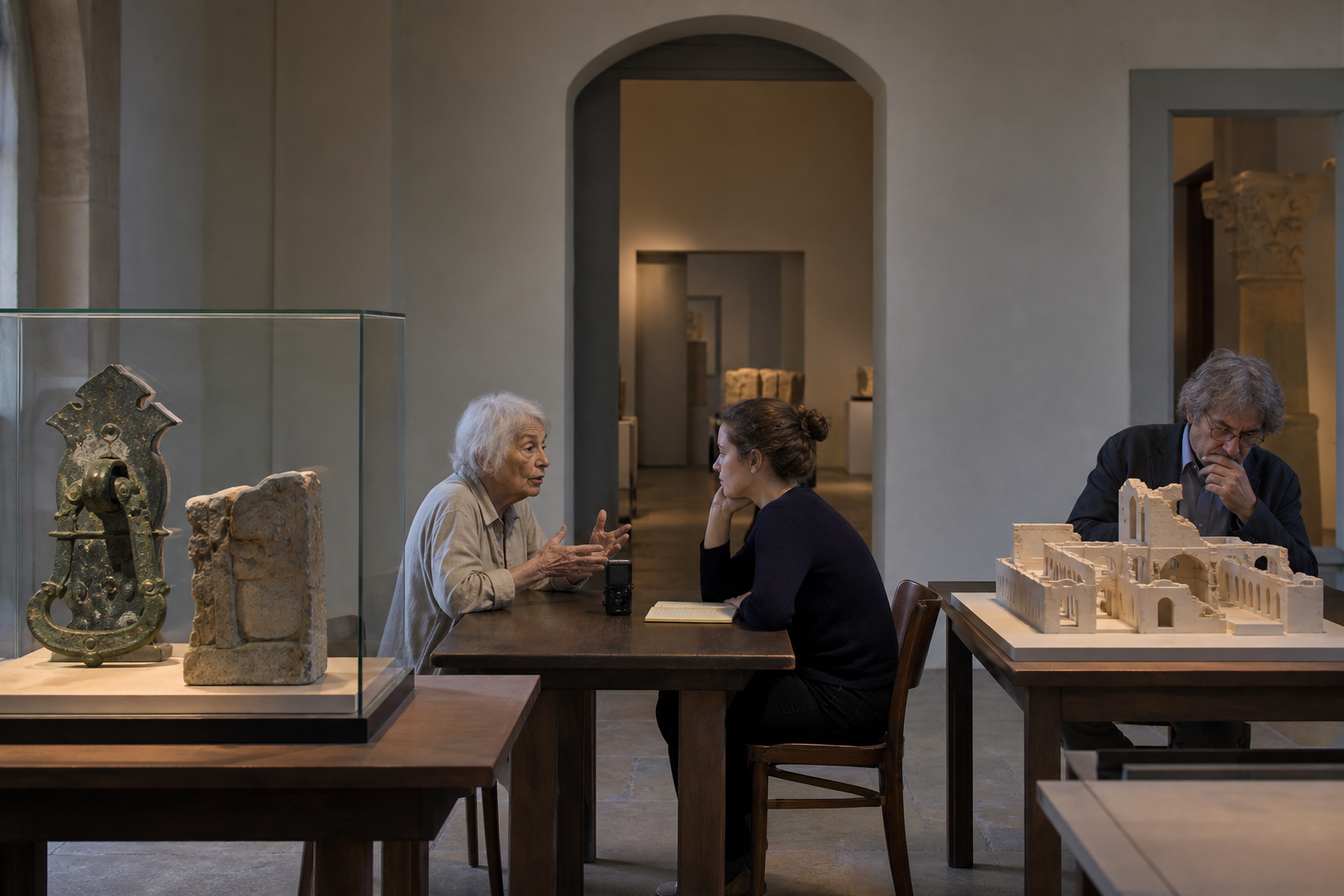
Difficult history loses credibility when an interpretive panel presents everything with the same level of certainty. A reader should be able to see what is established, what is broadly supported but difficult to quantify, what survives through community memory, and what remains unresolved.
The Goan case shows how to make those distinctions without suppressing the persecution itself. The Goa Inquisition was instituted in 1560 and operated intermittently into the late eighteenth and early nineteenth centuries. It intersected with religious conversion, regulation, and social control. Its effects reached community life, ritual practice, and cultural expression. The scope and quantification of those effects remain subjects of scholarly disagreement.
- Established institutional history: identify the governing authority, institution, period, rules, and documented practices.
- Supported social consequence: explain the effects that appear across multiple kinds of evidence while retaining any limits on scale or measurement.
- Inherited community memory: preserve the names, stories, observances, and family accounts through which people remember the past.
- Unresolved interpretation: name disputes over etymology, location, chronology, numbers, or the connection between a particular object and a particular event.
A plaque or exhibit can make this structure visible with five short prompts:
- What is established?
- How do we know it?
- What do communities remember?
- What remains debated?
- Where can the underlying record be examined?
This format prevents two common failures. Euphemism hides the mechanism of persecution behind vague phrases such as difficult times or social tensions. Overclaiming turns a plausible or inherited account into a proven fact. Use the exact term supported by the evidence: religious regulation, forced labor, solitary confinement, dietary punishment, fetters, or flogging. If a detail is disputed, say so in the same place where the detail appears.
Do not flatten distinct colonial systems into one interchangeable story. The Portuguese Inquisition in Goa and British penal servitude in the Andamans can both be studied as exercises of coercive colonial power, but they involved different institutions, rules, settings, and forms of persecution. Connection is not equivalence. Naming the differences makes the larger history more credible.
Build correction into the memorial from the beginning. Date the interpretive text, identify the body responsible for it, provide a route for submitting evidence, and retain previous versions in a public log. A correction should not quietly erase the earlier wording. It should show what changed and why.
Make suffering legible without turning it into spectacle
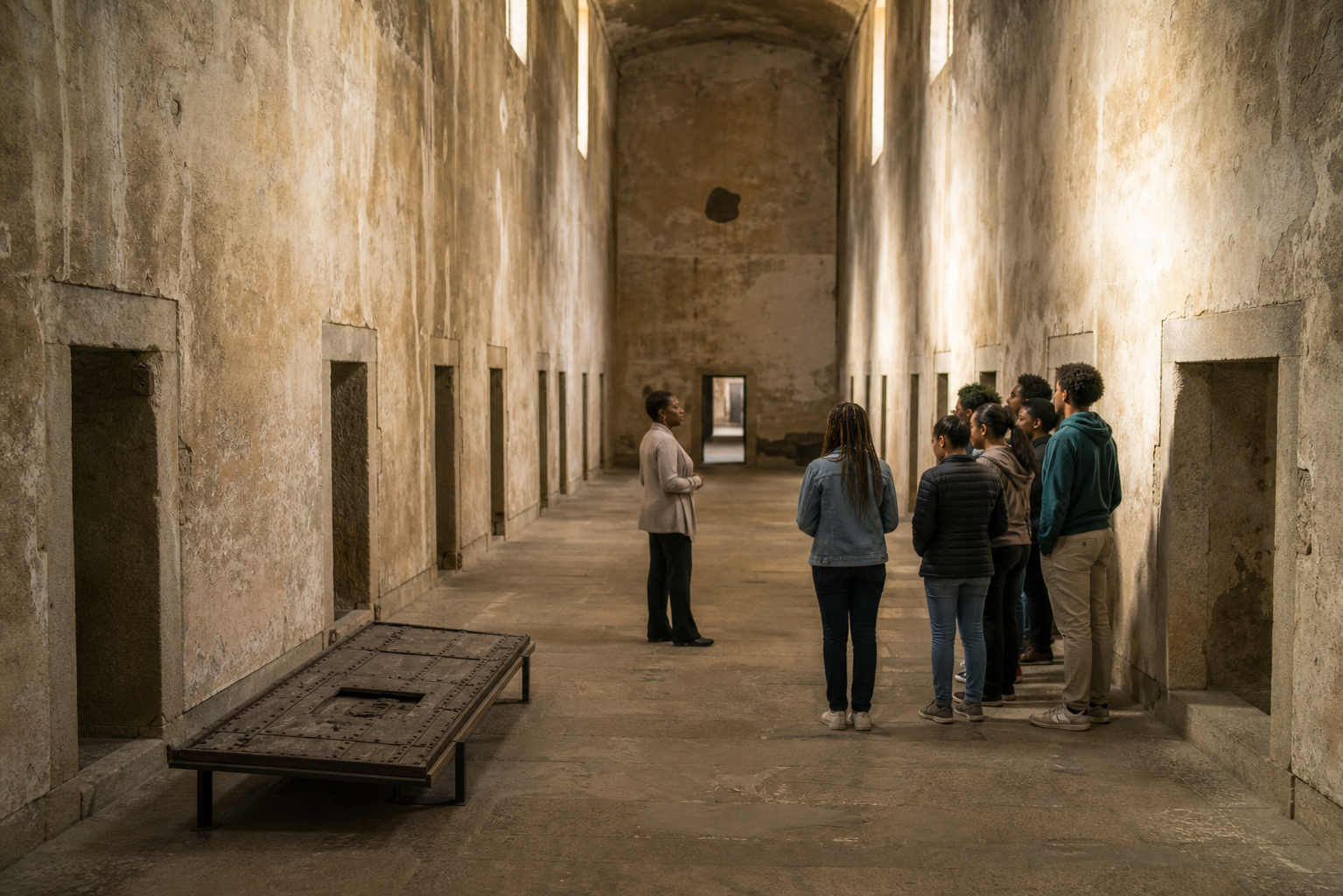
Some forms of persecution remain abstract until a visitor understands what a body was forced to do. That is why an object or carefully governed demonstration can teach what a paragraph cannot. It is also why reenactment requires stricter discipline than an ordinary display.
At Mumbai’s Swatantryaveer Savarkar Rashtriya Smarak, a kolhu demonstration recreates the motion of the oil-press labor imposed on political prisoners at Kala Pani. In ordinary agrarian use, a bullock could drive the horizontal beam around a central press. In the Cellular Jail, prisoners supplied the movement. An everyday tool of production thereby became an instrument of coercion.
The setting matters as much as the machine. The Andaman penal settlement was established in 1858 after the 1857 War of Independence. The Cellular Jail was completed between 1896 and 1906 with seven radiating wings and hundreds of solitary cells. Isolation, surveillance, silence, fetters, hard labor, and punishment for unmet expectations formed a system. If an exhibit shows only a heavy beam, the visitor may mistake systemic degradation for an isolated act of cruelty.
The physical explanation should be exact. A long beam produces rotation around a central pivot. The prisoner has to keep walking against the resistance created as seeds are crushed by compression and shear. Repetitive movement, harness friction, tropical heat, restricted nutrition, and fetters could compound exhaustion and injury. Daily quotas varied by the seed and circumstances, so an exhibit should not present one universal number unless it can trace that number to a particular record, prisoner, and period.
Use five safeguards for any living-history treatment of persecution:
- Document the demonstration. Explain which testimony, memoir, rule, plan, photograph, or surviving object supports each element. Do not invent dialogue, punishments, or measurements for dramatic effect.
- Explain the system before the sensation. Visitors should understand who controlled the prison, why political prisoners were transported, how isolation worked, and how labor targets were enforced.
- Keep participation voluntary and symbolic. The educational aim is to understand the motion and coercive design, not to reproduce injury, exhaustion, humiliation, or a punitive load.
- Restore the prisoner’s agency. Include names, writings, beliefs, resistance, coded communication, shared songs, solidarities, and inner discipline. A person who resisted colonial rule was more than the pain inflicted upon him.
- Provide space for reflection. Follow the physical encounter with testimony, a quiet area, questions for students, and a path to the archive or memorial record.
Agency is especially important in a dharmic account of colonial persecution. Hindu, Sikh, Jain, Buddhist, and other freedom fighters did not enter history merely as passive victims. Political prisoners came from different regions and networks, including Punjab, Bengal, Maharashtra, Bihar, and the United Provinces. Their courage, discipline, and solidarity belong in the exhibit alongside the architecture of punishment.
Historical responsibility must also be named accurately. Identify the colonial government, tribunal, prison administration, regulation, officer, or policy when the evidence permits. Do not convert institutional responsibility into inherited guilt for every present-day Christian, Briton, Portuguese person, or member of another community. Descendants do not inherit personal guilt. Citizens do inherit a responsibility to know what public institutions did and to prevent dehumanization from being normalized again.
This is not a request to soften Hindu memory for the comfort of others. It is a demand for satya and discipline. Collective blame gives critics an easy reason to ignore the evidence. Precise attribution keeps attention on the persecuted, the machinery of coercion, and the choices made by identifiable authorities.
Key takeaways: six questions to ask before you lend support
Before you sign a petition, endorse a renaming decision, donate to a memorial, or recommend an exhibit to students, ask six questions:
- What exactly will be preserved: the name, physical object, location, testimony, institutional record, or all of them?
- Does the interpretation distinguish established fact, supported conclusion, community memory, and unresolved claim?
- Can another person audit the claim through catalogue entries, scans, transcripts, translations, and clear citations?
- Does the memorial explain the mechanism of persecution as well as the suffering it caused?
- Does it honor resistance and agency while assigning responsibility to documented institutions and actors rather than whole communities?
- Are irreversible changes paused until documentation, specialist review, and public consultation are complete?
If a local proposal fails this test, you do not need to oppose remembrance itself. Ask for a better process. A useful one-page submission to a council, trust, museum, or heritage body should identify the asset at risk; request a pause on irreversible action; call for a documented inventory; propose a panel containing historians, archivists, conservation specialists, educators, and community representatives; and require multilingual public findings with a correction procedure.
You do not need perfect consensus before preserving a vulnerable name, marker, or testimony. You do need intellectual honesty before declaring what it proves. Preserve first, label uncertainty where it exists, teach the machinery of persecution, and keep revision possible. The next time a memorial dispute reaches you, ask for the record before accepting the verdict.
References
- DharmaRenaissance Blog – Protecting Goa’s Inquisition-Era Memory: Preserve Hat Katro Khamba and Confront the Past
- DharmaRenaissance Blog – Grinding Memory: Mumbai’s Kolhu Reenactment Reawakens the Brutal Realities of Kala Pani