

Colonial accounts did not encounter an empty social landscape in India: they encountered inherited communities, unequal status, endogamy, occupational restrictions and practices of exclusion. The crucial historical question is how those varied realities came to be represented as parts of one ancient, uniform and essentially racial system.
The supplied source traces a four-part transformation: an Iberian language of blood and lineage supplied the initial analogy; translation compressed unlike Indian institutions; racial theory connected language, ancestry and rank; and colonial administration made the resulting categories operational. This sequence clarifies what it means to call caste partly constructed without pretending that hierarchy itself was invented by colonial rulers.
The category arrived with a European genealogy
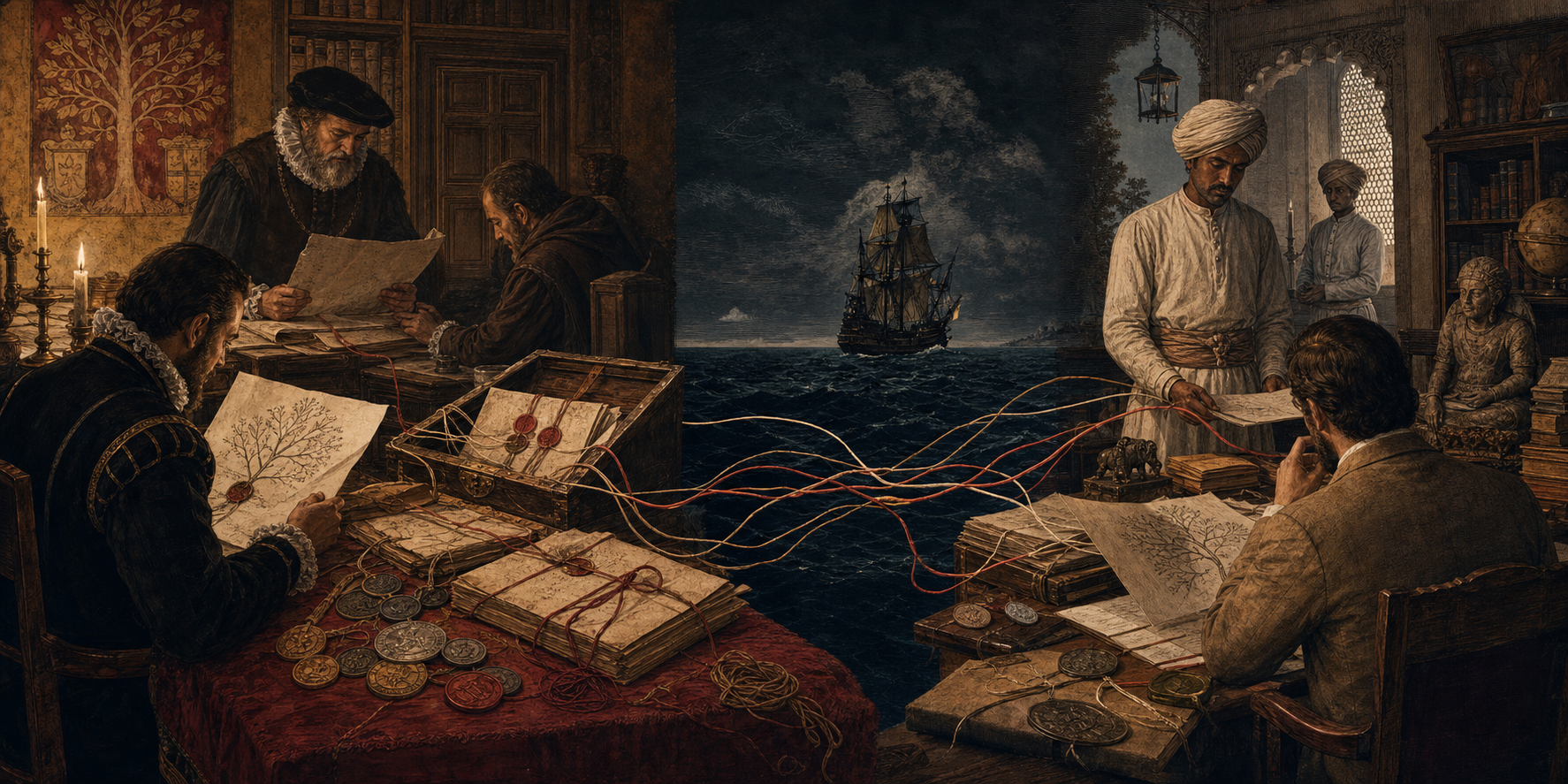
The history begins before European observers attempted to classify Indian society. According to the source article, Portuguese and Spanish ideas about descent had been shaped by the religious and political consolidation of the Iberian Peninsula. Granada fell in 1492, Spain ordered Jews who would not convert to leave, and Portugal forcibly converted many Jews in 1497. Converts and their descendants could remain suspect despite formally becoming Christian.
The doctrine of limpieza de sangre, or cleanliness of blood, turned that suspicion into a genealogical distinction between Old Christians and people believed to possess Jewish or Muslim ancestry. The source reports that institutions could examine lineage, testimony and ancestral reputation when deciding eligibility for certain orders, colleges, offices, guilds or honours. Present belief and conduct could therefore be subordinated to inherited identity.
This background matters because the Portuguese word casta could denote lineage, stock, breed or kind. It did not originate as a precise translation of a single Indian institution. When Portuguese observers reached India after Vasco da Gama’s arrival at Calicut in 1498, they brought a vocabulary already connecting ancestry, collective character, marriage and social eligibility. The source carefully notes that Iberian blood-purity doctrine was not identical to later biological racism, even if it helped make inherited status intelligible in ways that subsequent racial thought could develop.
Translation compressed unlike Indian institutions
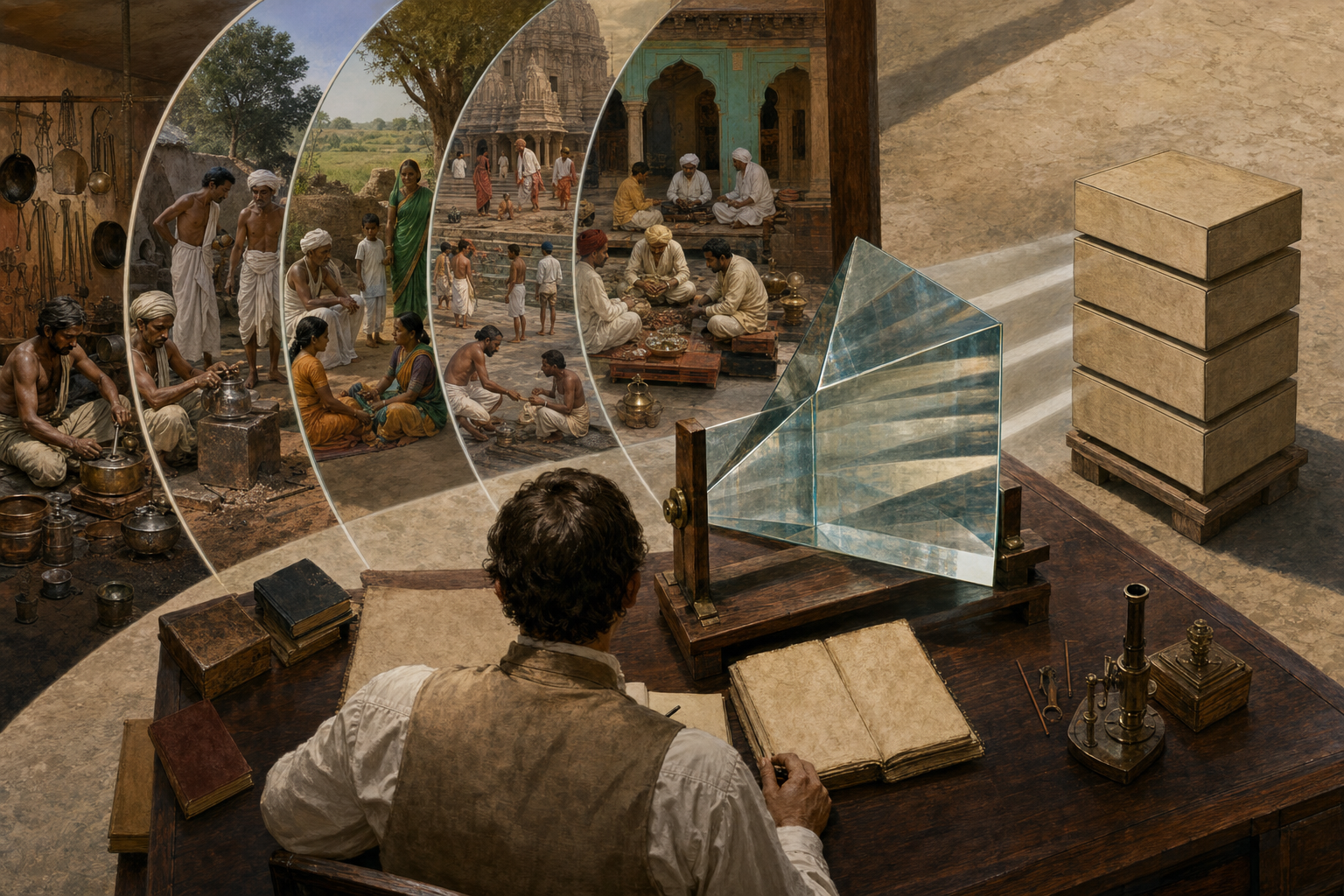
European descriptions applied casta broadly to communities associated with occupation, descent, religious practice, locality, marriage or political rank. That elasticity gradually hardened into the impression that “caste” named a uniquely Indian and internally coherent institution. Translation was therefore not merely a change of vocabulary; it selected which differences counted and implied how they were related.
The source distinguishes several terms that the colonial label could obscure. Varṇa could provide a broad normative or cosmological classification, whereas jāti more often identified a socially recognised community connected with birth, marriage or custom. Kula could indicate a family, house or lineage; gotra another form of descent affiliation; sampradāya a transmitted religious tradition; and śreṇi an occupational or mercantile organisation. Their meanings and relationships were not uniform across India.
Ācāra, understood as customary conduct or an inherited way of life, exposes a further limitation of the single-system model. Communities could maintain continuity through food, rites, marriage conventions, work, worship and local institutions. Yet the source also describes such practices as capable of changing with migration, patronage, economic opportunity, religious affiliation, political conflict or shifts in the importance of professions. An inherited community could thus be durable without being an unchanging racial unit.
This distinction does not erase precolonial inequality. The source explicitly recognises documented forms of endogamy, unequal access to resources, ranked honour, occupational limits and untouchability. Its narrower claim is that the existence of these practices does not establish that every regional distinction belonged to one timeless, pan-Indian mechanism matching the later colonial model.
Race theory fused language, descent and social rank

Between the early modern Iberian setting and nineteenth-century colonial anthropology, European explanations of human difference changed. The source describes genealogies of nobility, religious boundaries, slavery, natural history, anatomy, philology and theories of civilisation increasingly converging. “Race,” once usable for lineage or a people imagined through common descent, was reorganised by some theorists around supposedly inherited physical and mental traits. Populations could then be ranked as though they were stable natural types.
Philology supplied a particularly influential bridge. The demonstrated relationship among Sanskrit, Greek, Latin and other Indo-European languages was converted by some thinkers into a history of an “Aryan” people or race. Within that speculative account, Indian social rank could be interpreted as evidence of ancient conquest, separation or racial mixture. A finding about related languages was made to bear claims about biology and social organisation.
The source identifies the methodological problem: language, biological ancestry, textual classification and community membership answer different questions. Languages can spread through education, trade, political prestige, migration, intermarriage or cultural adoption. Communities can alter occupations, alliances, names and status. Treating all four forms of evidence as interchangeable made a conjectural racial history appear to explain the entire social field.
The colonial construction of caste was therefore not a single false statement imposed at one moment. It was a chain of equivalences. A linguistic family could be imagined as a race; textual categories could be treated as descriptions of everyday society; social rank could become evidence of ancestry; and local communities could be positioned as fixed subdivisions of a comprehensive structure.
Administration converted a theory into public facts
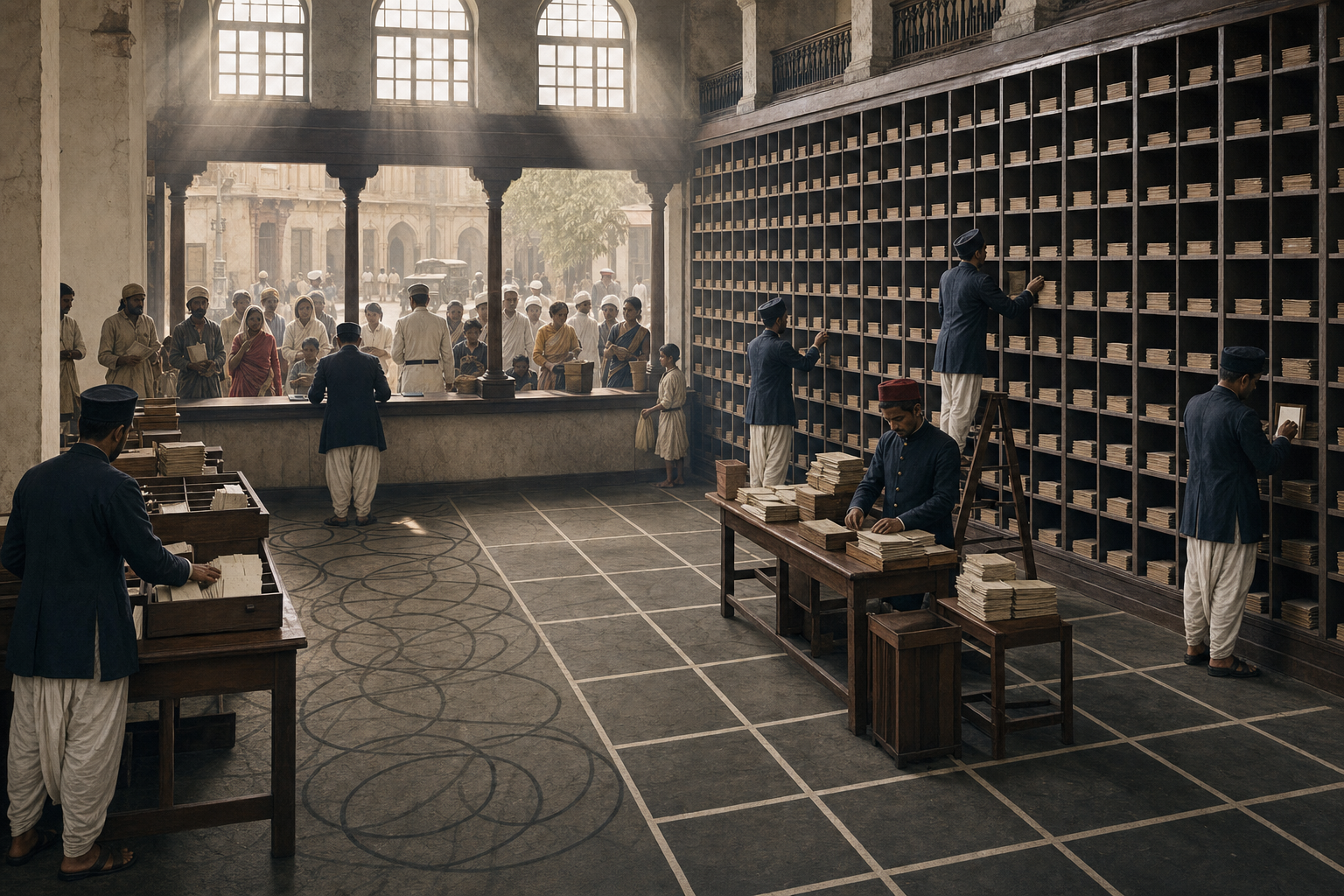
Scholarly classification acquired greater force when colonial government used it. The source reports that officials required legible population categories for taxation, law, recruitment, representation, policing, censuses and public benefits. They collected community names, requested rankings from local informants, compared textual prescriptions with observed practices and fitted inconsistent material into standard schedules.
This process created a feedback loop. Administrators needed stable groups in order to govern, while state records made the groups they recognised appear more stable. A disputed local ranking could enter an official schedule; the schedule could then be treated as evidence that the ranking was established. Classification did not necessarily create every identity it recorded, but it altered the incentives and forums through which identities were asserted, compared and contested.
The most useful meaning of “construction” is consequently neither fabrication nor simple discovery. Colonial rule inherited real communities and inequalities, interpreted them through European theories of genealogy and race, and standardised selected features for administrative purposes. The product was more uniform than the field from which it had been assembled and more consequential because institutions acted upon it.
Key takeaways
- The word “caste” carried an Iberian history of lineage and blood before it became a general label for Indian social difference.
- The label compressed distinct categories of birth, custom, descent, religious transmission, occupation and normative classification.
- Colonial racial theories joined evidence from philology, texts, physical ancestry and social rank even though those forms of evidence do not map neatly onto one another.
- Administrative use gave classifications practical durability, turning interpretive models into categories through which communities were governed and represented.
A careful history must therefore resist two shortcuts: treating colonial terminology as a transparent account of an unchanged antiquity, and treating every documented hierarchy as merely a colonial invention. The more productive inquiry asks which relationships existed in a particular place, how they changed, who classified them and what power the classification acquired.
Future study can sharpen that inquiry by keeping textual ideals, local practices, community self-descriptions and administrative records analytically distinct before examining how they interacted. That approach leaves room to confront inherited discrimination while also recovering the historical diversity concealed by a single-system narrative.