

You may have come here to settle one question: did Aryabhata invent zero? The honest answer is more useful than the familiar slogan. Aryabhata was a foundational architect of Bharat’s mathematical tradition, but zero and decimal place value cannot be assigned to him alone.
You do not have to choose between civilizational pride and historical precision. Once you separate Aryabhata’s documented achievements from the longer development of zero, you can explain India’s scientific heritage with confidence – and without handing an informed listener an easy correction.
Key takeaways: the claim that holds up
- Aryabhata, born in 476 CE, composed the Aryabhatiya and made major contributions to arithmetic, algebra, trigonometry, astronomy and positional numerical thinking.
- The decimal place-value system and the concept of zero matured over centuries within the Indian mathematical tradition. Treating them as one person’s sudden invention hides that development.
- Brahmagupta explicitly formulated arithmetic involving zero in the seventh century. That is a distinct milestone from Aryabhata’s earlier work.
- The strongest account of Bharat’s achievement names both individual contributions and the intellectual continuum that made them possible.
Aryabhata’s documented achievements need no exaggeration
Aryabhata’s stature does not depend on attaching every Indian mathematical breakthrough to his name. His own record is substantial. The Aryabhatiya brought together work in arithmetic, algebra, trigonometry and astronomy, demonstrating a culture of systematic calculation rather than isolated numerical tricks.
When you introduce Aryabhata to a student, colleague or skeptical friend, begin with four achievements that can be stated clearly:
- Earth’s rotation: Aryabhata described the Earth’s diurnal rotation. This is the precise astronomical claim to make; it should not be inflated into the assertion that he presented a complete modern heliocentric model.
- Pi: He produced a remarkably accurate approximation of pi, showing the sophistication of the numerical methods available to him.
- Trigonometry: His jya and ardha-jya tables supported systematic computation and influenced later mathematical work.
- Numeration: His letter-based numerical scheme employed place-value principles, an important stage in the development of positional notation in the subcontinent.
These details do more than protect you from an avoidable factual dispute. They reveal how Aryabhata actually worked: through numerical organization, calculation and reasoned models of observable phenomena. A vague claim that he invented everything makes him sound legendary. A precise account lets you see him as a mathematician.
That distinction matters. Legends invite admiration, but methods invite study. If younger readers remember only a heroic label, they have learned a name. If they remember rotation, trigonometric tables, a numerical approximation and positional thinking, they have encountered a scientific legacy.
Why zero has more than one origin question
The usual argument becomes confused because the word zero is made to carry several different ideas at once. Separate them before assigning credit:
- Place value means that a symbol’s position determines its value. The same digit can represent units, tens or hundreds depending on where it stands.
- A placeholder preserves an empty position in written notation. It allows a number to show that a particular place contains nothing without collapsing the positions around it.
- Zero as a number goes beyond notation. It can enter arithmetic and therefore requires explicit rules for how operations involving zero behave.
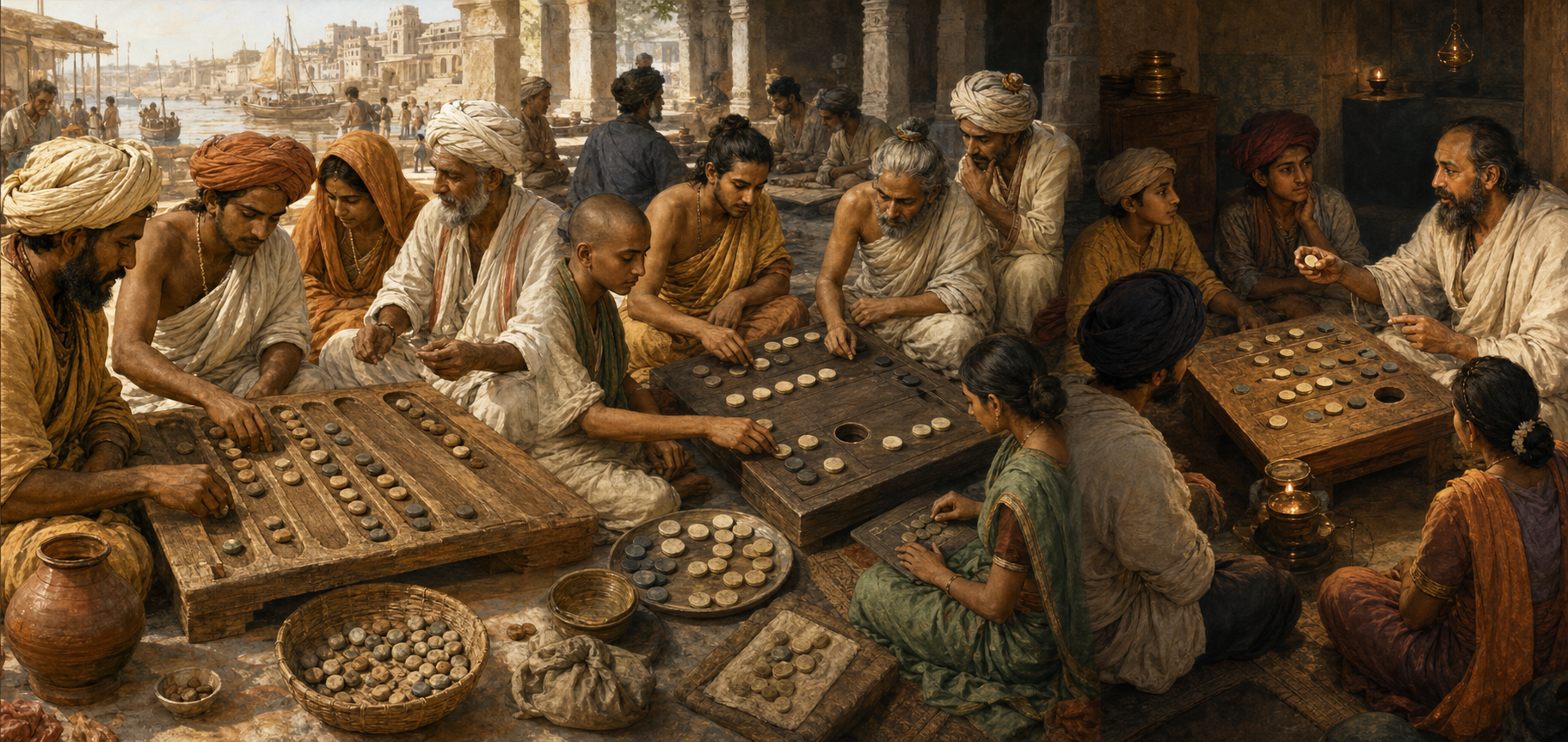
Aryabhata’s use of place-value principles belongs decisively in this history. It does not, by itself, establish that he single-handedly created every dimension of zero. The Indian decimal system developed across generations, with the Bakhshali manuscript reflecting that continuing evolution and Brahmagupta supplying a later, explicit treatment of zero in arithmetic.
This is why a bare yes or no can both mislead. Saying only yes turns a long intellectual development into a solitary moment. Saying only no can erase Aryabhata’s foundational place in the positional reasoning from which later advances emerged.
A reliable answer is: Aryabhata did not single-handedly invent the complete modern concept of zero. He made foundational contributions to India’s positional mathematical tradition, while zero and the decimal place-value system developed over centuries; Brahmagupta later formalized arithmetic rules involving zero.
Notice what this wording accomplishes. It preserves Aryabhata’s importance, names Brahmagupta’s separate contribution and credits the Indian mathematical tradition as a living continuum. It is harder to fit on a slogan, but it is much harder to disprove.
Teach the distinction without diminishing Bharat
You can make this history understandable without beginning with dates or asking a learner to memorize competing claims. Start with the mathematical distinction and then attach the historical milestones to it.
- Write 205 and 25. Ask what the zero preserves in the first number. Removing it does not merely remove an object; it changes the positional structure and therefore the number.
- Name the two roles. Explain that preserving an empty place is not identical to establishing arithmetic rules for zero as a number.
- Introduce Aryabhata through his work. Connect positional thinking to his broader achievements in arithmetic, algebra, trigonometry and astronomy.
- Place him in a continuum. Explain that a mature mathematical system can develop through many advances rather than one isolated act of invention.
- Add Brahmagupta’s milestone. Identify the seventh-century formulation of arithmetic involving zero as a later and more explicit step.
- Return to the original question. Ask the learner to replace the sentence Aryabhata invented zero with a statement that distinguishes his contribution from the tradition’s collective achievement.
This method gives the learner a reason for the historical distinction. Without the numerical example, Aryabhata versus Brahmagupta can sound like a contest over national credit. With it, the learner sees that place value and arithmetic with zero answer different mathematical needs.
That precision is compatible with a dharmic understanding of knowledge. Hindu, Buddhist, Jain and Sikh traditions are not interchangeable, but their civilizational worlds honor learning, disciplined inquiry and ethical conduct. Aryabhata can therefore be approached as a shared figure of Bharat’s knowledge heritage without forcing him into a simplistic sectarian label.
Intellectual humility is part of that inheritance. Correcting an overstated slogan does not surrender civilizational pride; it disciplines it. Bharat’s case is stronger when it shows a durable community of inquiry producing successive advances, not a collection of fragile claims that depend on one celebrated name.
Protect scientific heritage through accurate representation
Aryabhata’s image may appear in a classroom, museum display, advertisement or social-media graphic. In each setting, the essential question is the same: does the presentation help the audience understand his work, or does it reduce him to a costume, a pseudo-equation and a convenient symbol of ancient genius?
If you create or approve material about Aryabhata, use this practical check before publication:
- Name an actual contribution. Earth’s rotation, the approximation of pi, trigonometric tables and positional numerical thinking are more informative than a generic genius label.
- Keep the zero claim qualified. Present Aryabhata as foundational, the Indian development as cumulative and Brahmagupta’s arithmetic rules as a later milestone.
- Remove visual caricatures. Anachronistic props, invented symbols and meaningless equations may make the figure recognizable while stripping away his intellectual identity.
- Add context where attention is brief. A caption, short explanatory panel or linked educational page can distinguish historical fact from creative allegory.
- Request informed review. When the material will reach a large audience, have a recognized historian of mathematics or astronomy check both the wording and the visual assumptions.
A respectful portrayal does not have to be solemn or inaccessible. It does have to preserve the relationship between the person and the achievement. Once Aryabhata becomes merely an ancient-looking face used to sell an unrelated idea, the audience receives the prestige of his name without the knowledge that earned it.
If a brand or publisher gets it wrong
A factual, narrowly framed objection is more effective than a general accusation of disrespect. It gives the responsible team something concrete to correct.
- Identify the exact image, caption or spoken line at issue.
- State whether the problem is a false claim, an anachronism, a caricature or a lack of context.
- Supply a concise replacement. For example, replace a sole-inventor claim with the historically stronger wording given above.
- Ask for a defined remedy: a corrected caption, revised creative, public clarification or companion educational material.
- If an advertisement appears likely to cause serious or widespread offense, use the Advertising Standards Council of India’s complaint process and cite the precise element rather than attacking the people involved.
Even where no strict legal boundary has been crossed, cultural responsibility still matters. Reputation, public trust and the transmission of historical memory all depend on choices that law may not regulate. Civil feedback keeps the focus on those choices; harassment only obscures the correction being requested.
The next time you encounter the claim that Aryabhata invented zero, do not discard it with a sneer or repeat it unchanged. Replace it with the stronger account: Aryabhata was a foundational mathematician of Bharat, zero and decimal place value matured through an Indian intellectual continuum, and Brahmagupta later made arithmetic with zero explicit. Then point to the mathematics. That is how admiration becomes education and inheritance becomes living knowledge.


References
