-
Do Planets Shape Our Destiny? A Timeless Vedic Guide to Jyotisha, Karma, and Free Will

Is astrology truly the “eyes of the Vedas,” and do planets govern human fate? This in-depth, academically grounded guide clarifies what Vedāṅga Jyotiṣa is, how it historically joined astronomy and ritual timing, and why life is physically and culturally entangled with celestial cycles. Readers learn the technical building blocks—rāśi, nakṣatra, lagna, pañcāṅga, daśā, gochara, and…
-
Decoding Nakshatras: A Timeless Vedic Star Map Uniting Dharmic Traditions and Skywatchers

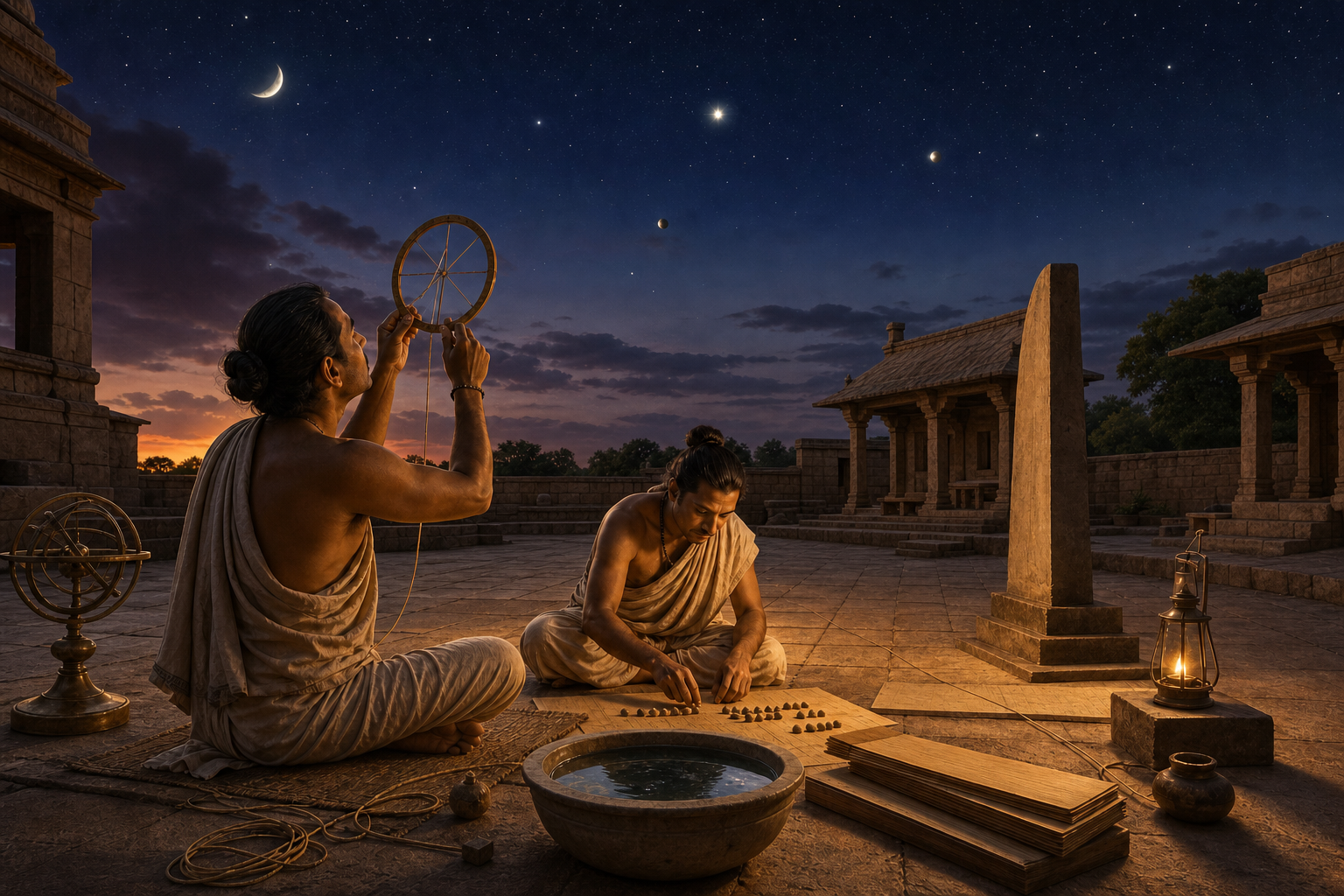
Nakshatras, the 27 lunar mansions of Vedic astronomy, form a precise star map that has guided Hindu Dharma and related dharmic traditions for millennia. Each mansion spans 13°20′ along the Moon’s path and is anchored by recognizable stars such as the Pleiades (Krittika), Aldebaran (Rohini), Spica (Chitra), and Antares (Jyeshtha). Classical sources—from the Rigveda and…
-
Clash and Convergence: How Vedic and Western Worldviews Shaped Science, Faith, and History

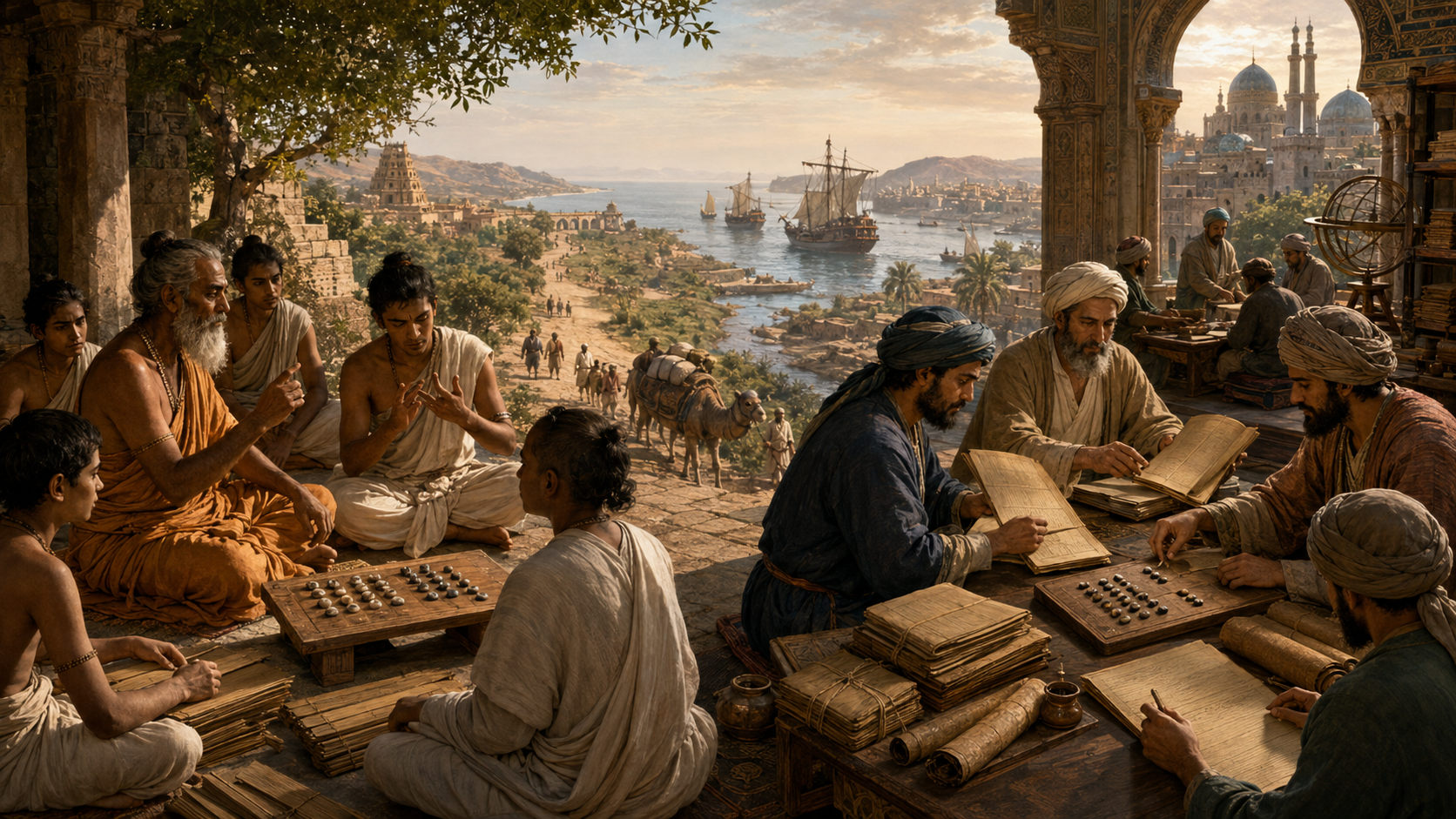
This long-form essay traces how encounters between Vedic knowledge systems and Western scholarship reshaped global debates on science, faith, and history. It contextualizes John Bentley’s 1825 rebuke of John Playfair within wider conflicts over chronology, authority, and civilizational legitimacy. Readers gain a clear view of India’s mathematical and astronomical achievements, the emergence of Indology, and…
-
Kerala’s Forgotten Calculus: The Dharmic Knowledge Tradition that Preceded Newton by 200 Years

This essay examines how the Kerala School of Mathematics developed series expansions and methods akin to calculus centuries before their European articulation. It situates the debate within the politics of recognition, showing how Eurocentric narratives shaped the reception of Indian scientific achievements. It synthesizes George Gheverghese Joseph’s research on Madhava of Sangamagrama and his successors,…
-
Ayanacalana Explained: The Essential Guide to Mastering Hindu Timekeeping and Rituals

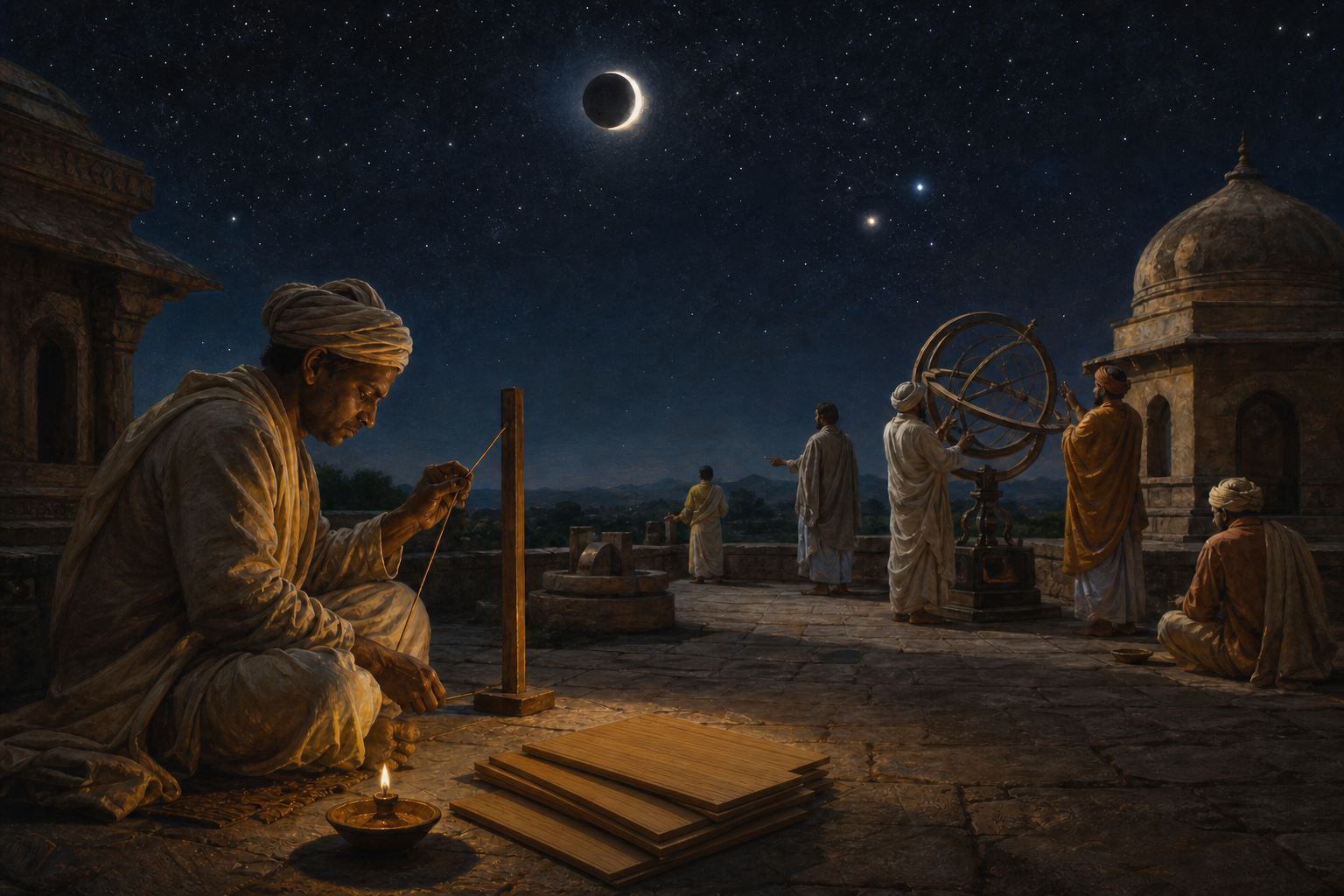
Ayanacalana—the precession of the equinoxes—anchors the accuracy of the Hindu panchanga and the timing of rituals and festivals. By clarifying the relationship between the ecliptic, celestial equator, and nakshatras, it explains why ayanamsha is essential in Indian calendrical practice. The five limbs of the panchanga, including tithi and nakshatra, depend on this correction to reflect…
-
Master the Panchanga: A Complete, Proven Guide to Hindu Timekeeping’s Five Limbs

The Panchanga—Hinduism’s five-limbed almanac—combines Tithi, Vara, Nakshatra, Yoga, and Karana to guide daily life with precision and meaning. Rooted in Vedic astronomy and refined by scholars like Aryabhata and Varahamihira, it aligns rituals, festivals, and personal decisions with celestial rhythms. Readers discover how the lunisolar calendar stays seasonally accurate through adhik maas and why regional…
-
The Aryabhata Number System

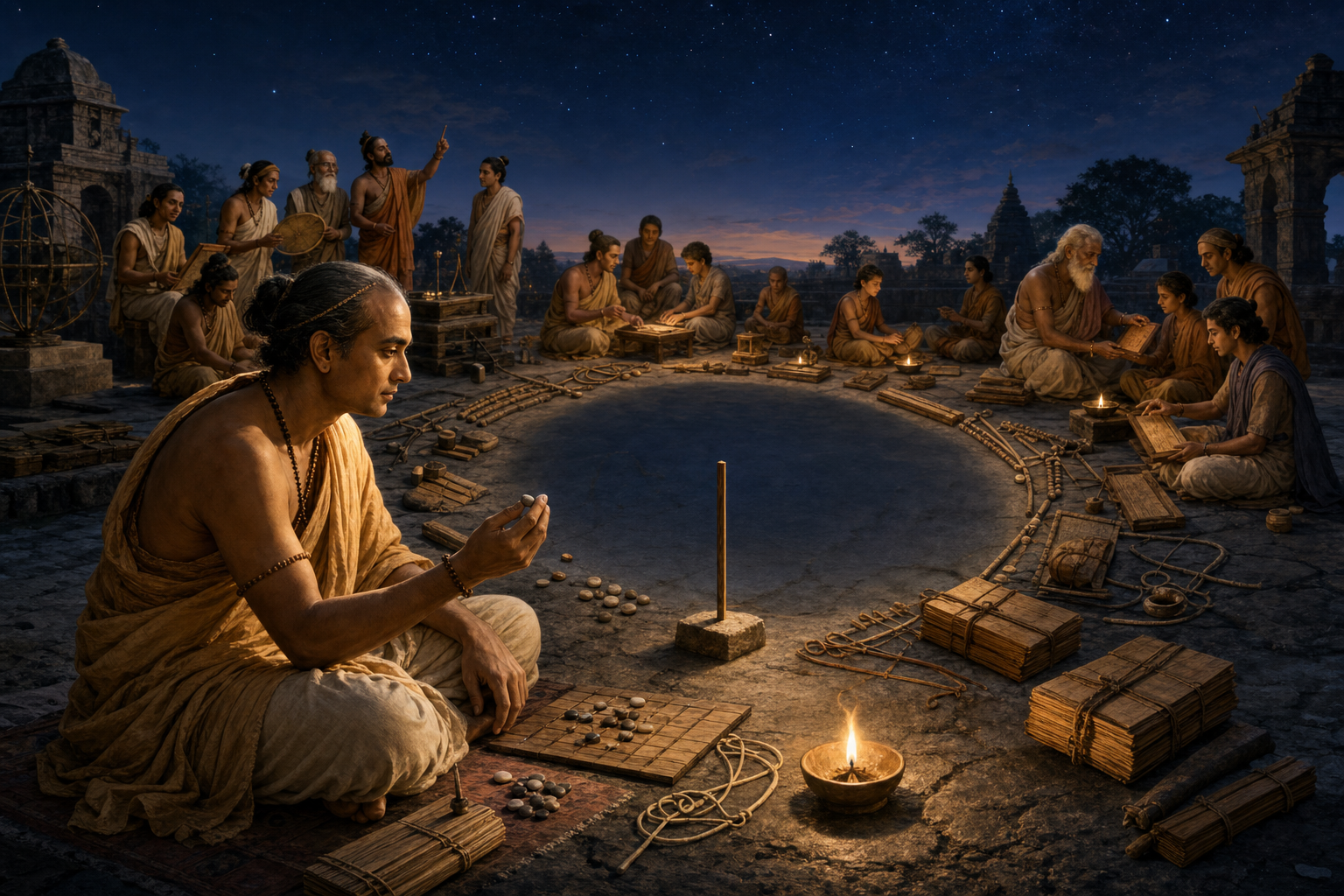
The **Aryabhata Number System** showcases the ingenuity of ancient Indian mathematicians, with Aryabhata inventing a unique method of numerical representation using Samskritam letters. His seminal work, the **Aryabhatiya**, composed in 499 CE, is divided into four sections covering astronomical constants, mathematics, time reckoning, and celestial geometry. Aryabhata’s notable contributions include the use of the decimal…
-
The Poetry of Algebra: How India Contributed to the Logic of Indeterminate Equations

This blog post explores the contributions of ancient Indian mathematicians Bhaskara, Brahmagupta, and Aryabhata to algebra, highlighting their work on indeterminate equations. It emphasizes the poetic beauty of algebra and its enduring legacy, connecting historical mathematical innovations to modern technology and the development of computers in India.