
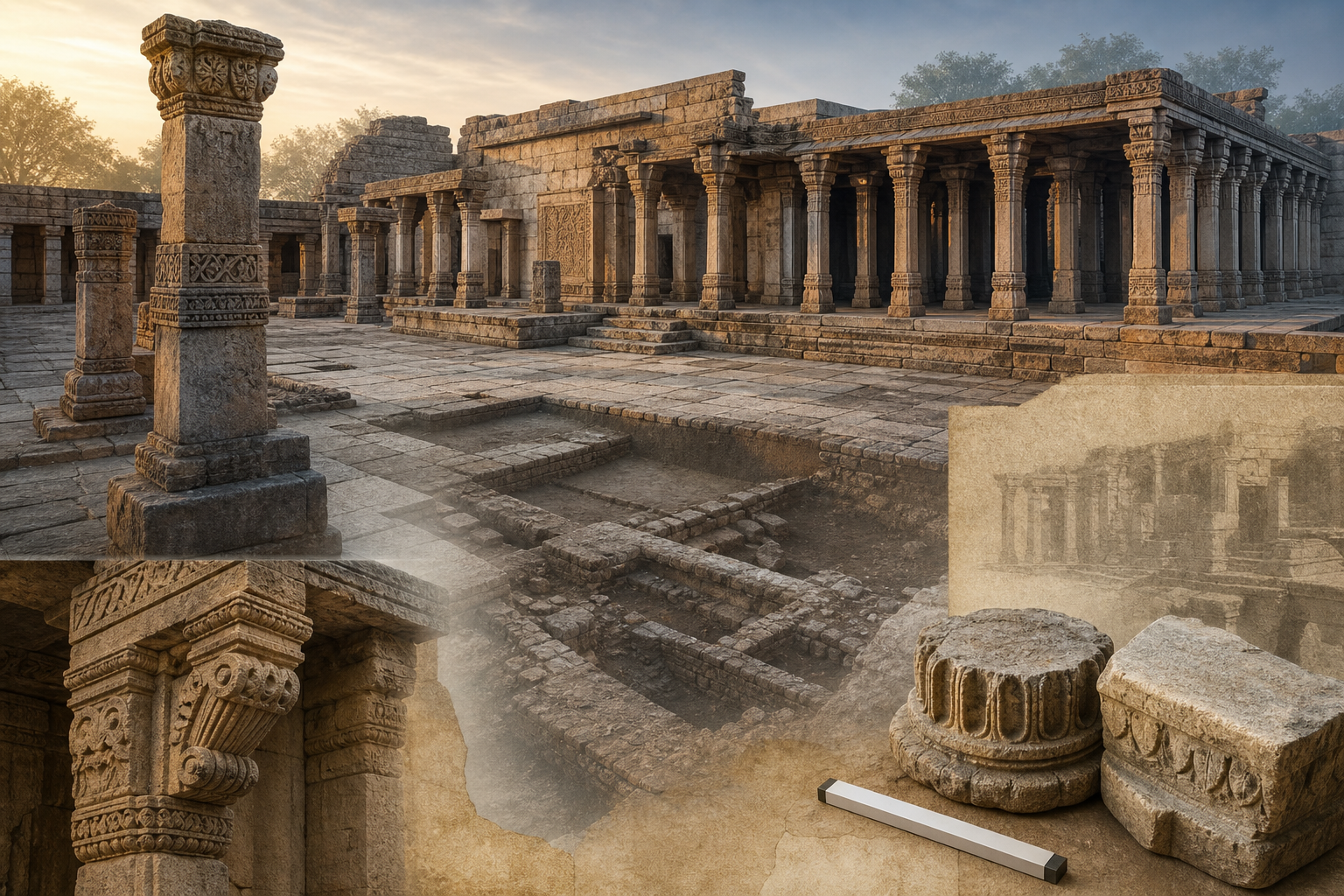
If you want to know whether Bhojshala is now legally recognised as a Hindu temple, the short answer needs one important qualification. On 15 May 2026, the Madhya Pradesh High Court declared the disputed precinct within the Bhojshala complex to be a Hindu temple. Precision about the words “disputed precinct” matters.
The ruling is strongest when neither enlarged nor diminished. It identifies the historical religious character of the contested space through archaeology, architecture, epigraphy, historical records and evidence of worship. It does not make physical possession, daily access, conservation duties and every other administrative consequence interchangeable with that finding.
Key takeaways
- The High Court declared the disputed precinct within Bhojshala a Hindu temple; claims about the entire complex should use the Court’s exact geographical scope.
- The declaration recognises a religious character found to have existed already. It is not framed as a judicial conversion of one place into another.
- No isolated carving, inscription or recollection carried the conclusion by itself. The finding rested on a composite evidentiary chain.
- Ayodhya supplied a method for weighing documents, archaeology, worship and remedies. It did not supply an automatic factual answer for Bhojshala.
- Temple recognition does not authorise unregulated access, construction, removal of later fabric or damage to an ASI-protected monument.
The ruling is about religious character, not every consequence
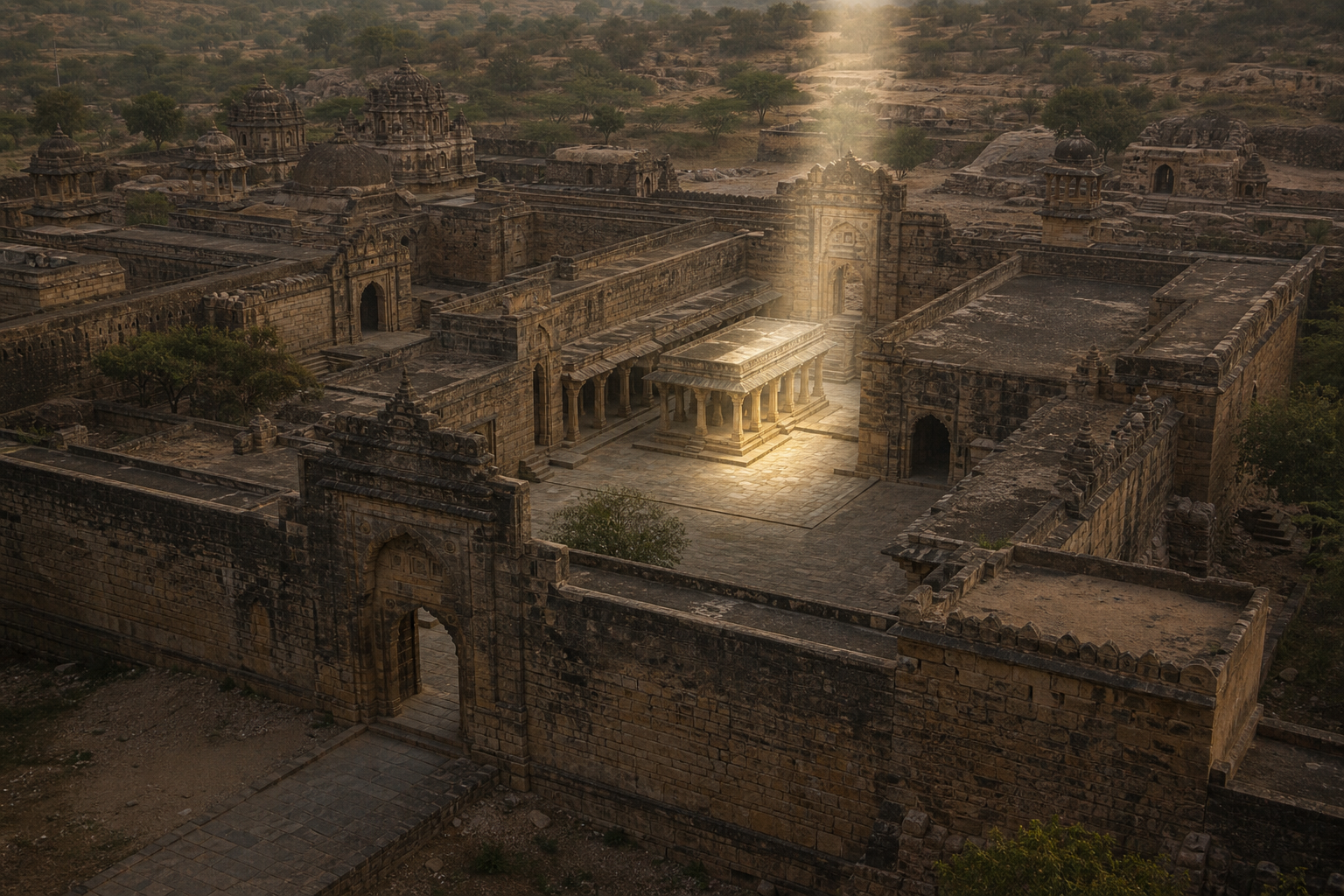
Bhojshala is historically associated with King Bhoj, around the 11th century, and the veneration of Vagdevi, or Saraswati. The complex also acquired later architectural layers, including the Kamal Maula mosque precinct, and eventually came under the custodianship of the Archaeological Survey of India. Those layers explain why a one-line description of the place has never been enough.
A finding of religious character asks what a place has historically been for legal purposes. Physical possession asks who controls or occupies it. An access schedule asks who may worship there, and when. Conservation rules determine what anyone may move, install, repair or remove. These questions affect one another, but they remain distinct.
Temple status in law is also more than an architectural compliment. Courts generally look for a place used as of right by the Hindu community for public religious worship, tested against such matters as recognised ritual, sanctified space, icons, historical usage and material remains. At Bhojshala, the legal conclusion joined historical identity to evidence of religious use; it did not rest only on whether the masonry resembled a temple.
This gives you three practical rules when reading claims about the decision. Quote the space the Court actually identified. Separate the declaration from questions of possession and access. Do not infer a specific administrative change unless an operative direction establishes it.
If you intend to rely on the ruling in litigation, organise worship, alter the site or contest an access restriction, commentary is not enough. Those actions can create legal and conservation consequences. Work from the signed operative order, any later appellate or implementation directions, and advice from a lawyer familiar with heritage and religious-endowment law.
Historical character was established through a chain of evidence
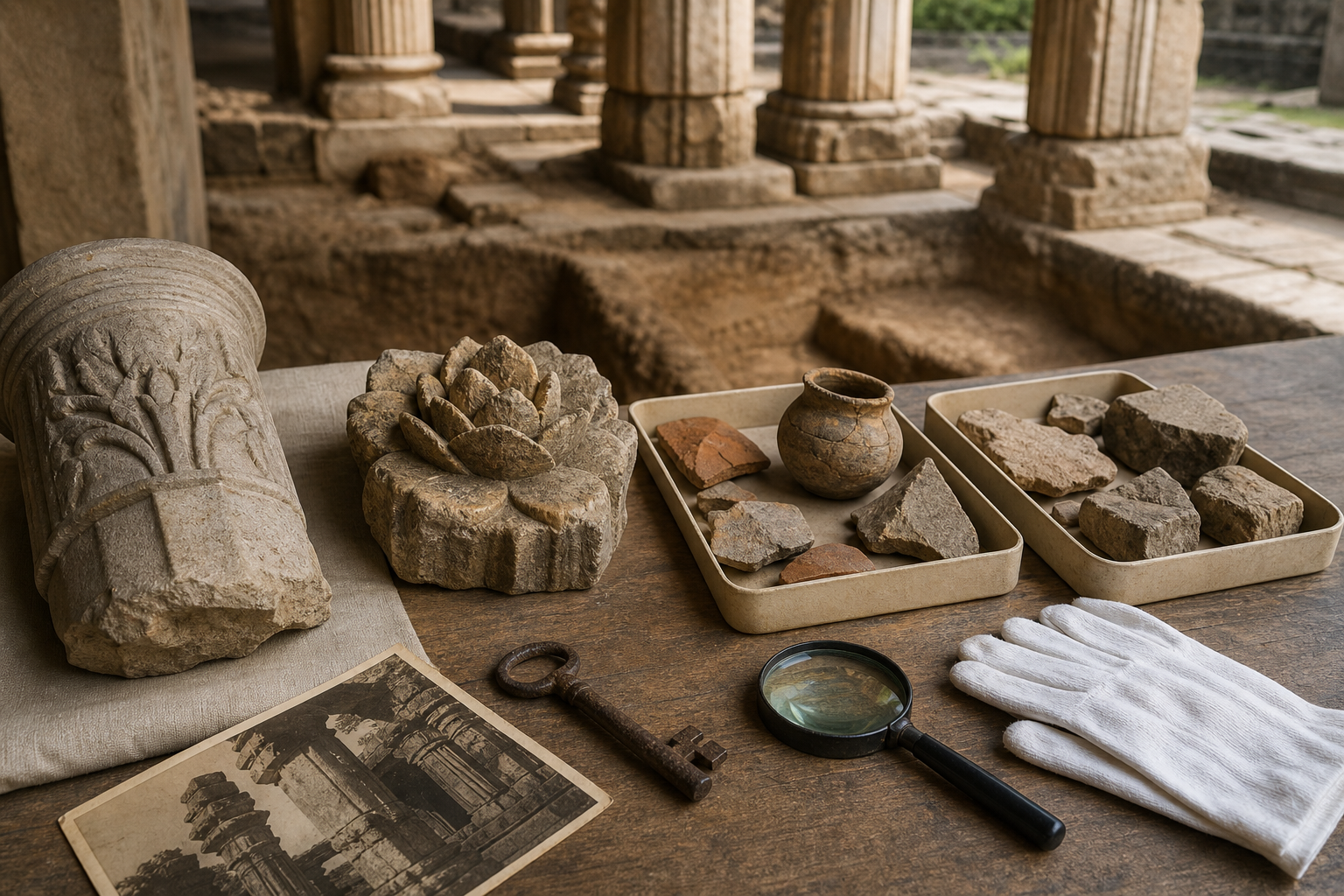
The central evidentiary point is convergence. Bhojshala’s character was assessed through a combined matrix of epigraphy, iconography, architectural typology, historical records, travelogues, gazetteers, ASI field documentation and testimony about worship. Each category answers a different question and checks the weaknesses of the others.
| Evidence | What it can help establish | What it cannot establish by itself |
|---|---|---|
| Epigraphy | A dedication, patron, institution, language, religious association or approximate historical setting | The date and function of every surrounding wall merely because an inscribed stone is present |
| Iconography and architectural typology | Whether pillars, mouldings, plans, sculptural forms or sanctified spaces conform to temple traditions | That every component remains in its original position or belongs to the same construction phase |
| Historical records, travelogues and gazetteers | Names, remembered associations, descriptions and changes in use across time | Direct proof of an earlier period when an account was written much later |
| ASI field documentation and archaeology | Construction sequences, reused fabric, subsurface features and relationships among structural layers | A religious conclusion without provenance, context and specialist interpretation |
| Evidence of worship | Continuity of community use and the lived religious meaning of a place | The complete architectural history of the monument without corroborating material or documentary evidence |
Provenance is crucial. A sculptural or architectural fragment can be highly probative, but its weight depends on where it was found, whether it was reused, how it relates to adjoining fabric and whether its style agrees with inscriptions and historical chronology. A reused temple member may prove that earlier temple material existed without proving that its present location is original. Context turns an object into evidence.
The relevant technical toolkit can include non-invasive ground-penetrating radar, high-resolution photogrammetry, 3D laser scanning, comparative stonework analysis and epigraphic examination. These methods do different jobs. Radar can identify subsurface anomalies, while photogrammetry and laser scanning preserve geometry and surface relationships. Neither an anomaly nor a digital model interprets itself.
That distinction protects you from a common evidentiary mistake: confusing a method that could be used with a finding actually produced by that method. Before repeating that a scan, inscription or excavation “proved” a claim, identify the surveyed area, the recorded feature, its context, the specialist interpretation and the corroborating evidence. Chain-of-custody records and interdisciplinary review matter because a technically impressive image can still be detached from its archaeological setting.
The same discipline applies in the other direction. The presence of later mosque-era fabric does not, by itself, erase evidence of an earlier temple. Nor does evidence of an earlier temple make every later layer historically unreal. A layered monument requires a chronology, not a winner-takes-all description of its stones.
You should therefore be cautious with unsupported details. Unless the underlying exhibits are in front of you, do not invent the wording of an inscription, a count of recovered objects, the depth of a subsurface feature or the original location of a reused member. The Bhojshala finding does not need embellishment. Its defensible force lies in the agreement among independent categories of evidence.
Ayodhya’s method and the constitutional boundary
Ayodhya did not decide Bhojshala automatically
Invoking Ayodhya does not mean that one temple judgment mechanically produces another. The relevant connection is methodological. Courts weigh competing claims through documentary and oral evidence, use archaeology to illuminate historical character, consider demonstrated patterns of worship and tailor relief to protect rights and the rule of law.
Put plainly, precedent guides the legal test; Bhojshala’s own evidence supplies the answer. “Ayodhya involved a temple, therefore Bhojshala must be a temple” is not a serious evidentiary argument. The stronger position is that the Ayodhya framework was applied to Bhojshala’s distinct documentary, material and devotional history.
This insistence on proof serves a Dharmic claim rather than weakening it. Civilizational memory tells a community where to look and which questions to ask. Judicial proof requires inscriptions, structures, records, context and reliable testimony capable of being tested. Keeping those roles distinct turns inherited memory into a durable public case.
Recognition is not conversion, and recognition has limits
The Places of Worship (Special Provisions) Act, 1991 forms part of the legal setting. The Court treated determination of historical character as recognition of an existing identity during adjudication, rather than as a fresh judicial conversion. That distinction is significant, but it should not be stretched into the claim that the Act is irrelevant to every dispute. Its application still depends on the claim before the court, the evidence, binding precedent and the precise relief sought.
Articles 25 and 26 protect religious freedom while allowing the State to safeguard public order, morality and health. At a protected monument, those guarantees operate alongside the conservation regime administered through the ASI and the Ancient Monuments and Archaeological Sites and Remains framework. No worshipper or administrator should read temple recognition as permission to chip historic stone, paint old surfaces, remove later additions, install new fabric without approval or disregard crowd controls.
Preserving later mosque-era components does not cancel the finding that the disputed precinct has Hindu temple character. Sensitive conservation can acknowledge the primary religious identity found by the Court while retaining later fabric that records what happened to the site over time. Erasing a later layer would also erase part of the physical chronology through which the earlier layer is understood.
This is where constitutional neutrality and a pro-Dharma historical position can meet. The State need not deny a Hindu temple identity to preserve later heritage. Hindu devotees do not need the destruction of later evidence for the temple finding to remain true. Accuracy, restraint and stewardship make the recognition harder to misrepresent and easier to pass intact to the next generation.
What a responsible next phase should look like
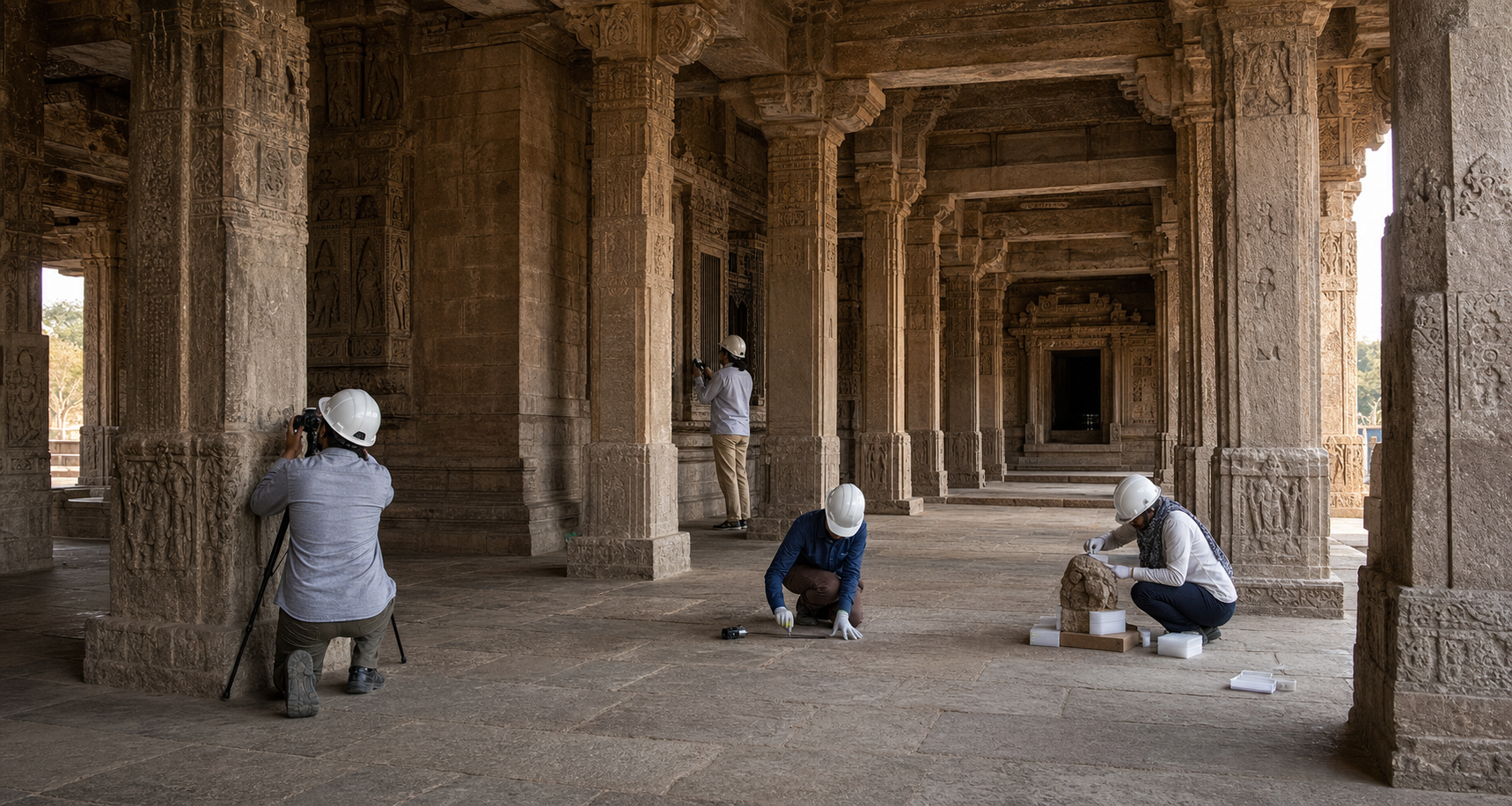
Test every public claim with six questions
A court ruling of this sensitivity will attract claims that compress evidence, remedy and administration into one sentence. Before accepting or forwarding one, ask:
- Which space is being discussed? Look for the exact precinct, structure or boundary rather than assuming every part of the complex had an identical history.
- Is this a holding, an evidentiary finding or a predicted consequence? A finding about historical character does not automatically prove a claim about possession, access hours or future construction.
- What is the evidence category? An inscription, structural plan, radar result, gazetteer entry and witness account have different strengths and limits.
- Was the named technique actually used? A list of available archaeological tools is not proof that every tool produced a Bhojshala finding.
- Is the claim corroborated? Give greater weight to a conclusion supported by architecture, chronology, archaeology and worship evidence together.
- Has a later order changed implementation? Check operative administrative and appellate directions before making claims about present access or control.
If a claim cannot answer the first two questions, treat it as incomplete. If it names a dramatic artifact or scientific result but cannot answer the next three, treat it as unverified. If it announces an immediate change at the site without answering the sixth, do not act on it.
Look for conservation and access discipline
The following are sound implementation benchmarks, not a claim that the Court ordered every individual measure. They give you concrete signs by which to judge whether authorities are protecting both worship and heritage:
- A secured scientific inventory: movable and immovable elements should be catalogued with locations, condition records, photographs and controlled metadata before access patterns change.
- A conservation management plan: the plan should record structural condition, define reversible interventions, maintain a risk register and monitor cracks and environmental change where necessary.
- A worship and visitor plan: separate entry and exit flows, crowd-density limits, festival procedures, shaded queues, first-aid points and gender-sensitive facilities protect people as well as stone.
- Clear interpretation: multilingual signage and a peer-reviewed digital archive should explain the chronology, temple evidence and later layers without turning the monument into a site of proselytising or provocation.
- Transparent community contact: published timelines, briefings, an accessible grievance desk, trained volunteers and on-site mediation reduce the space in which rumours can trigger confrontation.
- Conservation-linked local benefit: guided walks, craft kiosks and heritage stays should operate under fair standards, with commercial activity kept subordinate to the monument’s religious and structural needs.
Bhojshala can again become a place where young visitors learn to read architectural form, understand inscriptions and encounter the intellectual legacy associated with Saraswati. That opportunity will be lost if the ruling is reduced to a slogan or the monument is treated as a stage for confrontation.
Before you share the next claim about Bhojshala, quote the exact precinct and ask which category of evidence supports it. Then watch whether implementation protects worship, human safety and every historically valuable layer. That is the practical standard by which temple recognition can become responsible civilizational restoration.