

You may have encountered a blunt allegation: Bharat is financing a Taliban purchase of Belarusian drones. Before you repeat it as either a scandal or a strategic victory, ask a narrower question: what has actually been demonstrated?
The responsible verdict is unverified. That does not mean false. It means the public case has not crossed the distance between a geopolitically plausible scenario and a proven financial transaction. You do not have to choose between accepting the allegation and dismissing it on instinct.
The headline compresses four different claims

Treating the controversy as one yes-or-no question conceals where the evidentiary gaps lie. At least four propositions have been bundled together:
| Proposition | What it would establish | Present status |
|---|---|---|
| The Taliban arranged to acquire Belarusian drones | The underlying procurement exists | No official confirmation is identified |
| Indian money supports the purchase | The central financing allegation | No payment record or financing mechanism has been publicly identified |
| Russia approved or facilitated the arrangement | A wider clandestine operation involving Moscow | A strategic inference, not a confirmed part of the transaction |
| The purpose is to pressure Pakistan or counter ISIS-K | A possible motive | Motive cannot establish that the conduct occurred |
The word financing also needs definition. It could mean a direct state payment, money routed through an intermediary, a loan, a guarantee, reimbursement, or merely political approval for somebody else’s funding. A serious allegation should specify which mechanism is being alleged. Otherwise, every denial can be evaded by quietly changing what the word means.
The claim entered circulation through Afghanistan International, a London-based outlet, in work associated with Jamshid Yama Amiri and Samsama Sirat. Their employment histories and the outlet’s political orientation may justify closer scrutiny, but neither proves fabrication. Claims that anti-Taliban diaspora media may receive support from wealthy exiles or Western governments are likewise speculation unless funding evidence is produced. Provenance tells you where to investigate; it does not decide whether a claim is true.
Afghanistan, Belarus, India, and Russia have not supplied the official confirmation that would settle the basic account. Silence is not an admission, however, just as an official denial would not automatically disprove a covert arrangement. The burden can also be met through authenticated records and independent corroboration. Those have not been identified in the public case described so far.
Why the scenario sounds plausible without becoming proven
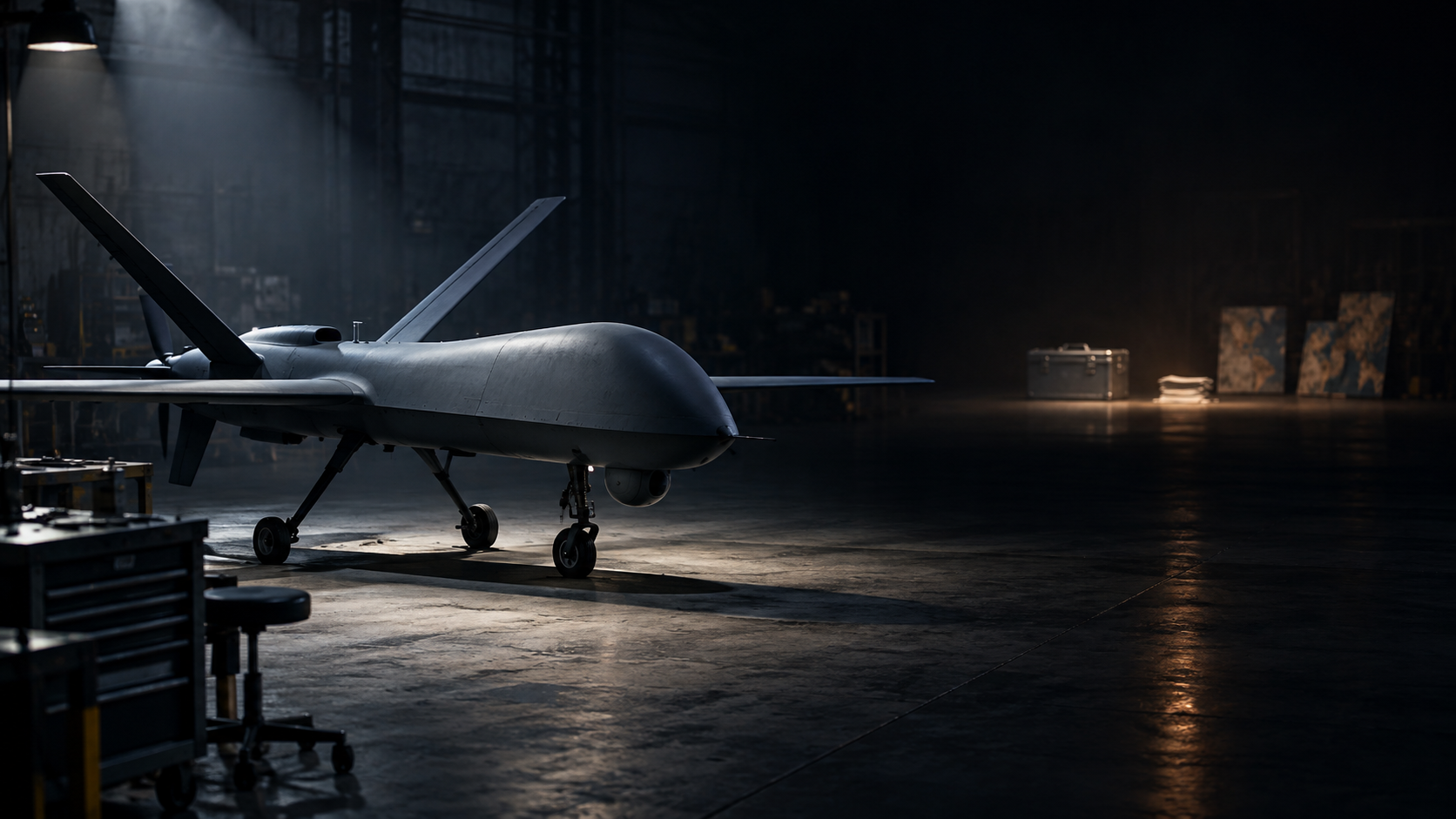
The allegation has enough geopolitical logic to resist casual dismissal. Renewed Afghanistan-Pakistan cross-border attacks create an obvious security context. India is Pakistan’s principal regional rival. Afghanistan also reached a military-technical arrangement with Russia for repairs to Russian-made equipment, while Belarus is closely integrated with Russia’s defence-industrial system. Those relationships make contact and procurement conceivable.
Russia has another stated concern. Foreign Minister Sergey Lavrov warned that Western weapons and ammunition were being sent by Ukraine to ISIS-K in Afghanistan. That establishes Moscow’s expressed threat perception; it does not, by itself, prove the transfer, its route, or an Indian response. A further hypothesis places any such route through Pakistan, but a proposed route is still not route evidence.
The allegation also circulated amid US negotiations with Belarus over a potash arrangement that Donald Trump described as massive. Political negotiations can affect the timing and incentives surrounding a damaging story. Yet the coincidence points in several possible directions. It cannot tell you whether the drone allegation was exposed, planted, selectively timed, or simply published when it became available.
This is the central distinction: strategic coherence is a reason to investigate, not a substitute for evidence. Rivalry can explain why India might want Pakistan pressured. Russian concern about ISIS-K can explain why Moscow might tolerate closer Taliban cooperation. Belarusian-Russian defence links can explain a possible supply path. None of those propositions establishes that Indian funds moved to a seller.
What evidence would materially change the verdict
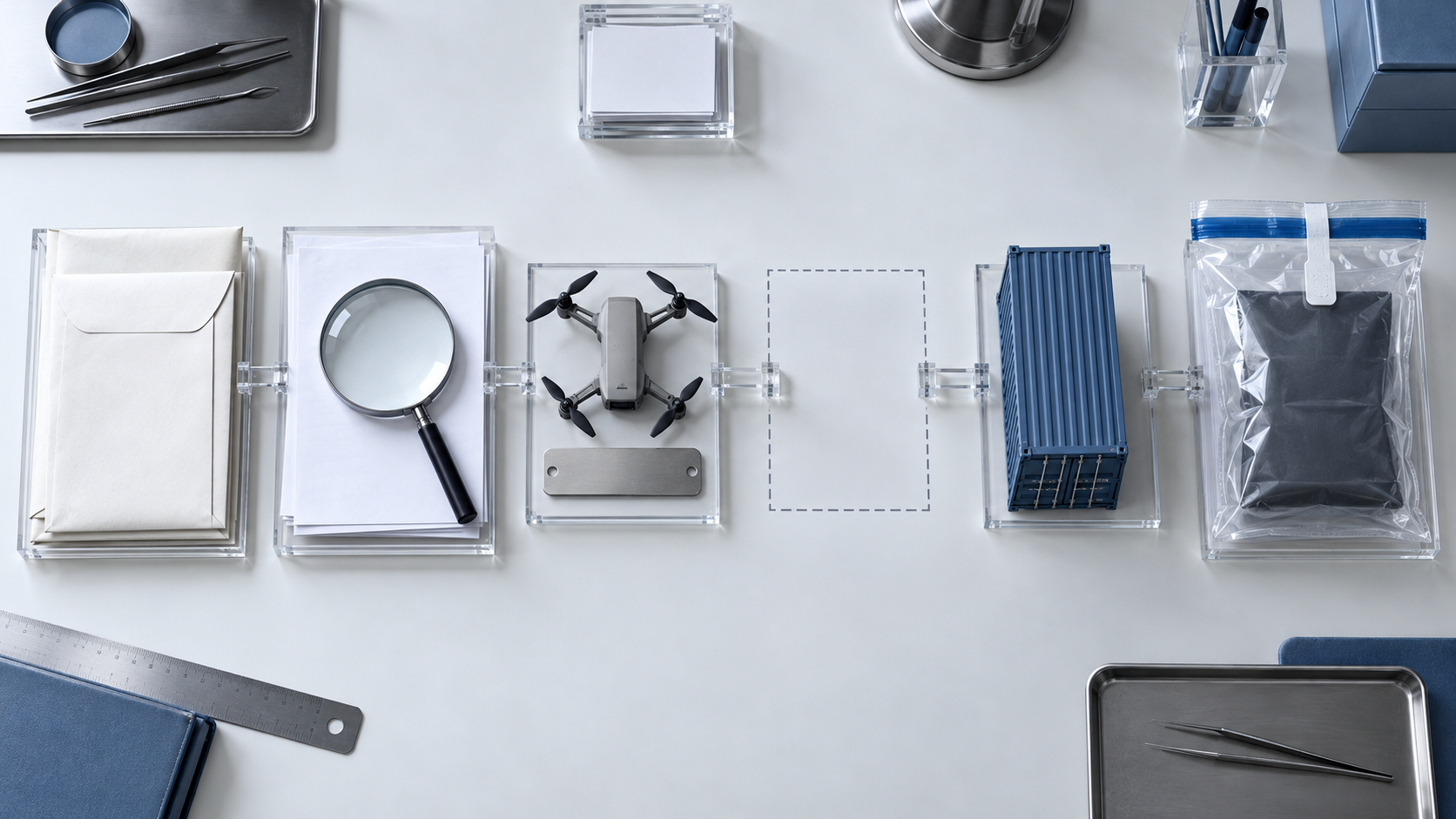
Because the allegation is specifically about financing, the strongest evidence must connect a payer to a procurement. When new reporting appears, look for these elements:
- A defined transaction: Who allegedly paid whom, for what drone model, through which intermediary, and under what kind of financing arrangement?
- Authentic financial records: A contract, payment instruction, ledger entry, invoice, guarantee, or intermediary record must be authenticated and connected to an Indian state entity or an authorised proxy. A document bearing a logo is not enough.
- Procurement evidence: Manufacturer details, quantities, contracting parties, export documentation, delivery terms, or serial information should establish that a Belarusian purchase actually existed.
- A delivery trail: Dates, transport stages, recipients, geolocated imagery, or other verifiable details should connect the equipment to Afghanistan and the Taliban rather than merely to a Belarusian manufacturer.
- Independent corroboration: A second outlet repeating the same allegation is not a second source. Corroboration must come from separate documents, witnesses, imagery, records, or official knowledge.
- A coherent chronology: The alleged Indian commitment must precede or accompany the purchase. Later cooperation among some of the parties cannot retroactively prove earlier financing.
Official statements should be read precisely. A government might deny paying while saying nothing about a private intermediary, or deny a purchase while acknowledging repair cooperation. Record the exact proposition being confirmed or denied. Do not broaden it to cover claims the statement never addressed.
Why drone wreckage would not prove who paid
Physical wreckage could strengthen one part of the case, but only after its location, date, chain of custody, model, manufacturer markings, and serial identifiers were authenticated. Even genuine Belarusian-made wreckage in the conflict zone would establish neither the buyer nor the financier on its own.
One speculative counter-scenario holds that Pakistan could receive Belarusian wreckage from Ukraine and present it as proof of the alleged transaction. That possibility should not become an all-purpose escape hatch. Without evidence of transfer from Ukraine, it is just another hypothesis. A disciplined assessment neither accepts wreckage at face value nor invents an unsupported explanation to make inconvenient evidence disappear.
Key takeaways for assessing the next update
- Use the correct label: The Indian-financing claim is unverified, not established and not conclusively disproved.
- Ask what financing means: A claim that cannot identify the alleged mechanism is too elastic to test properly.
- Separate the links: A Taliban purchase, Belarusian manufacture, Indian payment, Russian approval, and an anti-Pakistan motive are distinct propositions.
- Match evidence to the claim: Strategic interests may support plausibility, but payment or procurement records are needed to support a financing allegation.
- Demand independent corroboration: Repetition across outlets does not add evidentiary weight when every version traces back to the same underlying assertion.
- Update proportionately: Authenticated wreckage could prove equipment origin; transaction records could prove financing. Do not make either one prove more than it can.
A pro-Bharat position still requires evidentiary discipline

A pro-Bharat reader faces two temptations. One is to reject a hostile-looking allegation because its origin appears politically unfriendly. The other is to celebrate it because covert support for the Taliban might seem like clever pressure on Pakistan. Both reactions allow preference to choose the verdict before evidence does.
If the allegation is false, amplifying it can help construct a narrative of Indian sponsorship for Taliban military activity and may supply material for diplomatic pressure. If it is true, public speculation still does not reveal the precise purpose, limits, authorisation, or risks of the policy. In neither case does confident social-media repetition serve Bharat’s interests.
When you discuss the claim, use wording that preserves what is known: a media outlet has alleged Indian financing for a Taliban purchase of Belarusian drones, but no official confirmation or direct public evidence of the financial transaction has been identified. That sentence can be revised if authenticated records, independently verified delivery evidence, or specific official statements emerge.
When the next headline arrives, inspect what evidence has changed. If the only additions are stronger adjectives, more strategic theorising, or more outlets repeating the original allegation, the verdict should not change. Credible pro-Bharat analysis earns trust by applying the same standard to stories that flatter Bharat, stories that accuse it, and stories that appear useful against an adversary.
References

Leave a Reply
You must be logged in to post a comment.