
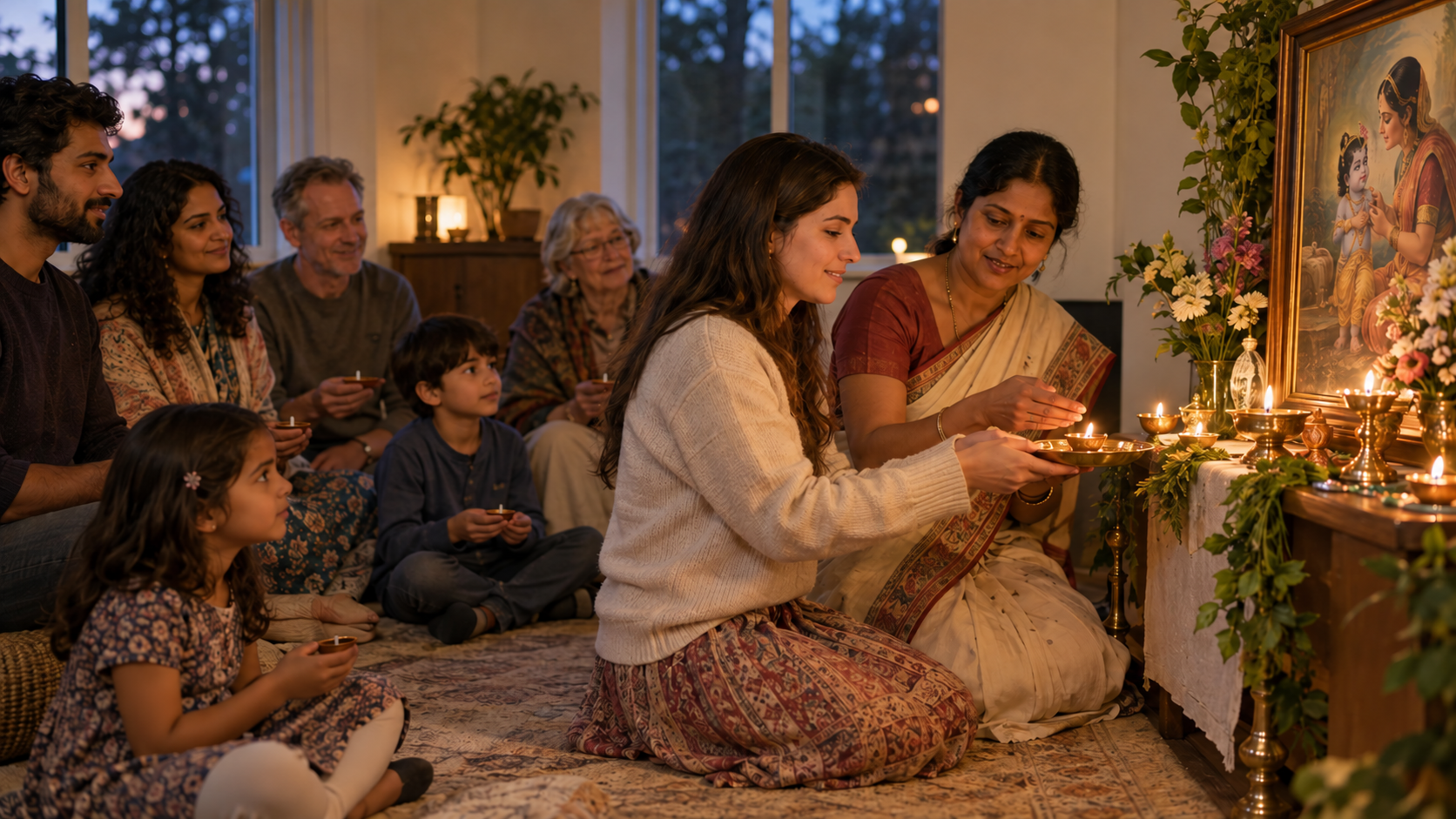
You want to share Kārtika beyond the temple, but you do not want the invitation to feel awkward, impersonal, or demanding. The answer is not a larger event. It is a carefully hosted encounter in which a newcomer understands what the lamp means, knows what to do, and remains free to participate at their own level.
A meaningful program can fit into 30 to 60 minutes in a home, school, community venue, public gathering, or congregational meeting. The plan below will help you choose the right setting, invite people clearly, conduct the offering safely, and turn a brief devotional act into a respectful relationship.
Let the Dāmodara pastime determine the tone
Before arranging lamps, be ready to answer the question a first-time guest may not say aloud: Why are we doing this?
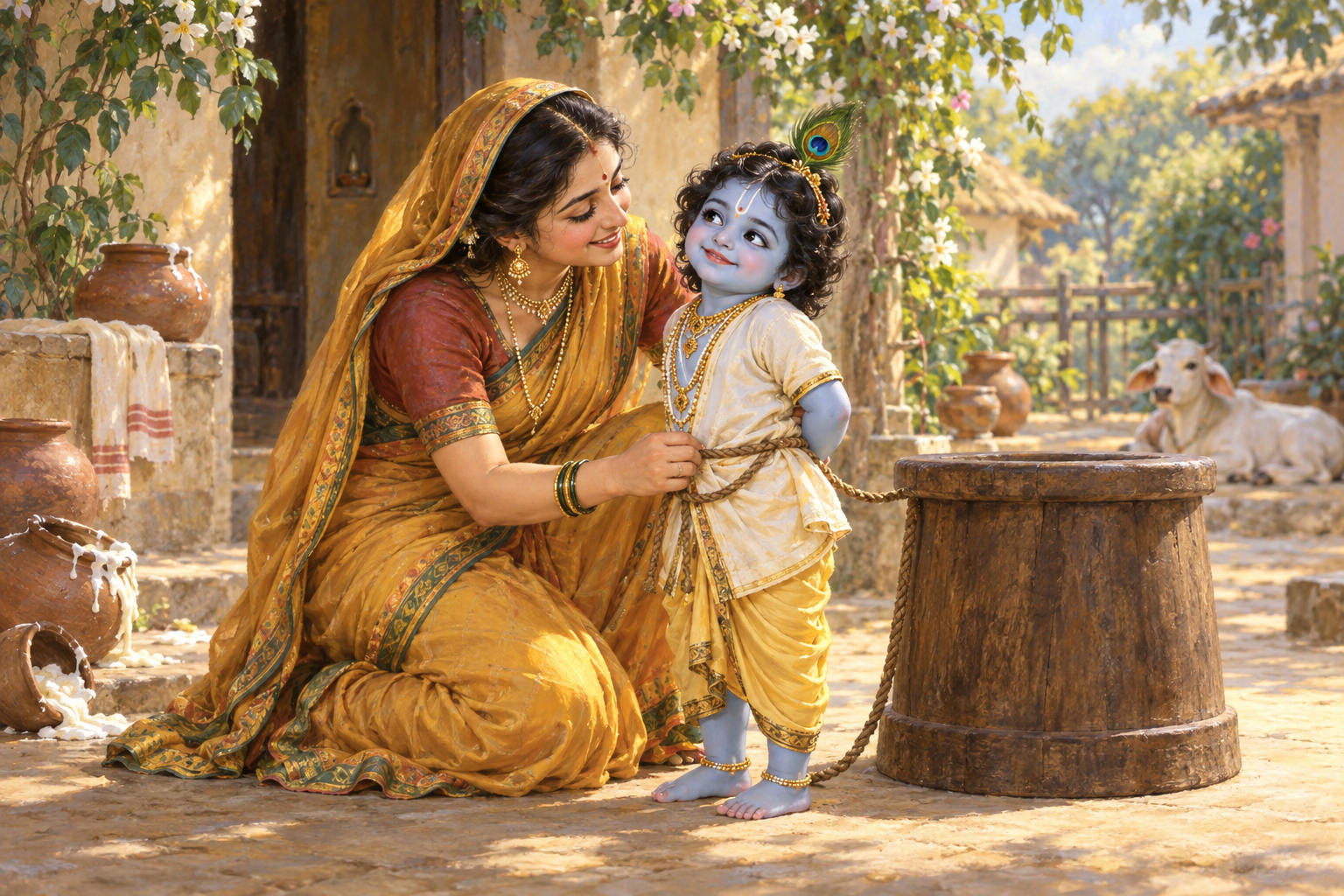
Kārtika is also known among Vaiṣṇavas as Dāmodara Month. Its central remembrance is the childhood pastime in which Mother Yaśodā binds Kṛṣṇa with a rope. The Supreme Lord, beyond anyone’s control, allows Himself to be bound by His mother’s love. The point is not the rope as an object. It is the power of sincere bhakti.
That meaning should shape your hospitality. Do not turn the offering into a test of religious knowledge or an elaborate performance that makes a newcomer afraid of making a mistake. A person needs no previous devotional training to offer a lamp; a little calm guidance is enough.
Your introduction can be as simple as this: “During Kārtika, we remember the love between Mother Yaśodā and child Kṛṣṇa. We will sing Dāmodarāṣṭakam and offer a lamp. You are welcome to watch or participate, and we will show you what to do.”
Then stop. A concise explanation gives the offering room to speak for itself. A long lecture before the lamp can make a simple doorway into bhakti feel like an examination.
Śrīla Prabhupāda explains in The Nectar of Devotion, drawing on the Padma Purāṇa, that devotional service performed during Kārtika has special spiritual value. This is why the program can remain modest without becoming spiritually trivial. Its substance lies in devotion, not production scale.
Choose the smallest setting you can host with care
The best format is the one in which you can welcome each person, conduct the lamp offering without confusion, and speak to interested guests afterward. Choose according to your relationships and capacity, not according to the size of a campaign target.
- A home gathering: Invite relatives, neighbors, or friends for Dāmodarāṣṭakam, a lamp offering, and prasādam. This is often the easiest setting for unhurried conversation.
- A doorstep invitation: With the resident’s permission, bring an image of Lord Dāmodara and offer a brief opportunity to participate. Keep the visit short, respect a refusal immediately, and use a stable heatproof surface rather than holding an exposed flame near clothing or decorations.
- A school or university program: Obtain institutional approval, adapt the explanation to the participants’ age, and agree in advance on supervision, fire rules, timing, and whether photography is permitted.
- A community center or care home: Coordinate with staff about accessibility, mobility, ventilation, and open-flame restrictions. Seat participants who should not stand in a queue.
- An approved public program: A festival, harināma, or other authorized gathering can include lamp offerings, but only after the organizer and venue have approved the setup.
- A temple or congregational gathering: Ask members of a bhakti-vṛkṣa group, Nāma-haṭṭa, or temple community to bring one person who has not participated before. Assign hosts so newcomers are not left to navigate the event alone.
Before announcing anything, settle four questions: Who is the gathering for? Who will explain the pastime? Who will supervise the flames? Who will speak with guests afterward? If any answer is “everyone,” assign a named person instead. Shared goodwill does not replace clear responsibility.
Your invitation should state exactly what the guest is accepting. For example: “We are holding a short Kārtika gathering at our home on Saturday from 6:00 to 6:45 p.m. We will hear the story of Mother Yaśodā and Kṛṣṇa, sing Dāmodarāṣṭakam, offer lamps, and share prasādam. No previous experience is needed, and you are welcome simply to observe.”
That wording removes three common uncertainties: how long the visit will take, what will happen, and whether participation is compulsory. Add the actual address, accessibility information, parking or transit details, and a request to disclose any food allergies if prasādam will be served.
Use a 45-minute program with one clear flow
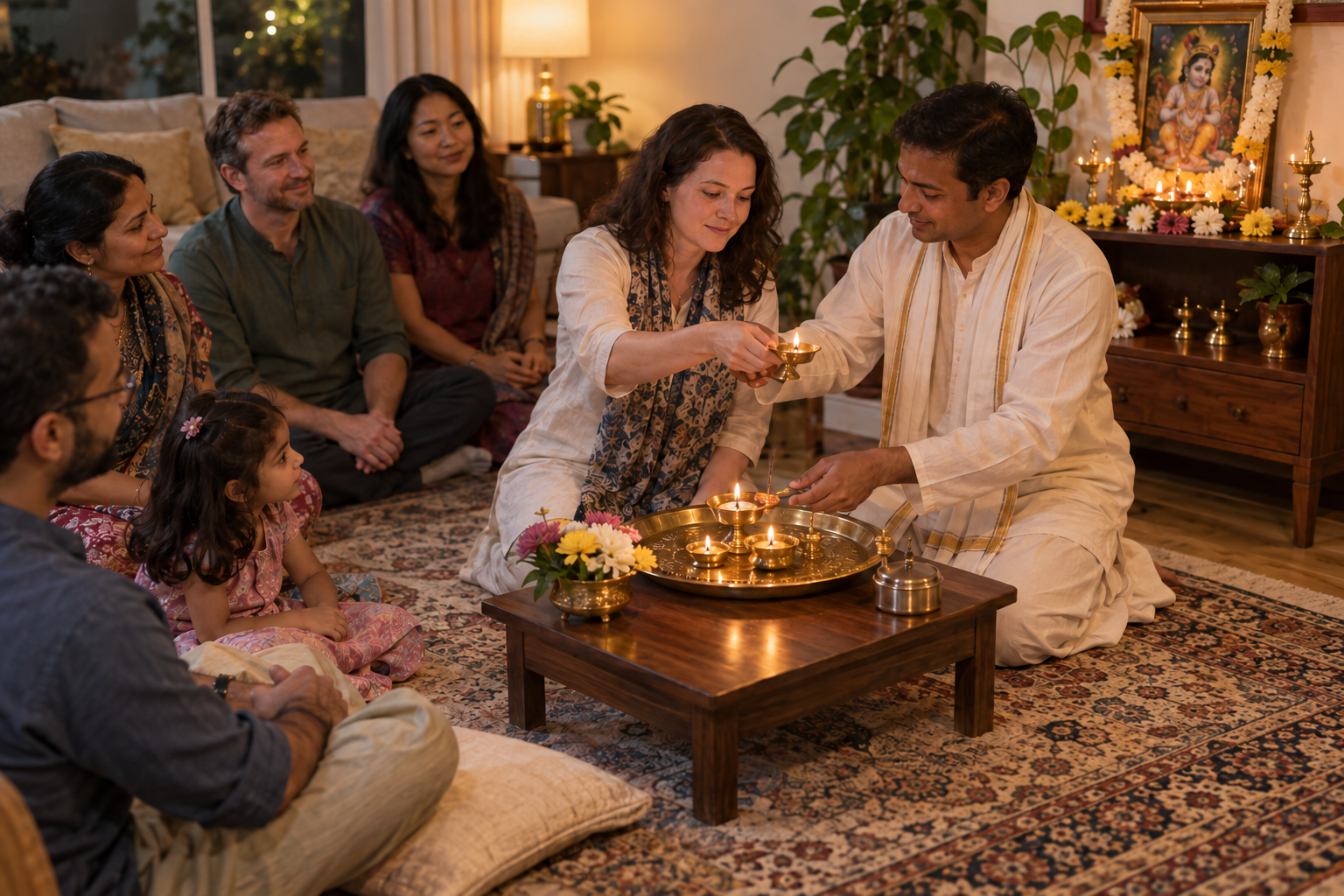
A short gathering still needs an order. The following 45-minute plan is a practical starting point; extend it toward 60 minutes if you expect a larger lamp queue or more conversation.
- 0:00-0:05 – Welcome: Receive guests, point out seating and exits, and explain that they may participate or observe.
- 0:05-0:12 – The meaning of Dāmodara: Tell the Mother Yaśodā and Kṛṣṇa pastime briefly. Emphasize loving devotion rather than assuming familiarity with Vaiṣṇava vocabulary.
- 0:12-0:22 – Dāmodarāṣṭakam: Sing or play the prayer. Provide the words or a translation if available so newcomers can follow without pretending to know them.
- 0:22-0:35 – Lamp offerings: Demonstrate the local temple or sampradāya procedure once, then guide each participant quietly. Keep the path into and away from the offering area unobstructed.
- 0:35-0:45 – Prasādam and conversation: Let guests ask questions. Offer a next step only to those who express interest.
Prepare the physical setup before anyone arrives. You will need an image of Lord Dāmodara placed securely, lamps and implements consistent with your established practice, a heatproof tray, a safe means of lighting and extinguishing the lamps, and any fire equipment required by the venue. Keep loose fabric, paper decorations, bags, and crowded sleeves away from the flame.
Assign one adult as the flame attendant. That person should remain at the offering area throughout, manage lighting and extinguishing, and prevent an unattended lamp from being passed through the room. Children should participate only with direct adult supervision. If the venue prohibits open flames, do not quietly bypass the rule; consult the venue and your temple leadership about an approved alternative or use another suitable location.
The host should demonstrate the movement and sequence used by the community rather than improvising ritual instructions. An usher can then invite one participant at a time, indicate where to stand, and direct the person toward a clear exit from the offering area. This prevents the hesitation that occurs when a newcomer is handed a flame without knowing what comes next.
Make dignity part of the procedure. If someone chooses to watch, let that choice stand without persuasion. If a person has limited mobility, bring the safe arrangement to an accessible position only when the venue permits it and the flame attendant can remain in control. Devotional welcome is not measured by how many guests can be pressed through a queue.
Plan the relationship that begins after the lamp
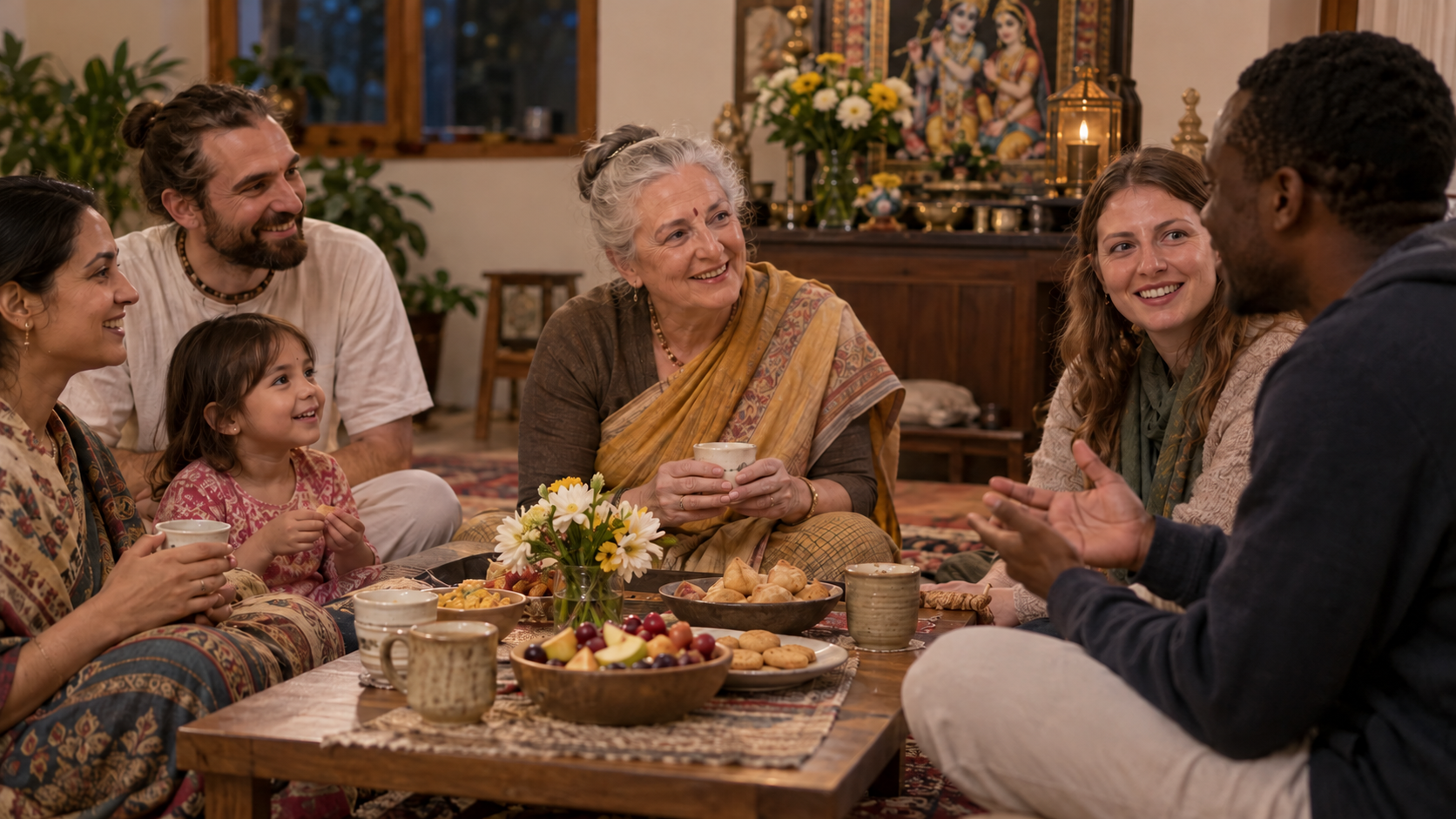
The offering lasts only a few moments, but it can become a newcomer’s first personal experience of bhakti. Your follow-up should preserve the openness of that moment rather than converting it into an unsolicited campaign.
Ask permission before collecting contact information. A simple form can request a name, a preferred contact method, and an optional choice such as “send me details of another Kārtika gathering” or “tell me about a Sunday Feast.” Do not treat attendance or a lamp offering as permission to add someone to a general mailing list or messaging group.
Send the promised message while the gathering is still easy to remember. Keep it personal and specific: “Thank you for joining our Dāmodara evening. You asked about the next home gathering; it will be on [date] at [time]. Let us know if you would like the details.” One relevant invitation is more respectful than a stream of announcements.
Keep two kinds of records separate. For the worldwide campaign, record the number of lamp offerings through the Lamp A Day App. For your local follow-up, record only the contact permissions that participants actually gave, keep access limited to the responsible team, and note the particular next step requested.
Do not judge the gathering only by its lamp count. Also ask whether newcomers understood the meaning, whether the offering area remained orderly, whether children and less-mobile guests were properly assisted, and whether anyone freely requested continued association. Those observations tell you what to improve before the next gathering.
Key takeaways for the 2026 Dāmodara campaign
- The 2026 campaign runs from 25 October through 24 November 2026.
- The worldwide invitation is to reach 10 million reported lamp offerings, following 8.2 million reported offerings in 2025.
- A useful program can last 30 to 60 minutes and can take place in a home, educational institution, community venue, approved public setting, or congregational gathering.
- Explain the Mother Yaśodā and Kṛṣṇa pastime before the offering, demonstrate the procedure, and make observation a fully acceptable choice.
- Confirm fire rules, assign one flame attendant, supervise children directly, and keep an accessible route through the offering area.
- Ask explicit permission before follow-up, offer one relevant next step, and report lamp offerings through the Lamp A Day App.
- For registration or assistance, contact bhakti.months@iskconcdm.com.
You do not have to begin with a hall full of people. Choose one setting you can host well, name the people responsible for welcome, flame safety, and follow-up, and invite someone who has never offered a lamp before. During Dāmodara Month, a small act offered with understanding and care is not a lesser form of outreach. It is the heart of it.
References

Leave a Reply
You must be logged in to post a comment.