
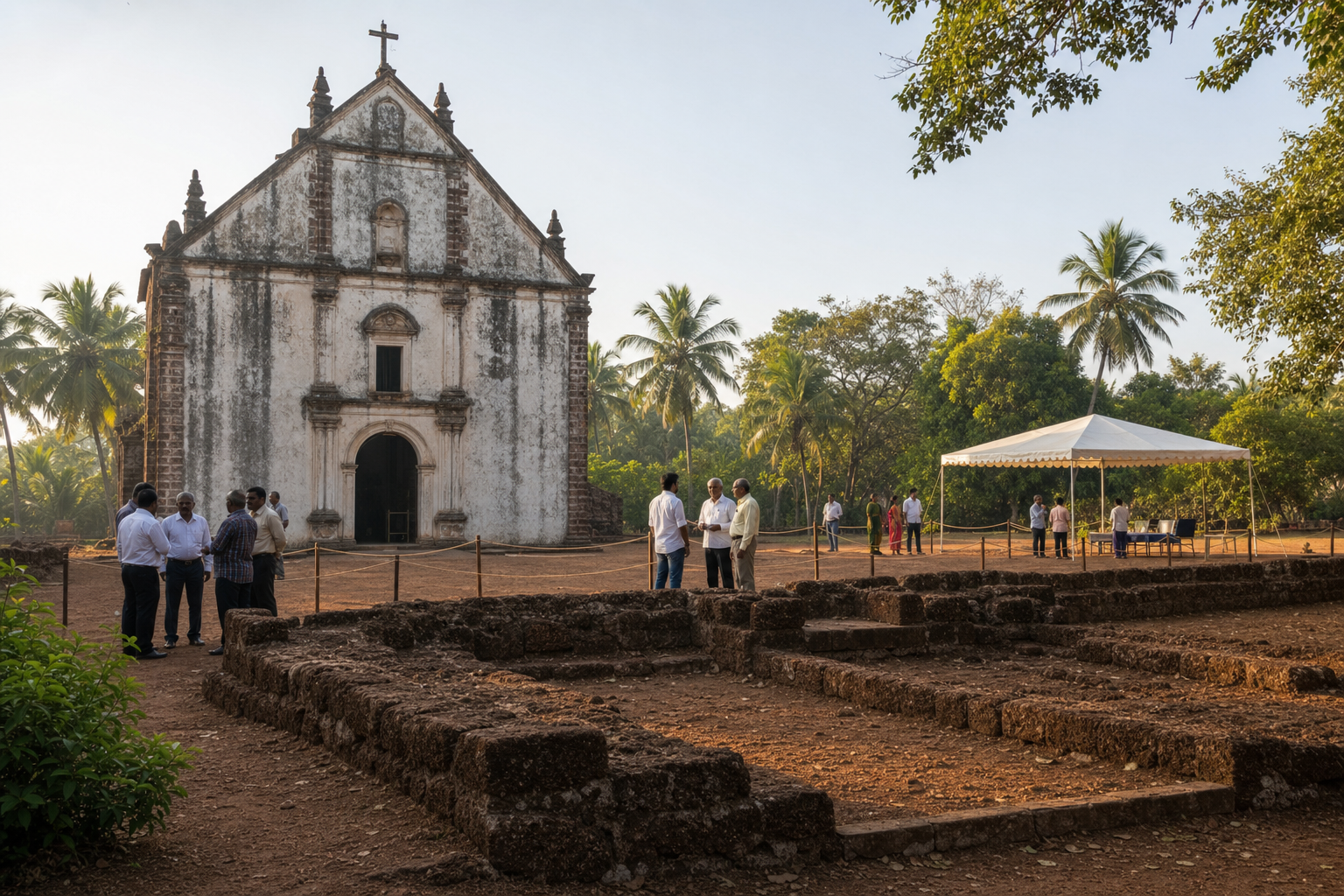
If you are being asked to support, oppose, organise or attend a religious programme near Sancoale’s protected heritage site, begin with three things: the official boundary, the written permission and the conditions attached to that permission. Good intentions cannot answer those questions.
A formal complaint has alleged that a pandal was erected and religious programmes were conducted within a restricted heritage zone without the required permissions. Those are allegations requiring verification, not a final ruling. The responsible response is an on-site inspection, a transparent administrative decision and, if the location cannot lawfully be used, help finding a suitable venue outside the restricted precinct.
First settle the status: allegation, boundary and permission
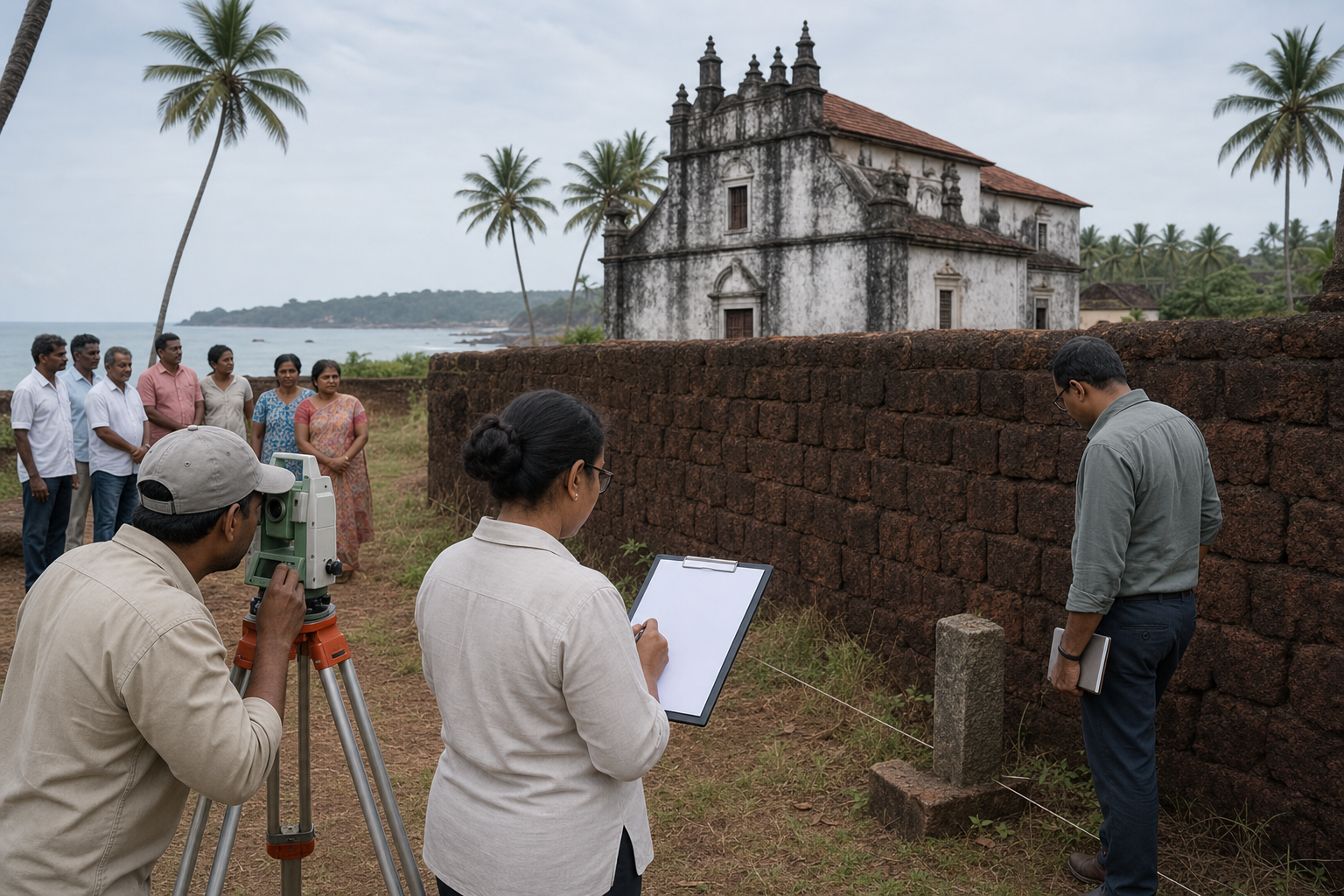
Heritage disputes become needlessly bitter when three different propositions are treated as one. The presence of a structure may be observable. Whether it stands inside a regulated boundary is a question of official records and measurement. Whether it is unauthorised depends on the permissions issued, the authority that issued them and the conditions that apply.
Keep those distinctions intact. Until the administration verifies the site and records, say that construction or an event is alleged to be unauthorised. Saying that nobody has shown you an approval is not the same as proving that no approval exists. Equally, an organiser’s assurance that everything is permitted is not a substitute for seeing the relevant written clearance.
Ask three precise questions:
- Where is the official line? Request a map, survey reference or on-site demarcation showing the protected precinct and any surrounding restricted or buffer area. A description such as “near the site” is not precise enough to establish compliance.
- What activity does the approval cover? A permission for an event should not automatically be assumed to authorise a pandal, installation work or other structures. Ask whether the written clearance expressly covers both the physical installation and the religious programme.
- Which authority is competent to approve it? A local consent, verbal assurance or absence of an earlier objection does not by itself establish heritage clearance. Ask the administration to identify every competent authority and the approvals required for this particular location and activity.
The exact boundary and any permissions already issued cannot be settled from public claims alone. If you receive a stop-work direction, removal notice or other order affecting legal rights, observe its deadline and seek advice from a lawyer familiar with Goa’s heritage and administrative rules. Do not defy an official direction on the strength of a general online explanation.
Use a permission-first plan before any pandal or programme
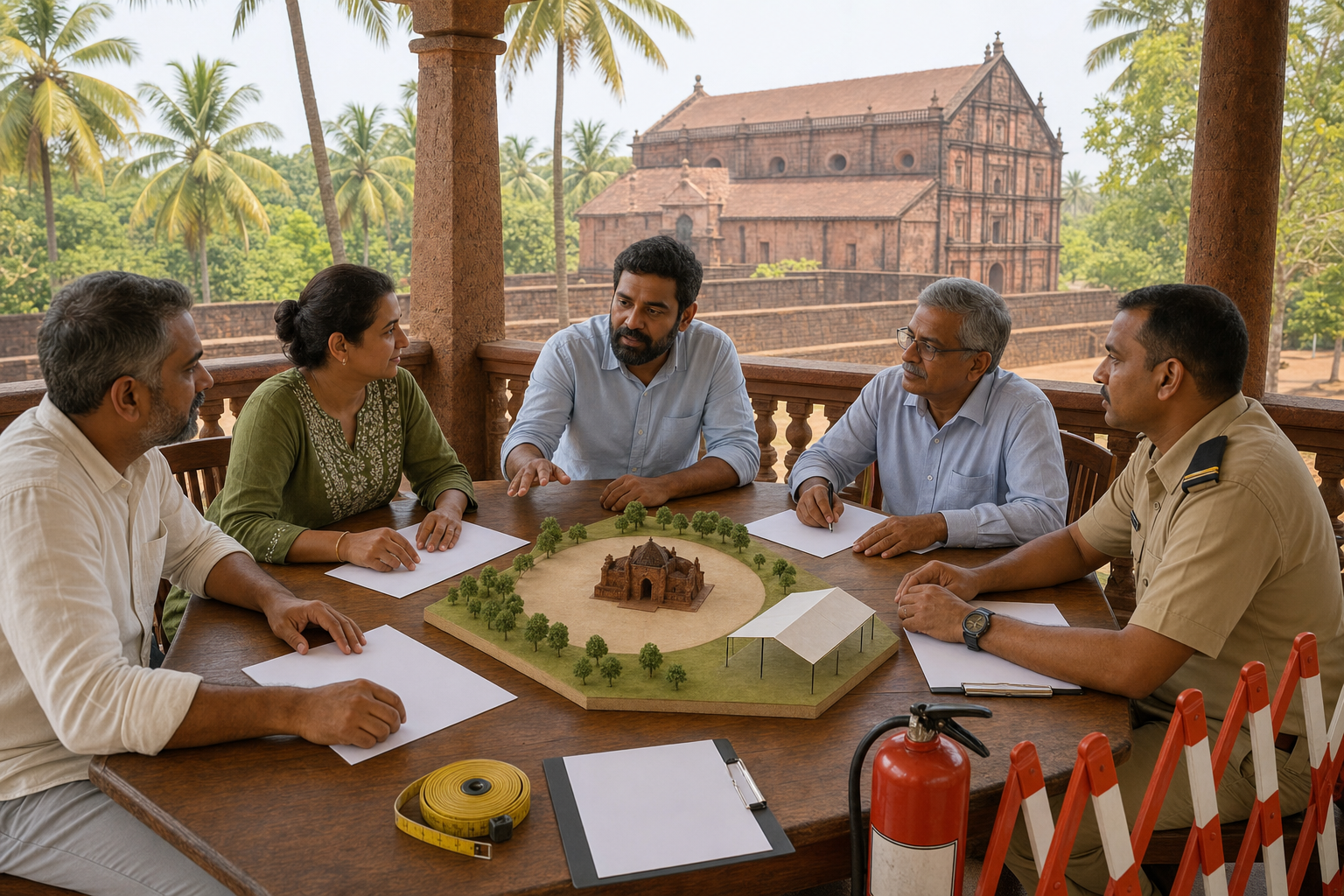
Calling a pandal temporary does not make its effects irrelevant. Installation activity, equipment, gatherings and access demands can still place physical or environmental pressure on a fragile precinct, obstruct archaeological supervision or interfere with safe movement. A temporary structure can also create a lasting precedent if authorities are repeatedly asked to accept it after erection.
If you are planning an observance near the site, use this sequence:
- Pause commitments at the point of uncertainty. Do not add to the structure, advertise a fixed venue or make the gathering harder to relocate until the boundary and approval requirements are clear.
- Identify the proposed location exactly. Supply a legible map, site sketch, nearby landmarks and enough location information for an officer to inspect the same place you intend to use.
- Describe the structure and the programme separately. State the pandal’s footprint, installation method and proposed period of use. Give the programme’s expected hours, attendance arrangements, sound requirements, electrical needs, waste plan and emergency access. Full disclosure helps the authority impose workable safeguards rather than deciding from an incomplete request.
- Ask for written confirmation of every required clearance. The request should cover the location, temporary installation, gathering and any operational conditions. Keep the application, acknowledgement and final response together.
- Wait for the written decision. Silence, an informal conversation or a belief that permission will arrive later should not be treated as approval. If a condition is unclear, obtain clarification before proceeding.
- Prepare an alternative venue at the same time. A nearby location outside the restricted zone can preserve the observance even if the original proposal is refused. Confirm the permissions required at the alternative site as well.
This sequence protects more than stone and masonry. It protects devotees from a last-minute cancellation, organisers from avoidable expense and the administration from being presented with a completed structure as a fait accompli.
Protect heritage without turning worship into the target
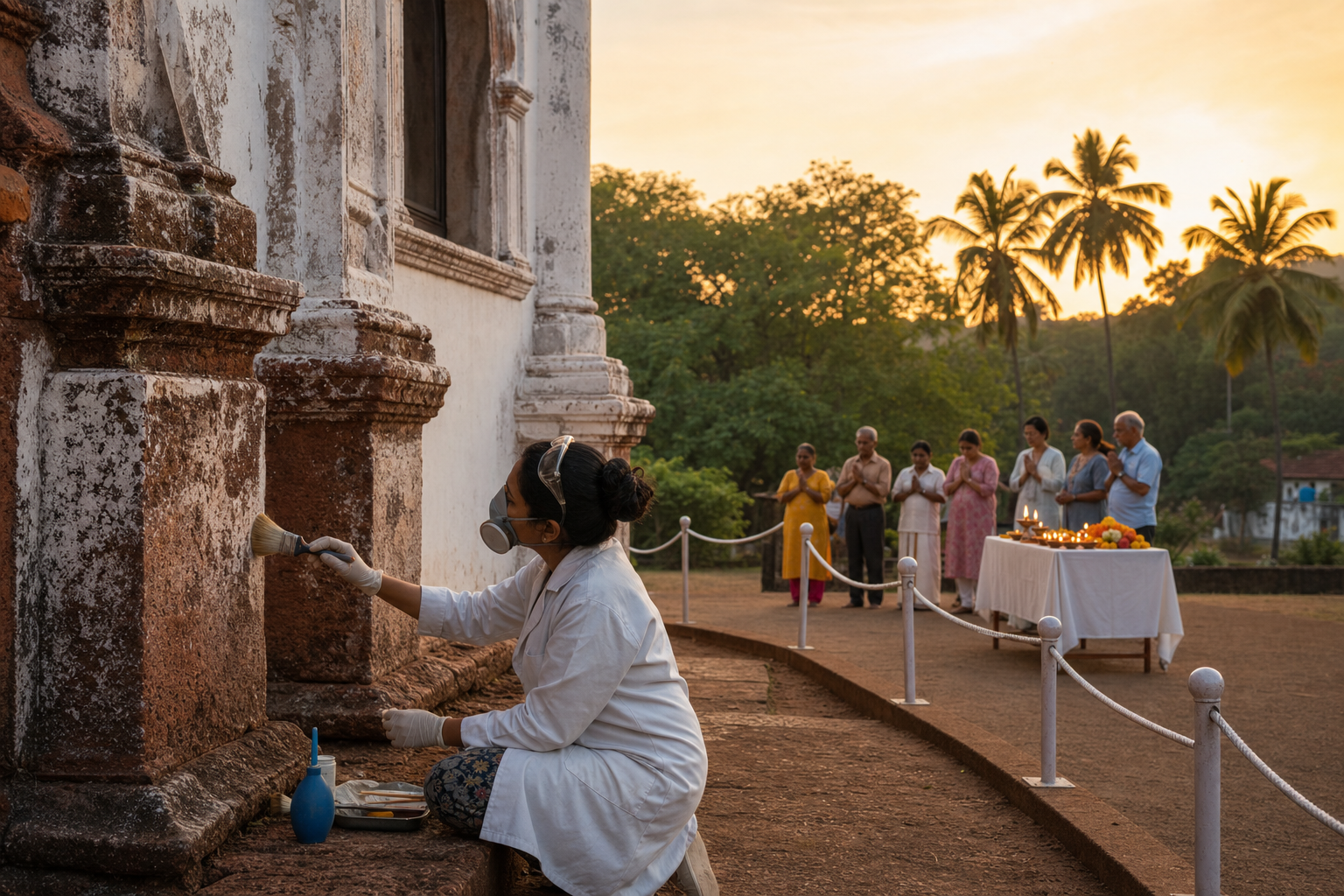
The central issue is compliance at a protected place, not whether religious observance deserves respect. Conflating those questions harms both causes. Heritage rules lose legitimacy when they appear selective, while worship is poorly served when a programme depends on an unresolved encroachment or disputed permission.
If you are organising the programme
Name one person to communicate with the authorities and keep a single record of applications, maps, conditions and correspondence. If inspection shows that the location falls inside a restricted area, relocate or modify the plan as directed. Tell participants clearly that the change protects the site and allows the observance to proceed lawfully; do not present every compliance question as hostility to faith.
If you are raising the concern
Report observable facts rather than assumed motives. Record the location, the nature of the structure or activity and when it was observed. Ask for verification of the boundary, inspection of the permissions and a written administrative response. Do not enter the site, confront participants or attempt to dismantle anything yourself. Those actions can create safety and legal problems while weakening an otherwise credible request.
Keep communal identity out of claims that can be resolved through maps, approvals and inspection. The same heritage standard should apply regardless of who built the structure or which community proposed the gathering.
What the administration should make clear
An effective response requires more than a private exchange with the complainant or organiser. Officials should inspect the location, identify the applicable boundary, check the relevant permissions and issue a reasoned decision. If a violation is found, corrective action should specify what must stop, move or be removed and who is responsible for compliance.
Visible boundary markers and multilingual signs would prevent many future disputes. Signage should explain what area is controlled, which activities need prior approval and where an applicant can obtain guidance. When a religious programme cannot use the requested location, helping organisers identify a suitable nearby venue turns enforcement into practical stewardship.
That is a deeply dharmic approach. Reverence is not measured only by the intensity of a celebration; it is also measured by restraint, duty and care for what previous generations entrusted to us. Hindu, Buddhist, Jain and Sikh communities all have reason to reject a false choice between living devotion and inherited heritage. Lawful observance and conservation can strengthen one another when organisers seek permission before acting and officials apply the rules consistently.
Key takeaways
- The reported lack of permission is an allegation until the competent authorities inspect the location and examine the records.
- The existence of a pandal, its position within an official restricted boundary and its legal status are separate questions.
- Temporary structures and religious programmes can each require scrutiny; ask whether the written approval expressly covers both.
- If the boundary or permission is uncertain, pause further installation and prepare a lawful alternative venue.
- Organisers, complainants and officials should rely on maps, written approvals and observable facts rather than communal accusations or verbal assurances.
Your next move can be simple: send one written request asking the administration to identify the boundary, verify the permissions and state what may lawfully proceed. That creates a record, gives every side the same facts and keeps the focus where it belongs: preserving Sancoale’s heritage while enabling worship in a suitable place.
References
