
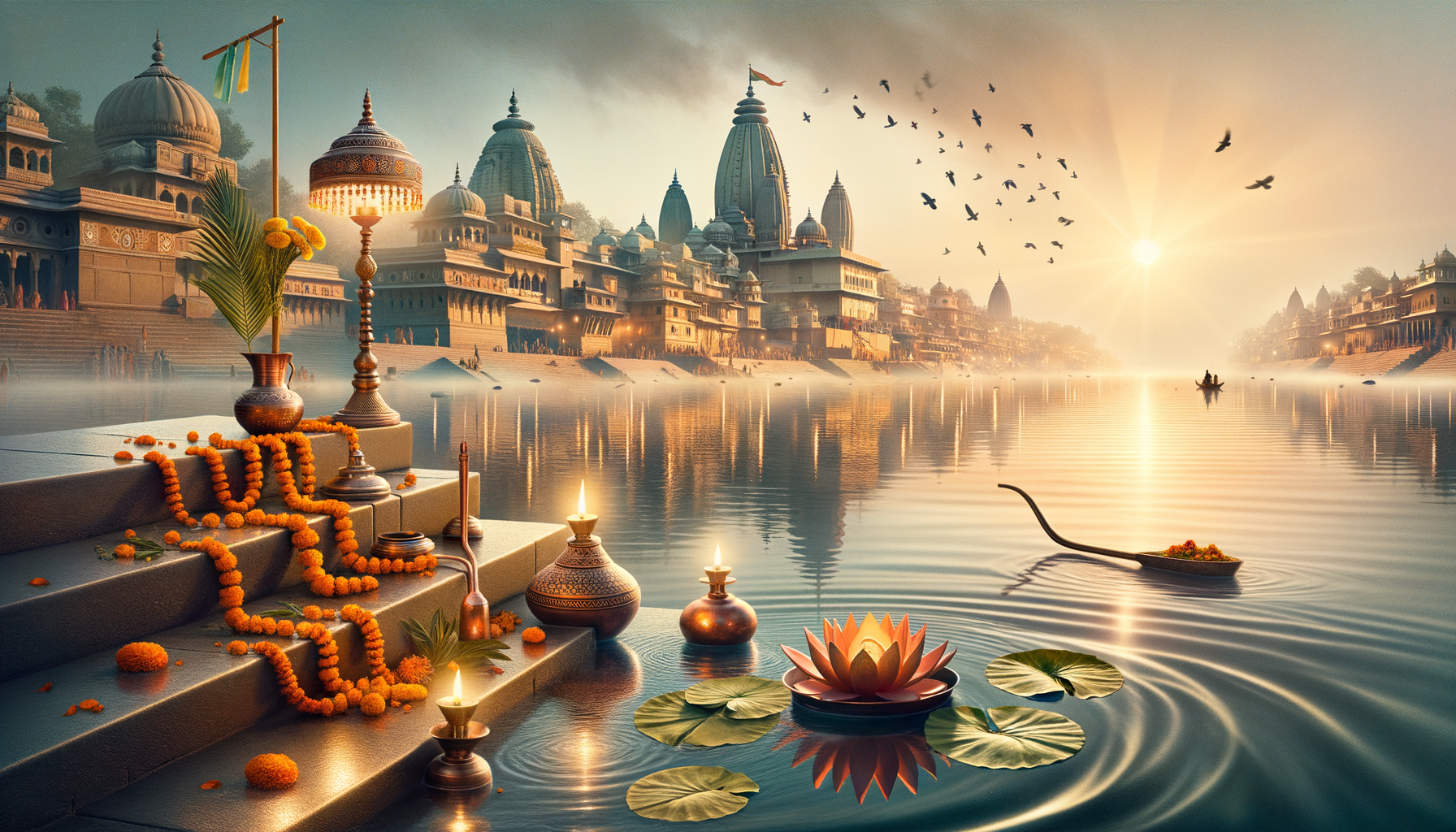
The Yamuna River occupies a central place in Hindu Dharma as a living embodiment of sacred geography and devotional practice. Across North India, communities honor Yamunaji as both a life-giving waterway and a spiritual presence guiding tirtha-yatra, family rites, and everyday worship.
In classical narratives, the river is personified as Yami (Yamuna), sister of Yama, the god of death, and daughter of Surya, the Sun god, and his wife Saranyu. Addressed reverentially as Yamunaji and also known as Kālindī, she symbolizes the meeting of light (Surya), moral order (dharma), and life’s finitude (Yama), offering devotees a path of purification and inner renewal.
The river’s sacred itinerary extends from its glacier source at Yamunotri through the Braj regionMathura and Vrindavanwhere Krishna’s lila traditions flourish, and onward to the Triveni Sangam at Prayagraj. Pilgrims bathe, perform snāna during Kartik, and observe Yama Dwitiya (Bhai Dooj), recalling the affectionate bond of Yama and Yamuna that sanctifies sibling love and auspicious protection.
Hindu scriptures and Puranic literature, including the Padma Purana and Skanda Purana, extol the religious significance of the Yamuna River. Texts praise her waters as purifying, her banks as auspicious for japa and vrata, and her darshana as conferring punya, deepening connections to bhakti and ethical living.
For many devotees, experiences along the Yamuna are profoundly affectivequiet mornings on Vrindavan ghats, the cadence of kirtan, and the solace of offering flowers into the current. Such moments are often described as steadiness of mind, gratitude, and a tangible sense of grace that endures beyond the pilgrimage.
The reverence for rivers as life-giving and purifying is a value shared across dharmic traditionsHinduism, Buddhism, Jainism, and Sikhismwhere water symbolizes interdependence, compassion, and restraint. Honoring Yamunaji therefore aligns with a broader dharmic ethic that upholds unity in spiritual diversity and respect for all beings.
In the contemporary context, safeguarding the Yamuna’s ecological health is inseparable from spiritual duty (dharma). Community seva, responsible rituals, and sustainable water practices embody a living commitment to sacred stewardship, reinforcing that devotion and conservation belong together.
Viewed through this lens, the religious significance of the Yamuna River is both scriptural and lived: a mythic lineage rooted in Surya, Saranyu, Yama, and Yami; a geography animated by Krishna-bhakti; and a unifying symbol that invites dharmic communities to cultivate purity, harmony, and shared responsibility.
Inspired by this post on Hindu Pad.
